Summary
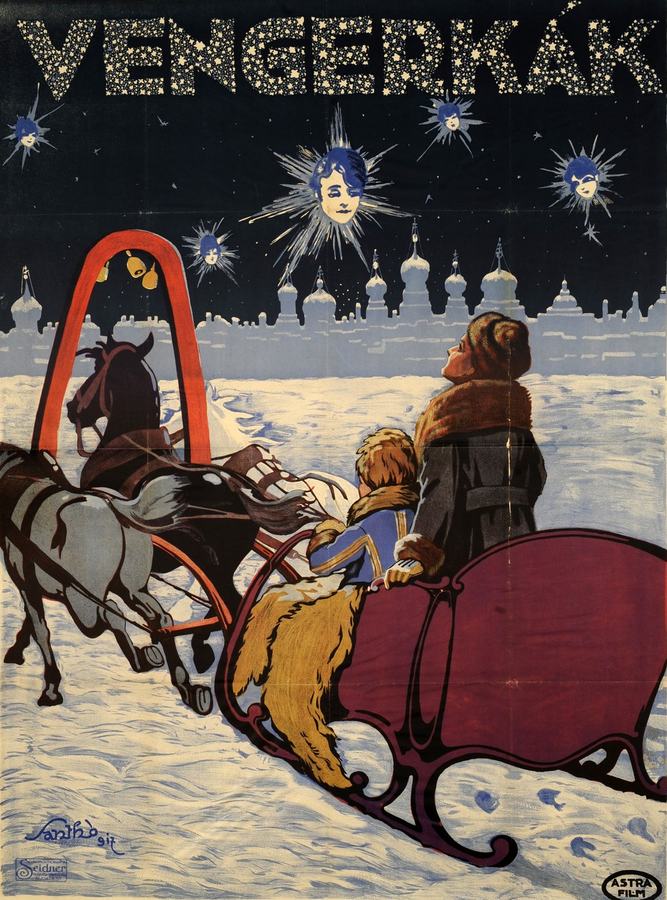
In the somber, exquisitely rendered tableau of early 20th-century Hungary, Béla Balogh's 'Vengerkák' unfurls a heart-wrenching chronicle of innocence imperiled and sisterly bonds tested by the siren call of metropolitan allure. We are introduced to Ilona, portrayed with luminous fragility by Ica von Lenkeffy, a young woman whose spirit, though tethered to the bucolic rhythms of her village, yearns for a life beyond its circumscribed horizons. Her sister, Erzsi, embodied with an earnest, grounded resilience by Helene von Bolvary, senses the looming shadows, her warnings a muted counterpoint to Ilona's burgeoning fascination with the charismatic, yet ultimately predatory, Count István (Gusztáv Vándory). István, a figure of deceptive charm, masterfully manipulates Ilona's aspirations, promising a glittering existence that quickly devolves into a gilded cage of societal judgment and personal desolation. As Ilona navigates the labyrinthine moral landscape of Budapest's high society, her initial enchantment curdles into a bitter understanding of betrayal. The film masterfully employs chiaroscuro to delineate the stark contrast between the village's honest simplicity and the city's corrupting opulence, mirroring Ilona's internal descent. Her tragic fall, marked by public disgrace and the profound isolation of a woman cast aside, resonates with a piercing poignancy. The narrative culminates not in a simplistic redemption, but in a profound, albeit somber, reconciliation of spirit, as the enduring power of familial love, represented by Erzsi's unwavering devotion, offers a fragile beacon against the encroaching darkness. Balogh, alongside writers Sándor Góth and Árpád Pásztor, crafts a searing indictment of class hypocrisy and the devastating vulnerability of women caught in the unforgiving machinery of societal expectation, leaving an indelible impression of profound human suffering and the quiet strength found in enduring kinship.
Review Excerpt
"
Stepping into the world of 'Vengerkák' is akin to unearthing a meticulously preserved relic from a bygone era, a cinematic tapestry woven with threads of yearning, betrayal, and the enduring resilience of the human spirit. This Hungarian silent film, a collaborative effort from writers Sándor Góth, Béla Balogh, and Árpád Pásztor, and brought to life under the nuanced direction of Balogh, stands as a testament to the profound storytelling capabilities of early cinema. It’s not merely a perio..."