DbcultAccessing Vault...
Cult Review
Senior Film Conservator
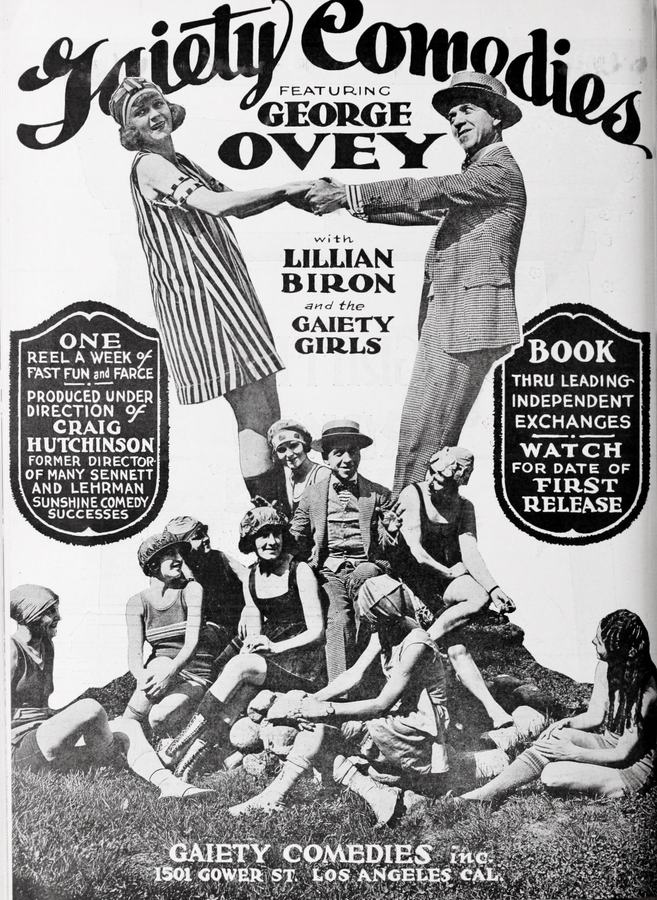
Stepping into the shadowy, often melodramatic, world of early 20th-century cinema, one encounters a fascinating array of human dramas, and Calling His Bluff stands as a particularly compelling, if understated, entry. Directed with a keen eye for domestic tension, this film, penned by Scott Darling, delves into the perennial struggle of a woman scorned, transforming what could be a simple tale of vengeance into a nuanced exploration of agency, societal constraints, and the insidious nature of marital betrayal. It’s not merely a story of a wife getting even; it’s a masterclass in psychological warfare waged within the confines of a seemingly respectable home.
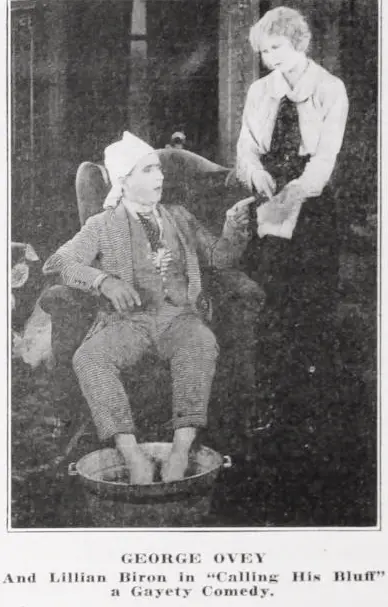
Lillian Biron, as the beleaguered yet ultimately resolute wife, delivers a performance that transcends the often broad gestures of the silent era. Her portrayal is a delicate tapestry of suppressed anguish, dawning awareness, and finally, steely determination. Through subtle shifts in posture, the tightening of a jawline, or the almost imperceptible flicker in her eyes, Biron communicates volumes about her character's internal journey. She isn't a passive victim; she is an observer, a strategist, and eventually, the architect of her own justice. This kind of nuanced acting was a hallmark of the era's finest talents, allowing audiences to connect with complex emotional landscapes without the aid of spoken dialogue. Her capacity to convey such depth with minimal intertitles is truly remarkable, drawing the viewer into her plight and making her eventual triumph all the more satisfying.
Conversely, George Ovey's portrayal of the errant husband is a study in bluster and superficial charm, a character archetype that remains depressingly familiar even today. Ovey imbues his role with an almost cartoonish arrogance, his swaggering confidence masking a profound lack of integrity. He is the quintessential cad, oblivious to the emotional devastation he wreaks, consumed by his own desires and convinced of his invincibility. The dynamic between Biron's understated strength and Ovey's overt weakness forms the very backbone of the film's dramatic tension. His eventual comeuppance, therefore, feels not just deserved but inevitable, a karmic consequence of his self-serving actions. The film doesn't shy away from depicting the ugliness of his character, making the wife's eventual triumph all the sweeter for the audience.
Scott Darling's script, while adhering to the narrative conventions of the time, demonstrates a cleverness in its construction. It avoids the pitfalls of overt melodrama, instead opting for a more cerebral approach to revenge. The wife's plan isn't born of sudden, passionate rage but rather a methodical, almost cold, assessment of her husband's vulnerabilities. This strategic depth elevates the film beyond a mere domestic spat, positioning it as a commentary on power dynamics within marriage and the limited avenues available to women seeking redress in an era that often afforded them little legal or social recourse. The ingenuity lies in her ability to turn his own vices against him, using his hubris and infidelity as the very tools of his undoing. It's a testament to Darling's understanding of human psychology that the narrative feels so satisfyingly complete.
The visual language of Calling His Bluff, while perhaps not as groundbreaking as some of its contemporaries, effectively serves the story. The cinematography, typical of the period, relies on clear, functional framing, allowing the actors' expressions and the unfolding domestic drama to take center stage. There are no extravagant camera movements or avant-garde techniques, but rather a focus on clarity and emotional resonance. The sets, likely modest given the production constraints of the era, nonetheless convey the sense of a comfortable, if stifling, middle-class existence, making the disruption of this domestic tranquility all the more impactful. The director, though uncredited, understood the power of staging and composition to enhance the narrative, ensuring that every glance, every gesture, contributed to the overall effect.
When considering Calling His Bluff, it's difficult not to draw parallels with other films that explore themes of female agency and societal constraints. Take, for instance, The Easiest Way, a film that similarly delves into the difficult choices and limited options faced by women in patriarchal societies. While The Easiest Way focuses on economic desperation leading to moral compromises, Calling His Bluff presents a woman who, rather than succumbing to external pressures, actively manipulates the internal dynamics of her marriage to achieve justice. The comparison highlights the diverse ways silent cinema tackled the burgeoning feminist consciousness of the early 20th century, often through compelling individual stories rather than overt political statements. Both films, in their own distinct ways, reflect the societal anxieties and evolving gender roles of their time, offering glimpses into the complex lives of women navigating a rapidly changing world.
Another interesting comparison can be made with films that explore the darker side of human nature and retribution, albeit in different contexts. While not a direct thematic match, the intense, almost visceral exploration of justice in Hard Boiled (though decades apart in production and genre) offers a stark contrast in methods of dealing with injustice. Whereas Hard Boiled revels in explosive action and overt violence as a means of seeking retribution, Calling His Bluff finds its power in intellectual and emotional manipulation. This juxtaposition underscores the versatility of cinematic storytelling across different eras and genres, demonstrating how the core human desire for justice can manifest in myriad forms, from the quiet cunning of a wronged wife to the explosive ballet of a police inspector's crusade. Both films, despite their vast differences, tap into a primal satisfaction derived from seeing wrongdoers face their comeuppance, albeit through vastly different cinematic languages.
The film's exploration of deception and its consequences also brings to mind the intricate plots of films like Love Letters, where misdirection and hidden motives drive the narrative. However, in Calling His Bluff, the deception is not merely a plot device but a weapon, wielded with surgical precision by the protagonist. Her actions are not born of malice for its own sake, but from a desperate need to reassert control and dignity in a relationship where she has been systematically undermined. This distinction is crucial; her revenge is not petty but purposeful, a carefully orchestrated move to restore balance and justice. The film manages to make her actions feel justified, not merely vengeful, which is a significant achievement for a narrative of this type.
From a historical perspective, Calling His Bluff offers a valuable insight into the social mores and gender dynamics of its time. The underlying assumption throughout the narrative is the husband's entitlement and the wife's expected subservience. Her defiance, therefore, is not just personal but subtly subversive. It speaks to a nascent cultural shift, where women were beginning to challenge traditional roles, even if only within the confines of domestic drama. The film, in its quiet way, reflects the broader societal currents that would eventually lead to greater demands for equality and recognition. It's a snapshot of a moment when the cracks in patriarchal structures were beginning to show, and individuals, particularly women, were finding innovative ways to assert their agency.
The emotional arc of the film is deeply satisfying. We witness the wife's transformation from a figure of quiet suffering to one of formidable strength. Her evolution is not instantaneous but a gradual awakening, fueled by the accumulating indignities inflicted upon her. This slow burn to retribution allows the audience to fully invest in her journey, making her eventual triumph resonate deeply. It's a narrative that champions the underdog, celebrating the power of intellect and resilience over brute force or societal privilege. The silent film format, with its reliance on visual storytelling and expressive acting, is particularly adept at conveying these internal shifts, allowing the audience to interpret and empathize with the characters' unspoken thoughts and feelings.
The legacy of films like Calling His Bluff lies not just in their entertainment value but in their ability to serve as cultural artifacts. They provide a window into the past, allowing us to understand the anxieties, moral codes, and social expectations of a bygone era. While the technology and filmmaking techniques have evolved dramatically, the core human emotions and dilemmas explored in films like this remain timeless. Betrayal, revenge, the quest for justice, and the struggle for personal autonomy are themes that continue to resonate with audiences across generations. This enduring relevance is what truly separates a fleeting piece of entertainment from a work that contributes to the rich tapestry of cinematic history.
In conclusion, Calling His Bluff is far more than a simple silent film melodrama. It's a potent, carefully crafted narrative that showcases strong performances from Lillian Biron and George Ovey, a clever script by Scott Darling, and a thematic depth that transcends its era. It’s a film that speaks to the enduring power of wit and resilience in the face of adversity, a testament to the fact that even in the quietest of battles, the most profound victories can be achieved. For those who appreciate the artistry of early cinema and stories that champion the human spirit against overwhelming odds, this film is an absolute must-see. It reminds us that sometimes, the most devastating blow isn't a shout or a fist, but a quiet, calculated move that exposes the truth and leaves the opponent with nothing but the echoes of their own deceit.
IMDb 4.6
1927
Community
Log in to comment.