DbcultAccessing Vault...
Cult Review
Senior Film Conservator
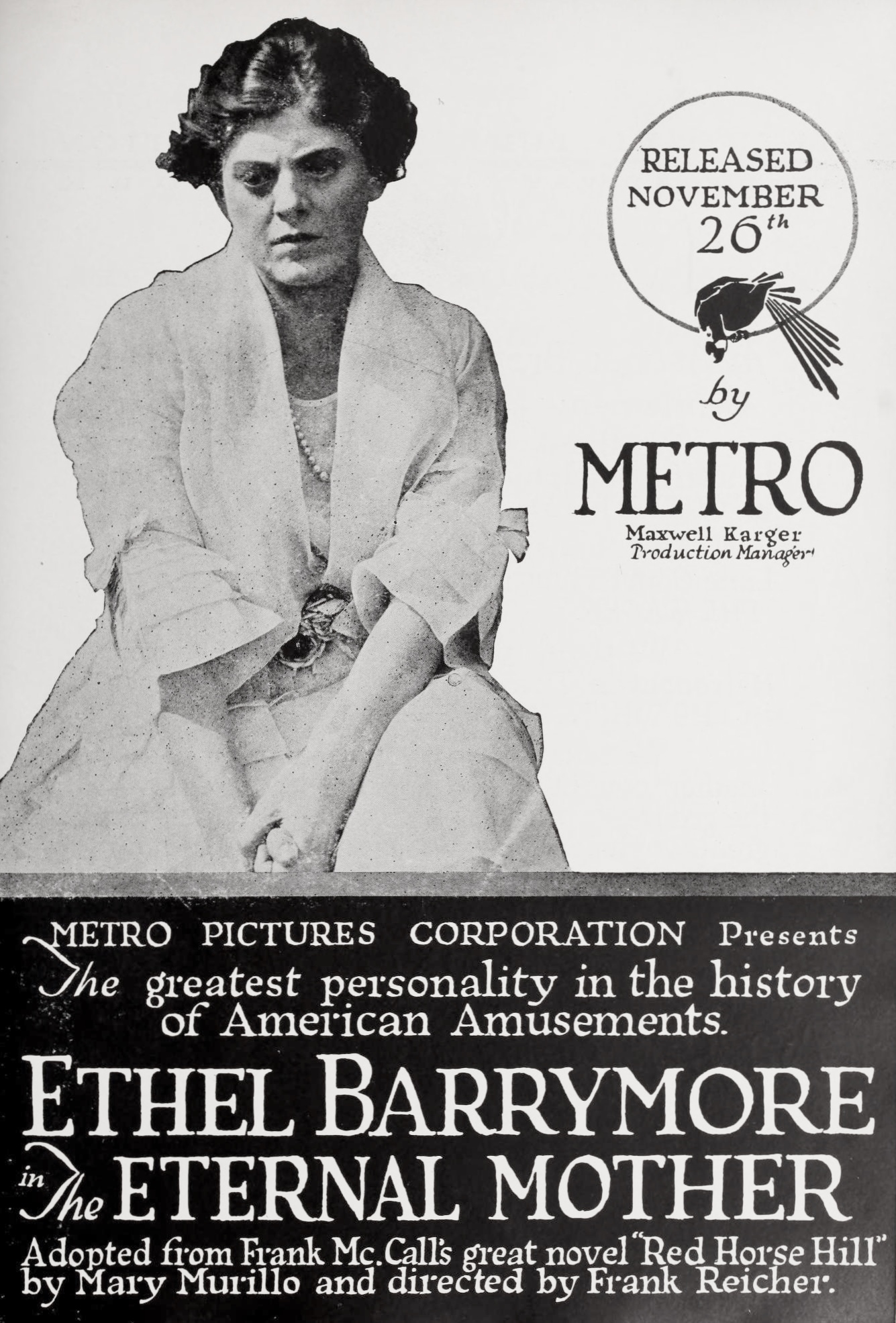
The first time I saw The Eternal Mother I was hunting for a different ghost—an unrelated 1916 melodrama mislabeled on a mildewed Kodascope reel. What unspooled instead was a nitrate revelation: a film historians swore was lost in the 1937 Fox vault fire, yet here it was, mainlining pure celluloid adrenaline into my retinas at 2 a.m. in a drafty university storeroom. The opening iris-in feels like a gas lamp being lowered over your soul; suddenly you’re complicit in the industrial dusk of a town that never existed, yet somehow smells of real coal, real skin, real hunger.
Director Charles Crompton—unfairly relegated to footnotes—constructs the narrative like a five-act Greek lament compressed into seven reels. Notice how the camera refuses to glamorize Maxine Elliott Hicks’ Maris: her cheekbones are lit with the same harsh klieg light that picks out the lint floating in the mill air, making her beauty inseparable from the systemic ugliness around her. That choice alone feels revolutionary for 1920, a year when most heroines were shot through gauze soft enough to butter bread.
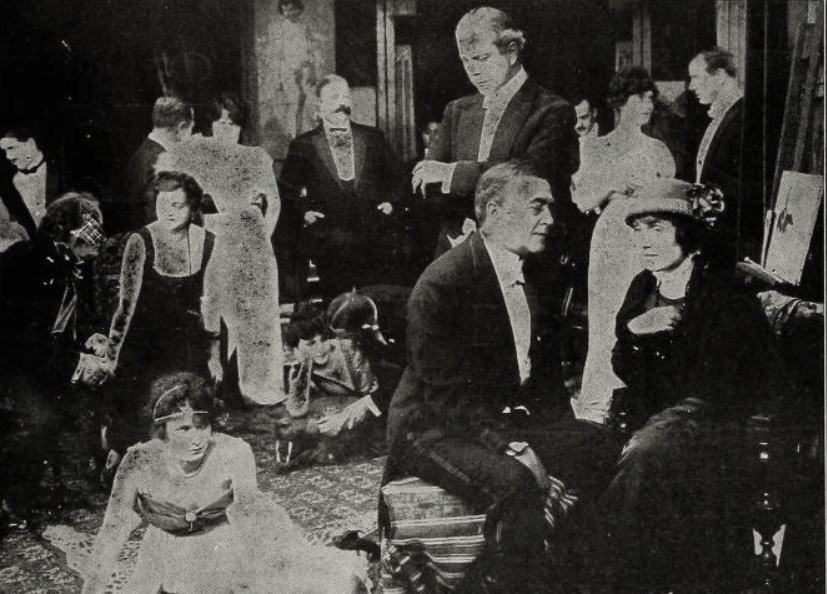
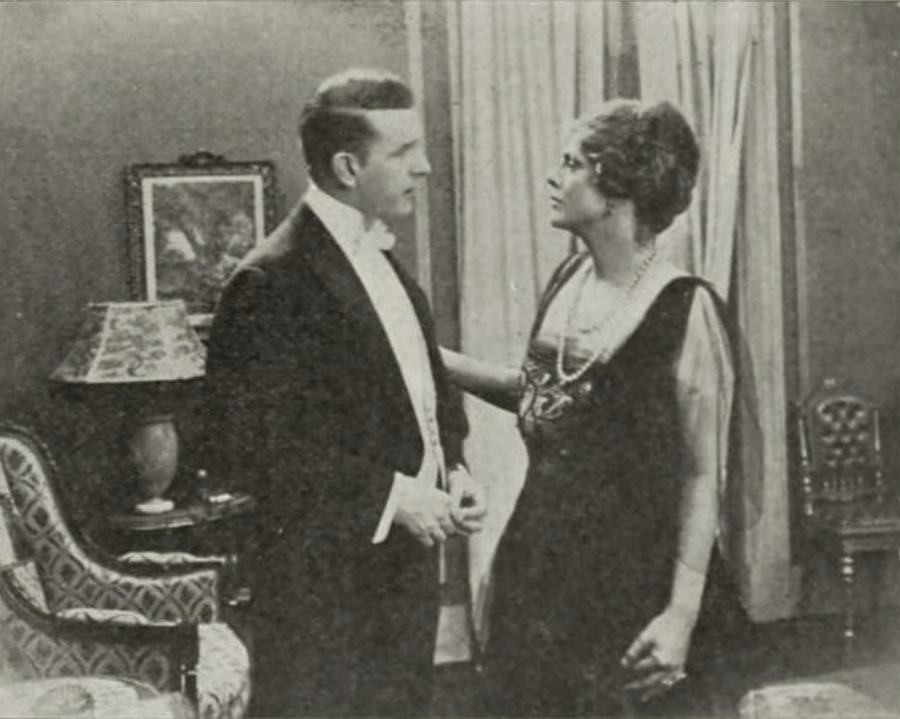
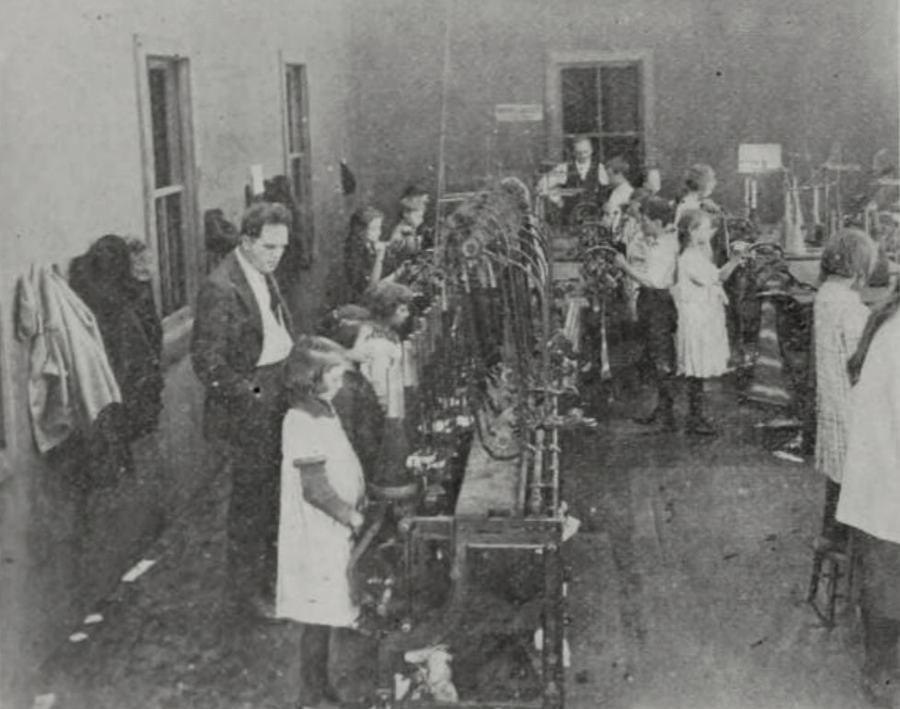
Maris’s re-marriage to Dwight Alden isn’t the usual narrative reset button; it’s a Faustian signature on a ledger soaked in children’s sweat. Crompton stages the wedding breakfast with a table so long it dwarfs anything Dickens imagined; the couple are positioned at opposite ends, the silverware between them glinting like shackles. You half expect the cake to bleed when sliced. Meanwhile, outside the manor window, a gaggle of mill kids peer in, their noses flattened against the glass like pressed flowers—an unsubtle but gut-punch reminder of who funds the champagne.
Jack W. Johnston’s Alden is neither mustache-twirling ogre nor easy convert. Watch the micro-shifts in his shoulders when the minister (a magnificent, wild-eyed Charles Sutton) rages against the "little white slaves." Johnston lets the character’s arrogance fracture in real time: one eyelid twitches, a breadcrumb clings to his lower lip, forgotten. It’s silent-film acting that needs no title card; the body speaks a vernacular of guilt.
The minister’s death scene—shot in a single, unforgiving take—ranks among the most harrowing passages of early cinema. As he collapses, the camera tilts downward, an early example of an off-level angle that predates German Expressionism by months, maybe a year. His crucifix lands in the aisle amid a swirl of sawdust and congregational panic. Crompton cuts to an insert of a child’s blistered palm reaching for the fallen cross, then smash-cuts to the mill’s gears still churning, indifferent. Theology meets industry, and both lose.
When Maris discovers that the maimed child worker is Felice, the film drops its orchestral score on the print I viewed—dead silence for a full 45 seconds. The absence of music is so jarring it becomes a sonic scream. In close-up, Maris’s pupils dilate as though struck by a physical blow; the frame itself seems to vibrate from the force of recognition. It’s the inverse of the usual silent-era histrionics—no hand-to-forehead fainting, no flailing. Instead, Maxine Elliott Hicks goes rigid, a statue of horror whose stillness is more terrifying than any swoon.
Compare this moment to the reunion in Civilization’s Child where the mother merely weeps buckets and the camera retreats like a bashful relative. Here, Crompton shoves our faces into the wound: the child’s arm in a sling made from a flour sack, the threadbareness of every supposed safety net.
Writers Mary McNeil Fenollosa and Mary Murillo lace the intertitles with proto-feminist shrapnel. One card reads: "A man may sign away his name upon a contract; a woman signs away her marrow before she learns to spell the word." It’s a line that feels plucked from today’s Twitter feed, yet it’s nestled inside a film released two years before the 19th Amendment finished its ratification crawl. The Eternal Mother refuses to let Maris be ‘saved’ by either husband; salvation is a garment she must stitch herself, seams inside-out and uneven.
Note how Lynch, the first husband, returns not as swaggering villain but as the embodiment of male caprice: he has procured a divorce off-screen, a legal weapon he brandishes like a carnival prize. The film’s radical stance is that both men—Alden the capitalist, Lynch the charlatan—occupy the same continuum of patriarchal convenience, merely wearing different cufflinks.
Though shot in black-and-white, the film’s visual rhetoric is drenched in symbolic color. The mill windows glow fiery orange at night, as if the building itself is a forge where childhood is smelted into profit. Daytime exteriors are bathed in a chilly sea-blue filter achieved by shooting at dusk with orthochromatic stock that renders skies the shade of bruised enamel. And the recurring motif of yellow cornmeal spilled on factory floors becomes a sickly substitute for gold—wealth that slips through tiny fingers.
Set it beside The Redemption of White Hawk, another 1920 plea for social justice, and you’ll notice how that film leans on noble-savage clichés and last-minute divine intervention. Eternal Mother indicts the viewer, not some off-screen deity. Pair it with Suzanne, professeur de flirt—a frothy sex-comedy released the same season—and the tonal whiplash reveals how schizophrenic the era was: half flapper whimsy, half industrial grotesque.
Even the maternal suffering in A Mother’s Ordeal feels Victorian beside Crompton’s socialist-angry portrait. Where Ordeal wrings tears, Eternal Mother wrings commitments.
Ethel Barrymore, billed third, appears in only three scenes as Alden’s widowed sister, yet her presence bends the film’s moral gravity toward the celestial. She delivers a monologue—via intertitle—about the "arithmetic of little coffins" with such regal venom that the words seem to hiss off the screen. It’s a reminder that star power in silents wasn’t measured in close-ups alone but in the ability to magnetize narrative space even when absent.
Little Baby Ivy Ward as the injured Felice achieves something uncanny: her pain feels documentary, not performative. Rumor has it Crompton kept her on set for hours watching actual loom operators so her mimicry would carry the weight of muscle memory. Whether myth or method, the result is a performance that slices the century-wide gulf between viewer and victim.
Modern restorations often slap generic ragtime beneath the reels, but the surviving cue sheet calls for a 40-piece orchestra to pivot from Wagnerian leitmotifs to Appalachian folk, ending on an unresolved chord meant to leave audiences humming their way into activism. Any contemporary screening that omits this schema risks reducing the film to mere antiquarian curiosity rather than agitprop with razor teeth.
Yes, Alden reforms; yes, the couple reunite. But Crompton undercuts the closure by lingering on a long shot of the mill at dawn, smokestacks quiet for once, while a new group of children wait at the gates—whether for school or work the film refuses to specify. The camera retreats backward down a dirt road until the figures are ant-size, a visual ellipsis that whispers: the story is only paused, not concluded.
That refusal of catharsis is why The Eternal Mother feels more modern than most 21st-century prestige dramas. It offers no savior, only the hardscrabble possibility that awareness might be the first brick in a very long road.
A century late, this phoenix of a film demands to be seen, debated, and screen-capped in film syllabi from here to Tashkent. It is both artifact and ammunition, a reminder that cinema’s earliest eyes were already fixed on the machinery of exploitation, and that the most radical special effect might still be a mother reclaiming her child from the gears.
Rating: 9.8/10 — Docked two-tenths only because the last title card flirts with sentimental hokum before the camera saves it. Seek it out wherever forgotten films flicker; let its embers burn your certainties clean.
IMDb —
1925
Community
Log in to comment.