DbcultAccessing Vault...
Cult Review
Senior Film Conservator
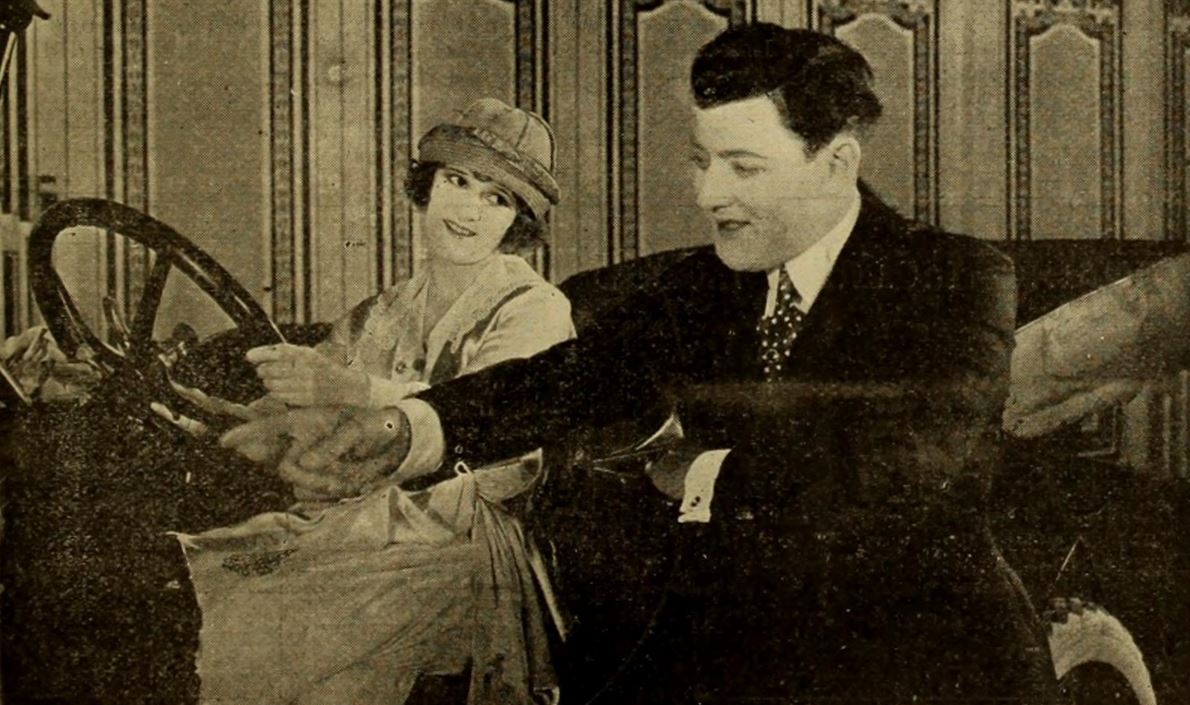
The cinematic landscape of the early 20th century, often characterized by its burgeoning narrative forms and experimental storytelling, occasionally offered gems that, despite their age, resonate with timeless themes. Among these is The Love Swindle, a film whose very title promises an intriguing dance between affection and artifice. From its opening frames, we are plunged into a world where social standing dictates more than just one's address; it shapes destiny, fosters prejudice, and ultimately, ignites a desperate, elaborate deception. This isn't merely a romantic comedy of errors; it's a profound, if somewhat melodramatic, exploration of identity, class struggle, and the lengths to which an individual will go to secure genuine connection in a society obsessed with superficial markers.
At its core, The Love Swindle, penned by Fred Myton and Rex Taylor, functions as a pointed social commentary, subtly critiquing the rigid class distinctions prevalent in its era. Diana Rosson, portrayed with a compelling blend of vulnerability and resolve, embodies the gilded cage of wealth. Her flight to the country, away from the clamor of insistent suitors like the guardian's choice, Trotwell, speaks volumes about the lack of autonomy afforded even to the privileged. Her fortune, rather than a blessing, becomes a barrier, attracting unwelcome attention and hindering authentic relationships. This initial setup immediately establishes the central conflict: how does one find true love when one's identity is inextricably linked to, and often overshadowed by, one's material possessions?
The fortuitous arrival of Dick Webster during a violent storm, interrupting a robbery, is a classic narrative contrivance, yet it serves a crucial purpose. Dick, a man of principle and, crucially, an ingrained animosity towards the wealthy, becomes Diana's unlikely savior. This initial encounter is pregnant with dramatic irony; the very wealth Diana seeks to escape is what inadvertently brings her rescuer, a man who despises that very same opulence. The burgeoning friendship between them is thus immediately fraught with an inherent tension, a ticking clock on the inevitable revelation of Diana's true station. Similar explorations of social dissonance and unexpected connections can be observed in films like The Bronze Bride, which also delves into the complexities of love transcending societal expectations, albeit through different cultural lenses.
The ensemble cast, featuring Emanuel A. Turner, Leo White, Clarissa Selwynne, Edith Roberts, Reggie Morris, and F.A. Turner, navigates this intricate plot with the characteristic expressiveness of the silent era. Edith Roberts, likely embodying Diana Rosson, must convey the emotional spectrum of a woman trapped by her circumstances, then empowered by her own cunning, and finally, humbled by exposure. Her transformation from the besieged heiress to the demure 'twin sister' requires a nuanced performance, relying heavily on subtle shifts in posture, gaze, and gesture to differentiate the two personas. This duality is the linchpin of the film's emotional impact, and the success of the 'swindle' hinges entirely on the audience's belief in her ability to inhabit two distinct identities.
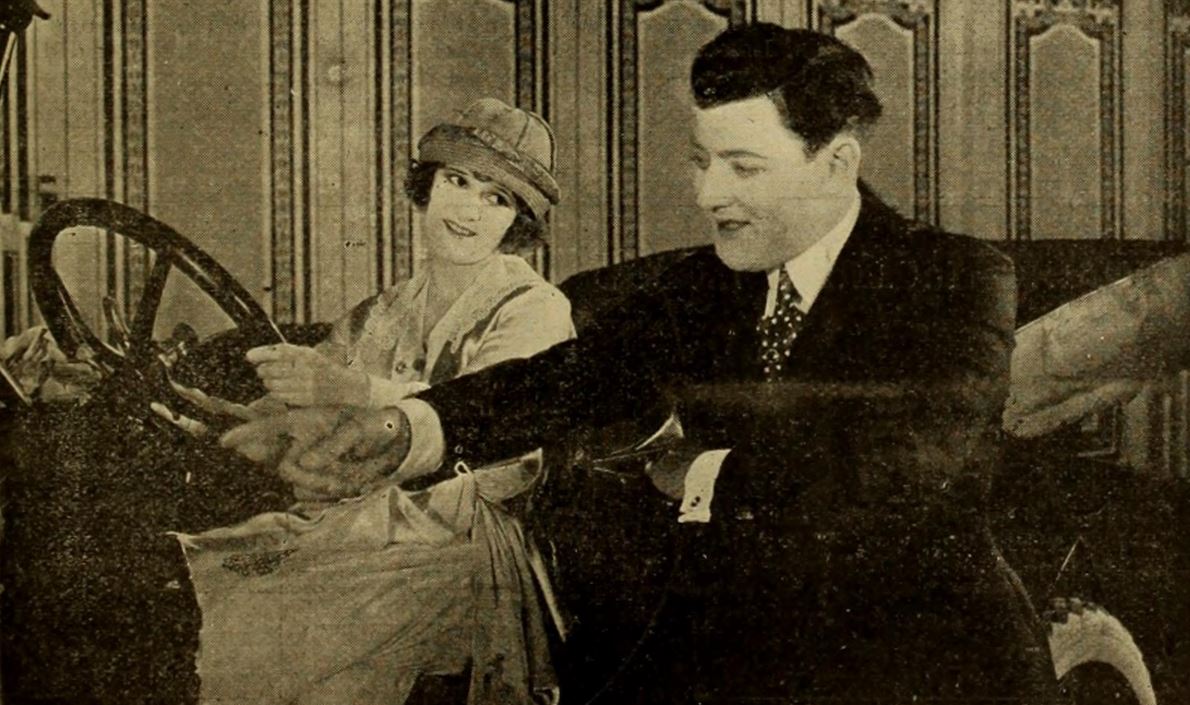
Emanuel A. Turner, presumably portraying Dick Webster, faces the challenge of depicting a man whose prejudices are deeply ingrained yet whose heart is ultimately open to genuine affection. His initial aversion to the rich must be palpable, making his eventual falling in love with the 'sister' a convincing, rather than contrived, development. The dramatic arc demands that he be both a man of strong convictions and one capable of profound emotional growth, a journey that climaxes in his forgiveness of Diana's deception. The performances, while adhering to the broader strokes of silent film acting, collectively build the emotional credibility necessary for the audience to invest in such a high-stakes romantic gamble.
The narrative construction of The Love Swindle is a masterclass in building tension through sustained deception. Diana's ingenious plan to invent a twin sister who 'insists on earning her own living' is not just a clever plot device; it's a symbolic act of shedding her gilded skin. By creating an alter ego untainted by wealth, she constructs a bridge to Dick's heart, bypassing the very obstacle that separates them. This narrative strategy, while perhaps a bit fantastical, speaks to the profound desire for acceptance for one's true self, or at least a self unburdened by external judgments. It forces the audience to consider: is the deception itself a form of love, or merely a means to an end?
The film cleverly employs dramatic irony, a cornerstone of effective storytelling, as Dick falls deeply in love with the 'demure young woman,' blissfully unaware that she is the very heiress he disdains. This creates a compelling dynamic, where the audience is privy to a secret that the protagonist is not, heightening the emotional stakes. The marriage, born of this elaborate masquerade, is a precarious triumph, constantly threatening to unravel. The tension isn't just about whether they will fall in love, but whether the truth, when inevitably revealed, will shatter their fragile bond beyond repair. This kind of identity-based romantic entanglement can be seen in other films of the era, though perhaps less dramatically executed, reflecting a common fascination with hidden identities and social barriers.
The climax of the film, triggered by Horace Sciven's false accusation of violin theft, serves as the catalyst for Diana's forced unmasking. This moment, where she is taken to the police station and her husband discovers her true identity, is the narrative's emotional fulcrum. It is here that the film's central question is answered: can love forged in deception survive the harsh light of truth? Dick's initial shock and probable feelings of betrayal are entirely understandable. He has been swindled, not of money, but of an honest relationship. Yet, the film's resolution hinges on a crucial emotional leap: his realization that her deception was born not of malice or greed, but of a profound and desperate love for him.
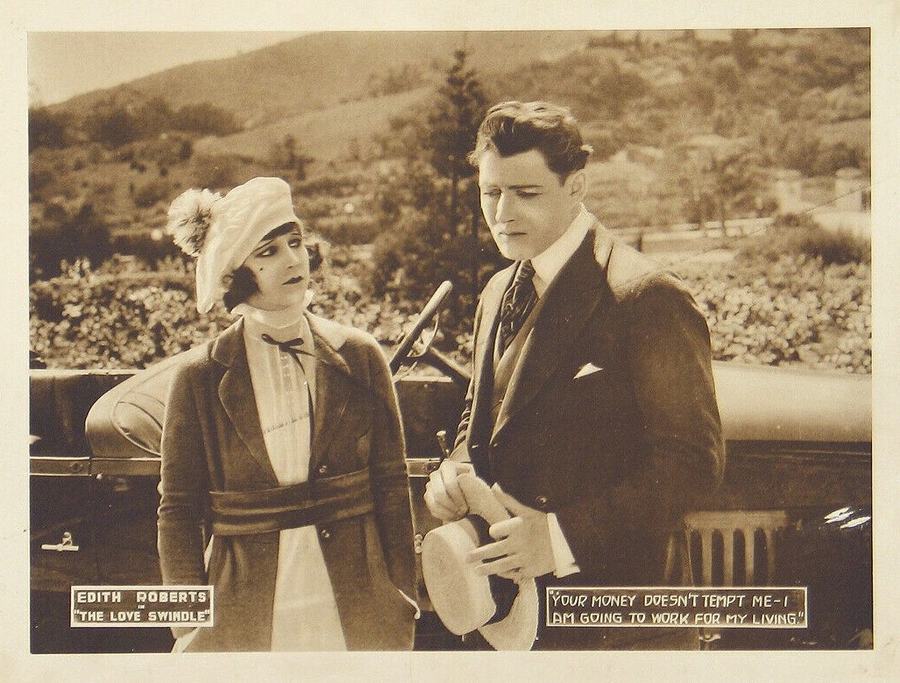
This act of forgiveness is perhaps the most significant thematic statement of the film. It suggests that true love transcends societal prejudices, even those deeply held, and can even overcome the sting of betrayal when the underlying motivation is pure. It argues that the 'swindle' was, paradoxically, a testament to the depth of Diana's feelings, a desperate measure to secure a love that would otherwise be inaccessible. In this way, The Love Swindle, despite its potentially problematic premise of deception, ultimately champions the idea that love, in its most earnest form, can melt away even the most entrenched biases and forgive the most elaborate of deceptions. This resolution, while perhaps idealistic, offers a satisfying emotional catharsis that speaks to the era's romantic sensibilities.
Placed within the broader context of early cinema, The Love Swindle exemplifies the nascent power of film to explore complex human emotions and societal structures. While it may lack the epic scope of a The Eagle or the stark realism found in some European productions of the period, its focus on intimate human drama, albeit heightened, allowed for a direct engagement with audience sympathies. The film's reliance on clear visual storytelling, typical of the silent era, would have made its intricate plot easily digestible for contemporary viewers, despite the absence of spoken dialogue.
The themes explored – class differences, the pursuit of genuine love against societal odds, and the morality of deception for a 'greater good' – remain perennially relevant. These are not unique to The Love Swindle; indeed, many films, from Across the Pacific with its wartime deceptions to The Woman of Mystery focusing on hidden identities, touch upon similar narrative devices. However, The Love Swindle distills these elements into a focused romantic drama, making it a compelling artifact of its time. Its enduring appeal lies not just in its dramatic twists, but in its exploration of the human heart's capacity for both intricate planning and profound forgiveness.
Ultimately, The Love Swindle stands as a fascinating example of early cinematic romance, skillfully blending melodrama with social commentary. It asks provocative questions about the nature of identity, the superficiality of wealth, and the transformative power of love. While the premise of a 'twin sister' might seem quaint by modern standards, the underlying emotional truth of Diana's desperate gambit resonates. It is a story that, through its intricate dance of truth and illusion, reminds us that the path to genuine connection is often fraught with unexpected turns, and that sometimes, the greatest acts of love require the most audacious deceptions. The film, through its exploration of these complex dynamics, continues to offer insights into the enduring human quest for acceptance and profound affection, making it more than just a historical curiosity but a narrative that still speaks volumes about the intricate tapestry of human relationships. The intricate plotting and character motivations, while perhaps simplified by the constraints of silent film, lay bare universal desires that transcend the specific historical context, proving that even a 'swindle' can lead to a deeper understanding of love's true essence. The film, in its quiet way, challenges us to look beyond the surface, to question the judgments we make based on external appearances, and to consider the often-unseen forces that drive individuals to extraordinary lengths in the name of love. It’s a testament to the power of narrative, even in its nascent form, to explore the deep complexities of the human condition and the often-paradoxical routes we take to find belonging and connection. The film's resolution, emphasizing forgiveness and understanding over retribution, provides a poignant message that continues to resonate, suggesting that true affection can indeed overcome the most elaborate of deceptions, proving resilient against the harsh realities of exposed truths.
Discover more about The Love Swindle
IMDb 5.2
1928
Community
Log in to comment.