DbcultAccessing Vault...
Cult Review
Senior Film Conservator
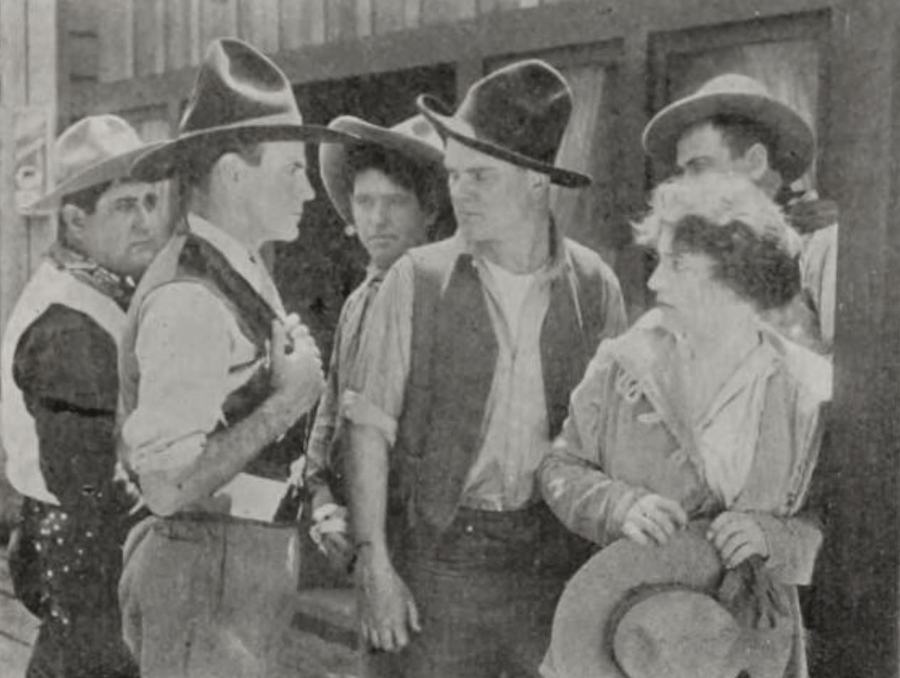
In the annals of early American cinema, certain films stand as foundational pillars, not merely for their technical innovation but for their enduring exploration of universal human dilemmas. Among these, the 1917 production of Whispering Smith carves out a significant, if often understated, niche. More than just a simple Western, it's a profound character study wrapped in the rugged aesthetics of the frontier, a narrative that deftly navigates the treacherous waters of justice, personal sacrifice, and unrequited love. It's a testament to the era's storytelling prowess, presenting a protagonist whose moral compass, while unwavering, is constantly tested by the complexities of human relationships and the dark underbelly of a rapidly industrializing West.
At its heart, Whispering Smith introduces us to a character who is less a man and more an embodiment of a certain frontier idealism. Smith, portrayed with a quiet intensity that belies his inner turmoil, is the quintessential strong, silent type. His 'whispering' moniker hints not at timidity, but at a measured, deliberate approach to justice, a man whose actions speak louder than any boastful pronouncements. He is defined by an instinctive understanding of right and wrong, an unwavering commitment to seeing justice served and crime rectified. This isn't the boisterous, gun-slinging bravado often associated with Western heroes; rather, it’s a more introspective, almost philosophical rectitude. He doesn't seek confrontation but confronts injustice with an unshakeable resolve. This portrayal offers a fascinating counterpoint to more overtly aggressive Western protagonists of the era, suggesting a nascent sophistication in character development that would evolve in later decades.
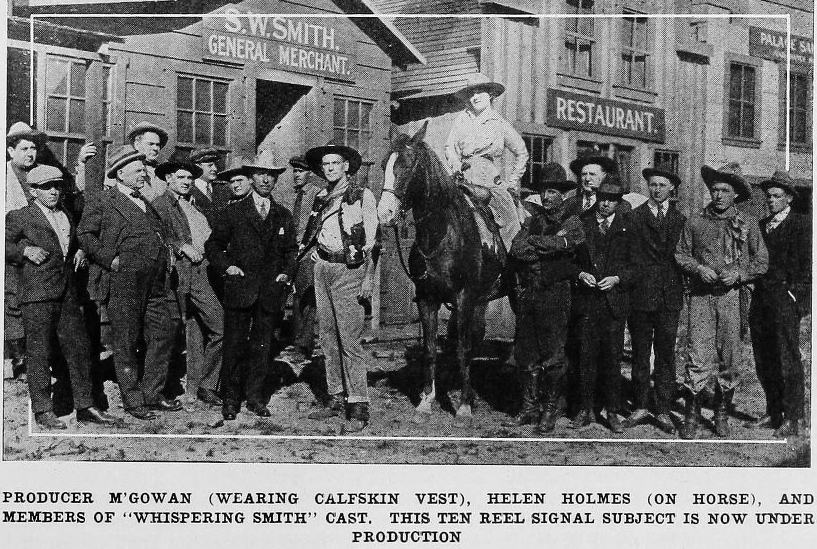
Yet, beneath this stoic exterior beats a heart capable of profound, if unarticulated, affection. Smith's love for Marion is the tender undercurrent that complicates his otherwise clear-cut moral universe. It's a love that renders him vulnerable, transforming the fearless lawman into a bashful suitor, a dichotomy that immediately humanizes him. This internal struggle, between his professional duty and his personal emotional landscape, forms the central dramatic tension of the film. It's an early example of how the Western genre, often perceived as simplistic, could delve into nuanced psychological territory. His character resonates with the audience because he is not merely an agent of the law, but a man grappling with the very human cost of his convictions. The film masterfully employs this tension, allowing Smith's principles to be tested not by external threats alone, but by the aching tenderness of his own heart, making him a figure far more compelling than a mere archetype.
Contrasting sharply with Smith's integrity is Sinclair, a character painted in shades of charming villainy. He is the dashing rogue, outwardly charismatic enough to win Marion's hand, yet inwardly a vortex of unscrupulous ambition and vindictive tendencies. His marriage to Marion quickly devolves into a crucible of unhappiness, a stark illustration of how superficial allure can mask a deeply corrosive nature. Marion's plight is particularly poignant; she is trapped in a union that slowly extinguishes her spirit, a victim of Sinclair's harsh and controlling demeanor. Her narrative thread highlights the precarious position of women in this rugged frontier society, often at the mercy of their partners' dispositions, a theme also subtly explored in dramas like A Mother's Confession, albeit in a different social context.
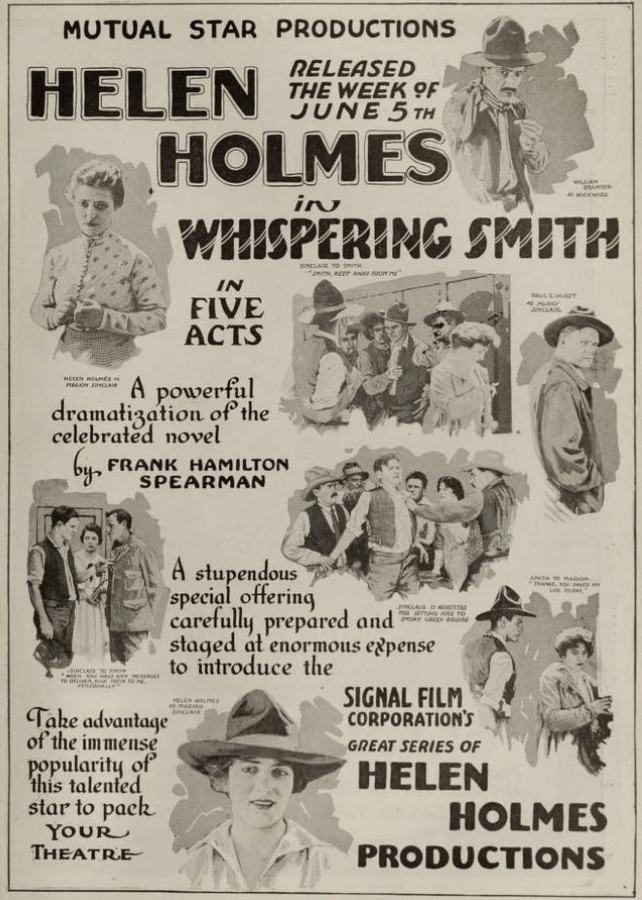
The setting of "Medicine Bend" itself becomes a character, a typical Western railroad and mining town nestled at the foot of a treacherous declivity. This geographical feature is not merely backdrop but an active participant in the unfolding drama, notorious for the frequent freight train wrecks that plague the transcontinental railroad. These accidents, however, are not random acts of nature but meticulously orchestrated events, cover for a sophisticated network of robberies. Sinclair, as the foreman of the wrecking crew, is perfectly positioned to be the mastermind behind these depredations. The film builds a palpable sense of unease around these incidents, creating an atmosphere of pervasive crime that Smith must penetrate. This portrayal of a corrupted infrastructure, where those entrusted with safety are instead orchestrating its downfall, adds a layer of social commentary that elevates the film beyond a simple good-versus-evil narrative. It hints at larger systems of corruption, a theme that resonates with other early crime thrillers like The $5,000,000 Counterfeiting Plot, where intricate criminal enterprises challenge the established order.
Smith’s arrival in Medicine Bend marks the beginning of a relentless pursuit, not just of criminals, but of a resolution that honors both justice and his profound sense of empathy. His swift discovery of Sinclair’s involvement in the train robberies places him in an agonizing predicament. To expose Sinclair means to publicly disgrace Marion, the woman he still loves. This moral quandary is where the film truly shines, transforming a straightforward detective story into a poignant drama of personal sacrifice. Smith chooses to protect Marion from the public shame, orchestrating Sinclair’s dismissal rather than his arrest. This act of quiet mercy, born from a deep, unspoken love, is a powerful demonstration of Smith’s character. It’s a moment that challenges the conventional wisdom of justice, suggesting that true rectitude sometimes demands a more nuanced approach than mere retribution. This complexity in moral decision-making sets Whispering Smith apart, imbuing it with a psychological depth that was perhaps ahead of its time.
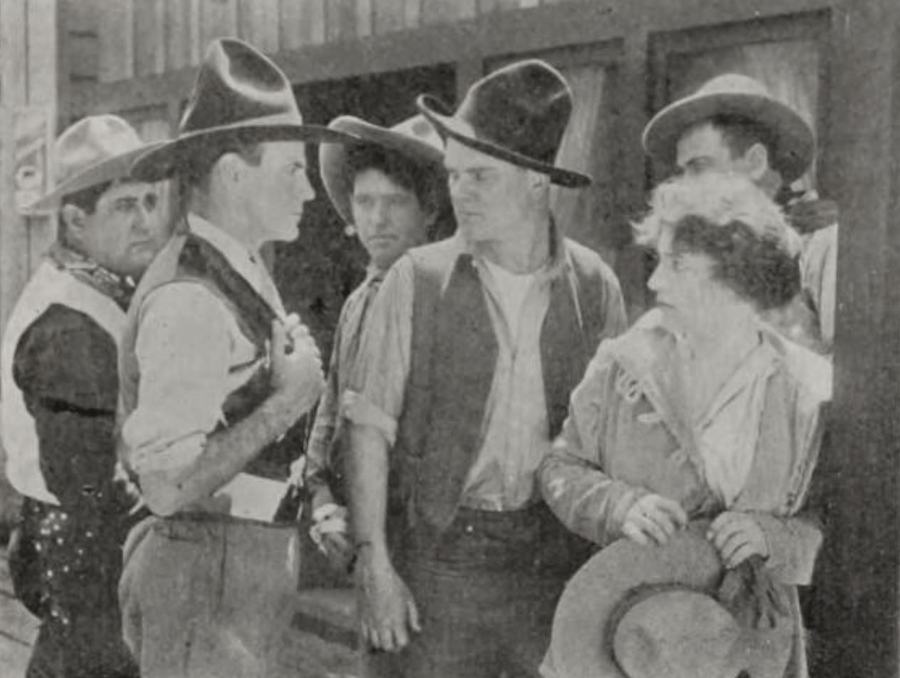
Marion's subsequent departure from Sinclair, a desperate bid for self-preservation, unleashes the full extent of Sinclair's vindictive nature. His act of burning the "Smoky Creek" trestle is not merely an act of revenge against the railroad but a furious lashing out at the world that has stripped him of his wife and his position. This catastrophic event forces Smith to confront Sinclair directly, yet again, his love for Marion intervenes. The film’s climax is not a violent shootout, but a profound act of reconciliation, brokered by the very man who has every right to seek retribution. Smith, in a truly remarkable display of compassion, engineers a reunion between Sinclair and Marion, extracting a promise of a reformed life and an exodus from Medicine Bend. He allows them to leave, a decision that speaks volumes about his character – a man who prioritizes the well-being and potential redemption of others, even at the cost of his own desires. This narrative choice, prioritizing mercy and the hope of rehabilitation over strict punitive justice, offers a refreshingly humanistic perspective that distinguishes it from many contemporary narratives of crime and punishment, such as the more direct retribution seen in serials like Judex.
Frank H. Spearman's original story, brought to the screen, embodies a certain gritty realism characteristic of early 20th-century American narratives, particularly those set against the backdrop of industrial expansion and the fading frontier. The depiction of railroad operations, the dangers of mountain passes, and the pervasive threat of organized crime lend an authenticity to the film that would have resonated strongly with audiences of the time. While specific directorial flourishes might be lost to the mists of time or the limitations of extant prints, the narrative structure itself suggests a deliberate attempt to build suspense and character depth. The performances, led by Walter Rodgers as Smith and Belle Hutchinson as Marion, likely relied on the broad, expressive gestures common in silent film, yet the emotional core of their characters shines through the plot summary alone.
Comparing Whispering Smith to its contemporaries, one can see its place within a burgeoning cinematic landscape. Films like The Regeneration (1915) similarly explored themes of crime, societal pressures, and the potential for redemption, albeit in an urban setting. Both films delve into the moral ambiguities faced by individuals caught in challenging circumstances, striving for a better life or upholding a personal code. The Western genre itself was evolving rapidly, moving beyond simple adventure tales to incorporate more complex human dramas. While Pierre of the Plains (1914) offered another glimpse into frontier life, Whispering Smith distinguishes itself through its focus on the internal conflict of its hero and the profound moral choices he makes. The film's emphasis on a character's ethical integrity, even when it conflicts with personal desires, sets a precedent for many future Western heroes who would embody a similar blend of strength and introspection.
The enduring appeal of Whispering Smith lies in its timeless narrative of moral rectitude clashing with human frailty, and the redemptive power of compassion. It demonstrates that even in the harsh realities of the frontier, where law and order were often brutally enforced, there was room for mercy and the hope of rehabilitation. The film's resolution, where Smith allows Sinclair and Marion to depart, is a surprisingly nuanced and emotionally resonant conclusion for a film of its era, eschewing the simpler satisfaction of pure vengeance for the more complex grace of forgiveness. This choice elevates the film beyond a mere genre piece, imbuing it with a universal message about the human capacity for empathy and the intricate dance between justice and forgiveness.
In an age where cinematic storytelling was still finding its voice, Whispering Smith managed to weave together elements of a thrilling crime drama, a poignant romance, and a profound moral fable. It's a reminder that the early days of Hollywood were not just about spectacle, but also about the thoughtful exploration of character and theme. Its influence, though perhaps not as overtly celebrated as some blockbusters of its time, lies in its contribution to the evolving sophistication of the Western genre and its portrayal of a hero whose strength derived not just from physical prowess, but from an almost spiritual integrity. This film, therefore, remains a fascinating artifact, a window into the narrative sensibilities of a bygone era, yet one whose core message of justice tempered by love continues to resonate with contemporary audiences. It's a foundational piece that helps us understand the trajectory of American cinema, showcasing how early filmmakers were already grappling with complex human emotions and moral dilemmas within popular genre frameworks.
IMDb 5.7
1929
Community
Log in to comment.