DbcultAccessing Vault...
Cult Review
Senior Film Conservator
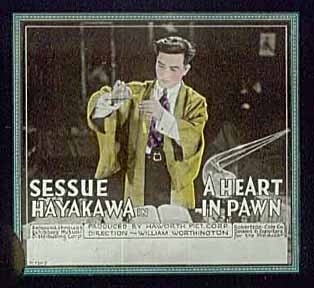
In the shimmering, often melancholic tapestry of silent cinema, certain films emerge not merely as historical artifacts but as resonant echoes of human experience, capable of stirring the soul across the chasm of a century. Among these poignant testaments to early filmmaking's power, "A Heart in Pawn" stands as a particularly devastating and intricately woven tragedy. It is a narrative that refuses easy categorization, a grand melodrama imbued with the gravitas of a Greek epic, featuring characters ensnared by the inexorable currents of fate and the profound, often ruinous, cost of devotion. This is not simply a tale; it is a profound rumination on sacrifice, deception, and the relentless grip of destiny, all brought to vivid, wordless life by a cast whose expressive prowess transcends the absence of audible dialogue.
At its core, "A Heart in Pawn" unfurls the harrowing odyssey of Sada, portrayed with heartbreaking vulnerability. Her husband, Toyama, a man driven by intellectual ambition, dreams of furthering his medical studies in America. The financial chasm between his aspirations and their reality is vast, yet Sada, with a love that borders on the absolute, resolves to bridge it. Her method, however, casts a long shadow: she secretly embraces the demanding and often perilous life of a geisha, a profession laden with societal judgment, all while maintaining the facade that the funds originate from a deceased grandfather's inheritance. This initial act of profound self-sacrifice and elaborate deception sets the stage for a cascade of tragic events, a testament to the film's unflinching exploration of how even the noblest intentions can pave a path to ruin.
Toyama, oblivious to the true source of his funding, embarks on his American journey, finding a mentor in Dr. Stone, a specialist in the complex and then-nascent field of hereditary vices. The irony is palpable, a cruel foreshadowing of the personal demons Toyama himself will soon confront. His academic pursuits become a stark counterpoint to the escalating peril Sada faces back in Japan. When Sada is unjustly implicated and condemned for the murder of a prominent banker—a self-defensive act against his aggression—the news shatters Toyama's world. This devastating revelation triggers a profound psychological collapse, unleashing his own latent, inherited propensity for alcoholism, a vice that threatens to consume him entirely. The film here, much like The Stain in the Blood, delves into the insidious nature of inherited traits, portraying them not as mere plot devices but as integral components of character destiny.
Dr. Stone, a figure of both scientific rigor and humanitarian compassion, intervenes, pulling Toyama back from the brink of self-destruction. Yet, even as Toyama begins his slow recovery, the threads of fate continue to twist with merciless precision. Unbeknownst to him, Sada's death sentence is commuted to life imprisonment, a reprieve granted only after she gives birth to their daughter. The narrative then introduces another layer of poignant complexity: Toyama, bound by a dying Dr. Stone's request, marries Emily, the doctor's half-Japanese daughter. This union, born of duty and grief, creates a new, fragile family unit, built upon a foundation of unspoken truths and the echoes of a past Toyama believes to be irrevocably lost.
The story's climax unfolds years later, back in Japan, where Toyama, now a respected lecturer, finds himself addressing women prisoners. The sheer force of dramatic irony is almost unbearable as he encounters Sada among the incarcerated faces. The ensuing recognition is a moment of profound, wordless agony, shattering the carefully constructed edifice of his new life. The subsequent revelation that the child he and Emily adopted is, in fact, his own daughter, born of Sada's suffering, is a devastating blow that propels the narrative towards its tragic denouement. Sada's desperate escape, her reunion with Toyama, and his agonizing decision to commit harakiri are moments of intense, unbearable tension. The final, heart-wrenching act of Sada drowning herself to spare Toyama from the approaching prison guards is a testament to a love so absolute it transcends life itself, echoing the profound sacrifices seen in films like The Woman Who Gave, but with an even darker, more fatalistic conclusion.
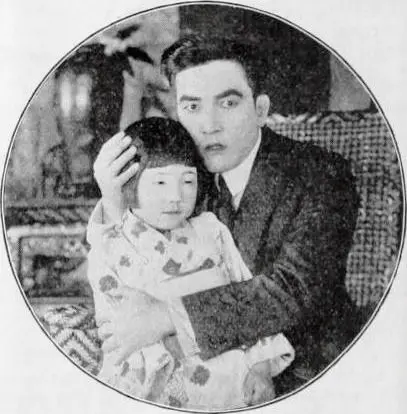
The emotional weight of "A Heart in Pawn" rests squarely on the shoulders of its principal cast, whose mastery of silent acting is nothing short of extraordinary. Sessue Hayakawa, a titan of early Hollywood, delivers a performance as Toyama that is a masterclass in nuanced emotional expression. His portrayal navigates the treacherous waters of ambition, despair, redemption, and ultimately, utter hopelessness with a magnetic intensity. Hayakawa's ability to convey Toyama's internal turmoil – his initial idealism, the crushing blow of Sada's fate, his descent into alcoholism, and his final, agonizing decision – without uttering a single word, is a testament to his unique screen presence. He imbues Toyama with a dignity that makes his suffering all the more potent, making him a character whose tragic arc resonates long after the credits roll.
While the specific roles are not explicitly detailed in the plot outline, it is widely understood that Tsuru Aoki, Hayakawa's real-life wife and frequent on-screen collaborator, likely embodies the role of Sada. If so, her performance would undoubtedly be the film's beating heart. Aoki possessed a remarkable ability to convey profound emotion through subtle gestures and piercing gazes, making her an ideal choice for a character whose life is defined by quiet sacrifice and immense suffering. Her portrayal of Sada, from the initial, hopeful deception to the crushing weight of imprisonment and the final, desperate act of self-annihilation, would be etched with an unforgettable blend of strength and vulnerability. Her silent screams and tears would be felt rather than heard, making the audience complicit in her agony.
Florence Vidor, a luminous presence in silent film, would bring a delicate complexity to the role of Emily, Dr. Stone's daughter. Her character is not merely a plot device but a woman caught in the tragic wake of Toyama's past. Vidor's elegance and understated acting style would beautifully convey Emily's compassion, her unwitting role in the deception, and her eventual heartbreak upon discovering the truth. The subtle nuances of her performance would ensure that Emily is seen not as an antagonist, but as another victim of the intertwined fates. Vola Vale, another notable actress of the era, would undoubtedly contribute to the film's emotional depth, likely in a crucial supporting role that further complicates the narrative, perhaps as a catalyst for Sada's arrest or a confidante, adding layers to the intricate web of relationships.
"A Heart in Pawn" excavates profound themes that remain startlingly relevant. The central motif of sacrifice, particularly Sada's willingness to endure personal degradation for her husband's future, is explored with a raw, almost brutal honesty. It challenges the conventional romantic ideal of sacrifice by showing its devastating, unintended consequences. The film also delves into the complex interplay between individual agency and the inescapable forces of destiny and hereditary predisposition. Toyama's inherited tendency towards alcoholism is not a moral failing but a tragic flaw that, once activated by external trauma, proves almost impossible to overcome. This aspect aligns with the fatalistic undertones found in narratives like The Gates of Doom, where characters often find themselves trapped by circumstances beyond their control.
Furthermore, the film subtly touches upon cultural identity and the clash between Japanese tradition and American modernity. Toyama's journey to America symbolizes a yearning for progress, yet his return to Japan brings him face-to-face with the unyielding traditions and societal expectations that ultimately dictate his and Sada's fate. The geisha profession itself, viewed through Western eyes, carries a different connotation than its complex reality in Japanese culture, adding another layer of nuance to Sada's sacrifice. The film, in its portrayal of these cultural intersections, offers a glimpse into the evolving global perspectives of the early 20th century, a period of immense change and cultural exchange.
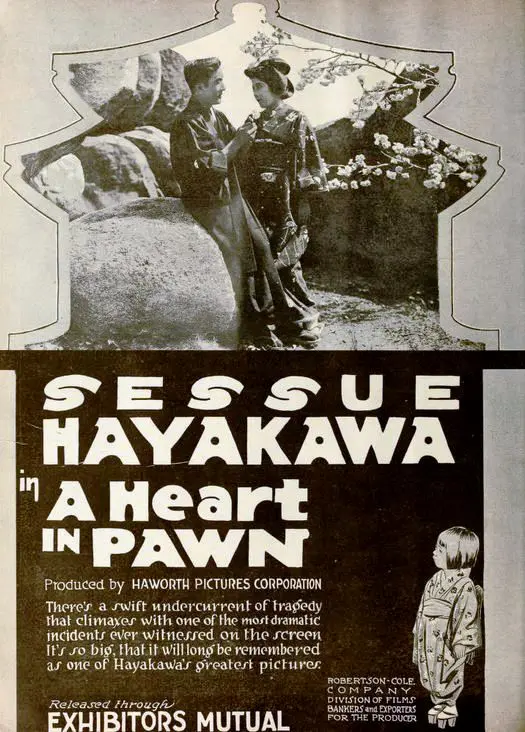
The screenplay, crafted by Frances Guihan and Thomas J. Geraghty, is a marvel of intricate plotting and escalating dramatic tension. To weave such a complex narrative, replete with hidden identities, tragic reversals, and profound emotional arcs, within the constraints of silent film storytelling, speaks volumes about their skill. The pacing is deliberate, allowing the audience to fully absorb each emotional blow, each twist of fate. The use of intertitles, while necessary, is judicious, allowing the powerful visual storytelling to carry the bulk of the narrative weight. The direction, whoever helmed this powerful feature, demonstrates a keen understanding of how to maximize the impact of visual metaphors and the subtle language of the body, creating an immersive experience despite the lack of spoken dialogue. The film's ability to maintain suspense and emotional investment across its runtime is a testament to the seamless collaboration between writers and director.
The visual language of silent cinema, often underestimated today, is employed here with great effect. Sets, costumes, and lighting all contribute to the film's atmosphere, transitioning from the traditional aesthetics of Japan to the more modern, clinical environments of American academia and then back to the somber confines of a Japanese prison. The contrast in settings amplifies the characters' journeys, visually underscoring their internal and external transformations. The cinematography, a critical component of silent film's communicative power, would have been tasked with capturing the raw emotion on the actors' faces, the subtle shifts in their expressions that convey entire paragraphs of feeling. This meticulous attention to visual detail is what elevates "A Heart in Pawn" beyond mere melodrama into the realm of profound cinematic art.
"A Heart in Pawn" is more than a historical curiosity; it is a potent example of silent cinema's ability to explore the deepest recesses of the human heart. Its narrative, while steeped in the melodramatic conventions of its era, transcends them through its genuine emotional intensity and the exceptional performances of its cast. The film’s unflinching portrayal of sacrifice, deceit, and the crushing weight of destiny resonates with a timeless quality, reminding us that the human condition, with its triumphs and its tragedies, remains eternally compelling.
For aficionados of silent film, and indeed for anyone interested in the evolution of cinematic storytelling, "A Heart in Pawn" offers a rich, albeit heartbreaking, experience. It stands as a testament to the power of visual narrative, the eloquence of unvoiced emotion, and the enduring artistry of talents like Sessue Hayakawa and Tsuru Aoki. In its final, devastating moments, the film doesn't offer catharsis but rather a lingering sense of the profound and often cruel ironies of life, solidifying its place as a significant, albeit sorrowful, contribution to the cinematic canon. It challenges viewers to confront the difficult questions of love's ultimate price and the inescapable hand of fate, leaving an indelible mark on the soul long after the final fade to black. Much like the profound emotional impact of The End of the Road or the intricate moral dilemmas of The Forbidden Room, "A Heart in Pawn" forces us to reflect on the complexities of human choices and their often-unforeseen consequences.
In an era dominated by technological spectacle, returning to a film like "A Heart in Pawn" is a refreshing, yet challenging, exercise. It strips away the auditory distractions, compelling us to engage with the raw essence of performance and narrative. The film's enduring power lies in its ability to communicate universal human experiences – love, loss, betrayal, and redemption – through the universal language of emotion. It serves as a powerful reminder that true cinematic artistry transcends the limitations of its medium, speaking directly to the heart with an eloquence that requires no words. The film's very title, "A Heart in Pawn," encapsulates its tragic essence: a soul pledged to a destiny far beyond its control, ultimately yielding to the relentless demands of a cruel fate.
IMDb 6.1
1935
Community
Log in to comment.