DbcultAccessing Vault...
4/10
Senior Film Conservator
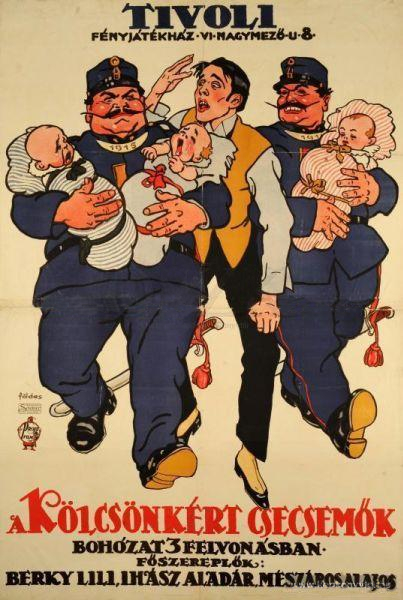
A definitive 4/10 rating for a film that redefined the boundaries of cult cinema. A kölcsönkért csecsemök remains a cornerstone of transgressive art.
The year 1914 remains a cornerstone in the annals of global cinematography, a period where the medium shed its swaddling clothes and embraced the complexities of long-form narrative. Amidst the seismic shifts occurring in the American and European markets, the Transylvanian city of Kolozsvár emerged as an unexpected epicenter of creative ferment under the stewardship of Jenő Janovics. His production of A kölcsönkért csecsemők (The Borrowed Babies) stands as a testament to this localized Hollywood, offering a vibrant, albeit chaotic, exploration of domesticity and deception. Unlike the grim social realism found in contemporary works like Traffic in Souls, Janovics’ film leans into the rhythmic absurdity of the stage, successfully translating Margaret Mayo’s theatrical DNA into a visual language that feels remarkably modern in its pacing.
To understand the brilliance of A kölcsönkért csecsemők, one must first acknowledge the gravitational pull of Janovics himself. A man of the theater who recognized the burgeoning power of the lens, Janovics infused his productions with a sense of structural integrity that many early silents lacked. While films like Hamlet, Prince of Denmark sought to capture the high-minded gravity of Shakespeare, Janovics understood that the camera was equally adept at capturing the kinetic energy of a well-timed lie. The plot, a dizzying carousel of infant substitution, requires a level of directorial precision that borders on the choreographic. Every entrance and exit, every frantic look to the camera by Lili Berky, serves to tighten the narrative noose around the protagonist’s neck.
The film’s reliance on the 'borrowed baby' trope might seem quaint by contemporary standards, yet in 1914, it functioned as a sharp-edged tool for dissecting the social pressures of the era. The protagonist, Zoie, is not merely a liar; she is a woman navigating a world where her value is inextricably linked to her reproductive capabilities. When she fails to meet these expectations, she resorts to a radical form of performance art—borrowing a child to satisfy the patriarchal gaze of her husband. This thematic depth elevates the film beyond the mere slapstick seen in A Regiment of Two, positioning it as a precursor to the screwball comedies that would dominate the 1930s.
At the heart of this storm is Lili Berky, whose performance is a masterclass in silent screen acting. In an era where many performers were still tethered to the broad, histrionic gestures of the 19th-century stage, Berky displays a surprising amount of nuance. Her face is a map of shifting anxieties, moving from smug self-satisfaction to abject terror with a fluidity that anchors the film’s more outlandish moments. She possesses a charisma that rivals the stars of The Goddess or Mistress Nell, yet she retains a distinctly Hungarian sensibility—a mixture of melancholy and wit that defines the national cinema of the period.
The supporting cast, featuring stalwarts like Bertalan Pálfy and the other Berky family members, creates a robust ensemble that prevents the film from becoming a mere star vehicle. The chemistry between the 'conspirators'—those tasked with procuring the infants—is particularly noteworthy. Their interactions provide a rhythmic counterpoint to the central marital drama, creating a layered comedic experience. It is this ensemble strength that allows A kölcsönkért csecsemők to maintain its momentum even when the logic of the plot begins to fray under the weight of its own absurdity.
Technically, the film reflects the limitations and the ingenuity of its time. The cinematography, while largely static in its framing, utilizes the depth of field within the domestic interiors to create a sense of claustrophobia. As the number of babies increases, the rooms seem to shrink, mirroring Zoie’s encroaching panic. This visual storytelling is far more sophisticated than the work seen in Beulah or ‘Neath Austral Skies, suggesting that Janovics and his crew were closely monitoring the stylistic evolutions occurring in larger film hubs.
One cannot discuss this film without acknowledging its place in the broader tapestry of 1914 cinema. While the world was on the brink of a catastrophic conflict that would eventually dismantle the Austro-Hungarian Empire, A kölcsönkért csecsemők represents the final, exuberant flourish of a culture that was about to change forever. It shares a certain thematic restlessness with films like Amalia or Satana, reflecting a global fascination with identity and the masks we wear in polite society. However, Janovics chooses laughter over tragedy, a decision that makes the film’s survival all the more precious.
When placed alongside Spartacus or the grandiosity of The New Adventures of J. Rufus Wallingford, Janovics’ work might seem modest in scale. Yet, its impact lies in its intimacy. It does not seek to depict the fall of empires or the rise of legends; instead, it focuses on the microscopic explosions of a failing marriage. This focus on the domestic sphere aligns it with A Gentleman from Mississippi, though Janovics’ touch is lighter, more satirical. Even when compared to the procedural tension of C.O.D., this Hungarian gem holds its own by prioritizing character-driven humor over plot-driven suspense.
The film’s use of the 'borrowed' baby as a plot device also invites comparison to the moralistic tales of the era, such as Imar the Servitor. Where other films might have punished the protagonist for her deception, Janovics leans into the absurdity, suggesting that in a world governed by rigid social norms, a little deception might be the only way to survive. This subversive undercurrent is what keeps the film relevant over a century later. It is not just a relic; it is a living piece of comedy that understands the fundamental human desire to be seen as more than we are.
Viewing A kölcsönkért csecsemők today is an exercise in archaeological joy. We see the roots of the modern sitcom, the early glimmers of cinematic stardom, and the technical prowess of a studio that was once the envy of Eastern Europe. The film avoids the pitfalls of its contemporaries—such as the often-aimless wandering of On the Trail of the Spider Gang—by maintaining a laser-like focus on its central conceit. The 'borrowed' babies are not just props; they are the physical manifestations of Zoie’s lies, and as they multiply, so does the film’s brilliance.
In the grand scheme of 1914, a year that gave us so many foundational texts, A kölcsönkért csecsemők stands tall as a masterclass in tone and timing. It reminds us that cinema, even in its infancy, was capable of capturing the most complex of human follies with grace and humor. Jenő Janovics and his troupe of actors did not just make a movie; they captured a heartbeat of a culture on the edge of transformation. For any serious student of film history or lover of classic comedy, this is not merely a recommendation; it is an essential viewing experience that bridges the gap between the theatrical past and the cinematic future.
A landmark of the Kolozsvár studio, preserved for the ages.
IMDb —
1931
Community
Log in to comment.