DbcultAccessing Vault...
Cult Review
Senior Film Conservator
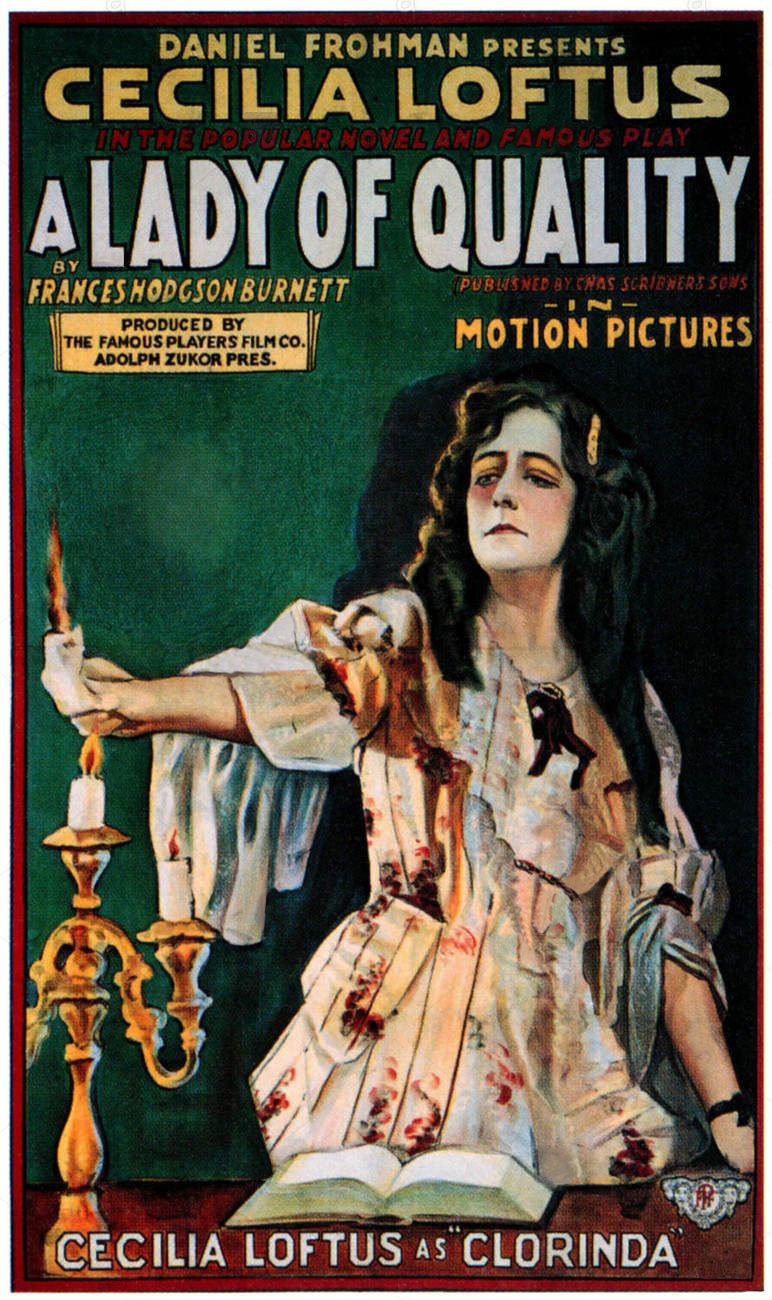
There are films you watch; then there are films that watch you—lids peeled back, unblinking, daring you to blink first. A Lady of Quality—released in the tremulous autumn of 1913—is one such basilisk. Shot when cinema still wore short trousers, it feels centuries older than its own negative, yet its pulse beats louder than most 4K restorations you’ll stream tonight.
Let’s dispense with nostalgia right away: this is no lace-doily curio to be cooed over between sips of chamomile. The picture crackles with the kind of gender pyrotechnics that would make contemporary Twitter implode into a singularity of hot takes. Imagine Oliver Twist cross-dressing as Hamlet while swigging brandy from Corbett’s boxing gloves—you’re halfway to the berserk majesty on display here.
The plot—plucked from Frances Hodgson Burnett’s florid penny dreadful—unfurls like a Jacobean stage play force-fed through a hand-cranked camera. We open on Sir Jeoffrey Wildair, a florid baronet whose hatred of women is matched only by his capacity for losing ancestral acres at dice. News arrives of yet another daughter; his response is to exile the infant to the pantry of obscurity. But the universe has a puckish sense of symmetry: six years later the girl hijacks his powder horn, brandishes it like Excalibur, and when reprimanded, flogs her sire with the nerve of a Cossack. Instead of apoplexy, paternal pride blooms—a perversion so casually monstrous it feels almost mythic.
From here director J. Searle Dawley—best remembered for piloting early Edison fantasias—lets the narrative gallop off the leash. Clorinda is re-costumed as a boy, inducted into a brotherhood of rakes who swill, swear, and wager away their souls. Cinematographer Carl Louis Gregory bathes these revels in chiaroscuro that anticipates German Expressionism by a full decade: candlelight carves gargoyle shadows onto tapestries, smoke coils like ectoplasm, and every frame seems exhumed from a fever dream.
The film’s boldest gambit is its refusal to treat Clorinda’s breeches as mere slapstick. Each stride in leather boots becomes a thesis on performative gender: she swings her hips with the swagger of a musketeer, yet the camera lingers on the tremor in her lower lip whenever the Duke of Osmonde—laconic, velvet-clad—enters the glade. Masculinity here is not biology but costume jewelry, easily clasped or unclasped according to the whim of the wearer. When she finally doffs trousers for silk bustles, the edit is not a capitulation but a calculated act of war: she weaponizes femininity the way a magician palms a coin.
Cecilia Loftus—music-hall chanteuse turned screen enigma—embodies this mercurial duality with a volatility that silents rarely achieve. Watch her pupils in the extreme close-up after she bests Oxon at foil: they dilate like ink dropped in water, triumph and terror braided into one. Because the film lacks intertitles for entire reels, Loftus must narrate subtext through clavicle, eyebrow, the twitch of a kid glove—she deserves comparison to Maria Falconetti, though history has misplaced her crown in a dusty props trunk.
If Clorinda is a comet, Oxon is the black hole—charming, ravenous, irredeemable. House Peters plays him with matinee-idol sheen cracked to reveal something septic underneath. His wager to “win” Clorinda’s heart is less courtship than colonization; when he pockets that raven curl he might as well be scalping her. Yet the film complicates our schadenfreude: in the London gaming hells he is as much prisoner as predator, shackled by peer pressure and paternal expectation. His eventual murder—bludgeoned by the same crop that once symbolized Clorinda’s liberation—plays like a ritual exorcism rather than triumph. The camera doesn’t relish his demise; it recoils, leaving us complicit in the hush that follows.
Every melodrama needs its still center, and Peter Lang provides it with minimalist grace. Osmonde says little—even in title cards—but his glances operate like tuning forks: when he looks at Clorinda the entire film modulates into a softer key. Notice the sequence where she descends the grand staircase in crinoline for the first time: the Duke’s pupils track her not as conquest but as constellation, an astral body he fears to sully. Their eventual union—delayed by marriage, widowhood, homicide—feels earned rather than inevitable, a rare feat in Victorian pulp.
Do not mistake a 1913 release date for tameness. The duel between Clorinda and Oxon is shot in torrential rain, blades flashing like Morse code; Dawley intercuts actual lightning from a Louisiana storm he’d stockpiled for another project. When the fatal whip-crack lands, the frame jitters—whether from camera mishap or deliberate jolt is unclear, but the result is a visceral shiver that presages the pugilistic brutality of later boxing actualities. Equally unsettling is the post-murder concealment: Clorinda dragging the body down stone steps, her candle guttering until the screen floods to inky nothing. We are miles away from the tidy morality of biblical pageants or pious tableaux; this is noir decades before the term calcified.
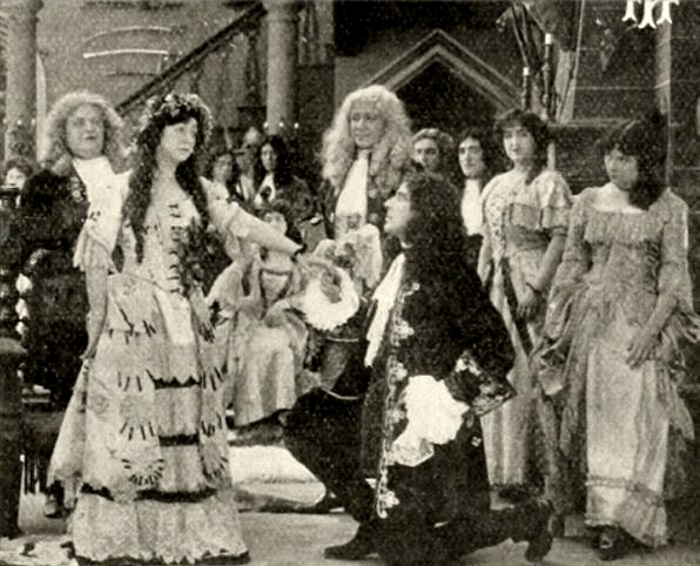
Where the narrative could collapse into penny-dreadful sensationalism, it pivots toward a radical accounting. Clorinda’s atonement is not a single tearful confession but a slow, self-administered chemotherapy: she bankrolls Oxon’s bastards, settles his gambling markers, endows convents in the Amazon. Dawley documents these acts via montage—currency counted, IOUs burned, widows fed—until restitution becomes its own exhausting addiction. The film suggests that guilt, like interest, compounds; salvation is less sacrament than spreadsheet.
Critics often crown The Student of Prague (also 1913) as the first “art film,” but A Lady of Quality experiments with syntax just as feverishly. Observe the birthday-night transformation sequence: Clorinda stands before an oval mirror fragmented into three panels. Dawley triple-exposes the shot so her boyish reflection dissolves into feminine silhouette then back again, an oscillating identity impossible on stage. Elsewhere he employs iris-out masks shaped like keyholes, implying we’re spying through locks at sins too decadent to name.
The palette—hand-tinted by the wives of Brooklyn projectionists—survives only in fragments: amber for hearth-light, cyan for moonbeams, a sickly chartreuse during the murder that feels imported from a migraine. These flashes of color prefigure the symbolic tinting of later Les Misérables adaptations and lend the piece a feverish opium glow.
Most surviving prints lack an official score, which proves perversely advantageous. The absence of music turns the film into a cavernous echo-chamber: you hear your own respiration, the creak of your chair, the thrum of blood. During the cellar-drag sequence I became hyper-aware of the metallic scrape of the film’s optical track—a ghostly percussion that heightened dread more than any orchestrated crescendo could. If you curate a home screening, pair it with Max Richter’s The Leftovers motifs on low volume; the marriage is uncanny.
Place A Lady of Quality beside contemporaneous morality yarns like Pilgrim’s Progress and you appreciate how heretical it is. Swap the gender of the protagonist and you get something approaching The Redemption of White Hawk; inject a dose of supernatural fatalism and you’re flirting with Fantômas. Yet the film’s true descendant is not theatrical but literary: Clorinda Wildair is the missing link between Charlotte Brontë’s Jane Eyre and Diana Norman’s Seize the Fire, a proto-feminist archetype decades ahead of her corset.
Only two 35mm nitrate prints are known: one at the Library of Congress—shrunken, vinegar-syndromed, riddled with Chinese-lantern perforations—and another in a private Paris cellar once owned by a Rothschild mistress. A 4K photochemical rescue began in 2021 under the eye of LOCO’s restoration squad, but funds dried up faster than Sir Jeoffrey’s brandy. For now, your best bet is a 2K scan circulating among clandestine cine-clubs; check rarefilmsociety.org for password-protected Vimeo links that rotate monthly.
Great art should leave friction burns; A Lady of Quality leaves scars. It is both artifact and oracle, a film that foresees the gender discourse of the next century while wallowing in the Gothic muck of its own. Clorinda’s journey—from ignored chattel to whip-wielding avenger to penitent administrator of justice—traces the arc of modern feminism before modernity had stapled its manifestos. Yet the movie refuses to sanctify her; every triumph is paid for in arterial coin, every kiss smuggles poison under its tongue.
So seek it out—if not in 4K, then in the jittery 480p rip that smells of vinegar and mothballs. Let its shadows pool on your retina; let its riding-crack echo in your marrow. And when the final iris closes, ask yourself the question the film refuses to answer: Is redemption merely a more elegant form of imprisonment? A Lady of Quality offers no absolution, only the exquisite agony of knowing you, too, are capable of murder beneath the chandelier—and of spending the rest of your life balancing the books.
Rating: 9.2/10 — A molten cornerstone of feminist cinema, hidden for a century in patriarchy’s attic.
IMDb —
1912
Community
Log in to comment.