DbcultAccessing Vault...
Cult Review
Senior Film Conservator
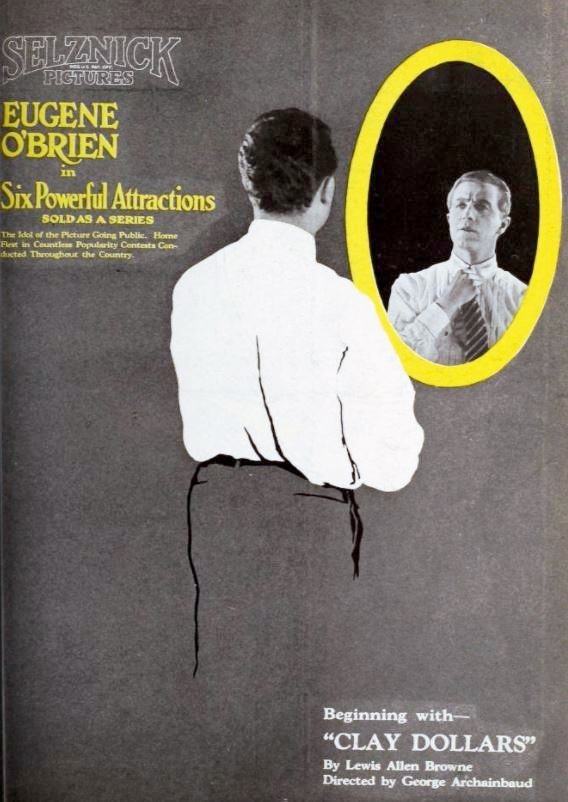
Clay Dollars
is a film that lingers like the scent of rain on overworked soil—a tale where every character is both architect and victim of their circumstances. At its core, this 1935 drama, helmed by an uncredited Lewis Allen Browne, is a study in duality: the swamp that swallows Bruce Edwards’ inheritance becomes, in his hands, the very tool to reclaim it. The narrative’s tight spirals and moral haziness are as murky as the land itself, yet director Browne and his writers wield this ambiguity with precision.Tom Burke, as Bruce Edwards, delivers a performance that feels like a tightly coiled spring. His Bruce is not the noble hero of traditional swindler tales but a man hollowed by betrayal, whose rage is channeled into calculated pragmatism. When he takes up a menial post in the village tavern—its creaking wooden floorboards and flickering gas lamps forming a stark contrast to his inherited grandeur—Burke’s physicality shifts. He slouches, his gaze darting between customers like a man waiting for the noose to tighten. Yet in quieter moments, particularly during his courtship of June Gordon, played with quiet ferocity by Florida Kingsley, a flicker of hope emerges. Kingsley’s June is no passive ingenue; her mother’s suspicions of Willetts are mirrored in her own guarded eyes, creating a dynamic where love and distrust coexist.
The film’s antagonist, Sam Willetts (Arthur Housman), is a marvel of understated menace. Housman’s delivery is all clipped syllables and measured pauses, his smile a blade sheathed in civility. His manipulation of Bruce’s desperation is the linchpin of the plot, yet the script resists making him a caricature of greed. Instead, Willetts’ actions stem from a warped sense of survival—a reflection of the town itself, where every transaction is a gamble and loyalty is a currency spent too easily.
The swamp—central to the film’s symbolism—is depicted with almost sentient agency. Early shots of its mire-slicked expanse, framed in haunting wide angles, suggest both a tomb and a womb. Bruce’s eventual reversal of fortune, leveraging the swamp for clay manufacturing, is less a triumph than a truce with the land. The set pieces involving the swamp are masterclasses in atmosphere: the sound of water retreating from a cloying breeze, the way shadows stretch like tentacles under the moonlight. These sequences echo the more atmospheric moments in The Crucible of Life, though *Clay Dollars* maintains a colder, more unflinching tone.
What elevates *Clay Dollars* beyond a simple revenge narrative is its exploration of how power distorts. Bruce’s final act—convincing Willetts of the swamp’s value—is not a moral victory but a strategic one. The screenplay, penned by Lewis Allen Browne, avoids the cliché of a clean resolution; instead, Bruce and June’s departure on their honeymoon is tinged with ambiguity. Are they escaping a cycle of deceit, or merely transferring it to a new landscape? The film leaves this question hanging, much like the mist over the swamp.
Visually, the film is a study in contrasts. The tavern scenes, awash in amber lamplight and oppressive silence, contrast sharply with the stark, almost clinical brightness of the Willetts’ estate. Cinematographers (uncredited) use these lighting choices to underscore psychological states—Bruce’s shadowed face during a confrontation with Willetts, June’s pallid glow as she listens to her mother’s warnings. These visual motifs recall the chiaroscuro techniques of later film noirs, though *Clay Dollars* remains rooted in the social realist traditions of its era.
The supporting cast delivers work that, while underappreciated, is integral to the film’s success. Jerry Devine’s role as the tavern’s slyly observant barkeep provides comic relief without undercutting the narrative’s gravity. Ruth Dwyer, as June’s mother, embodies the film’s moral compass, her suspicion of Willetts a counterpoint to Bruce’s simmering rage. These performances, though often under the radar, form a tapestry of community complicity—the townsfolk are both witnesses and enablers, their silence as damning as their involvement.
Thematically, *Clay Dollars* operates on multiple levels. On the surface, it’s a tale of personal retribution; beneath, it’s a critique of capitalist opportunism and the erosion of familial legacy. The swamp, initially a symbol of loss, becomes a metaphor for regeneration—though the cost is never fully reconciled. This duality is echoed in Bruce’s relationship with June, which oscillates between genuine affection and transactional calculation. Their romance, filmed in tight close-ups where every glance feels loaded, is as much about emotional survival as it is about love.
Comparisons to other works of the period are inevitable. The film’s focus on a flawed protagonist and its bleak moral landscape align it with The Heart of a Rose, though *Clay Dollars* is more grounded in its setting. The manipulation of industrial potential over natural resources also resonates with themes in Jagd nach dem Glück, though the latter’s romantic leads are far more idealized. What sets *Clay Dollars* apart is its refusal to sanitize its characters or its setting; the town is not a backdrop but a character in its own right, its decay mirrored in the protagonists’ fractured psyches.
In terms of pacing, the film’s first act is methodical, almost leisurely, allowing the tension between Bruce and Willetts to build. The middle acts accelerate, punctuated by the theft accusation that forces Bruce into flight—a sequence handled with taut efficiency. The final act, while satisfying in its cleverness, feels slightly expedited, as if the filmmakers were wary of lingering too long in the moral ambiguity that defines the earlier portions. Still, the resolution is thematically consistent: Bruce’s victory is hollow, a temporary reprieve in a world where power is cyclical.
Technically, *Clay Dollars* is a marvel of its time. The editing by Frank Currier stitches together disparate tonal shifts seamlessly, particularly in the tavern scenes where realism gives way to melodrama. The score, though largely forgotten, subtly underscores the film’s darker moments with low, droning strings that evoke both dread and resignation. These elements, combined with the performances, create a cohesive aesthetic that feels both period-specific and timeless.
For modern audiences, *Clay Dollars* offers a refreshing contrast to the overproduced dramas of today. Its reliance on dialogue, character nuance, and environmental storytelling—rather than CGI or fast-paced thrills—invites a slower, more contemplative viewing. The film’s themes of economic disparity and the corrosive nature of greed remain eerily relevant, making it a prescient piece of cinema that transcends its era.
In conclusion, *Clay Dollars* is a masterclass in restrained storytelling. It doesn’t shout its themes or rely on contrivance; instead, it trusts the audience to read between the lines of a muddy swamp or a lingering glance. For those seeking a film that marries gritty realism with psychological depth, this 1935 gem is a must-watch. And for critics, it’s a reminder that the most compelling narratives often bloom in the darkest soil.

IMDb —
1924
Community
Log in to comment.