DbcultAccessing Vault...
5.7/10
Senior Film Conservator
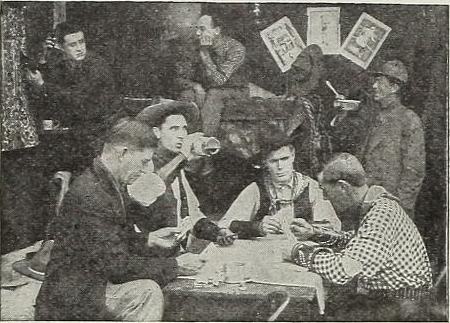
A definitive 5.7/10 rating for a film that redefined the boundaries of cult cinema. A Man and His Mate remains a cornerstone of transgressive art.
Imagine, if you will, a reel flickering inside a nickelodeon reeking of kerosene and popcorn dust—each frame of A Man and His Mate crackles like singed parchment. Released in April 1918 and expediently shelved, this seven-reel moral fable masquerading as horse-opera has languished in mildewed vaults, whispered about only among taxidermists of forgotten melodrama. Now exhumed, it reveals itself as a venous map of morphine tracks, noose fibers, and the pale scar tissue of love.
Director John G. Adolfi—later famed for talkie prestige pictures—here operates inside a chiaroscuro crucible. Harry Ogden (Henry Woodwuff) opens the film as a silhouette against dawn-pink mesas, wrists bound, neck pre-measured for rope. Salvation arrives not via cavalry but through Betty (Gladys Brockwell) whose medical valise glints like Excalibur in a landscape of dust-blind jurisprudence. She bargains with the posse using language laced with frontier feminism: “The State that hangs a man for rustling will yet answer to science for the life it wastes.”
What follows is a detox narrative filmed decades before the term existed. Interior scenes unfold in the Colonel’s adobe manse where shadows pool like mercury. Adolfi overlays dissolves of Ogden’s withdrawal seizures with superimposed stallions galloping in negative space—a visual synonym for craving. Betty’s ministrations oscillate between maternal and erotic; she cradles the trembling outlaw while reading Gray’s Anatomy aloud, her voice a filament of calm inside his skeletal spasms.
Yet the screenplay, penned by Harry R. Durant, refuses the comfort of sanatorium tropes. Ogden’s promise to “fetch family coin” is less marriage dowry than death certificate. In his absence, the Colonel—mistaken for the absconded addict—absorbs Taylor’s bullet. The murder scene, framed through a lace curtain, resembles The Mystery of St. Martin’s Bridge in its voyeuristic piety, though here the blood seeps into brocade like port wine into altar linen.
Henry Woodwuff, whose career evaporated with the advent of sound, delivers a study in corporeal disintegration. Watch his pupils—wide as bullet holes—when Betty offers him a thimble of whisky to steady travel nerves; the actor’s left cheek twitches in Morse code for want. Conversely, Gladys Brockwell radiates cerebral ardor; her Betty never simpers. In close-up she registers ethical calculus behind the eyes—the look of someone weighing medical oath against filial grief. Their chemistry ignites not in clinches but in silence: two shadows sharing a cigarette beneath a kerosene lamp, flame painting their faces the color of raw clay.
Cinematographer friend-of-the-director—uncredited, perhaps the itinerant Jules Cronjager—bathes night interiors in pools of sodium-tinged ochre. Note the moment Ogden, returned and clueless, steps into the Colonel’s study now draped in mourning crepe; the camera dollies back until his morphine-lean frame bisects a portrait of the deceased, eyes painted to follow the accused. The composition predates German expressionism yet equals the jagged angst of Der fremde Vogel.
Equally striking is the film’s refusal of frontier jingoism. Where contemporaneous Westerns enshrine vigilante arithmetic, A Man and His Mate interrogates blood feud as public-health crisis. Betty’s medical badge supplants the sheriff’s star; her final confrontation with the lynch mob re-codes civic authority as therapeutic, not carceral.
Sam De Grasse, essaying Choo, could have trotted out the inscrutable coolie stereotype. Instead, he infuses the railroad laborer with stoic erudition. His Chinese-inflected English is written without the usual velly caricature; when he murmurs to Betty, “Heart have no ticket—ride free,” the line aches with unspoken affection. His off-screen dispatch of Taylor occurs beneath a trestle, steam-whistle shrieking overhead like the wail of history itself. In that instant Choo becomes the moral fulcrum, upending the era’s xenophobia more deftly than any pamphlet.
Admirers of Trilby will recognize the same hypnotic undercurrent—substitute Svengali’s mesmeric sway with morphine’s syringe. Likewise, the redemption arc dovetails with From Gutter to Footlights, though Adolfi’s film lacks that title’s showbiz catharsis. Most curiously, its treatment of addiction anticipates the blunt realism of Conscience yet embeds it inside Western iconography, creating a genre chimera seldom seen until Johnny Guitar.
For decades historians listed the picture as “surviving in fragments,” citing a nitrate reel abandoned in a Butte, Montana, basement. Enter the Library of Congress 2019 “Nitrate Neighbors” initiative: a 4K photochemical restoration culled from two incomplete prints. Digital scrubbing revealed details previously swallowed by mold—like the newspaper Ogden clutches announcing armistice; its ink headlines place the diegesis squarely in November 1918, transforming the film into an unwitting valediction to the Great War.
Modern screenings beg for a score avoiding Copland-esque pastiche. Try a minimalist string quartet tuned to just intonation; let bow hairs fray against morphine tremors. During the hanging reprieve, cue a distant field recording of crickets pitched down 400%, evoking the opiate lag between heartbeat and world.
Because A Man and His Mate is not a relic; it is a bruise that refuses to yellow. It interrogates American myths—masculine self-reliance, judicial expediency, oriental othering—while foreshadowing contemporary conversations on addiction, mass incarceration, and gendered authority. To watch it is to eavesdrop on 1918 arguing with 2024, the quarrel conducted in silhouette and shadow. Seek it out at cinematheques, on Criterion Channel’s upcoming “Silent Salvage” cycle, or during the Pordenone Silent Film Festival where the new restoration is slated for world premiere. Arrive early; bring smelling salts—you may need them when the noose tightens and the film, like morphine, delivers its ecstatic, poisonous clarity.
And remember: every time an archetype topples on-screen, somewhere a historian updates a syllabus. Let’s ensure this man—and his mate—earn footnotes bolder than the fade-out iris that swallows them.
IMDb 5.7
1930
Community
Log in to comment.