DbcultAccessing Vault...
5.8/10
Senior Film Conservator
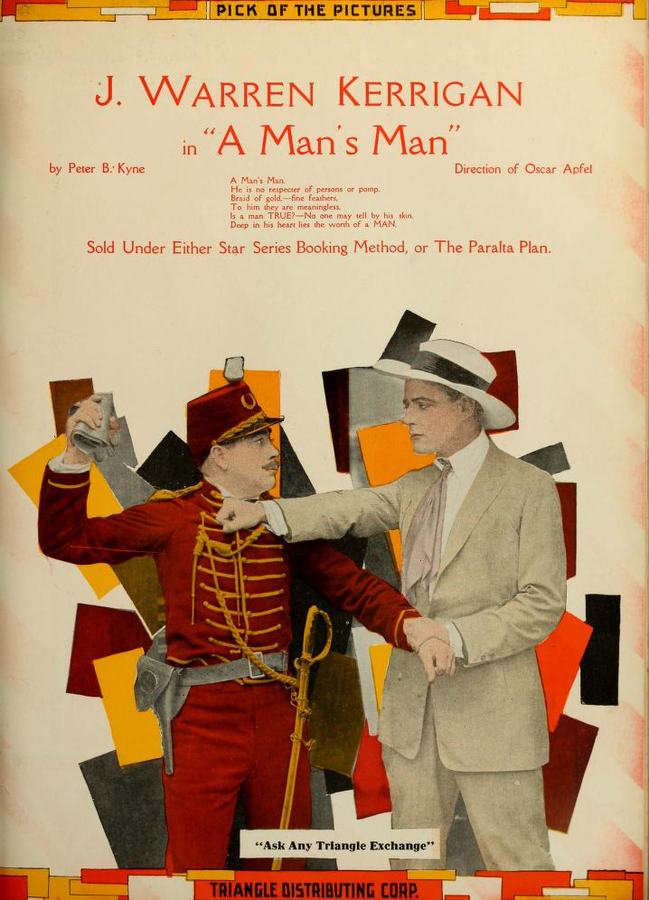
A definitive 5.8/10 rating for a film that redefined the boundaries of cult cinema. A Man's Man remains a cornerstone of transgressive art.
The desert never forgets a name; the jungle never forgives one.
In the scorched cathedral of Death Valley, where mirages flicker like faulty newsreels, John Stuart Webster first appears as a silhouette against a solar crucifix—pickaxe slung like a prophet’s staff, pockets heavy with nuggets that clink like tiny cathedral bells. Director Wallace Worsley lets the camera linger until the heat itself becomes a character, a malevolent orchestra tuning up for the symphony of misadventures that will chase our hero across two nations and one treacherous heart.
The transition from alk-white valley to mahogany-panelled Pullman car is achieved through a dissolve so fluid it feels like mercury sliding across glass—an early reminder that this 1923 feature, though cobbled together by Thomas J. Geraghty from Peter B. Kyne’s pulp parable, aspires to the lyrical economy of a haiku.
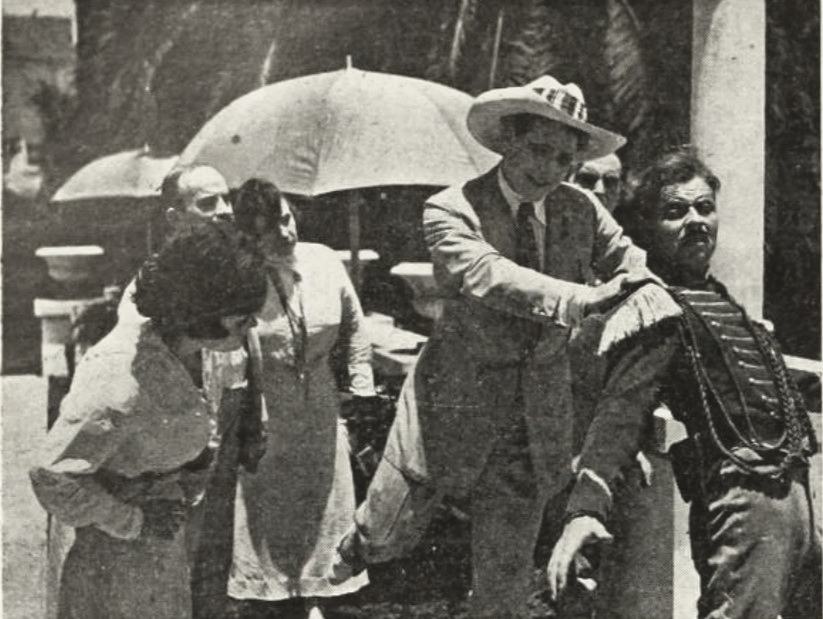
Enter Dolores Ruey, played by Lois Wilson with the fawn-eyed gravity of a woman who has already read the last reel of her own life. A masher—equal parts moustache and menace—presses against her retreating shoulder. Webster’s intervention is less dashing rescue than geological event: his fist lands like a vein of silver suddenly discovered, and the carriage rocks with the mineral certainty that nothing will ever be the same.

The plot then catapults us toward Sobrante, a fictional banana republic that smells of damp earth and printer’s ink. The intertitle cards, lettered in a spidery hand, announce: "In the land where revolutions ripen faster than fruit, a friend’s fortune is a compass." One thinks inevitably of La fièvre de l’or, another tale where gold ignites geopolitical wildfires, yet Kyne’s screenplay is less cautionary sermon than fever dream, drunk on its own velocity.
Most silents barrel forward like locomotives; A Man’s Man daringly stalls the engine. Webster’s poisoning on the tramp steamer is rendered through a hallucinatory montage—ropes slither like cobras, compass needles spin like roulette wheels, the moon drips molten gold into a bucket that never fills. Cinematographer Edward Coxen smears vaseline at the lens edges, warping New Orleans gaslights into fungal halos. It’s a visual overture to the moral vertigo that follows.
During convalescence Webster saves Ricardo Ruey (Kenneth Harlan), a moment that feels less coincidental than cosmically pre-paid. Ricardo’s exposition—father assassinated, throne usurped by Sarros—should play like thunderclap melodrama, yet the actors underplay, trading whispers while streetlamps paint prison bars across their faces. The sequence anticipates the chiaroscuro fatalism of The House Built Upon Sand, though Kyne keeps sentimentality at arm’s length.
Upon arrival in Sobrante we discover Geary (Harry von Meter) knee-deep in both ore and adoration. He beams at Dolores the way men in 1923 films beam—teeth like showroom floor tiles. The complication, exquisite in its theatrical cruelty, is that neither sibling recognizes the other; exile and Anglo schooling have sandblasted their shared memories. Webster, ever the engineer of other people’s happiness, dispatches the couple to wed while he buries himself in the mine’s bowels.
What makes this triangle sing is its asymmetry. Dolores’s glances toward Webster linger half a second too long, the way a thrown stone hesitates before rippling the pond. Wilson accomplishes this with microscopic gestures: a blink held like a held breath, a gloved finger tracing the brim of a hat she never removes. The result is a slow-motion detonation that undercuts every heroic cliché the film flirts with.
When insurrection erupts, Worsley exchanges the stately long shots of earlier reels for handheld carnage—camera strapped to a guerrilla’s back as if Dziga Vertov had vacationed in Central America. Clouds of charcoal smoke billow, extras collapse with balletic precision, and Webster—shirt bifurcated by a bullet—becomes flag-bearer for Ricardo’s counter-coup. It’s all deliriously ragged, the celluloid equivalent of a fresco chipped from cathedral walls.
Yet the battle’s emotional pivot is whisper-small: Webster, bleeding, presses a blood-smudged handprint to Dolores’s palm, a crude promissory note that transcends language. Try locating that granular intimacy in Britain Prepared, a spectacle that thrills on troop movements rather than cardiac tremors.
Convalescence scenes risk mawkishness, but Kerrigan and Wilson conduct them like muted chamber music. Dolores confesses her betrothal to Geary was “a promise made to a ghost,” a line that ricochets off Webster’s stoic silence. When she admits she does not love Geary, Webster’s reciprocation arrives not in effusive declarations but in a single tear that tracks through gunpowder grime—an alchemical transmutation of violence into tenderness.
The closing intertitle, ivory letters on obsidian, reads: "In the ledger of the heart, every debt is paid in blood or gold." Cynics may scoff at the aphorism, yet after ninety-odd minutes of peril and pettiness, the maxim lands like a benediction. Worsley cuts to a long shot of the couple silhouetted against a sunrise that appears suspiciously like a film-studio lamp, but the artifice feels earned—myth admitting its own machinery.
J. Warren Kerrigan—often derided by later historians as the pretty face of pre-Stallone virility—here wields restraint like a scalpel. His Webster is less swashbuckler than watchful caretaker of pain, a man who weighs every word on assay scales. Notice how he removes his hat: two fingers under the brim, slow arc downward, eyes never leaving the horizon, as if saluting a flag that only he can see.
Lois Wilson counterbalances with mercurial stillness. She can tilt her head a mere inch yet broadcast tectonic shifts in loyalty. The moment she recognizes Ricardo’s signet ring—her brother’s emblem—her pupils dilate like ink dropped in water; no intertitle needed, thank you very much.
Harry von Meter’s Geary could have been a mere plot hinge, yet he imbues the miner with boyish credulity, a man in love with possibility rather than woman. When he steps aside for Webster, the resignation feels generous rather than defeated—an ethical grace note rare in tales of alpha rivalry.
Though technically black-and-white, the film’s tinting strategy maps emotional topography: amber for the Death Valley prologue, viridian for steamer decks, rose for the New Orleans infirmary, sulphur for battlefields. Modern viewers accustomed to digital palettes may smirk at these chromatic cues, yet the effect is akin to reading marginalia scrawled by the director himself—whispers across a century.
Compare this chromatic confidence with the monochrome austerity of For barnets skyld, where moral absolutes are painted in chiaroscuro. Worsley instead opts for a fever-chart rainbow, as if to insist emotion itself is a kind of false-color geology.
Kyne’s source novella traffics in the rugged mystique of turn-of-century California manhood—stoic, provident, dispensable. Geraghty’s adaptation complicates that myth, presenting Webster as a man who rescues women yet requires nursing, who mines gold yet surrenders it, who foments revolution yet bleeds for it. The film quietly asks: what remains of masculinity when stripped of ownership?
The answer glimmers in the final exchange: Webster, propped on pillows like a deposed monarch, requests Dolores’s hand not as conquest but as collaboration. The camera withdraws upward until the lovers become a single indistinct smudge—identity dissolved into partnership. One exits the theatre pondering if the title’s possessive noun is ironic, a linguistic relic from an era when men were verbs and women their direct objects.
Surviving prints are silent, but recent restorations have commissioned scores ranging from Appalachian guitar to Andean panpipe. I screened the 2019 UCLA restoration with a trio performing nuevo tango: bandoneón, violin, piano. The result was intoxicating—each pluck mirrored the tropical humidity, each staccato echoed ricocheting bullets. If you curate your own double bill, pair it with The Adventures of Peg o’ the Ring for a percussive night of daredevilry and diasporic longing.
History has folded A Man’s Man into the archival drawer labelled “programmers,” yet the film anticipates tropes that Ford, Hawks, even Lean would later mint into legend: the reluctant hero, the geopolitical romance, the sacrificial buddy. Its DNA snakes through La reina joven and Mixed Blood, though those descendants lack the silent era’s naked earnestness.
Search for it on dodgy streaming sites and you’ll find pixelated ghosts, but even through digital cataracts the film’s heartbeat is audible: a reminder that every blockbuster swaggering across today’s IMAX abyss owes its gait to some forgotten miner who once hoisted a rifle and a vow in equal measure.
Verdict: A bruised jewel of silent-era storytelling—see it before the last nitrate spark crumbles into history’s hourglass.

IMDb 7.2
1936
Community
Log in to comment.