DbcultAccessing Vault...
Cult Review
Senior Film Conservator
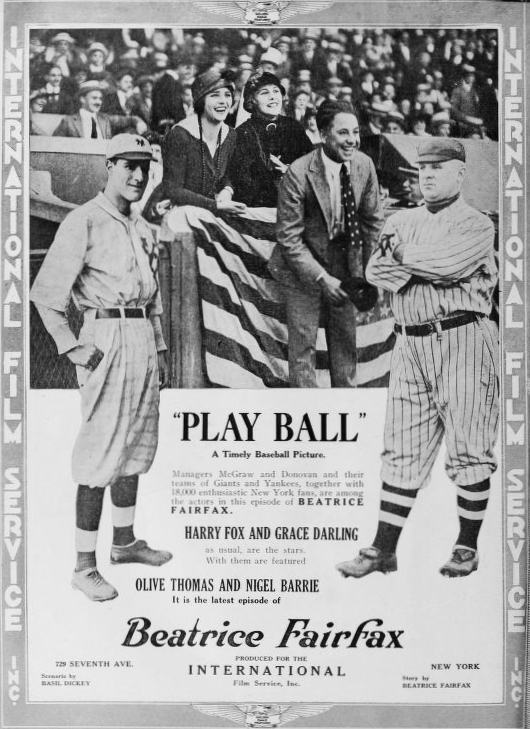
The early cinematic serials, those episodic narratives designed to lure audiences back week after week, often excelled at weaving intricate tapestries of peril, romance, and heroic intervention. Few exemplify this better than the enduring adventures of Beatrice Fairfax. In "Episode 10: Play Ball!" we are plunged headfirst into a whirlwind of high-stakes gambling, romantic entanglement, and a thrilling race against time, all set against the vibrant backdrop of New York City's burgeoning professional baseball scene. This particular installment showcases the serial's remarkable ability to blend contemporary social fascinations with classic melodramatic tropes, delivering a narrative that is both culturally resonant and emotionally charged.
At the heart of this gripping episode lies Martin O'Day, a character etched with the unmistakable desperation of a man whose entire fortune teeters precariously on the outcome of a single baseball game. O'Day, a saloon-keeper and professional gambler, has staked an exorbitant sum on the New York Yankees securing victory over their arch-rivals, the Giants, in the decisive championship game. His confidence, initially unwavering, stems from a misapprehension: he believes Bert Kerrigan, the Giants' formidable star pitcher, is indisposed and will not play. The dramatic tension ignites when McGraw, the astute Giants manager, makes a last-minute announcement that sends shockwaves through the betting underworld: Kerrigan will indeed pitch. This revelation shatters O'Day's carefully constructed illusion of security, threatening to plunge him into financial ruin. The film masterfully portrays O'Day's escalating panic, transforming him from a confident operator into a desperate schemer willing to resort to extreme measures to safeguard his wealth. His decision to kidnap Kerrigan is not merely an act of villainy but a desperate, cornered animal's lunge, highlighting the destructive power of greed and the perilous allure of illicit gambling in an era where such activities were both pervasive and often morally condemned.
O'Day's plan to neutralize Kerrigan is a meticulously crafted web of psychological manipulation, exploiting the tender vulnerabilities of love and trust. Knowing Kerrigan's engagement to Rita Malone, O'Day dispatches two anonymous, venomous letters. The first, addressed to Rita (portrayed with compelling earnestness by Olive Thomas), plants seeds of doubt about Kerrigan's fidelity, instructing her to appear at a specific hotel at 9 o'clock on the morning of the game to witness 'proof' of his duplicity. Simultaneously, a second letter reaches Kerrigan (Harry Fox, demonstrating his versatility), accusing Rita of unfaithfulness and directing him to watch a certain hotel window at 9:30 AM. This ingenious double-bluff is designed to not only remove Kerrigan from the game but also to sow discord in his personal life, ensuring his emotional incapacitation even if the physical abduction fails. The narrative expertly builds suspense as both Rita and Kerrigan, each tormented by the anonymous accusations, proceed separately to the designated rendezvous. The subsequent scene at the hotel is a masterclass in visual storytelling and misdirection. Rita is ushered into a room where she is seized from behind, her face covered with kisses by an unseen assailant. From Kerrigan's vantage point on the street below, observing the window, the tableau is devastatingly convincing: he perceives his beloved reciprocating the caresses of another. This moment of tragic misunderstanding is the emotional fulcrum of the episode, a powerful illustration of how easily trust can be shattered by carefully orchestrated deception. Kerrigan's furious ascent to the room, driven by a potent cocktail of heartbreak and rage, leads directly into O'Day's trap, where he is swiftly captured and bound. The sheer audacity of O'Day's plan, preying on the deepest insecurities of a loving couple, elevates the episode beyond mere action into the realm of poignant human drama.
Fortunately, the forces of justice in the world of Beatrice Fairfax are as indefatigable as the machinations of its villains. Rita, in her profound distress, instinctively turns to the sagacious Beatrice Fairfax, the eponymous advice columnist whose reputation for solving impossible dilemmas precedes her. Beatrice, ever the astute investigator, confides in Jimmy Barton, the intrepid newspaper reporter (portrayed with characteristic dynamism by Bruce McRae). Jimmy, already immersed in covering the championship game and keenly aware of O'Day's suspiciously heavy betting, possesses a crucial piece of the puzzle. His journalistic instincts, coupled with Beatrice's keen insights, set the stage for their heroic intervention. The scene where Jimmy confronts O'Day is a highlight of the episode. Feigning drunkenness, a clever ruse to lull the gambler into a false sense of security, Jimmy observes a note arrive, confirming Kerrigan's capture. The immediate shift in Jimmy's demeanor – from feigned inebriation to steely resolve – is executed with admirable precision. Drawing a revolver, he turns the tables on O'Day, forcing the villain to write a note ordering his subordinates to obey Jimmy's commands, before locking the gambler in a vault. This sequence epitomizes the resourcefulness and courage of the serial's heroes, demonstrating that intellect and quick thinking are as potent as any physical prowess. It’s a classic trope of the early detective serials, where the protagonist outwits the villain rather than merely overpowering them. The swiftness of Jimmy's actions, and the elegant simplicity of his solution, underscore the compelling narrative efficiency of these early films.
With O'Day incapacitated, Jimmy's next challenge is a desperate race against the clock. He hurries to the hotel, using O'Day's coerced note to secure the release of both Kerrigan and Rita. The relief and reunion of the couple are palpable, but time is of the essence. It is now afternoon, and the championship game is well underway. Beatrice, having arrived at the hotel in a parallel thread of the narrative, joins the trio. What follows is one of the episode's most exhilarating sequences: a wild, breakneck automobile chase through the bustling streets of New York City to the Polo Grounds. This scene, punctuated by the involvement of several policemen, is a testament to the dynamic filmmaking of the era, showcasing early action choreography and the burgeoning use of practical effects to convey speed and urgency. The frantic dash through crowded thoroughfares, with the fate of the game and a man's career hanging in the balance, creates an electrifying sense of suspense. Such sequences, common in serials like this, provided audiences with thrills that transcended the everyday, offering a glimpse into a world where heroes could literally outrace destiny. The visual spectacle of the speeding car, the frantic city life, and the looming deadline of the baseball game coalesce into a truly gripping cinematic experience, a staple of early action-adventure storytelling that would influence countless films to come.
The climax of "Play Ball!" unfolds at the Polo Grounds, where the championship game reaches its fever pitch. As Jimmy, Beatrice, Rita, and Kerrigan finally burst onto the crowded grounds, the fifth inning is in progress, with the Yankees leading 2 to 0. The Giants, however, stage a valiant comeback in the sixth, scoring three runs and taking a precarious one-run lead. But the Yankees retaliate in their half of the inning, with the first three batters reaching base, threatening to reclaim the lead. It is at this precise, nail-biting moment that Kerrigan, having rushed to the clubhouse, makes his dramatic appearance on the field in uniform. The roar of the crowd, the urgency in Manager McGraw's voice – "It's up to you to save us, Bert," he implores, "there's three on and nobody out" – all contribute to an almost mythical sense of a hero's return. Kerrigan, against all odds and the immense pressure, steps onto the mound. What follows is a display of pure athletic prowess and mental fortitude: he strikes out the next three batters, preserving the Giants' fragile lead. He holds the Yankees scoreless for the remainder of the game, securing a thrilling 3-2 victory for the Giants. This sequence is a powerful testament to the redemptive power of sport, where individual heroism can turn the tide of an entire contest. It’s a classic underdog story wrapped in a crime thriller, perfectly suited for the serial format's emphasis on dramatic highs and satisfying resolutions.
The aftermath of the game provides the necessary space for explanations and the triumph of truth. It is only after the final out that Kerrigan can adequately explain his mysterious absence to a bewildered Manager McGraw. Similarly, Rita and Kerrigan recount their harrowing experience at the hotel, shedding light on O'Day's insidious plot. Jimmy Barton, with characteristic journalistic flair, details O'Day's audacious attempt to sabotage their lives and the game for his own avaricious ends. The episode concludes with a sense of restored order and justice. O'Day's scheme is fully exposed, his villainy laid bare, and the innocent couple's reputation and love are vindicated. As the jubilant crowd disperses from the Polo Grounds, Beatrice and Jimmy, ever dedicated to their craft, hurry back to their offices. Their mission: to immortalize the sensational events of the day – the kidnapping, the daring rescue, the dramatic comeback, and the unmasking of the villain – for their eager readers. This final scene reinforces the crucial role of the press in the serial's world, not merely as observers but as active participants in the pursuit of truth and justice. The resolution, while swift, is deeply satisfying, providing emotional closure for the characters and a thrilling conclusion for the audience, cementing the episode's place as a memorable chapter in the Beatrice Fairfax saga.
"Beatrice Fairfax Episode 10: Play Ball!" stands as a compelling example of early silent cinema's ability to engage and entertain. The direction, while perhaps lacking the overt stylistic flourishes of later masterpieces, is remarkably efficient in its storytelling. The use of cross-cutting between O'Day's machinations, Rita and Kerrigan's separate journeys, Jimmy's investigation, and the unfolding drama of the baseball game, creates a multi-layered narrative tension that keeps the audience enthralled. The pacing is relentless, particularly in the latter half, building from the quiet suspense of the deception to the kinetic energy of the car chase and the athletic climax. The performances, particularly from Olive Thomas as the anguished Rita and Harry Fox as the conflicted but ultimately heroic Kerrigan, imbue the melodrama with genuine emotional weight. Bruce McRae's portrayal of O'Day is suitably villainous, capturing the essence of a desperate man consumed by greed. The serial format itself is a crucial element, fostering a loyal audience eager to follow Beatrice's ongoing quest for justice. The episode's appeal lies not only in its thrilling plot but also in its reflection of societal interests of the time: the growing obsession with professional sports, the widespread prevalence of gambling, and the burgeoning influence of the press and advice columnists like Beatrice Fairfax. While not directly comparable in genre, one might draw a parallel with the resourcefulness of female protagonists in other early films like Filibus, where women, often in unconventional roles, navigate and solve complex situations, albeit with vastly different methods. This episode, however, firmly grounds its heroine in the realm of journalistic integrity and keen observation, making Beatrice Fairfax a more accessible and relatable figure for her contemporary audience.
In conclusion, "Beatrice Fairfax Episode 10: Play Ball!" is more than just a chapter in a forgotten serial; it is a vibrant snapshot of early 20th-century entertainment. It seamlessly blends the excitement of a championship baseball game with the dark undercurrents of crime and the tender fragility of romance. The episode is a testament to the power of narrative to captivate, to thrill, and to ultimately uphold the ideals of justice and love. The stakes are high, the villain is cunning, and the heroes are resourceful, culminating in a satisfying resolution that leaves the audience exhilarated. The enduring legacy of the *Beatrice Fairfax* serial, and this episode in particular, lies in its masterful construction of suspense, its engaging characters, and its ability to deliver a consistent dose of thrilling adventure that kept audiences eagerly anticipating the next installment. It reminds us that even in the nascent days of cinema, storytellers understood the fundamental human desire for compelling drama, heroic triumphs, and the ultimate victory of good over evil. The episode's intricate plotting and dynamic execution ensure its place as a significant artifact of early American filmmaking, demonstrating how effectively silent cinema could convey complex narratives and profound emotional arcs without uttering a single word. It is, in essence, a grand slam of silent suspense, a testament to the timeless appeal of a well-told story, regardless of the technological constraints of its era.
IMDb 6.1
1936
Community
Log in to comment.