DbcultAccessing Vault...
4.4/10
Senior Film Conservator
A definitive 4.4/10 rating for a film that redefined the boundaries of cult cinema. A Man's Size Pet remains a cornerstone of transgressive art.
Is 'A Man's Size Pet' worth watching today? Short answer: yes, but with significant caveats that speak to its era as much as its individual merits. This film is a fascinating, if flawed, artifact for silent film enthusiasts and those curious about the roots of slapstick comedy. Conversely, viewers seeking polished narratives or modern comedic timing will likely find its charms elusive.
This film works because of its relentless physical comedy and the sheer audacity of its central premise involving a bear.
This film fails because its narrative coherence often collapses under the weight of its own gags, leaving a somewhat disjointed experience.
You should watch it if you appreciate the raw, unrefined energy of early cinema and don't mind a story that prioritizes spectacle over logic.
Stepping into the world of "A Man's Size Pet" is akin to opening a time capsule to an era when cinema was still finding its feet, experimenting wildly with what could provoke a laugh or a gasp. Released in a period brimming with nascent comedic talent, this particular offering from writers W.C. Tuttle and Robert McKenzie, the latter also starring, is a prime example of the rough-and-tumble humor that captivated audiences of the day. It’s a film that doesn’t just show you a story; it throws you headfirst into a whirlwind of escalating absurdity, powered by a rivalry, a judge, and a very confused, possibly drugged, bear.
The film’s charm, for those willing to engage with it, lies precisely in its unpolished nature. It’s a document of early cinematic ambition, where the spectacle of a real animal interacting with actors was a draw in itself, regardless of how neatly it fit into the plot. The narrative, while thin, serves as a mere scaffold for a series of escalating gags that range from petty pranks to outright danger. It’s a testament to the sheer ingenuity, and perhaps recklessness, of early filmmakers who were unafraid to push boundaries, even if those boundaries occasionally led to a chaotic mess rather than a perfectly crafted narrative.
At its core, "A Man's Size Pet" is a narrative propelled by petty male rivalry, a timeless comedic trope. Magpie (Gilbert Holmes) and Dirtyshirt (Ben Corbett) are two cowboys, or perhaps more accurately, two rascals, engaged in a battle for romantic supremacy. Their initial interactions set the stage for a classic silent-era slapstick showdown. The film opens with them 'dolling up' – a visual cue that immediately establishes their superficial intentions and competitive spirit. Magpie’s first trick on Dirtyshirt, sabotaging his horse and leaving him stranded while he gallops off to meet the girls alone, is a perfectly executed piece of physical comedy, establishing Magpie as the cunning antagonist and Dirtyshirt as the perpetually aggrieved victim. This early sequence is a clear nod to the kind of escalating pranks that defined much of early screen comedy, reminiscent of the simple, direct gags found in films like Here He Comes, albeit with a slightly more malicious edge.
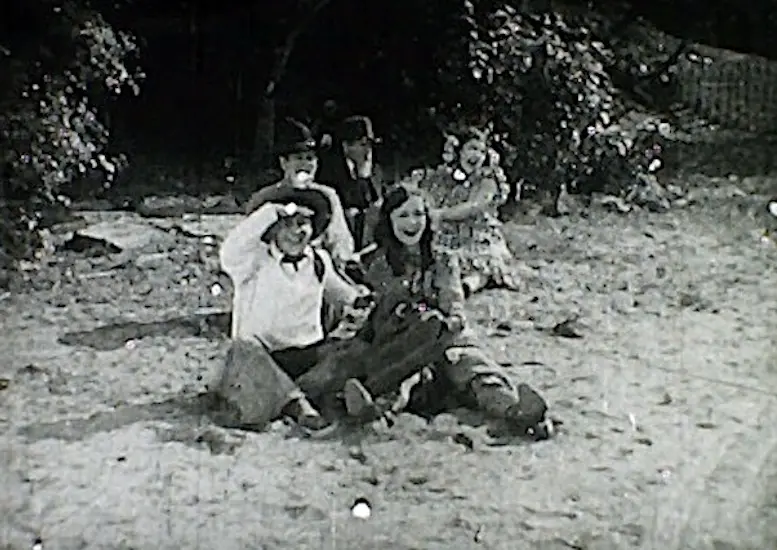
The rivalry isn't just a backdrop; it's the engine that drives the initial conflict, culminating in a brawl that feels both inevitable and entirely earned. The physical comedy here is broad, relying on exaggerated movements and reactions that were the lingua franca of silent film. The audience is meant to laugh at the misfortune of Dirtyshirt, even as Magpie’s actions are clearly unsporting. It’s a simple setup, but effective, laying the groundwork for the more outlandish events to come. The humor is direct, unburdened by subtlety, much like the frontier setting itself.
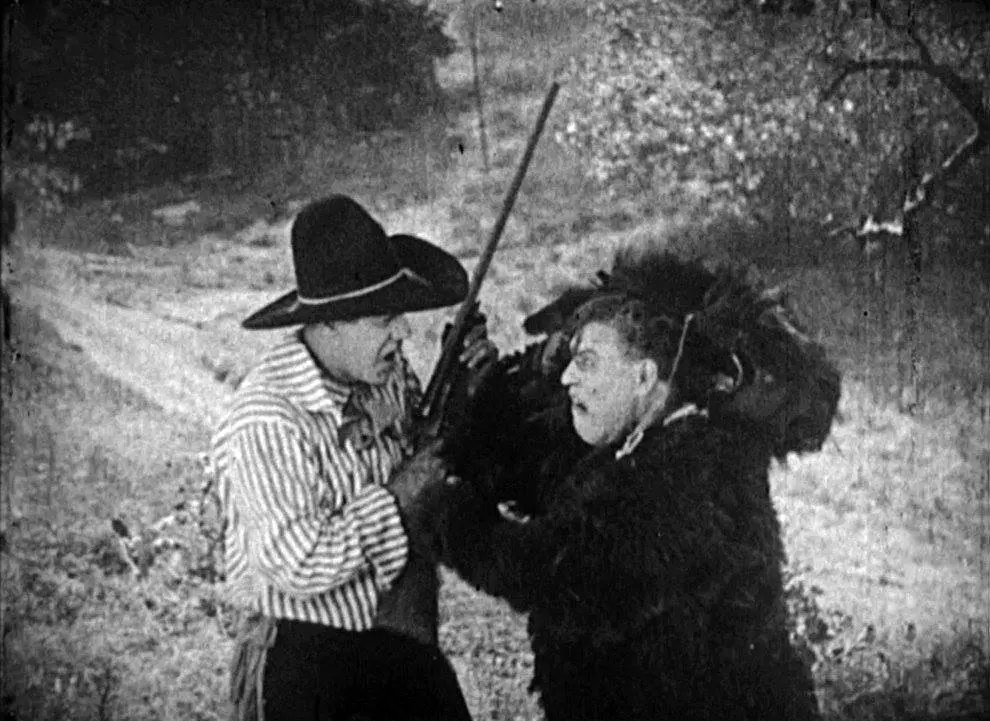
Where "A Man's Size Pet" truly veers into the memorable, and frankly, the bizarre, is with the introduction of the judge and his titular pet bear. This isn't just a casual pet; this is a bear that the judge (Robert McKenzie) feeds snuff to. This unconventional choice is the film's undeniable centerpiece, a bold, ethically questionable, and utterly captivating gimmick that elevates the film beyond a simple rivalry comedy. The moment the judge offers the bear a pinch of snuff, and the animal reacts with a violent, chaotic chase, is a moment of pure, unadulterated silent film madness. It’s an unconventional observation, but the judge, a figure of supposed authority, is the primary instigator of chaos with his unusual pet, subverting expectations of order.
The ensuing chase sequence, with the bear pursuing the judge and the two rivals, is where the film finds its most kinetic energy. It's a sequence that relies heavily on the shock and spectacle of a real, agitated animal being part of the action. This was a common, if dangerous, practice in early cinema, and here it’s used to maximum comedic and thrilling effect. The sheer audacity of this premise—a snuff-addicted bear causing havoc—is what gives the film its unique, if somewhat disturbing, flavor. It’s a testament to a time when safety protocols were, shall we say, less stringent, and the pursuit of a novel gag often trumped all other concerns.
The performances in "A Man's Size Pet" are, as expected for the era, heavily reliant on physical comedy and exaggerated facial expressions. Gilbert Holmes as Magpie embodies the smirking, conniving rival with gusto. His expressions of triumph and mischief are almost cartoonish, painting him as a clear, if charming, villain. Ben Corbett’s Dirtyshirt is the perfect foil; his exasperation and frustration are palpable, often communicated through wide eyes and frantic gestures. Together, they form a classic comedic duo, their rivalry playing out in a series of highly visual gags. The dynamic is simple but effective: the trickster versus the tricked, a formula that never truly gets old in the realm of slapstick.
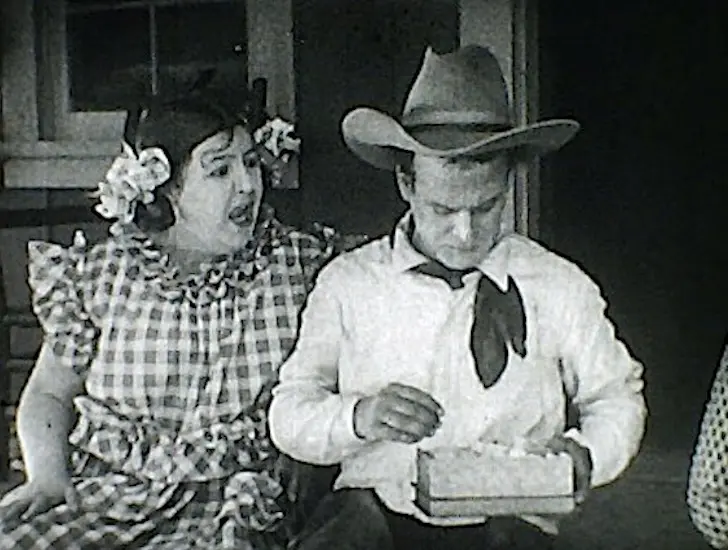
Robert McKenzie, as the judge, delivers a truly memorable performance. His character is a study in eccentric authority, his interactions with the bear being particularly noteworthy. McKenzie doesn't just play a character; he becomes a catalyst for chaos, his peculiar pet an extension of his own oddball persona. His deadpan delivery (as much as one can 'deliver' deadpan in a silent film) combined with the absurd situation makes him a standout. It's a debatable opinion, but the physical comedy, while crude, often outshines the intended character work, making the actors more vehicles for gags than fully fleshed-out individuals. This isn’t a criticism, but rather an observation of the priorities of early silent film acting.
The direction in "A Man's Size Pet" by Robert McKenzie is functional, prioritizing clarity of action over stylistic flourishes. The camera work is largely static, designed to capture the full scope of the physical gags and the broad movements of the actors. There are no elaborate tracking shots or complex compositions; instead, the film relies on straightforward medium and wide shots to convey the unfolding chaos. The chase sequences, while primitive by modern standards, effectively build tension through relatively rapid cutting for the era and the sheer spectacle of a real bear in pursuit. It's a directorial approach that emphasizes immediacy and directness, ensuring that every punch, pratfall, and panicked sprint is clearly visible.
Cinematographically, the film operates within the standard conventions of early silent cinema. Lighting is generally flat, aiming for even illumination to ensure visibility rather than dramatic effect. The black and white palette is stark, highlighting the physical presence of the performers and the starkness of the frontier setting. There’s a raw, documentary-like quality to some of the exterior shots, particularly during the chase scenes, which lends an unexpected verisimilitude to the absurdity. Compared to more experimental contemporary works like Kino-pravda no. 4, which actively played with form, "A Man's Size Pet" adheres to a more traditional, storytelling-focused visual language, albeit one centered on physical comedy.
The pacing of "A Man's Size Pet" starts with a measured build-up of the rivalry between Magpie and Dirtyshirt, allowing the audience to understand their dynamic. However, once the judge and his bear enter the fray, the film shifts gears dramatically, accelerating into a breathless rush of events. The bear chase is a high-energy sequence that propels the narrative forward with a frantic urgency. This rapid escalation continues into the party scene, where the stakes are raised even higher with the introduction of mistaken identity and the threat of real violence.
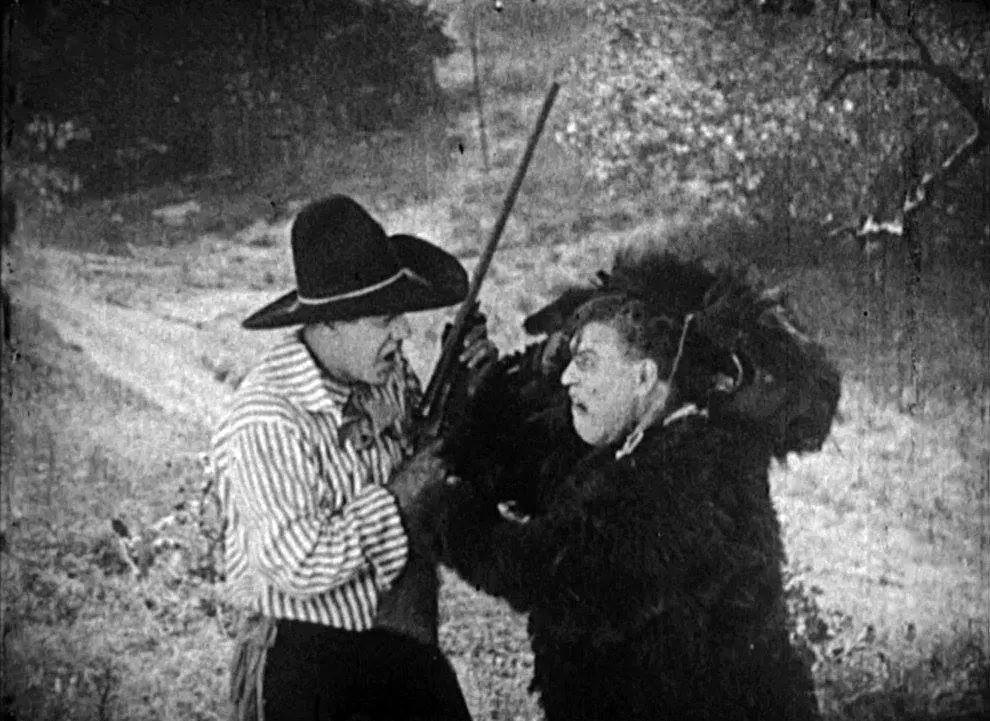
The tone is predominantly comedic slapstick, but there's an underlying tension, particularly given the presence of a live animal and a gun. The humor often derives from the characters' exaggerated reactions to peril, but the peril itself feels surprisingly real at times. It’s a delicate balance; the film wants to make you laugh, but it also wants to keep you on the edge of your seat, wondering if Dirtyshirt will actually shoot the disguised judge. It works. But it’s flawed. The transitions between pure comedy and moments of genuine threat can be jarring, a hallmark of early cinema still experimenting with genre blending. This blend of humor and mild suspense is a fascinating aspect, illustrating how early filmmakers weren't afraid to mix their genres, much like the serialized adventures seen in films such as Perils of the Coast Guard, though with a comedic rather than dramatic emphasis.
While "A Man's Size Pet" is primarily a vehicle for gags, it inadvertently touches upon a few thematic undercurrents that are worth noting. The most obvious is the theme of rivalry and deception, as Magpie consistently attempts to outwit and humiliate Dirtyshirt. This speaks to a primal, almost childlike competition for social standing and romantic attention. Another strong theme is mistaken identity, which drives the climax of the film, highlighting how appearances can be dangerously deceptive, especially when combined with pre-existing fear.
More subtly, the film offers a glimpse into frontier-era sensibilities, where a judge might keep a bear as a pet and feed it tobacco, and where a gun is a natural accessory at a party. This casual brutality, or perhaps simply a lack of modern awareness, is an interesting, if uncomfortable, byproduct of the film's setting and time. It’s a debatable opinion, but the film inadvertently reveals a brutal streak beneath the comedic surface, reflecting a certain era's rather cavalier attitude towards both animal welfare and personal safety. The humor, therefore, is often rooted in scenarios that would be unthinkable today, adding another layer to its historical value.
For those who find joy in the foundational elements of screen comedy, 'A Man's Size Pet' offers a unique window into the past. It is a raw, energetic piece. Its historical value is undeniable. Modern viewers, however, might struggle with its lack of narrative polish. The humor is often broad. Character development is minimal. Yet, the film's sheer audacity makes it memorable.
This film is best approached not as a polished narrative, but as a series of escalating comedic vignettes. It's a testament to the early days of filmmaking, when experimentation was rife and the spectacle of the moving image itself was often enough to captivate an audience. If you appreciate the unrefined charm of silent slapstick and have an interest in the evolution of cinematic comedy, then yes, it’s worth a watch. But manage your expectations; this isn't a meticulously crafted story but a boisterous, often ludicrous, ride.
Ultimately, "A Man's Size Pet" is more than just a relic; it's a boisterous, if unrefined, burst of early cinematic energy. It doesn't aim for profundity, nor does it achieve narrative elegance. Instead, it delivers a series of escalating, often absurd, gags anchored by a truly memorable, if ethically questionable, animal co-star. It's a film that demands a certain generosity from its audience, a willingness to overlook its rough edges in favor of its raw, pioneering spirit. While it won't resonate with everyone, its peculiar charm and historical importance make it a worthwhile watch for the discerning cinephile. It's an imperfect, untamed beast of a film, much like its titular pet, offering a unique glimpse into the wild west of silent comedy. It’s a film that reminds us how far cinema has come, and how much of its foundational spirit was built on sheer audacity and a willingness to simply put a bear on screen.

IMDb 7.4
1924
Community
Log in to comment.