DbcultAccessing Vault...
Cult Review
Senior Film Conservator
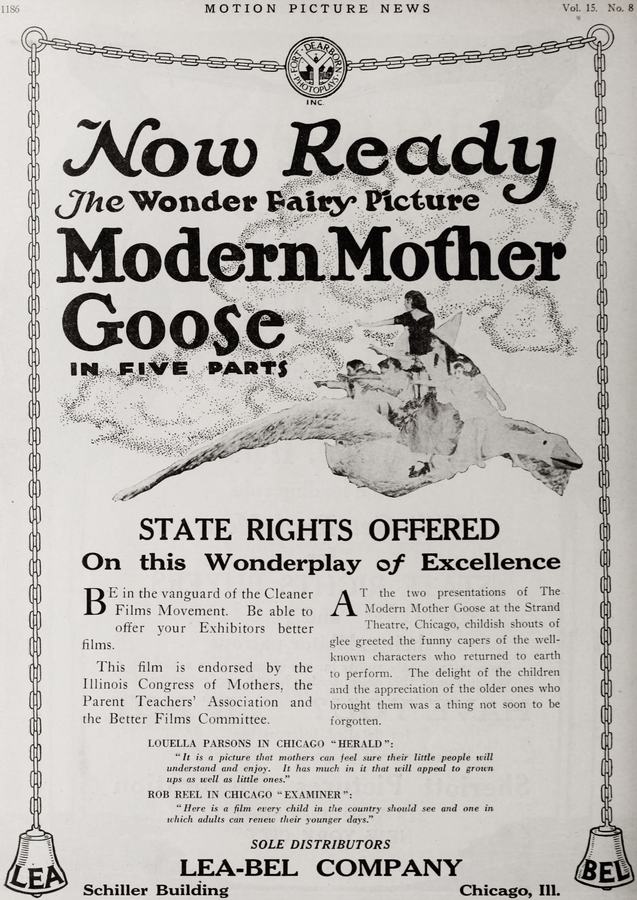
The cinematic landscape of the early 20th century, often viewed through the sepia-toned lens of nostalgia, frequently presented narratives steeped in either melodramatic romance or stark social realism. Yet, amidst this burgeoning art form, a unique gem emerged: "A Modern Mother Goose." This film, a subtle yet potent commentary on the societal currents of its time, transcends mere entertainment, offering a profound glimpse into the burgeoning complexities of female agency and the subtle power of narrative in an era grappling with unprecedented change. It’s a work that, even today, resonates with a quiet audacity, challenging the very fabric of traditional roles while simultaneously celebrating the enduring human need for stories that illuminate our shared existence. Its title, at first glance, might suggest a quaint children's tale, but the film quickly disabuses the audience of such a notion, instead presenting a sophisticated exploration of how ancient wisdom traditions can be reinterpreted for a world hurtling towards modernity. This isn't just a film; it's a social artifact, a mirror reflecting the anxieties and aspirations of a society on the cusp of profound transformation, particularly concerning the evolving role of women.
At the heart of "A Modern Mother Goose" lies Mary, brought to life with an arresting blend of vulnerability and nascent strength by Agnes Paul. Paul's portrayal is nothing short of masterful, capturing the internal struggle of a woman whose vivid imagination and storytelling prowess feel both a blessing and a burden in a society that prizes conformity. Mary is not the boisterous suffragette or the defiant flapper; rather, she embodies a quieter, more insidious form of rebellion. Her "fables" are not mere bedtime stories but rather allegories imbued with a subversive wit, gently questioning the rigid expectations placed upon women of her generation. She is a modern Cassandra, her prophecies wrapped in charming tales, often dismissed by the patriarchal figures around her, yet profoundly influencing the younger generation. Agnes Paul imbues Mary with an inner luminescence, a spirit that refuses to be extinguished by the mundane or the oppressive. Her eyes, often downcast in public, sparkle with an untamed creativity when she is lost in the act of weaving a narrative. This subtle duality is what makes her character so compelling and timeless; she represents the untold stories of countless women who, while outwardly conforming, nurtured revolutionary thoughts within their private worlds. Her journey is not one of dramatic confrontation, but a slow, deliberate blossoming, much like a seed pushing through hardened earth, proving that true change often begins with a whisper, not a shout. Her evolution from a seemingly docile figure to a woman who understands the profound impact of her unique voice is the film's most resonant triumph, echoing the nascent feminist movements that were just beginning to find their footing. While some films of the era, such as The Captive, explored more overt forms of female struggle and liberation, "A Modern Mother Goose" offers a nuanced look at the intellectual and emotional battleground within the domestic sphere, making Mary's quiet acts of defiance all the more powerful.
The brilliance of "A Modern Mother Goose" is further amplified by its meticulously crafted ensemble, each performance adding a crucial layer to Mary's complex world. Ellis Paul, as John, Mary’s earnest suitor or husband, perfectly embodies the well-meaning but ultimately traditional male perspective of the era. He represents the comfort of convention, the societal expectation of a stable, predictable life, and his love for Mary is genuine, yet shadowed by an inability to fully grasp her unconventional spirit. His struggle to reconcile his affection with her artistic inclinations provides a poignant counterpoint to Mary’s internal journey. Ethyl Levy, in her role as Eleanor, serves as a beacon of progressive thought and quiet encouragement. Her character is a breath of fresh air, a subtle mentor who sees Mary's potential and offers the much-needed intellectual and emotional validation that the protagonist often lacks from her immediate environment. Levy portrays Eleanor with an understated strength, her quiet wisdom a stark contrast to the more rigid societal figures. Frederick R. Clark's portrayal of Mr. Henderson, a formidable community elder or relative, is a masterclass in representing entrenched conservatism. He is the embodiment of the societal pressures Mary faces, his disapproving glances and pronouncements serving as constant reminders of the narrow path laid out for women. Clark skillfully conveys the weight of tradition without resorting to caricature, making Henderson a believable, albeit restrictive, force. Young Jack Paul, as Peter, is utterly captivating. His innocent fascination with Mary’s stories is not just charming; it’s symbolic. Peter represents the future, a generation whose minds are open to new narratives and unconventional wisdom, demonstrating the enduring impact of Mary’s unique form of education. His unwavering belief in Mary's tales validates her art in a way no adult could. Finally, Matthew Betz, playing an opportunistic publisher, adds a darker dimension, highlighting the external threats to Mary's artistic integrity. Betz brings a subtle menace, portraying a character who seeks to exploit Mary's talent for commercial gain, stripping it of its inherent soul. Rachel James and other supporting cast members populate Mary's world with authentic interactions, creating a vibrant backdrop that underscores the social fabric of the time. Their collective performances are not just individual triumphs but a harmonious symphony, each instrument playing its part in drawing out the nuanced complexities of Mary’s existence, much like the intricate social dynamics explored in films such as John Glayde's Honor, which dissects the societal pressures faced by its protagonist.
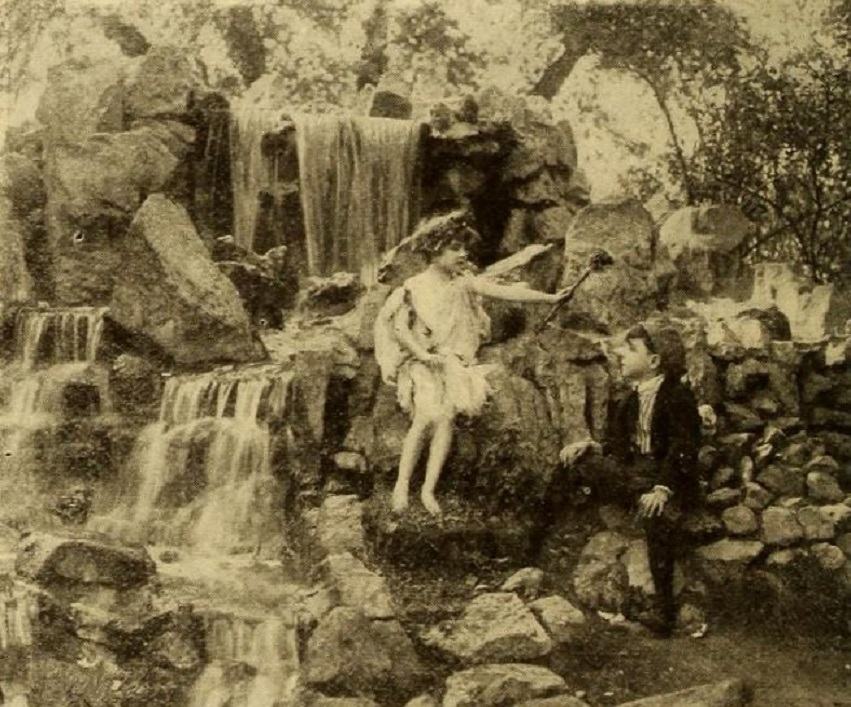
"A Modern Mother Goose" is a veritable tapestry of compelling themes, each thread intricately woven to create a rich and resonant narrative. At its core, the film explores the perennial tension between tradition and modernity. Mary’s struggle is a microcosm of a larger societal shift, where the rigid expectations of the past clash with the burgeoning desire for individual expression and intellectual freedom. The "Mother Goose" metaphor itself is brilliantly subversive; it implies the nurturing of children, the imparting of moral lessons through simple tales, yet Mary's stories are anything but simple. They are infused with a contemporary sensibility, subtly challenging the very norms they appear to uphold. This makes her a quiet revolutionary, a storyteller using the innocuous guise of children's fables to plant seeds of progressive thought. The film masterfully portrays storytelling as a powerful tool for subversion. Mary doesn't preach or protest; she creates worlds where existing societal structures are gently, yet firmly, questioned. Her narratives become a safe space for exploring ideas that would be deemed scandalous in direct discourse, much like the allegorical nature of some literary works of social criticism. This subtle approach makes the film's message all the more potent, demonstrating that true change can often begin with a reimagined narrative. Furthermore, the film is a profound meditation on the female voice and its struggle for recognition. In an era where women were largely confined to domestic roles, Mary's artistic aspirations are revolutionary. Her battle is not just against external forces but also an internal one, grappling with self-doubt and the weight of societal disapproval. The film champions the idea that a woman's intellect and creativity are not only valuable but essential for the evolution of society. The generational shift is another critical theme. The contrast between the rigid adults and the receptive children, particularly Peter, highlights the hope for a future where new ideas are embraced rather than stifled. Mary’s impact on Peter signifies the enduring power of her unconventional wisdom, suggesting that the future belongs to those who dare to dream beyond established boundaries. This thematic depth positions "A Modern Mother Goose" alongside other films that tackled significant social issues, albeit with different tones, such as Should a Woman Tell?, which directly confronted moral quandaries faced by women, or even the psychological intensity of Prestuplenie i nakazanie in its exploration of societal and individual conscience.
The direction of "A Modern Mother Goose" is characterized by a remarkable subtlety and a keen eye for visual storytelling, a hallmark of the era's most accomplished filmmakers. Given the constraints of early cinema, the director masterfully uses composition, lighting, and performance to convey complex emotions and thematic nuances without relying heavily on expository intertitles. The cinematography often juxtaposes Mary's vibrant inner world with the drab reality of her external circumstances. Shots of her lost in thought, a soft glow illuminating her face, contrast sharply with the more rigid, shadowed frames depicting societal gatherings or the disapproving glares of figures like Mr. Henderson. This visual dichotomy effectively communicates her internal struggle and the external pressures she faces. Symbolism abounds, from the recurring imagery of open windows representing freedom and possibility, to the enclosed, cluttered spaces that symbolize the suffocating domesticity Mary seeks to transcend. The pacing is deliberate, allowing the audience to fully immerse themselves in Mary's emotional journey and the gradual unfolding of her influence. There are no sudden, jarring plot twists; instead, the narrative progresses with a gentle rhythm, much like a story being told by a fireside. The director understands the power of the unspoken, allowing the actors' expressions and gestures to carry significant weight. Agnes Paul's nuanced performance, guided by this sensitive direction, allows Mary's transformation to feel organic and earned. The film avoids grand, dramatic gestures, opting instead for quiet moments of revelation and understanding, which resonate far more deeply. This approach, favoring psychological depth over overt action, sets it apart from many contemporaries and highlights a sophisticated understanding of cinematic language. The visual narrative, much like in films such as The Man Who Found Himself, delves into the internal world of its protagonist, using visual cues to tell a story beyond dialogue, making it a powerful example of early cinematic artistry.
Even decades after its initial release, "A Modern Mother Goose" retains a profound and enduring resonance, a testament to its timeless themes and masterful execution. Its legacy lies not in its groundbreaking special effects or its blockbuster appeal, but in its quiet, persistent voice advocating for individual expression and the power of narrative to shape perceptions. The film serves as a vital historical document, offering an invaluable window into the social anxieties and burgeoning progressive movements of the early 20th century. It reminds us that the struggle for female agency is not a monolithic battle but a series of nuanced, often internal, skirmishes fought on the battleground of societal expectations. Its portrayal of Mary's quiet subversion, rather than overt rebellion, offers a more relatable and perhaps more insidious form of empowerment, one that continues to inspire. The film’s lasting impact can be seen in its continuous ability to spark discussions about the nature of tradition, the role of art in social critique, and the importance of nurturing unique voices, particularly those often marginalized. It challenges audiences to look beyond the surface, to find the deeper meanings embedded in seemingly simple tales. In an age saturated with information, Mary's ability to communicate profound truths through accessible stories feels more relevant than ever. The film stands as a beacon for works that prioritize intellectual depth and emotional authenticity over spectacle. While other films of its era, like The Dollar Mark, might have focused on the stark realities of economic struggle, or A Prince in a Pawnshop on class distinctions, "A Modern Mother Goose" carves out its own unique niche by exploring the less tangible, yet equally vital, battles of the spirit and intellect. It is a film that rewards repeated viewings, each time revealing new layers of meaning and reinforcing its position as a quiet classic of early cinema, a timeless whisper that continues to echo in the modern consciousness, urging us to listen to the stories that challenge, enlighten, and ultimately, liberate.
IMDb 4.4
1926
Community
Log in to comment.