DbcultAccessing Vault...
5.2/10
Senior Film Conservator
A definitive 5.2/10 rating for a film that redefined the boundaries of cult cinema. A Roman Scandal remains a cornerstone of transgressive art.
Is 'A Roman Scandal' worth watching today? Short answer: yes, but with significant caveats that speak to its age and specific comedic stylings. This is a film for the dedicated silent comedy enthusiast, the historian of cinematic invention, and anyone fascinated by the peculiar genius of Charles R. Bowers. It is decidedly not for those seeking modern pacing, conventional narrative depth, or a casual introduction to the silent era.
This film works because it unapologetically leans into the unique brand of surreal, mechanical humor that defined Charles R. Bowers’s career, transforming a historical setting into a playground for anachronistic gags and Rube Goldberg-esque contraptions. It fails because its comedic rhythm, while brilliant for its time, can feel alienating to a contemporary audience unaccustomed to the protracted visual setups and payoffs of early cinema. You should watch it if you appreciate the artistry of physical comedy, the ingenuity of early special effects, and a bold, imaginative take on historical satire.
Charles R. Bowers remains one of silent cinema’s most fascinating, yet often overlooked, figures. While names like Chaplin, Keaton, and Lloyd rightly dominate the discourse, Bowers carved out a truly unique niche, blending live-action slapstick with stop-motion animation and elaborate mechanical gags. His films are less about character-driven drama and more about the sheer spectacle of invention gone hilariously awry. 'A Roman Scandal,' while perhaps not his most famous work, perfectly encapsulates this singular vision, offering a vibrant tableau of ancient Rome reimagined through a filter of ingenious absurdity.
The casting of Bowers was, in itself, a stroke of genius for a film titled 'A Roman Scandal.' His very presence signals a departure from historical accuracy into a realm of pure, unadulterated comedic invention. He was not merely an actor but a conceptual artist whose performances were inextricably linked to the intricate contraptions and animated sequences he brought to life. In this particular film, his character serves as the ultimate disruptor, a well-meaning but utterly chaotic force of progress.
The plot of 'A Roman Scandal' is, by modern standards, delightfully thin, existing primarily as a framework upon which to hang a series of escalating visual gags. Bowers's character, a Roman citizen with an inventor's spirit, endeavors to 'improve' various aspects of daily life, from the mundane to the ceremonial. We can imagine scenes where an automated toga-folding machine malfunctions spectacularly, or a chariot fitted with an early, steam-powered engine wreaks havoc in the Forum. The beauty lies in the collision of periods, the deliberate anachronism that fuels every laugh.
This approach allows the film to transcend simple slapstick. It becomes a subtle commentary on the human impulse to innovate, regardless of context, and the often-unforeseen consequences. Bud Fisher, credited as a writer, likely brought a more traditional gag-writing sensibility, perhaps grounding some of Bowers’s more abstract concepts in relatable, albeit still absurd, comedic situations. The interplay between these two comedic minds would have been crucial in shaping the film’s unique tone.
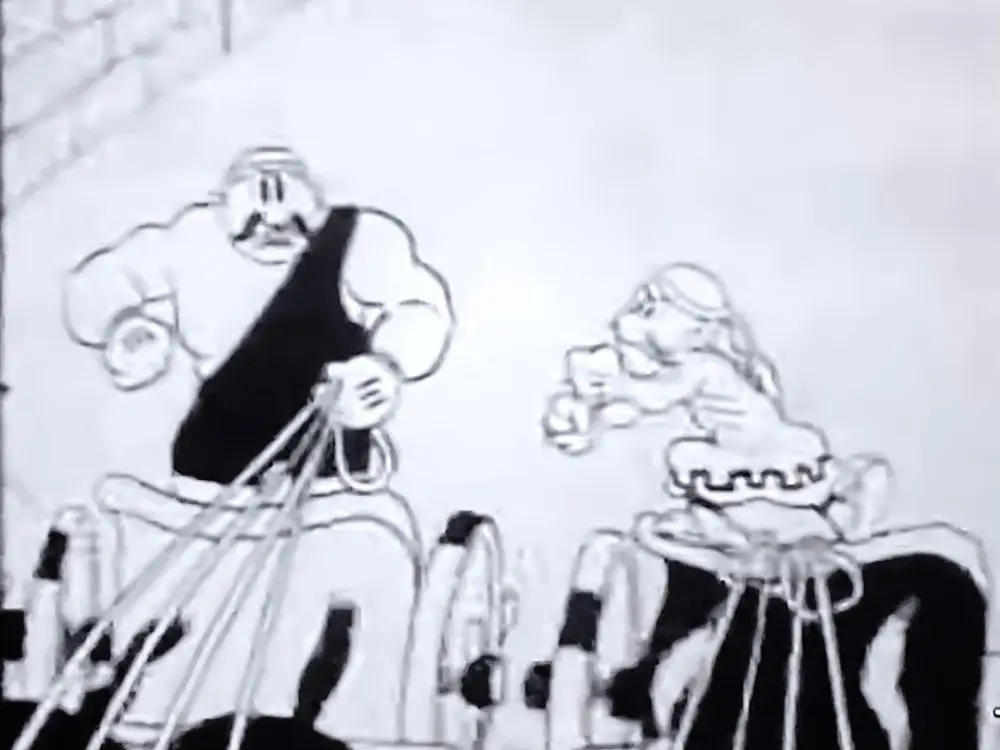
In silent cinema, acting is an art of exaggeration, where every gesture, every facial expression, must convey a wealth of emotion and intent without the aid of dialogue. Charles R. Bowers was a master of this craft, though his style differed markedly from the more overtly emotional performances of his contemporaries. Bowers's acting was often understated, a deadpan counterpoint to the escalating chaos around him. His reactions, typically a bewildered shrug or a look of mild exasperation, amplified the absurdity of his inventions' failures.
One can surmise that in 'A Roman Scandal,' Bowers's physical comedy would have been paramount. Imagine him attempting to demonstrate a newfangled Roman bath scrubber, only to become entangled in its bristles, or trying to explain the mechanics of a self-serving feast table to bewildered senators. His movements would have been precise, almost mechanical themselves, mirroring the very contraptions he creates. Bud Fisher, known for his Mutt and Jeff comic strip, likely contributed a more direct, perhaps even broad, comedic energy, contrasting Bowers's more cerebral approach.
The film undoubtedly relies on the universal language of physical comedy. A well-timed pratfall, a frantic chase sequence through ancient Roman streets, or the sheer visual humor of an elaborate machine failing in a spectacularly messy fashion – these are the moments that would have resonated with audiences then, and still can today, provided one adjusts to the pacing.
Directing a silent comedy like 'A Roman Scandal' demands a keen understanding of visual storytelling. Without dialogue, every frame must be meticulously composed to convey action, reaction, and comedic timing. The director (likely Bowers himself, given his hands-on approach to his films) would have focused on clear sightlines for gags, effective use of intertitles for exposition or punchlines, and dynamic camera work to capture the frenetic energy of the film's set pieces.
Cinematography in 1926, while lacking the sophistication of later eras, still offered opportunities for creative expression. The use of forced perspective to make Bowers's contraptions seem impossibly large or intricate, or the clever integration of stop-motion animation with live-action footage, would have been key. We can envision wide shots capturing the full scope of a chaotic Roman marketplace, suddenly disrupted by one of Bowers's inventions, followed by tighter shots on the bewildered expressions of the extras. The pacing would have been crucial – building tension with a slow setup, only to release it with a rapid-fire succession of gags.
Consider the visual gag potential: a Roman feast where automated food delivery systems go haywire, pelting senators with grapes and olives. The cinematography would need to track the trajectory of the food, the panicked reactions, and Bowers's own escalating exasperation. The editing would be sharp, cutting between cause and effect, setup and punchline, to maintain comedic momentum. This isn't just about filming a joke; it's about engineering a laugh through visual precision.
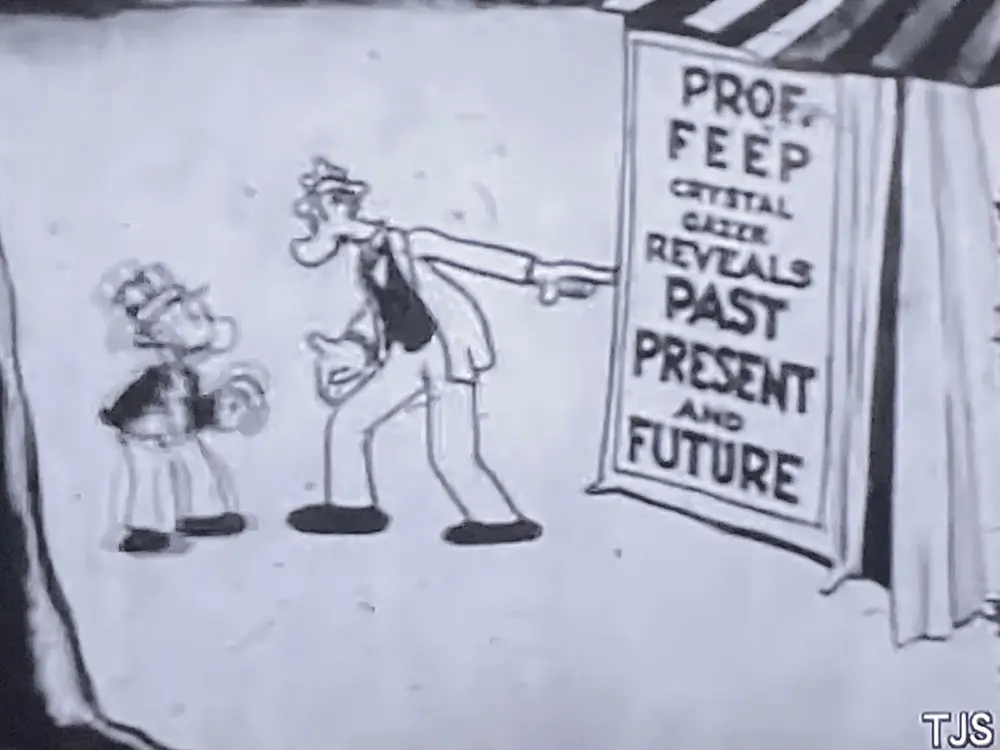
The tone of 'A Roman Scandal' is undoubtedly lighthearted and satirical. It’s a film that pokes fun at the solemnity of history, the rigidity of tradition, and the often-absurd side effects of innovation. The anachronistic elements are not merely for cheap laughs; they serve to highlight the universality of certain human traits – our desire for efficiency, our resistance to change, and our capacity for utterly illogical reactions to the unfamiliar.
One could argue that the film carries a subtle, albeit humorous, critique of unchecked progress. Bowers's inventions, while brilliant in concept, often lead to more problems than they solve, a theme that resonates even more strongly in our technologically saturated world. The film suggests that sometimes, the old ways, while perhaps less efficient, hold a charm and simplicity that modern conveniences often obliterate. This is a surprisingly profound observation for a silent comedy built on gags.
While 'A Roman Scandal' shares the silent comedy landscape with giants, its specific flavor sets it apart. It doesn't possess the balletic grace of a Buster Keaton film like The Dangerous Age, nor the poignant social commentary of Charlie Chaplin's work. Instead, it aligns more closely with the surrealist tendencies of some of Max Linder’s later films or the sheer mechanical ingenuity found in early animation. Bowers's unique blend of live-action and stop-motion sets him apart even from someone like Harold Lloyd, whose thrill comedies, such as High Life, relied on physical daring rather than elaborate contraptions.
The film's strength lies in its ability to create a completely self-contained, logic-defying world. It doesn't aim for realism; it revels in its artificiality. This is a brave choice, especially in an era where many comedians were trying to ground their characters in relatable, if exaggerated, human experiences. Bowers dared to be different, to be weirder, and that's precisely why his work, including 'A Roman Scandal,' still commands attention today.
Absolutely, for the right audience. If you approach 'A Roman Scandal' with an open mind and an appreciation for the historical context of silent film, it offers a truly unique experience. It’s a delightful dive into a comedic sensibility that is both timeless in its absurdity and distinctly of its era in its execution. The ingenuity of the gags, the sheer visual creativity, and Bowers’s understated performance make it a rewarding watch.
However, be prepared for a different pace. Silent films often require a recalibration of modern viewing habits. The humor is visual, often slow-building, and relies on sustained attention to the intricate setups. This is not a film to idly scroll through your phone during. It demands your engagement, and in return, it offers genuine, often surprising, laughs.
Pros:
- Originality of Concept: The blend of ancient Rome with modern (for 1926) mechanical invention is genuinely unique and provides endless comedic opportunities.
- Bowers's Unique Humor: Showcases the distinctive, often surreal, comedic style of Charles R. Bowers, a true innovator in early cinema.
- Visual Ingenuity: Likely features impressive practical effects and early stop-motion animation, a hallmark of Bowers's work.
- Historical Insight: Offers a fascinating glimpse into the comedic sensibilities and technical capabilities of the silent film era.
- Subtle Satire: Beyond the laughs, there’s a clever, often understated, commentary on progress, tradition, and human nature.
Cons:
- Pacing Challenges: The comedic rhythm of 1926 can feel deliberately slow to modern viewers, requiring patience.
- Limited Narrative Depth: The plot serves primarily as a vehicle for gags, which might disappoint those seeking a strong story arc or character development.
- Accessibility: As a silent film, it requires a different kind of engagement, and some viewers may struggle to connect without dialogue.
- Niche Appeal: While brilliant in its niche, it’s not a universally appealing film and won't resonate with everyone.
- Potential for Repetition: Some gags, while clever, might feel drawn out or repetitive to a contemporary audience.
“A Roman Scandal” is a fascinating, often uproarious, relic from a bygone era of cinematic comedy. It works. But it’s flawed. Charles R. Bowers, a true unsung hero of silent film, delivers a performance that is both understated and utterly captivating, a perfect foil for the mechanical chaos he unleashes. This isn’t a film that will redefine your understanding of plot or character, but it absolutely will challenge your expectations of what a historical comedy can be. It’s a testament to the power of visual storytelling and the enduring appeal of pure, unadulterated absurdity. If you're willing to step back in time and embrace its unique cadence, you'll find a surprising amount to enjoy and even marvel at. It might not be for everyone, but for those it connects with, it’s a quietly brilliant piece of comedic history.

IMDb 6.7
1927
Community
Log in to comment.