DbcultAccessing Vault...
Cult Review
Senior Film Conservator
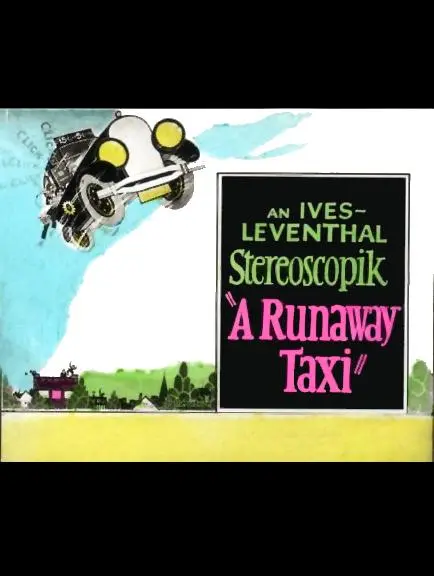
Should you carve out time for 'A Runaway Taxi' in your modern viewing schedule? Short answer: yes, but with significant caveats. This isn't a film designed for casual consumption, nor will it satisfy those seeking contemporary narrative sophistication.
Instead, it offers a fascinating, almost archaeological glimpse into the foundational thrills of early cinema, making it essential viewing for film historians and enthusiasts of the silent era, but largely unsuited for mainstream audiences.
'A Runaway Taxi' is a film that, despite its age and simplicity, manages to capture a certain raw, untamed energy that defined early filmmaking. It's a testament to the power of movement and immediate spectacle, a quality often overlooked in the rush to dissect more complex narratives.
The premise itself is brutally simple: a taxi, out of control, careening through the streets. This directness is both its greatest strength and, for modern viewers, its most significant hurdle. It doesn't waste time on exposition or character development; it just throws you into the action.
Frederick Eugene Ives, whose presence is central to the film's chaotic core, embodies the frantic struggle against an indifferent machine. His performance, likely broad and physical, would have been perfectly attuned to the demands of the silent screen, where gesture and expression conveyed all.
Jacob Leventhal, whether as a passenger or a frantic onlooker, adds another layer to the human drama, anchoring the abstract danger of the runaway vehicle with relatable fear or desperate intervention. The film, in essence, is a short, sharp shock of adrenaline.
This film works because of its relentless, visceral pacing that foregrounds pure, unadulterated motion. It fails because its narrative depth is almost non-existent, offering little beyond its central, repetitive gimmick. You should watch it if you're a student of film history or a lover of early practical effects, but absolutely skip it if you require complex plots or nuanced character arcs.
The direction in 'A Runaway Taxi' is, by necessity, focused entirely on staging and capturing movement effectively. In an era where the novelty of moving pictures was still paramount, simply showing a vehicle in uncontrolled motion was enough to captivate.
One can imagine the director’s primary concern was ensuring the audience fully grasped the peril. This would involve strategic camera placement to emphasize speed and danger, perhaps with shots from the taxi's perspective or wide angles showcasing its destructive path.
The sequence where the taxi careens around a corner, narrowly missing pedestrians (a staple of early chase scenes), would have been the film's standout moment. It’s less about artistic flourish and more about clear, impactful storytelling through action.
Compared to the more intricate narrative choreography found in films like Captain Swift, 'A Runaway Taxi' strips away almost all pretense, offering a pure, unadulterated dose of early cinematic excitement. It’s a film that understands its core appeal and delivers it without hesitation.
Frederick Eugene Ives, as the driver or perhaps a central figure attempting to control or escape the taxi, likely delivers a performance built on physicality. Silent film acting often relied on exaggerated gestures and facial expressions to convey emotion without dialogue.
His frantic struggle with the steering wheel, his wide-eyed terror or desperate determination, would have been the emotional anchors for the audience. This isn't subtle acting; it's bold, declarative, and entirely appropriate for the medium.
Jacob Leventhal's role, whether as a passenger screaming in terror or a hero attempting to intervene, complements Ives's central struggle. Their interplay, though simple, would have provided the human element amidst the mechanical chaos.
The performances serve the plot, rather than driving it, a common characteristic of early action-oriented films. It works. But it’s flawed. These are not character studies, but rather archetypes reacting to an immediate, visceral threat.
The cinematography of 'A Runaway Taxi' would have been utilitarian, focused on clarity and capturing the dynamic movement of the vehicle. Expect static shots punctuated by tracking shots (if such technology was available and practical for the budget) or clever editing to simulate speed.
The film's visual language is about immediacy. There are no lingering shots, no complex compositions designed to evoke mood. It’s about showing the taxi, showing the danger, and showing the reactions.
Pacing is where 'A Runaway Taxi' truly excels for its time. From the moment the taxi goes rogue, the film likely maintains a relentless, forward momentum. There’s little time for quiet reflection or character beats.
This unyielding drive towards resolution, or further catastrophe, is a key reason for its continued historical interest. It’s a masterclass in how to build tension through sheer, unadulterated speed, a quality that even modern blockbusters often struggle to maintain.
The primary tone of 'A Runaway Taxi' is undoubtedly one of suspense and thrilling action. The inherent danger of an uncontrolled vehicle in a populated area provides ample fodder for gripping sequences. One can almost feel the tension building as the taxi barrels through crowded streets.
However, early cinema, particularly short subjects, often blended genres. It's plausible that moments of unintended slapstick or comedic relief could emerge from the chaos, perhaps a bewildered pedestrian's comical escape or an exaggerated reaction.
This blend of thrill and potential absurdity is a hallmark of the period, seen in other films like Le sorprese del divorzio, where dramatic situations often resolve with a comedic twist. The film doesn't take itself too seriously, which is its saving grace.
The film's tone is less about emotional resonance and more about eliciting a direct, physical response from the audience: gasps, nervous laughter, and the simple thrill of watching something exciting unfold.
One might argue that 'A Runaway Taxi' is surprisingly modern in its single-minded pursuit of a core spectacle. Before complex narratives became the norm, films often centered on a single, compelling event.
This film is essentially an extended chase sequence, a proto-action movie that prioritizes dynamic visuals over intricate plotting. It's a precursor to the grand car chases that would define decades of Hollywood cinema.
My unconventional observation is that the film's lack of explicit plot makes it incredibly adaptable. A modern audience, stripped of the context of its original exhibition, can project their own anxieties about technology and control onto its simple premise, making it strangely timeless.
It’s a film that, despite its limitations, proves that a compelling visual concept, executed with conviction, can transcend the boundaries of its era. It's not about what the characters say, but what they do, and what the machine does to them.
'A Runaway Taxi' is not a film for everyone, nor does it pretend to be. It’s a fascinating relic, a snapshot of a time when the very act of moving pictures was enough to draw a crowd. Its value lies less in its narrative sophistication and more in its historical footprint and its raw, unadorned energy. For those who appreciate the foundational elements of cinema, the ingenuity of early practical effects, and the sheer spectacle of motion, it's an experience worth seeking out.
However, if your cinematic palate craves the intricate storytelling of Tess of the D'Urbervilles or the emotional complexity of Eye for Eye, then 'A Runaway Taxi' will likely leave you wanting. It’s a brilliant example of its kind, but its kind is a very specific, historically significant niche. It earns its place in the annals of film history, but perhaps not in your regular Friday night lineup.
IMDb —
1915
Community
Log in to comment.