DbcultAccessing Vault...
6/10
Senior Film Conservator
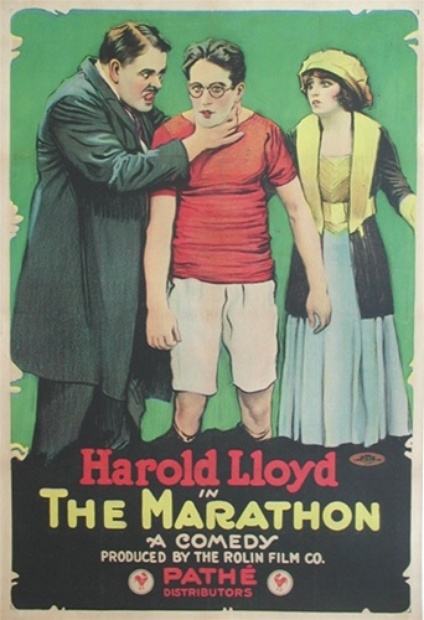
A definitive 6/10 rating for a film that redefined the boundaries of cult cinema. The Marathon remains a cornerstone of transgressive art.
When we look back at the primordial soup of American silent cinema, 1919 stands out as a year of profound mutation. It was the moment Harold Lloyd fully shed the derivative skin of 'Lonesome Luke' and embraced the 'Boy'—that bespectacled, resilient everyman who would eventually define the era's optimism. The Marathon isn't just a short film; it is a frantic manifestation of a society moving too fast for its own good. Unlike the more somber explorations of morality found in The Secret Orchard, Lloyd’s work here is purely visceral, a celebration of the human body as a tool for comedic geometry.
The film starts with a deceptive quietude. We see the Boy attempting to woo Bebe Daniels, whose screen presence provides a necessary emotional anchor to the impending chaos. There is a certain charm in these early moments that reminds one of the domestic tensions in A Woman's Honor, though Lloyd immediately pivots toward the absurd. The chemistry between Lloyd and Daniels is palpable, a spark that had been refined over dozens of collaborations at Hal Roach Studios. But the romance is merely the fuse; the explosion is the chase.
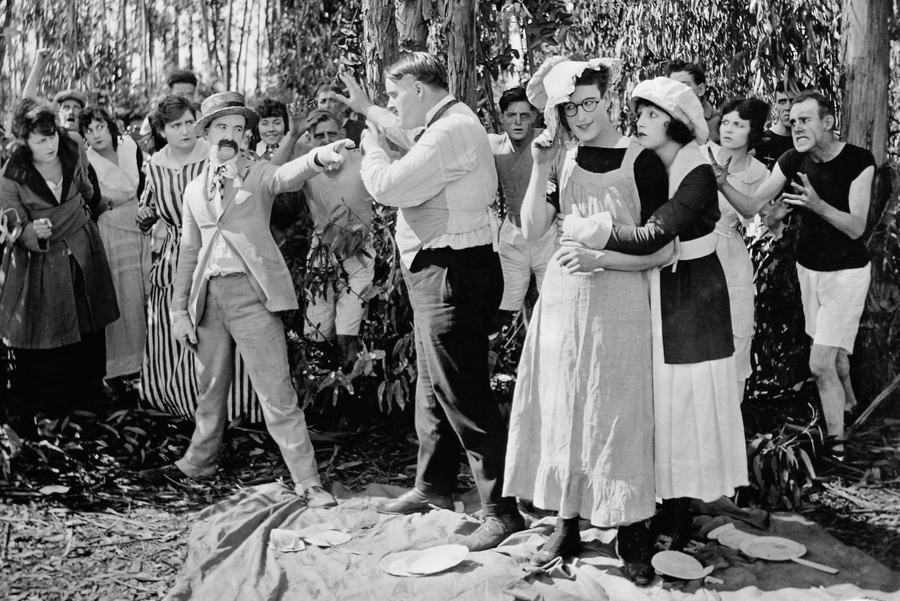
The core brilliance of The Marathon lies in its title’s double meaning. It refers to the literal race the Boy stumbles into, but also the metaphorical endurance test of his daily existence. When the father and the police begin their pursuit, the film transforms into a peripatetic nightmare. Lloyd’s athleticism is on full display, yet it’s coded as desperation. This isn't the calculated heroism of Davy Crockett; it’s the frantic scrambling of a man who is perpetually one step away from total catastrophe.
As he merges with the actual marathon runners, the film engages in a fascinating commentary on public perception. The crowd cheers for him, unaware that his speed is fueled by the fear of incarceration rather than a desire for a medal. This confusion between private panic and public acclaim is a recurring theme in Lloyd's filmography. It’s a stark contrast to the more rigid social hierarchies depicted in A Gentleman's Agreement. In Lloyd’s world, the individual is always at the mercy of a misunderstanding that elevates him to a status he never sought.
Directorial duties fell to Fred C. Newmeyer, a man who understood the mechanics of a gag better than almost anyone in the industry. The pacing of The Marathon is relentless. There are no wasted frames. Every fall, every hurdle, and every interaction with the supporting cast—including the always reliable 'Snub' Pollard—is timed with the precision of a Swiss watch. The cinematography captures the sprawling, dusty roads of early Los Angeles, providing a documentary-like backdrop to the stylized violence of the slapstick. It lacks the lush, almost operatic visuals of Amazonas, Maior Rio do Mundo, but it gains a gritty, immediate energy that keeps the audience tethered to the screen.
Consider the sequence where the Boy is running through the crowd. The camera placement is low, emphasizing the churning legs and the dust clouds. It’s a primitive form of action filmmaking that feels surprisingly modern. While Great Expectations might focus on the internal psychological toll of ambition, Lloyd focuses on the external, physical toll of just trying to stay upright. The humor is found in the friction between the Boy’s glasses—a symbol of intellect and fragility—and the brutal physical demands of the race.
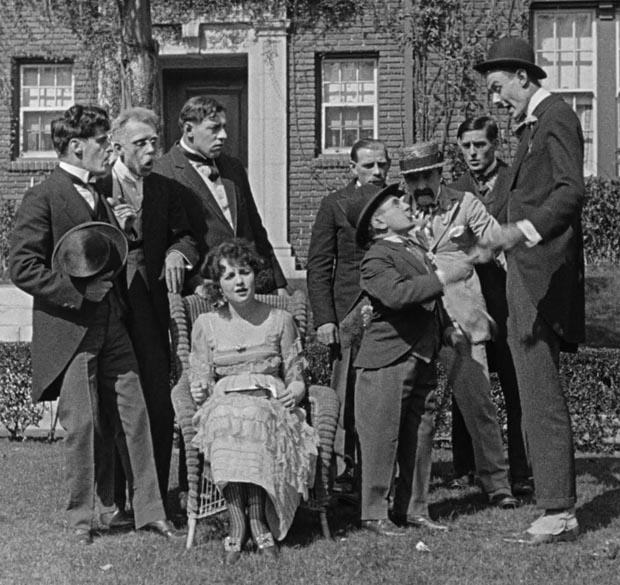
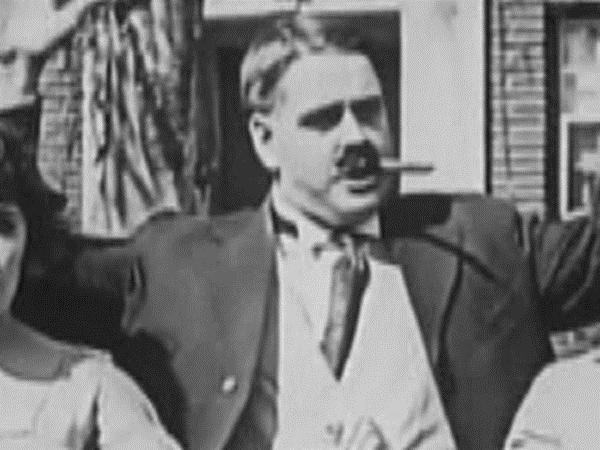
The cast is a 'who's who' of the Roach lot. Noah Young and Bud Jamison bring their formidable physical presence to the roles of the pursuers, acting as the immovable objects to Lloyd’s unstoppable force. The presence of Marie Mosquini and James Fitzgerald adds layers to the communal chaos. Unlike the focused political intrigue of The Politicians, the 'politics' here are purely domestic and physical. It's about the right of possession—not of property, as in By Right of Possession, but of one's own destiny in a world that keeps trying to trip you up.
The film also touches upon the 'marathon craze' of the early 20th century. By 1919, long-distance running had become a bizarre public obsession, often involving grueling 'dance marathons' or 'walking matches.' Lloyd satirizes this by showing how easily a pursuit can be commodified into entertainment. The police aren't just chasing a 'criminal'; they are inadvertently providing the 'content' for the spectators lining the streets. It’s a meta-commentary that feels decades ahead of its time, echoing the themes of power and manipulation found in The Lash of Power.
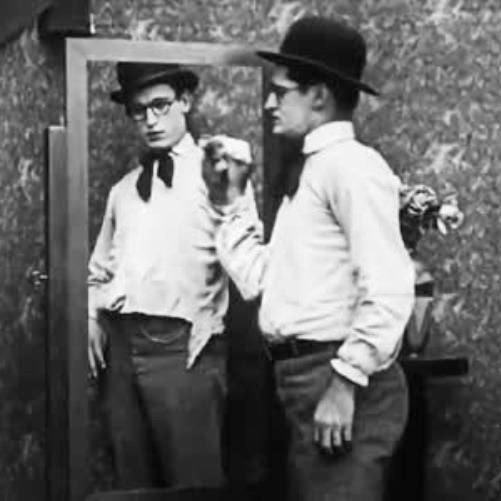
Writing for a silent comedy requires a different kind of literacy. The 'writers' of these films—often the actors and directors themselves in an improvisational huddle—had to construct a narrative entirely through action. In The Marathon, the story is told through the trajectory of the chase. We see the Boy’s evolution from a romantic suitor to a fugitive to a champion, all without a single line of spoken dialogue that matters as much as his facial expressions. His eyes, magnified by those iconic horn-rimmed lenses, convey a spectrum of emotion: panic, realization, and eventually, a weary triumph.
This visual storytelling is far more sophisticated than the melodramatic staginess of The Code of Marcia Gray. Lloyd understood that the audience doesn't need to be told why he's running; they feel the rhythm of the run. The editing by the Roach team ensures that the transition between the domestic scenes and the marathon is seamless, creating a snowball effect of narrative tension. By the time we reach the climax, the film has achieved a state of 'pure cinema' where movement is the only language that exists.
Is The Marathon Lloyd’s greatest work? Perhaps not when compared to the feature-length heights of Safety Last! or The Freshman. However, as a distilled essence of his comedic philosophy, it is unparalleled. It captures a moment in time when cinema was discovering its ability to manipulate time and space through the edit. It lacks the cynicism of An Alien Enemy or the tragic weight of The Cast-Off, opting instead for a joyous, albeit exhausting, celebration of persistence.
The film ends not with a grand resolution, but with the logical conclusion of its own frantic energy. The Boy wins, but at what cost? He has outrun the law, outrun the father, and outrun the professional athletes, yet he remains the same bespectacled dreamer we met in the first frame. It is this refusal to change—this stubborn adherence to his own identity despite the world’s attempts to crush him—that makes Harold Lloyd the most relatable of the silent clowns. The Marathon is a testament to the idea that life is just one long race, and sometimes, the only way to win is to never stop moving, even if you don't know where you're going.
In the end, we are left with the image of a man who has conquered the city through sheer accidental momentum. It’s a powerful image, one that resonates in an age where we all feel like we’re running a race we didn't sign up for. Lloyd’s 'The Marathon' is more than a comedy; it’s a survival manual wrapped in a slapstick routine. If you can find a restored print, watch it not just for the laughs, but for the incredible display of 1910s craftsmanship that paved the way for every action-comedy that followed. It is, quite simply, a sprint through the heart of early Hollywood.
IMDb 2.8
1931
Community
Log in to comment.