DbcultAccessing Vault...
6.8/10
Senior Film Conservator
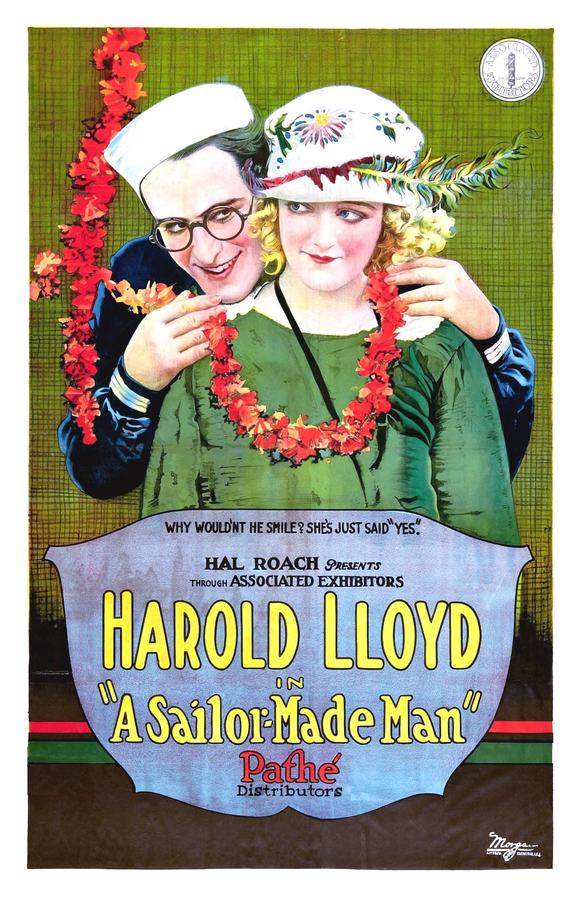
A definitive 6.8/10 rating for a film that redefined the boundaries of cult cinema. A Sailor-Made Man remains a cornerstone of transgressive art.
By 1921, the landscape of silent comedy was undergoing a tectonic shift. The era of the two-reeler was beginning to feel restrictive for the burgeoning ambitions of the medium’s giants. While The Smilin' Kid and other contemporary shorts offered quick-fire dopamine hits of slapstick, Harold Lloyd sensed a need for structural expansion. A Sailor-Made Man stands as a pivotal monument in this evolution. Originally conceived as a standard short, the narrative density and the organic proliferation of gags forced the film to expand into a four-reel featurette, effectively launching Lloyd into the feature-film stratosphere that would later yield masterpieces like Safety Last!
The film opens with a sequence that meticulously establishes the protagonist's indolence. Unlike the desperate poverty often explored in A Child for Sale, Lloyd’s character here is burdened by nothing but excess. He is the ultimate idle playboy, a figure of leisure whose primary struggle is the exertion required to propose marriage. This setup is crucial; it provides the psychological canvas upon which the Navy will paint its lessons of discipline and valor.
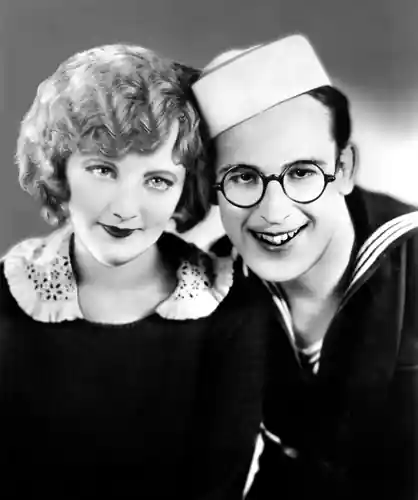
The brilliance of Lloyd’s 'Glasses Character' lies in his relatability. He is not a whimsical waif like Chaplin or a stoic statue like Keaton; he is a man of the modern age, defined by his drive and, occasionally, his foolishness. When he joins the Navy, the comedy arises not just from physical blunders, but from the collision of class expectations. The transition from silk robes to sailor whites is handled with a deftness that avoids the heavy-handed moralizing found in An Honest Man. Instead, the film leans into the chaotic energy of shipboard life.
The casting of Noah Young as 'Rough-House' O'Kane provides a perfect foil. Their relationship—initially one of antagonism, eventually one of mutual respect—mirrors the broader societal shifts of post-WWI America. The camaraderie formed in the belly of a steel vessel serves as a microcosm for the melting pot of the era. This isn't just a comedy; it's an exploration of masculine identity in a world that was rapidly industrializing. We see traces of the same social commentary found in Snobs, yet Lloyd keeps the tone light, prioritizing the 'gag' as the primary unit of storytelling.
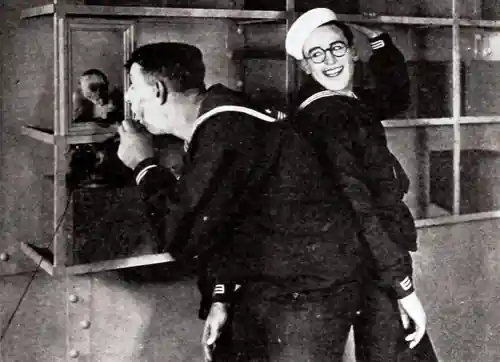
The film’s final act is where the 'sailor-made' man truly emerges. Set in the exoticized locale of Agra-Putra, the sequence is a masterclass in spatial comedy. Lloyd utilizes the architecture of the Maharajah’s palace with a precision that borders on the mathematical. The chase scenes are not merely frantic movements; they are choreographed ballets of timing and perspective. While a film like The Whispering Chorus might use shadows for psychological dread, Lloyd uses every pillar, balcony, and doorway for comedic concealment and revelation.
One cannot overlook the contribution of the writing team, including H.M. Walker and Sam Taylor. Their ability to weave a coherent emotional arc through a series of escalating stunts is what separates Lloyd’s work from the more episodic nature of Trouble Makers. The rescue of Mildred Davis is not just a plot necessity; it is the culmination of the protagonist’s growth. He uses the tools of his environment—boxing gloves, heavy curtains, and even his own perceived clumsiness—to overcome a superior force. This is the 'optimism of the ordinary' that became Lloyd’s hallmark.

Visually, A Sailor-Made Man is surprisingly sophisticated for 1921. The cinematography captures the scale of the naval vessels with an eye for detail that rivals the documentary realism of the time. The contrast between the sun-drenched deck of the ship and the shadowy, opulent interiors of the palace creates a visual rhythm that keeps the viewer engaged. It lacks the pastoral sentimentality of The Gates of Eden, opting instead for a crisp, urban energy that feels remarkably contemporary.
The supporting cast, featuring Dick Sutherland as the formidable Maharajah and Mildred Davis as the quintessential ingenue, provides the necessary stakes. Davis, who would later become Lloyd’s real-life wife, possesses a screen presence that is both delicate and resilient. Her role here, while traditional, is elevated by the genuine chemistry she shares with Lloyd. Unlike the more tragic romantic pairings in Aylwin, the Lloyd-Davis dynamic is built on a foundation of playfulness and mutual charm.

Reflecting on A Sailor-Made Man over a century later, its influence is undeniable. It paved the way for the high-concept comedies of the late 1920s and established the blueprint for the 'action-comedy' genre. While films like Scandal focused on the salacious underbelly of high society, Lloyd chose to focus on the redemptive power of effort. He suggested that even the most vacuous playboy could find substance through service and courage.
The film avoids the melodrama of The World and Its Woman, focusing instead on the sheer joy of movement. Whether he is accidentally enlisting or dodging a scimitar, Lloyd’s movements are a testament to the physical prowess required of silent film actors. He was a stuntman, an actor, and a visionary wrapped in one pair of horn-rimmed glasses. A Sailor-Made Man remains an essential piece of cinema history, a vibrant reminder of a time when the silver screen was a playground for the impossible.
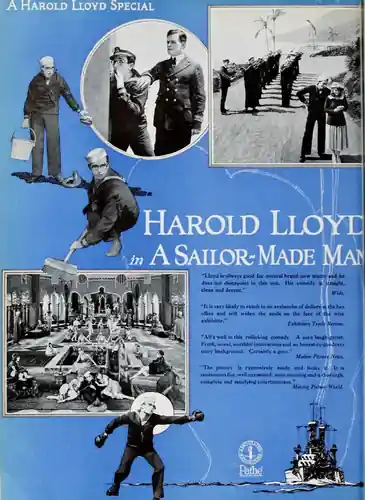
In the broader context of Lloyd's filmography, this work serves as the bridge between his early experimentation and his eventual mastery. It shares the adventurous spirit of Jack Chanty but infuses it with a suburban relatability that was uniquely Lloydian. It is a film that celebrates the 'Boy' next door—even if that boy starts with a million dollars and ends up on a battleship. For any student of comedy, or indeed any lover of fine storytelling, this 1921 gem is a mandatory voyage.
Final Verdict: A high-octane masterpiece of early feature comedy that proves Harold Lloyd was the true architect of the modern slapstick hero. Essential viewing for those who appreciate the intersection of grit, wit, and maritime chaos.
IMDb 5.8
1921
Community
Log in to comment.