DbcultAccessing Vault...
Cult Review
Senior Film Conservator
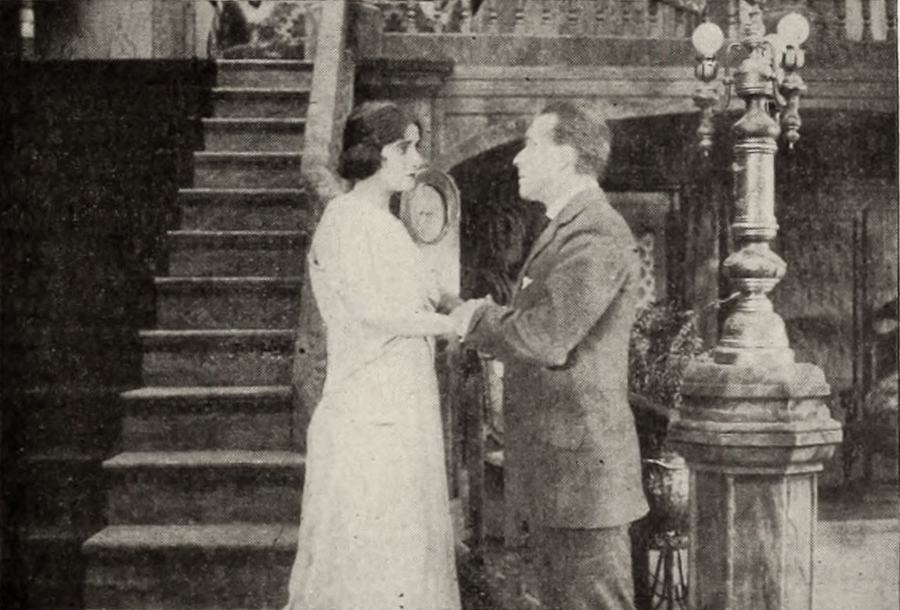
Ah, the silent era! A time when narratives often embraced the fantastical with a refreshing lack of cynicism, where the grand gestures of melodrama met the nascent stirrings of genre film. 'One Million Dollars,' a cinematic artifact from 1915, emerges from this rich period as a particularly intriguing specimen, a delightful confection of spiritualism, high-stakes crime, and ingenious detective work. Penned by the imaginative duo of Frederic Arnold Kummer and George DuBois Proctor, this film isn't merely a quaint historical curio; it’s a testament to the boundless creativity that defined early filmmaking, demonstrating a willingness to blend disparate elements into a compelling whole. It’s a narrative that, even today, captivates with its audacious premise and intricate plotting, proving that a good story, well told, transcends the limitations of its medium or its age.
At its heart, 'One Million Dollars' is a story of extraordinary circumstances. We are introduced to Richard Duvall, portrayed with a certain gravitas, an English criminologist whose intellectual curiosity leads him far from the familiar climes of Europe to the spiritual heartland of India. It’s here, amidst ancient traditions and profound mysteries, that Duvall experiences a transformative encounter. After a selfless act – saving a Buddhist priest's life – he is bestowed with a gift that shatters the boundaries of his conventional understanding: a crystal globe. This isn't merely an ornamental trinket; it’s a conduit to the astral plane, enabling Duvall to enter a cataleptic state and unleash his astral body. This concept, while firmly rooted in spiritualist beliefs popular at the time, serves as a magnificent narrative device, elevating the film beyond a simple 'whodunit' into something far more ethereal and thrilling. Imagine the possibilities! A detective who can literally transcend physical barriers, a silent observer in the most clandestine of settings. It sets a precedent for a unique brand of espionage, a silent, unseen surveillance that pre-dates modern technology by decades.
It is during his spiritual awakening in India that Duvall's path crosses with Grace Ellicott. Their accidental collision, a charming cinematic meet-cute, sparks an immediate, mutual admiration. Grace, touring the Far East with her aunt, the Countess D'Este, and the Count, represents a beacon of innocence and beauty, soon to be engulfed by a sinister plot. Back in England, the narrative shifts, revealing the dark underbelly of aristocratic life. The Count D'Este, burdened by his mistress's financial demands and unable to meet them, conspires with his sinister housekeeper, Mrs. Cooke, to eliminate his wife and claim her fortune. The method is insidious: poison, subtly introduced into candy, leading to the Countess’s sudden, suspicious demise. This act of cold-blooded murder sets the stage for the central conflict, robbing Grace of her beloved aunt and, more importantly, her rightful inheritance. The film masterfully builds this tension, allowing the audience to witness the crime unfold, creating a sense of urgency for Duvall's eventual intervention. It’s a classic setup, but infused with the unique spiritual element that 'One Million Dollars' so deftly employs.
Upon his return to England, Duvall, perhaps still pondering the inexplicable encounter with Grace in India, embarks on further experiments with his crystal globe. To his astonishment and delight, Grace's face materializes within the orb's depths, a poignant reminder of their brief, yet impactful, connection. This is where the film truly embraces its unique premise. Subsequent astral journeys, undertaken while in his cataleptic state, begin to peel back the layers of the Countess’s death. Duvall's disembodied consciousness becomes privy to fragments of the nefarious plot, witnessing the deceit and avarice that led to Grace's aunt's murder and the subsequent swindling of her fortune. It's a brilliant conceit, offering a visual representation of intuition and deduction, where the detective literally 'sees' beyond the physical realm. This element differentiates 'One Million Dollars' significantly from more grounded detective stories of the era, such as The Ticket-of-Leave Man, which relied on more conventional police procedural elements. Duvall’s methods are unconventional, bordering on the supernatural, yet presented with a straight face, inviting the audience to suspend disbelief and revel in the imaginative possibilities.
Armed with these spectral insights, Duvall seeks out Grace, a formidable task given the extraordinary nature of his revelations. He attempts to explain his bizarre experiments, a conversation that must surely have been fraught with skepticism on Grace’s part, yet her predicament soon validates his strange claims. Grace reveals that before her aunt's death, she had seen the Countess's will, which clearly stipulated that her entire fortune, including a cool million dollars in cash, was to be bequeathed to her. However, in the wake of the suspicious death, the Count produces a new will, conveniently naming himself as the sole beneficiary. The swiftness and convenience of this new document, coupled with Grace's prior knowledge, ignite her suspicions, aligning perfectly with Duvall's astral findings. This pivotal moment solidifies their alliance, transforming their initial mutual admiration into a partnership driven by justice. The film expertly builds the tension around this financial betrayal, making the titular 'one million dollars' not just a sum, but a symbol of justice denied.
Duvall, a man of action as well as intellect, wastes no time in formulating a plan. His first move is to secure a position for his loyal East Indian servant, Purtab Gar, within the Count's household. This strategic placement provides an invaluable inside source, a silent pair of eyes and ears within the enemy's camp. What follows is a brilliant psychological game, a cat-and-mouse chase where Duvall, under the guise of the mysterious 'Victor Gerard,' begins to systematically drive Count D'Este to the brink of distraction. Everywhere the Count turns, he finds cards bearing the chilling demand: "I want One Million Dollars. Victor Gerard." The repetition, the ubiquity of these messages, slowly erodes the Count's composure, turning his home into a psychological prison. This form of torment is ingenious, relying on mental pressure rather than brute force, a sophisticated tactic for the era. It speaks to Duvall's cunning, his ability to manipulate situations and minds, much like the intricate plots seen in films such as The Money Master, but with a unique, almost theatrical flair.
The psychological warfare culminates when Duvall, still in his 'Victor Gerard' persona, pays a direct visit to the increasingly agitated Count. He insists that the one million dollars be prepared for collection at midnight, promising a return. Driven to desperation, the Count, rather predictably, notifies the police. In a stroke of audacious irony, the chief of police calls in Duvall himself to assist in solving the mystery and apprehending the elusive 'Gerard.' Duvall, maintaining his perfect facade, outlines a meticulously crafted plan, directing the Count to have the money ready as demanded, while assuring him of impregnable police protection. The stage is set for a grand theatrical display. At the appointed hour, 'Gerard' arrives, a shadowy figure amidst the watchful eyes of the law. As the police close in, 'Gerard' mysteriously vanishes, along with the money, leaving the authorities utterly bewildered. The scene is a masterclass in misdirection, a testament to Duvall's meticulous planning and his ability to outwit not only the criminals but also the forces of law and order, all for the greater good. This sequence alone would have been a thrilling spectacle for silent film audiences, reliant on visual cues and the power of suggestion to convey the magic of the disappearance.
The immediate aftermath of 'Gerard's' vanishing act is chaotic. Duvall coolly emerges from a room where the police believed they had 'Gerard' trapped, deepening the mystery. The Count, now utterly unhinged, accuses Grace of stealing the money and, in a fit of rage, attempts to strangle her. It is Purtab Gar, the loyal servant, who intervenes, saving Grace from the Count's murderous fury. The climax of the film sees Duvall, ever the cunning strategist, cornering Mrs. Cooke as she attempts to poison Grace – a chilling echo of the Countess’s murder. Trapped and exposed, the housekeeper breaks, confessing to her complicity in the Countess’s murder. With all the pieces in place, Duvall meticulously explains everything to the mystified police, laying bare the Count’s villainy, Mrs. Cooke’s treachery, and his own elaborate scheme to ensure justice. The Count is carried off under arrest, his reign of terror and greed brought to a definitive end. The final scene, with Grace and Duvall left happily together, provides a satisfying resolution, not just of the crime, but of their burgeoning romance. It’s a clean wrap-up, typical of the era, where morality triumphs and love conquers all, leaving the audience with a sense of poetic justice.
'One Million Dollars' stands as a fascinating example of early cinematic ambition. The film, featuring performances by Camille Dalberg, Henri Bergman, Charles E. Graham, Mayme Kelso, Carlotta De Felice, William Faversham, George LeGuere, and Arthur Morrison, likely relied heavily on their expressive acting to convey the intricate plot and emotional beats in the absence of spoken dialogue. The unique blend of a supernatural element (astral projection) with a classic murder mystery and detective procedural was quite ahead of its time. While other films of the era explored dramatic narratives, such as Leah Kleschna or The Victory of Virtue, few dared to introduce such overt mystical components into a crime story with such conviction. The writers, Kummer and Proctor, crafted a narrative that demanded a high degree of audience engagement and imagination, a hallmark of successful silent films. The film's influence, while perhaps not as widely documented as some blockbusters of its time, lies in its innovative genre fusion, hinting at the potential for cinema to tell stories that defied conventional reality. It’s a precursor to later films that would experiment with psychic detectives or supernatural interventions in crime solving, demonstrating that the seeds of such complex narratives were sown very early in film history. The film's cleverness in orchestrating the 'Gerard' deception, and the subsequent retrieval of the money, showcases a sophisticated understanding of suspense and audience manipulation that is still effective today. It’s a reminder that even without the benefit of sound or advanced special effects, filmmakers of the silent era were capable of weaving truly magical and compelling tales, proving that the ingenuity of storytelling is timeless. For those interested in the evolution of the mystery genre, or indeed, the early forays into the fantastic within cinema, 'One Million Dollars' is an essential, if often overlooked, piece of the puzzle. It offers a glimpse into a period where cinematic language was still being invented, and where the boundaries of what a film could achieve were constantly being pushed, often with dazzling results.
IMDb 6.2
1934
Community
Log in to comment.