DbcultAccessing Vault...
7.1/10
Senior Film Conservator
A definitive 7.1/10 rating for a film that redefined the boundaries of cult cinema. A Scandal in Bohemia remains a cornerstone of transgressive art.
London, 1890-ish. The fog tastes of coal smoke and secrets. Through that murk glides a brougham lacquered like obsidian, its occupant cloaked in sable, his moustache waxed to lethal points. He is the King of Bohemia—equal parts sovereign and supplicant—haunted by a soprano who once shared his pillow and now holds his future for ransom. The weapon? A photograph. The demand? Silence, permanent and binding. Enter Sherlock Holmes, whose silhouette cuts Baker Street like a scalpel: precise, pitiless, thrillingly alive.
Director Maurice Elvey shoots the encounter like a clandestine Mass: candle-flame quivering across embossed wallpaper, the monarch’s gloved fist tightening around a wineglass until it weeps burgundy. We feel the chill of a throne room before we ever see it; we taste the iron in Adler’s kiss before she appears. The film, adapted from Arthur Conan Doyle’s six-page story, swells into a 40-minute tone poem on surveillance, desire, and the vertigo of being truly seen.
Mme. d’Esterre plays Irene with the languid menace of a panther napping on a ledger of unpaid sins. Notice how she enters: backlit by footlights, a diaphanous shawl drifting like ectoplasm, the camera tilting up as though genuflecting. One raised eyebrow lands harder than any king’s seal. In the silent grammar of 1921, her close-ups are entire novellas—eyelids drooping half-closed, the glint of a wedding band that should not exist. Watch the way she pockets the incriminating photo: not a triumphant snatch but a lover’s caress, folding the threat into her bosom like a sonnet.
Compare this to The Actress’ Redemption where the femme fatale repents in tears. Adler never repents; she simply ascends, leaving men to repent of her.
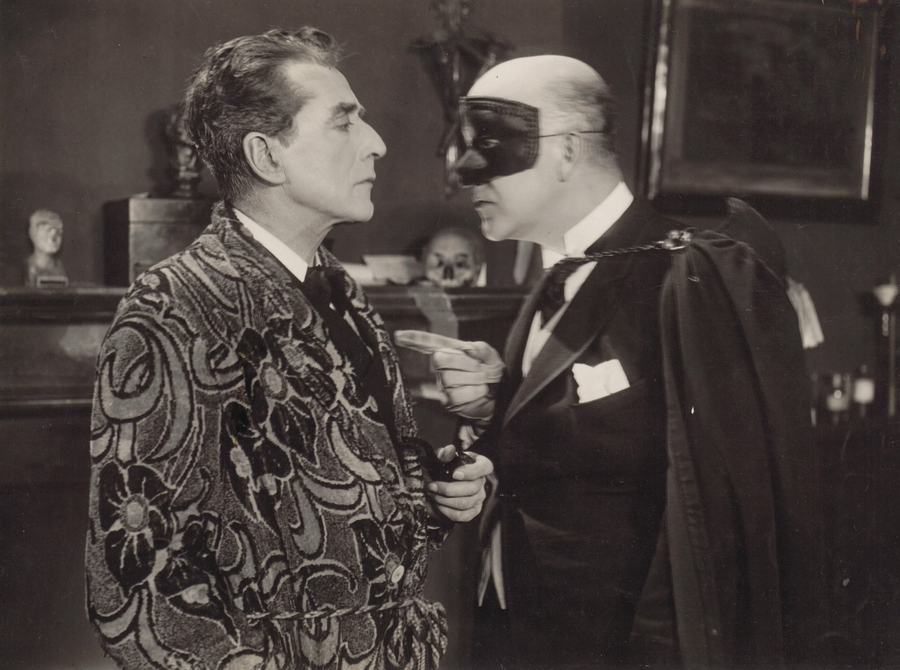
Eille Norwood embodies Holmes with the ascetic grace of a monk who has swapped prayer for crime scenes. His Holmes is all sinew and synapse; he thinks with his shoulders, deduces with the tilt of a wrist. Critics of the era dubbed him “the man who never needed subtitles,” and you believe it. Watch the sequence where he trails Adler’s carriage: coat collar slicing the wind, eyes flicking from muddy wheel-ruts to the glint of a diamond horseshoe pin. Every cut is a question; every iris-in feels like a heartbeat.
Norwood’s triumph is restraint. Where stage tradition played Holmes as flamboyant arachnid, Norwood opts for glacier—immense power barely hinting at crevasses beneath. When he realizes Irene has fled the trap, the camera lingers on a micro-twitch at the corner of his mouth: defeat, desire, dazzlement compressed into a single frame. It lasts perhaps sixteen milliseconds yet stretches across an entire century of cinema.
Hubert Willis gives us a Watson who is no bumbling foil but a steady ember—warm, watchful, quietly aflame. His side-parted hair gleams like polished mahogany; the cane he carries is more scepter than crutch. In the flat at 221B, he pours tea with the solemnity of a priest preparing sacrament, eyeing Holmes over porcelain rims as if to ask, “Who will absolve you if you win?” Notice the subtle shift when Watson learns the king once courted Irene: a blink, a swallow, the faintest tightening of starched collar—silent judgment more damning than any sermon.
This Watson anchors the film’s moral gyroscope. While Jack revels in nihilism and Robbery Under Arms romanticizes outlaw camaraderie, Scandal quietly insists that loyalty without ethics is mere thuggery.
Cinematographer Basil Emmott treats London like a fever dream painted in mercury. Streets glisten as if varnished; shadows stretch into catacombs. Interior scenes favor tenebrism—faces half-swallowed by umbra, eyes catching stray shards of light like coins at the bottom of a well. The opera-house sequence is a masterstroke: silhouettes of top-hats ripple across velvet seats, a gas-jet flares, Irene steps into a spotlight that turns her gown into liquid gold. You half expect the celluloid itself to combust from envy.
Compare this chiaroscuro to the sun-scorched palette of The Sundowner or the pastel whimsy of Sis Hopkins. Elvey’s London is noir before the term existed, a city where even dawn feels like a confession.
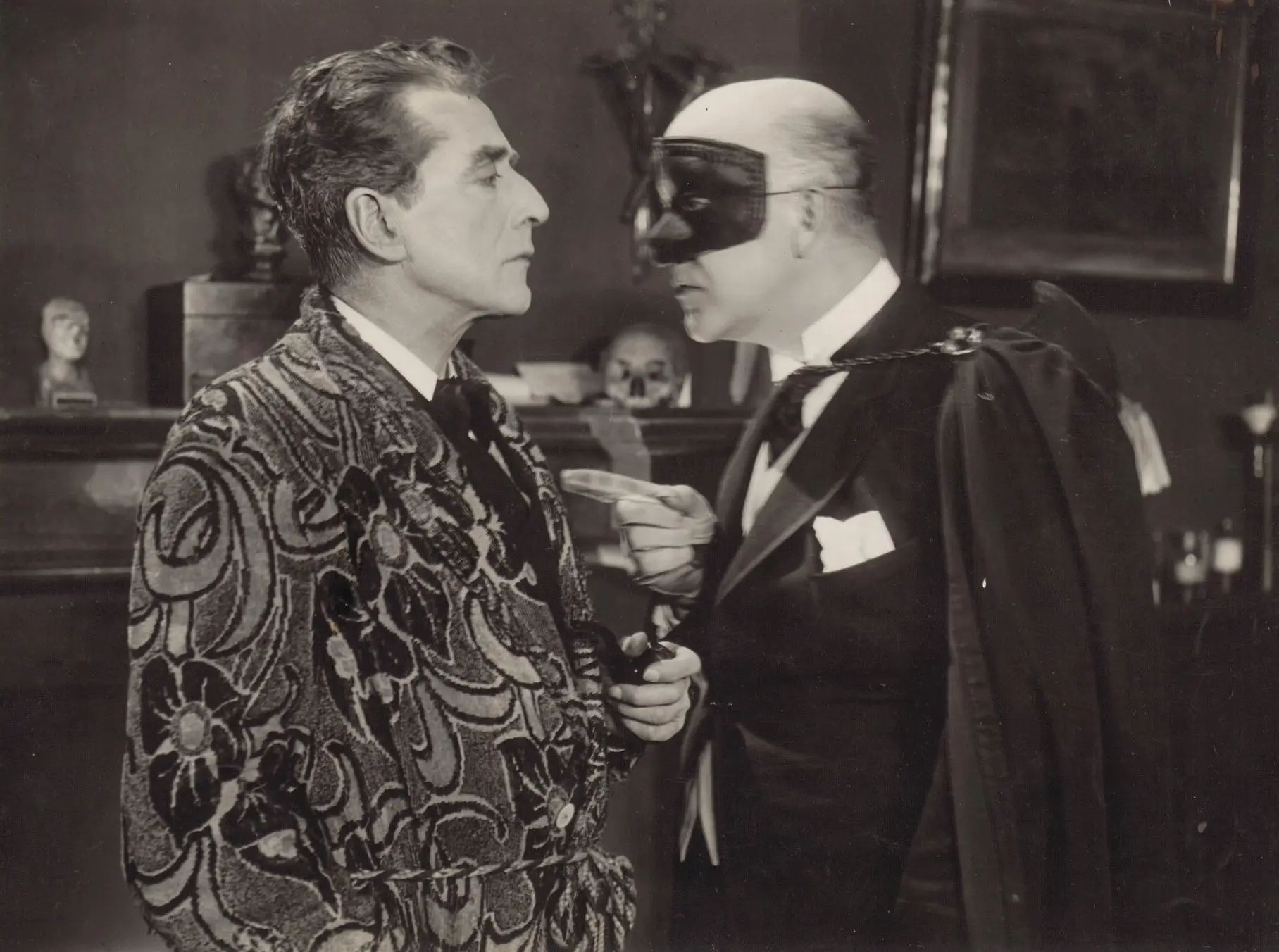
Miles Mander plays the Bohemian monarch like a man wearing a crown of nettles. His inflections (via intertitles) swing from imperious to infantile in a blink. Watch how he fingers the royal signet, twisting it as though it were a handcuff. In one exquisite shot, he stands before a cracked mirror; the fracture bisects his face—half sovereign, half cuckold. The metaphor is silent yet thunderous. We glimpse the bruised boy inside the ermine, and suddenly Adler’s crime isn’t theft of a photograph but theft of illusion, the cruelest larceny of all.
Writer William J. Elliott prunes Doyle’s lush prose into haiku precision. Act I: inciting photograph smuggled inside a hymnal. Act II: Holmes donning the mask of a groom, fingering horseshoe nails for clues. Act III: the wedding trap, where incense and intrigue intermingle. Act IV: the vanishing—Adler slips the snare, leaving behind a daguerreotype of herself in traveling cloak, eyes bright with bon-voyage. Each act clocks under eleven minutes, yet the emotional payload feels Wagnerian.
Rhythmic montage—carriage wheels, ticking mantel-clock, hammering heart—creates a metronome of dread. Notice the recurring visual motif: doors. Doors slammed, doors ajar, doors half-off hinges after Holmes picks their locks. Each threshold marks a transgression of knowledge: the moment we know too much about monarchs, mistresses, and ourselves.
1921 was hardly a beacon for feminism, yet Scandal sneaks subversion through the servant’s entrance. Irene never begs, never bargains. She converts beauty into capital, then into passport, then into freedom. When she warns, “The law cannot protect the foolish from the scorned,” the intertitle burns like a manifesto. Compare her autonomy to the sacrificial lamb trope in A Wife’s Sacrifice or the predatory Other Woman in The Other Woman. Adler neither sacrifices nor preys—she transcends.
While the film is technically mute, contemporary exhibitors were encouraged to accompany it with Wagner’s “Liebestod,” the music bleeding into scenes like opium into blood. Modern restorations often choose Erik Satie for ironic counterpoint—gymnopédies pirouetting around palace intrigue. Either way, the absence of diegetic noise amplifies small sounds in the auditorium: a cough, the rustle of skirts, the collective gasp when Adler outsmarts Holmes. Silence becomes a cathedral, magnifying every flicker of eyelash, every bead of kingly sweat.
Set Scandal beside Wedlock and you see two prisons: one built of matrimony, the other of monarchy. Pair it with Alien Souls and you trace the ache of outsiders craving entry into gilded salons. Contrast it with The Brown Derby where Hollywood satire deflates pretension; Elvey chooses instead to let pretension drown in its own reflection.
Trace a line from Norwood’s Holmes to Bogart’s Spade, from Adler’s gaze to Phyllis Dietrichson’s anklet in Double Indemnity. The DNA is unmistakable: desire weaponized, shadows as moral ledger, the detective who solves the crime yet loses the chess match. Even the final image—Holmes sliding Adler’s portrait into a drawer labeled “Remember”—prefigures the bittersweet close of Casablanca where another hero learns that sometimes the best victory is letting the bird fly free.
Once feared lost, a 35mm nitrate print surfaced in a Slovenian monastery vault in 1998, complete with Czech hand-painted intertitles. The BFI’s 4K restoration resurrects Emmott’s chiaroscuro; you can stream it via BFI Player or snag the Masters of Cinema Blu-ray which gifts us a commentary by silent-film scholar Pamela Hutchinson and a 20-page booklet on Elvey’s career.
Is the film flawless? Hardly. A subplot involving a bumbling valet exists purely to spoon-feed exposition, and the king’s final shrug at losing Adler feels rushed, as though royalty itself were late for another appointment. Yet these quibbles evaporate like ether when set against the film’s aching sophistication—a sophistication that whispers rather than shouts, that seduces rather than explains.
Watch it at midnight with rain needling the windowpanes. Let the flicker of Irene’s photograph remind you that some hearts are grenades, and the wisest detectives know when not to pull the pin. In the end, Holmes doesn’t lose to a woman; he awakens to humanity, a gift wrapped in scandal, sealed with a kiss that still echoes across a hundred years of celluloid silence.
IMDb —
1928
Community
Log in to comment.