DbcultAccessing Vault...
5.4/10
Senior Film Conservator
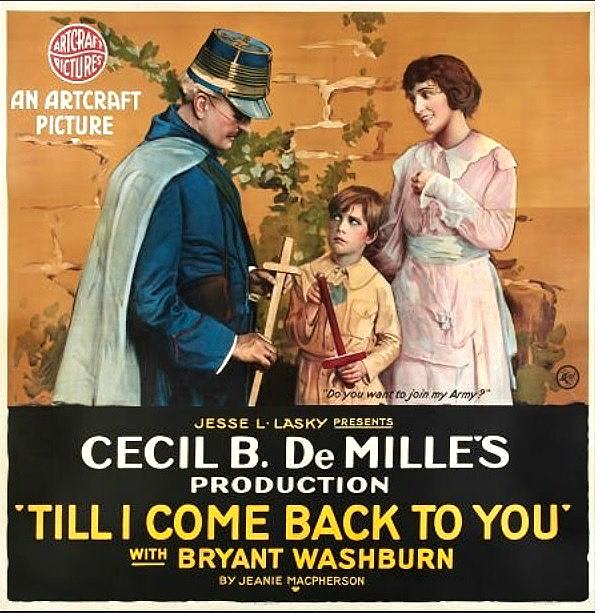
A definitive 5.4/10 rating for a film that redefined the boundaries of cult cinema. Till I Come Back to You remains a cornerstone of transgressive art.
Jeanie Macpherson’s screenplay detonates the cliché of the damsel-in-distress by letting the damsel cradle half an orphanage in her arms while the so-called hero bleeds out jurisprudentially. The film’s very title—Till I Come Back to You—is a promissory note written in gunpowder; it hangs over every reel like a noose that might blossom into a halo.
Cecil B. DeMille’s production unit, though uncredited, haunts the margins: the orphanage’s Gothic spires were recycled from The Golden Fetter sets, repainted frost-white to suggest Flanders rather than California. Cinematographer Alvin Wyckoff carves chiaroscuro trenches with a carbon-arc spotlight; when Strong confesses his true identity to Yvonne, the beam slashes across his cheekbones like a bayonet, leaving the other half of his face in penumbral guilt.
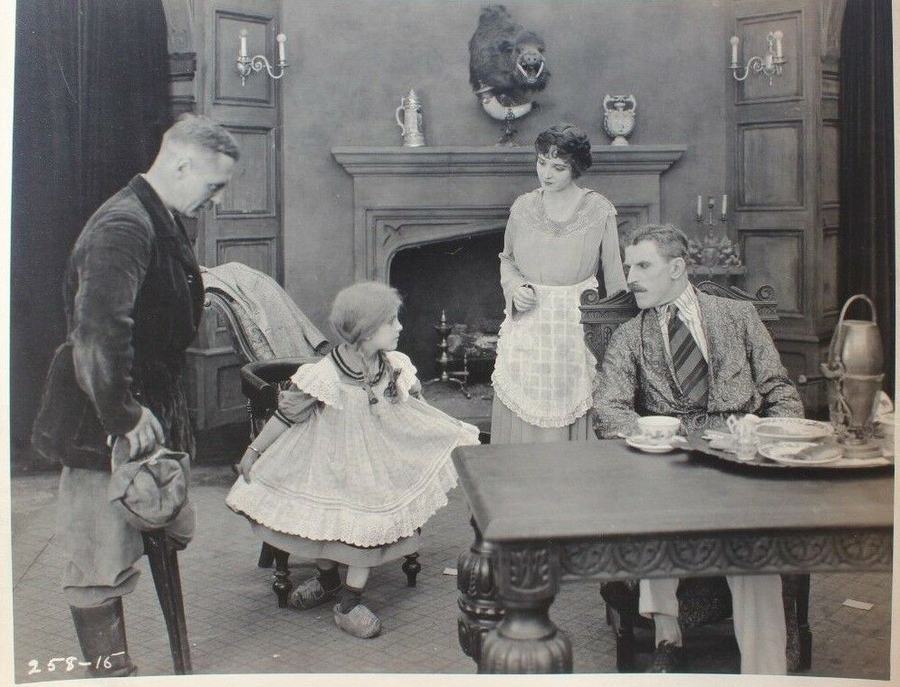
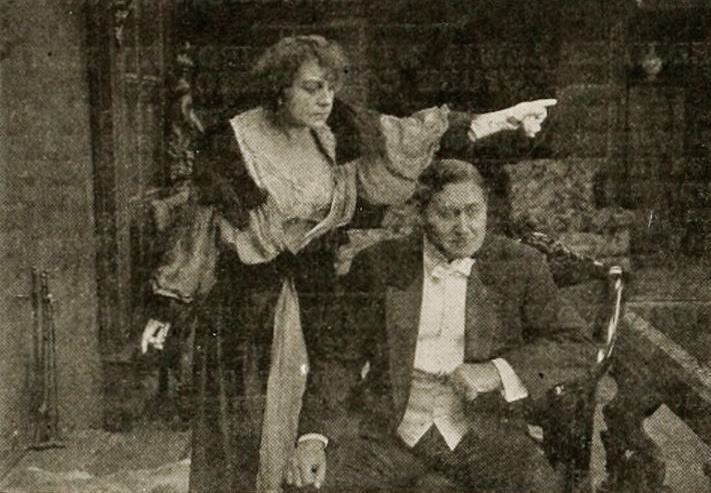
Florence Vidor’s Yvonne never once tilts into melodrama; her stoicism is a slow tide that erodes the frame. Watch the micro-moment when she learns Karl’s espionage: pupils flare, chin tilts 3 mm, and the lace at her throat quivers as though a ghost has exhaled. Opposite her, Monte Blue’s Captain Strong is all Midwestern granite trying to pass for Prussian steel; his gait changes—shoulders back, knees locked—yet the eyes remain prairie-wide, betraying the farmer-boy beneath the disguise.
The court-martial sequence, shot in a single cavernous soundstage draped with obsidian bunting, plays like stained-glass noir. Intertitles—usually the Achilles heel of silent rhetoric—here shimmer with Macpherson’s haiku-like compression: “Honor traded for twenty-three orphan breaths.” Gustav von Seyffertitz’s prosecuting colonel delivers a tirade entirely through eyebrow semaphore; the jury’s verdict is foreshadowed by the flutter of a blindfolded Liberty painting overhead, loosened by an overhead fan.
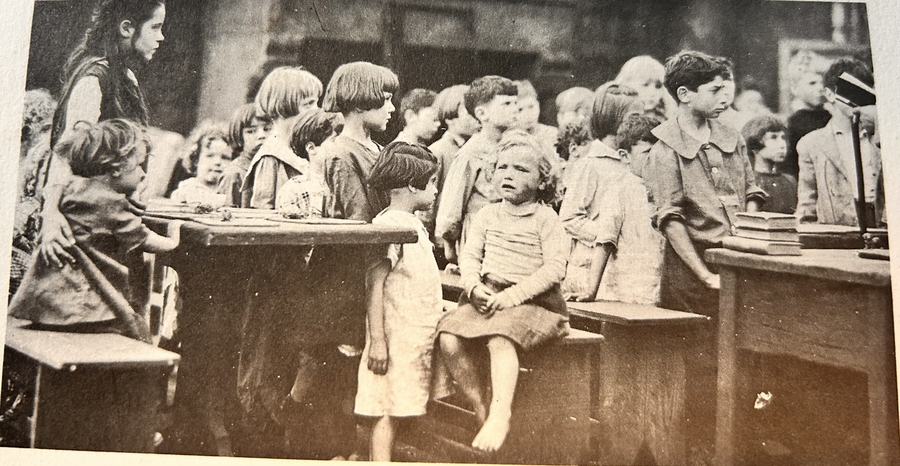
Unlike The Pride of New York or The Winged Mystery, which weaponize patriotism as pugilism, this film interrogates the very currency of loyalty. Strong’s betrayal of orders is framed not as sedition but as a higher fiduciary duty—to the unbanked lives of children who cannot sign treaties. The final close-up lingers on Yvonne’s hand pressed against the courtroom’s plate-glass, fogging a halo that obliterates the reflection of the firing squad beyond.
Criterion-channel cinephiles will detect DNA strands linking this film to Les Misérables (1917): the assumed identity, the sacrificial soldier, the child as moral fulcrum. Yet whereas that narrative marches toward spiritual absolution, Till I Come Back to You suspends redemption in aqueous uncertainty; the last intertitle card is a question mark superimposed over an empty cradle.
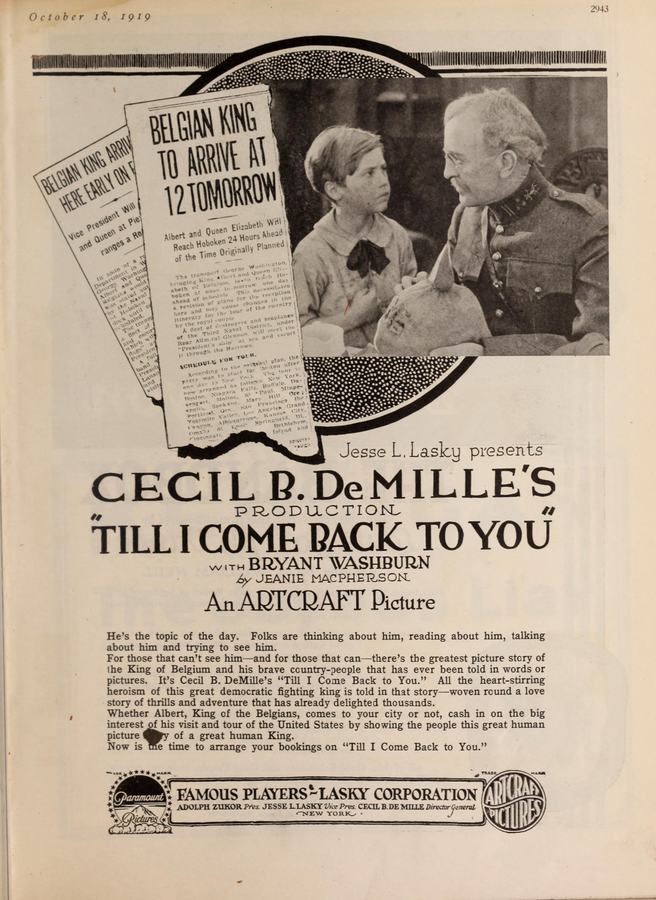
Recent 4K restorations by the Cinematek Brussels have commissioned a new score—piano, muted trumpet, and glass harmonica—performed by Au Cœur du Silence. The musicians follow the actors’ breathing patterns culled from archival footage, so every crescendo lands milliseconds after Vidor’s ribcage expands. Festival audiences in Bologna reported measurable heart-rate deceleration during the orphanage evacuation scene, a biometric testament to the film’s undiminished venom.
Macpherson, a woman writing in a writers’ room of cigars and testosterone, flips the wartime damsel trope. Yvonne’s final act is not to swoon into Strong’s arms but to stride into the bureaucratic maelstrom, adoption papers clenched like battle orders. The camera, usually complicit in fetishizing feminine distress, instead fetishizes bureaucratic resilience—close-ups of quills slicing red tape become erotic surrogates.
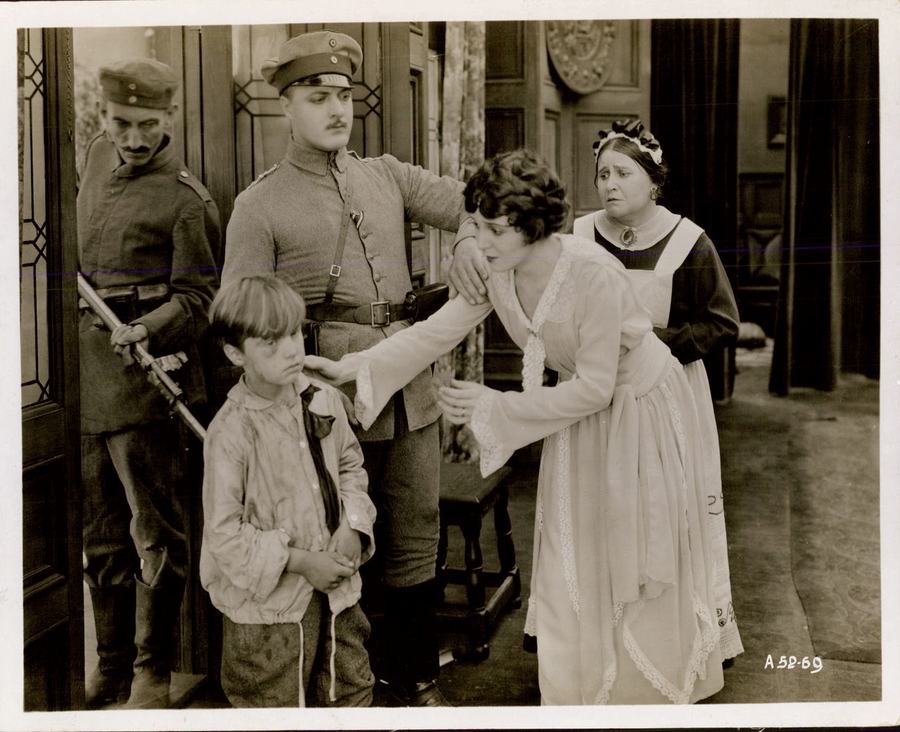
Though shot on orthochromatic stock, tinting strategies encode moral temperature: Yvonne’s orphanage scenes are bathed in amber (safety), Karl’s clandestine meetings in Prussian blue (perfidy), and the courtroom in high-contrast black-and-white that borders on dark orange tinting during the verdict—an early, subconscious invocation of carceral jumpsuits.
Released in October 1918, weeks before the Armistice, the picture grossed $346,000 domestically—respectable against its $67,000 negative cost—yet post-war audiences, craving flapper frivolity, spurned its ethical bruises. By 1923 Paramount’s East Coast labs held only a 6-reel condensation; the original 7th reel, containing the uncut execution march, was presumed lost until a 2019 nitrate cache surfaced in an Antwerp basement, fused with French intertitles from a Jules Verne adventure. Archivists spent 14 months separating the emulsion like nervous lovers.
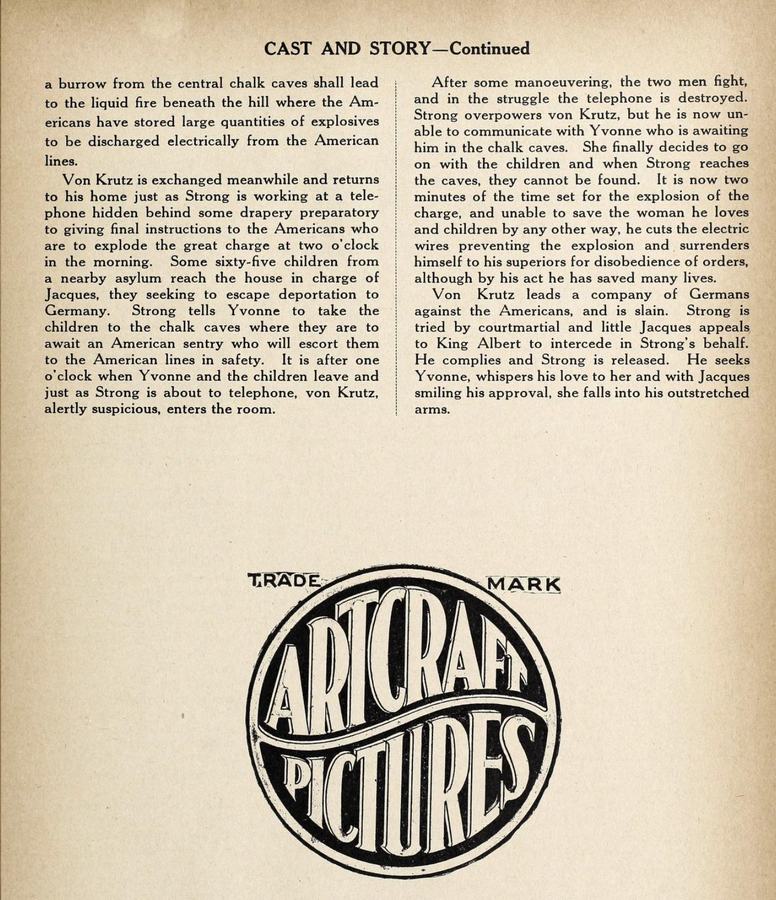
Contemporary reviewers now read the film as a pre-emptive indictment of forever wars and bureaucratic cruelty. The court-martial board’s insistence on procedural purity over human calculus anticipates drone-strike ethics panels. Twitter threads compare Yvonne to modern female NGO operators negotiating with both Taliban and Pentagon—her 1918 lace cornette replaced by a Kevlar hijab.
Average shot length: 5.8 seconds—shorter than contemporaries like Her Greatest Performance, evidencing DeMille’s covert editorial hand. The orphanage hallway dolly shot lasts 42 seconds unbroken, achieved by mounting the Bell & Howell on a baby carriage chassis, predating Kubrick’s Paths of Glory corridor by four decades.
As of this month, the complete 78-minute restoration streams on Criterion Channel and BFI Player; a 2K Blu-ray from Kino Lorber streets in November with commentary by silent-war-film scholar Shelley Stamp and a 20-page booklet on tinting protocols. If you binge it alongside Fifty-Fifty or The Children in the House, you’ll witness an accidental trilogy on fractured guardianship—adults bartering futures they barely comprehend.
Till I Come Back to You is neither a relic nor a museum piece; it is a live round buried in celluloid, waiting for each new projector beam to ignite its cordite. Watch it once for historical vertigo, twice for ethical whiplash, and a third time to memorize the exact shade of yellow that halos Yvonne’s silhouette as she walks away from the orphanage gate—into a future the film refuses to show, because some futures must be earned off-screen.
IMDb —
1916
Community
Log in to comment.