DbcultAccessing Vault...
5.3/10
Senior Film Conservator
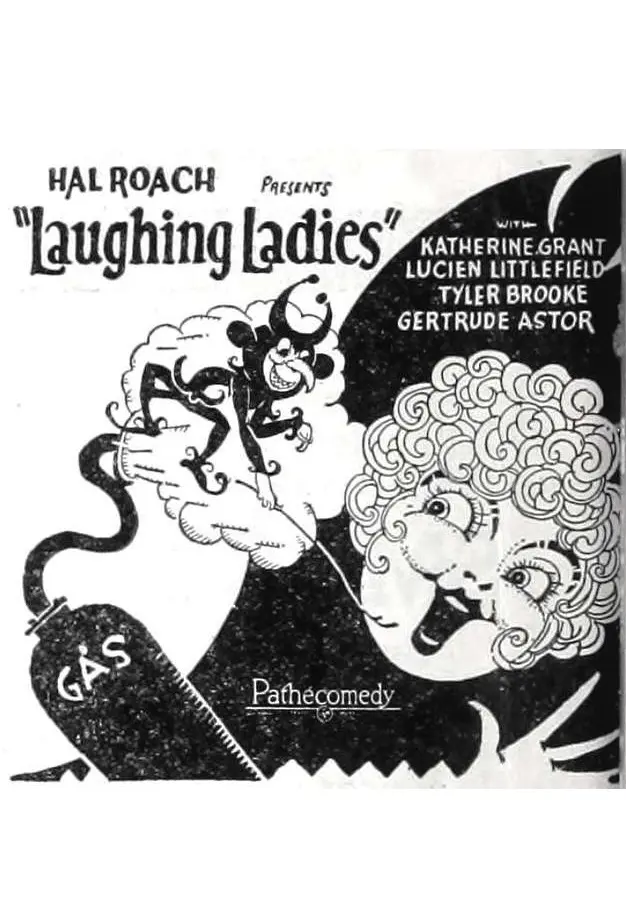
A definitive 5.3/10 rating for a film that redefined the boundaries of cult cinema. Laughing Ladies remains a cornerstone of transgressive art.
To watch Laughing Ladies (1925) is to witness the Hal Roach studio operating at a peak of kinetic spontaneity. While history often prioritizes the feature-length endeavors of the era, the short-form comedy was the true laboratory of the avant-garde. This film, directed by the prolific James Parrott and Hal Yates, utilizes the dental chair—a site of universal anxiety—as a springboard for a sophisticated study in social transgression. The premise is deceptively simple: a dentist, played with a delightful lack of professional ethics by Chris Lynton, overdoses a patient with nitrous oxide. What follows is not merely a gag reel, but a subversive commentary on the fragile veneer of 1920s propriety.
The protagonist's transformation from a suffering patient to a nitrous-fueled engine of chaos is handled with a lightness of touch that contemporary comedies often lack. As she exits the dental office, her movement through the city streets adopts a rhythmic, almost balletic quality. This isn't the slapstick of blunt force, but the slapstick of euphoria. In many ways, this tonal shift mirrors the experimental energy seen in other Roach productions like Look Out Below! (1922), where physical danger is transmuted into comedic gold through precise timing and a disregard for the laws of physics.
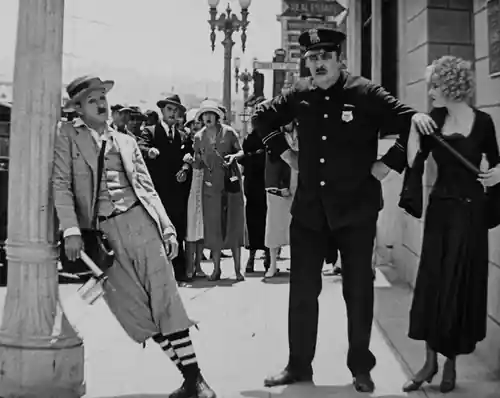
One cannot discuss this film without acknowledging the presence of Oliver Hardy. Long before his partnership with Stan Laurel reached its zenith, Hardy was a versatile 'heavy' and character actor whose mere presence could anchor a scene. In Laughing Ladies, we see the proto-elements of his legendary persona—the frustrated dignity and the impeccable physical awareness. His interaction within the ensemble, which includes stalwarts like Gertrude Astor and Tiny Sandford, creates a rich texture of reactions that heighten the absurdity of the central girl's intoxicated state.
The supporting cast reads like a 'who's who' of the silent comedy circuit. Bull Montana brings his unique, rugged physicality to the screen, providing a stark contrast to the delicate, albeit frenzied, movements of the lead actress. This juxtaposition of the grotesque and the graceful is a hallmark of the Parrott-Yates directorial style. It’s a similar dynamic to what one might find in the ensemble chaos of Kids and Kidlets, where the logic of the world is dictated by the most irrational person in the room.
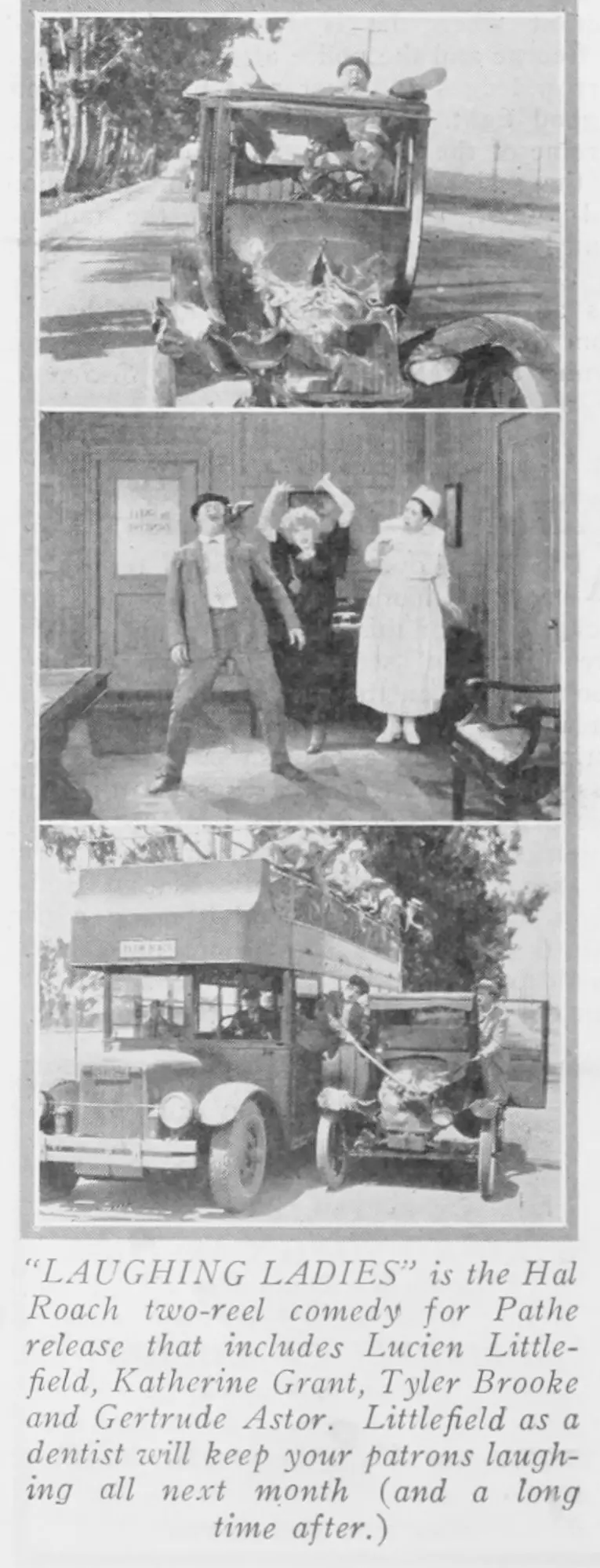
The use of 'laughing gas' as a plot device was a recurring trope in early cinema, yet Laughing Ladies elevates it beyond the mere gimmick. Here, the gas acts as a literal and metaphorical lubricant for social friction. When the girl 'trips blithely along' and begins her flirtation with a married man, the film touches on the burgeoning anxieties of the Roaring Twenties. The breakdown of the domestic unit, the blurring of public and private morality, and the fear of chemical influence all coalesce in this twenty-minute short. It offers a much more frantic and cynical view of romantic entanglements than the melodramatic pining found in John Heriot's Wife.
Technically, the film is a masterclass in the 'Roach House Style.' The cinematography is crisp, favoring wide compositions that allow the physical comedy to breathe. The editing is sharp, cutting on the beat of the gags to ensure that the momentum never falters. This rhythmic precision is what separates a standard comedy from a work of art. While a film like Bella Donna (1923) might rely on the opulence of its sets and the gravity of its stars, Laughing Ladies finds its power in the sheer velocity of its execution.
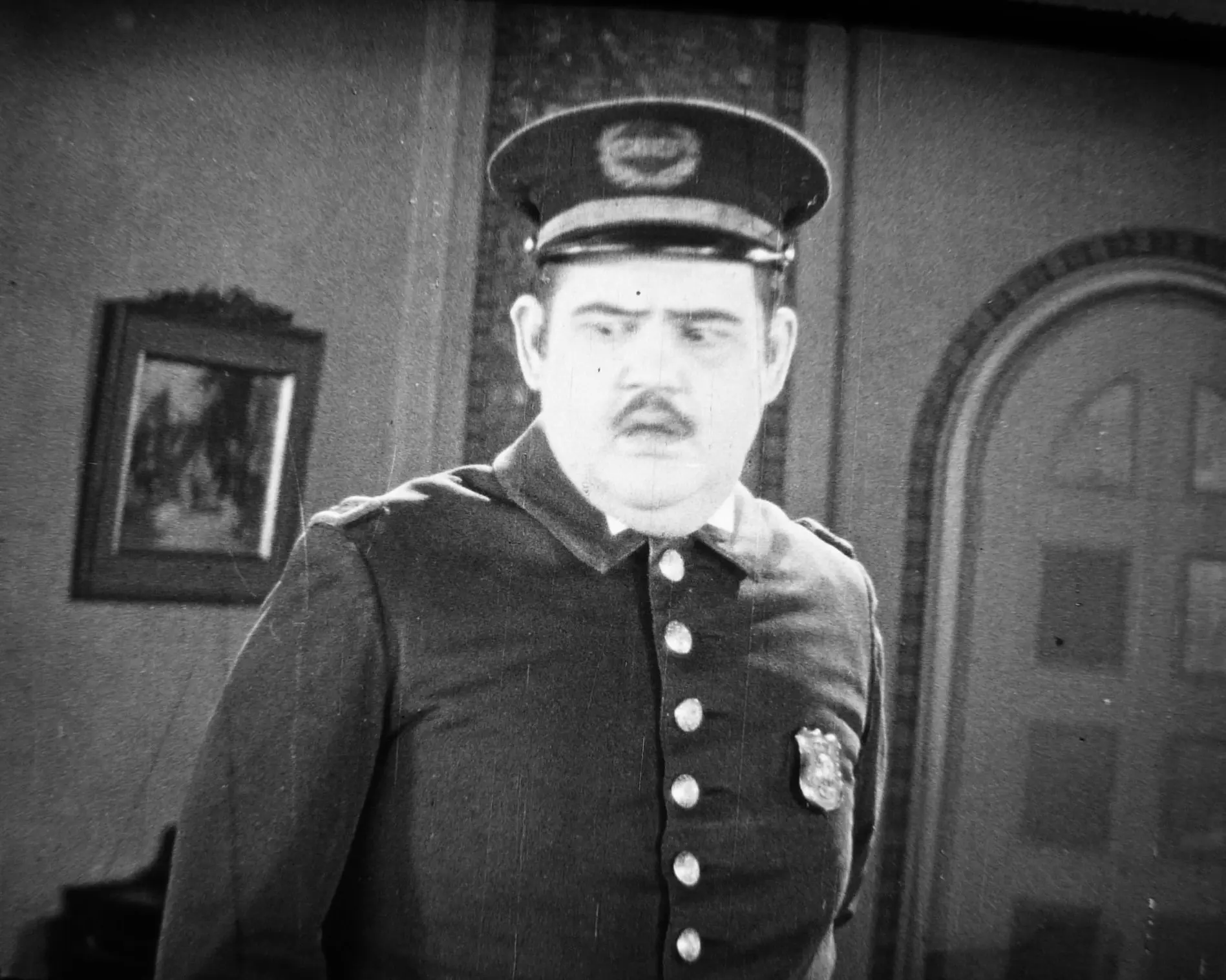
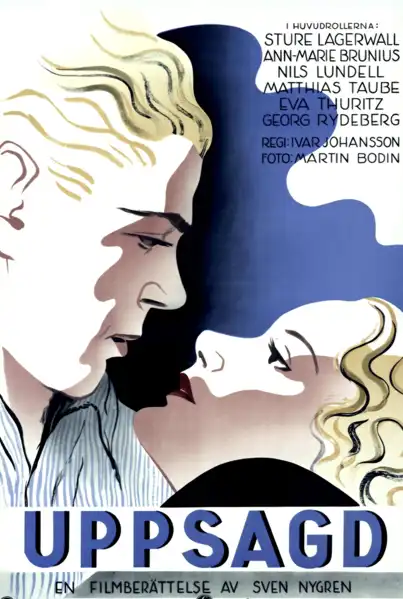
When placing Laughing Ladies within the broader context of 1925 cinema, its originality becomes even more apparent. It lacks the pastoral sentimentality of Singer Jim McKee or the high-society posturing of Hick Manhattan. Instead, it embraces a gritty, urban surrealism. The dental office is not a place of healing, but a den of accidental intoxication. The street is not a place of commerce, but a stage for a drug-induced performance piece. This gritty energy is perhaps only matched by the more adventurous international exports of the time, such as the haunting imagery of Minaret Smerti, though the two films occupy opposite ends of the tonal spectrum.
The 'married man' subplot is particularly fascinating. In an era where the Hays Code was beginning to loom on the horizon, the film’s depiction of a woman—under the influence or not—pursuing a married man with such reckless abandon is remarkably bold. It sidesteps the moralizing of Everyman's Price by hiding its subversion behind a mask of hilarity. If she is laughing, the audience is laughing, and if everyone is laughing, the transgression is forgiven. This is the ultimate power of the Roach comedy: it allows the audience to indulge in social taboos under the guise of harmless entertainment.
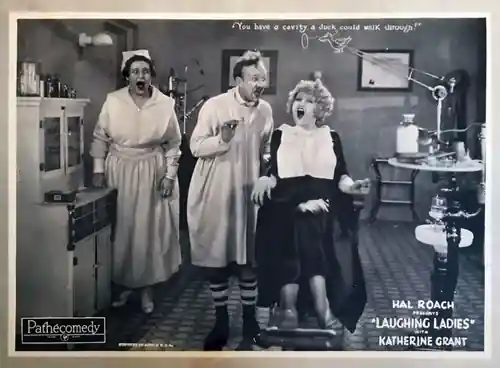
James Parrott’s contribution to the grammar of comedy cannot be overstated. His ability to stage complex, multi-layered gags is on full display here. Notice the way the background action often complements the primary focus, creating a living, breathing world of absurdity. This depth of field in comedy was a precursor to the sophisticated visual storytelling of the 1930s. It stands in stark contrast to the more theatrical, flat staging found in Builders of Castles or the somewhat static presentation of Willy Reilly and His Colleen Bawn.
The pacing of Laughing Ladies is relentless. From the moment the gas is administered, the film enters a state of perpetual motion. This 'up and going' philosophy—not to be confused with the film Up and Going—is what makes the silent era so enduring. There is no dialogue to slow down the revelation of character; everything is told through the twitch of an eyebrow, the stumble of a foot, and the frantic chase through a crowded park. The film’s climax, involving the inevitable confrontation between the 'married man,' his wife, and our nitrous-soaked heroine, is a masterclass in escalating tension and comedic payoff.
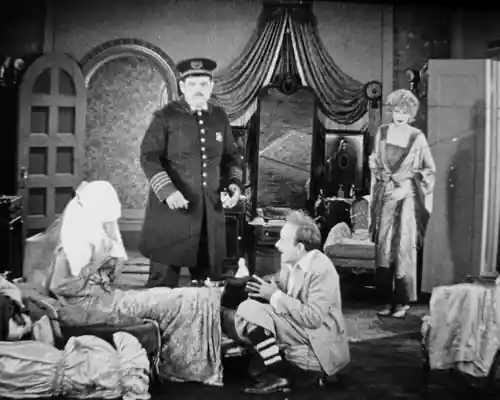
Looking back at Laughing Ladies from a modern perspective, it serves as a vital artifact of a lost world. It captures the fashion, the architecture, and the social anxieties of 1925 with a clarity that only film can provide. While it may not have the fairy-tale whimsy of Der verlorene Schuh or the exoticism of Eine weisse unter Kannibalen, it possesses a raw, unvarnished humanity. It reminds us that even a century ago, the impulse to escape the mundane through whatever means available—be it laughing gas or the cinema itself—was a fundamental part of the human condition.
The performance of Martha Sleeper (the girl) is particularly noteworthy. She manages to convey a sense of genuine joy that feels unforced, a difficult feat when the comedy is so heavily scripted. Her chemistry with the various men she encounters, including the ever-reliable Tyler Brooke and Lucien Littlefield, provides the film with its emotional core. Without her infectious energy, the film might have devolved into a mere series of stunts. Instead, it remains a character-driven piece that happens to be fueled by a massive amount of dental anesthesia.
In the grand tapestry of silent film, Laughing Ladies is a bright, neon thread. It is a testament to the creativity of the Hal Roach writers, like Hal Yates, who could take a simple dental visit and turn it into a riotous exploration of freedom. It shares the DNA of the best silent comedies, where the world is a playground and the only rule is to keep the audience guessing. Whether compared to the domestic comedies of A kölcsönkért csecsemök or the rugged adventures of Wild, Laughing Ladies holds its own as a unique, high-octane celebration of the absurd. It is a film that demands to be seen, not just as a historical curiosity, but as a living piece of comedic brilliance that still resonates today.
Final thoughts: If you find yourself wandering through the archives of 1920s slapstick, do not bypass this nitrous-fueled gem. It is a reminder that sometimes, the best way to deal with the pain of existence—or a toothache—is to simply let go and laugh until the screen fades to black.
IMDb 6.3
1935
Community
Log in to comment.