DbcultAccessing Vault...
7.1/10
Senior Film Conservator
A definitive 7.1/10 rating for a film that redefined the boundaries of cult cinema. The Purple Mask remains a cornerstone of transgressive art.
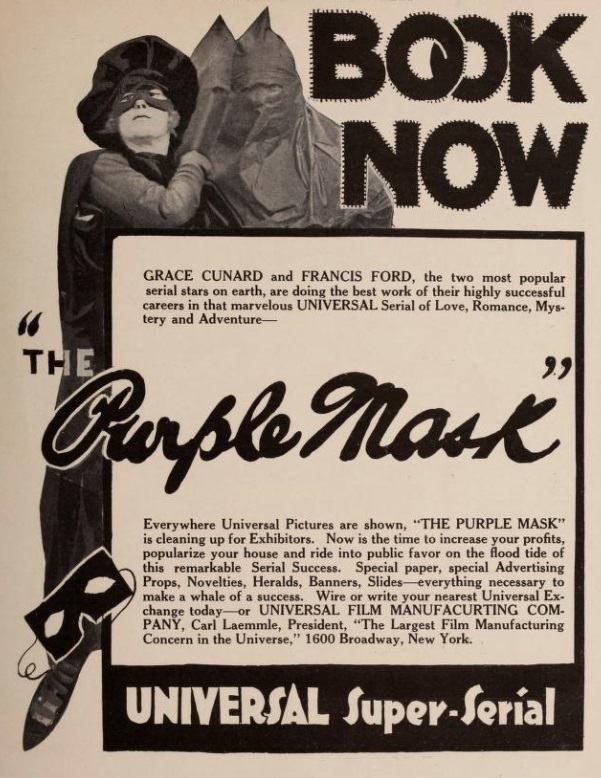
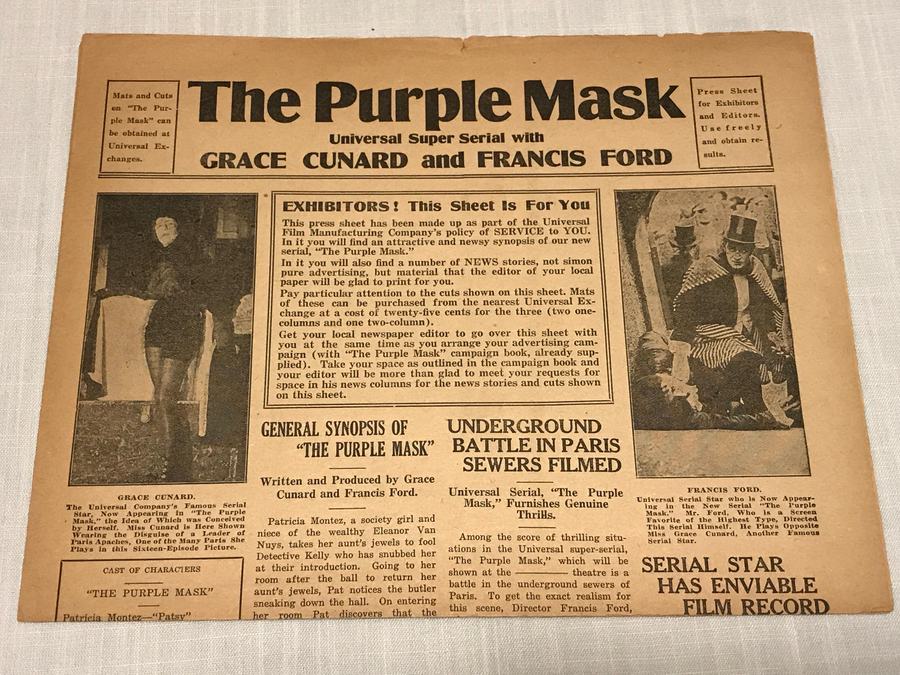
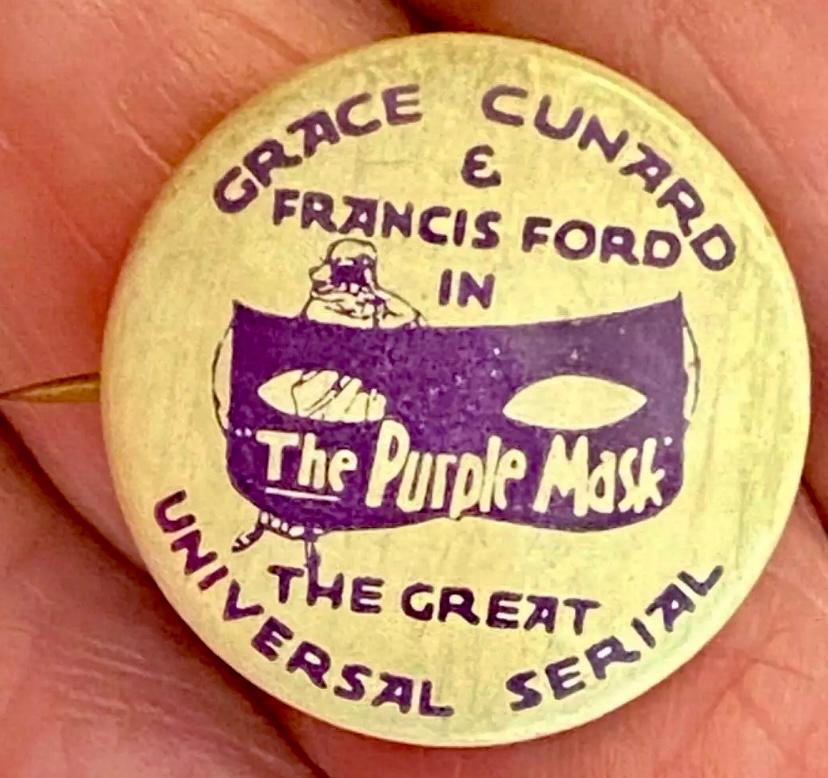
In the annals of early cinematic history, few genres captured the public imagination quite like the serial. These episodic thrillers, often presented in weekly installments, were the lifeblood of many a nickelodeon and grand picture palace, leaving audiences on the edge of their seats, eagerly anticipating the next cliffhanger. Among these thrilling sagas, The Purple Mask emerges as a fascinating artifact, a testament to the ingenuity and narrative flair of its creators, Grace Cunard and Francis Ford. The inaugural episode, appropriately titled 'The Vanished Jewels,' doesn't merely set the stage; it detonates a powder keg of social commentary, personal vendetta, and thrilling intrigue, all against the backdrop of a romanticized yet dangerous Paris.
At the heart of this initial foray into the serial's world is Patricia Montez, portrayed with an intriguing blend of charm and spirited defiance. As the darling of the American colony in Paris, Pat embodies the gilded age's ideal of the benevolent socialite. Her dedication to the suffering poor, particularly through her aunt Eleanor Van Nuys's principal charity, the Children's Asylum, paints a picture of selfless virtue. Yet, beneath this veneer of philanthropy, Cunard and Ford, as writers, shrewdly introduce a crucial flaw: an inflated sense of self-importance. Pat's popularity has, understandably, given her an 'excellent opinion of herself,' a detail that proves to be the catalyst for the entire episode's dramatic arc. This isn't just a simple character sketch; it's a profound exploration of ego, privilege, and the often-unforeseen consequences of a bruised pride. When Phil Kelly, the celebrated detective known across Europe as 'The Sphinx,' snubs her, Pat's reaction isn't one of mere annoyance but a deeply ingrained resentment that escalates into a full-blown resolution for retaliation. This psychological depth, even in a silent serial, is remarkable, positioning Pat not merely as a damsel or heroine, but as a complex, active agent of her own destiny, albeit one driven by a rather petulant impulse.
The plot of 'The Vanished Jewels' unfurls with a captivating swiftness, each scene building upon the last with escalating tension. Pat's initial act of defiance – stealing her aunt's jewels and then brazenly notifying Kelly – is a masterstroke of narrative provocation. It immediately establishes her as a formidable, albeit reckless, adversary. This isn't a crime of greed, but one of calculated psychological warfare, a challenge thrown directly at the feet of 'The Sphinx.' The jewels, therefore, transcend their material value; they become symbols of Pat's wounded pride and her determination to outwit the man who dared to slight her. However, the carefully constructed plan takes an unexpected turn when Jacques, the seemingly unassuming butler, seizes an opportunity for his own gain, absconding with the gems and taking them to the notorious Café Chat Noir, a rendezvous point for his fellow Apaches. This twist introduces a layer of unpredictable chaos, pulling Pat out of her comfortable aristocratic bubble and thrusting her into the gritty, dangerous underbelly of Parisian society. It's a classic cinematic trope, yet executed here with a freshness that feels both authentic and thrilling, echoing the urban anxieties of the era. The contrast between Mrs. Van Nuys's charitable pursuits and the dark dealings of the Apache gang is stark, highlighting the social chasms prevalent in the city.
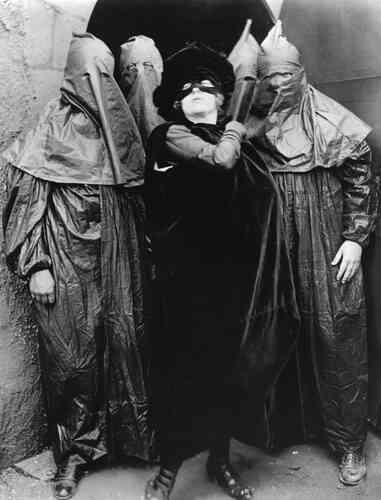
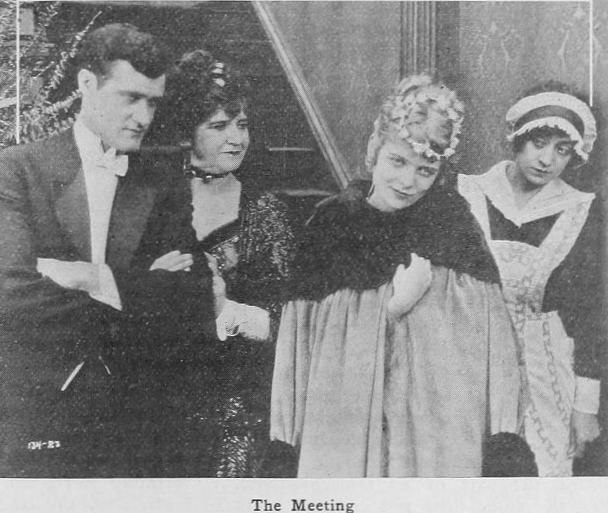
Pat's decision to pursue Jacques into the Apache den marks a pivotal moment, showcasing her courage and resourcefulness. Her disguise as an Apache's sweetheart, complete with a bribed cabman playing the role of her lover, speaks volumes about her audacity and willingness to transgress social boundaries for her objective. This sequence is ripe with dramatic potential, offering a glimpse into a world far removed from the opulent salons of the American colony. The Café Chat Noir, with its boisterous festivities and shadowy denizens, provides a vibrant, dangerous backdrop for the unfolding drama. It brings to mind the vivid, often sensationalized, portrayals of Parisian street life seen in films like In the Clutches of the Paris Apaches, a clear thematic cousin that similarly reveled in the illicit allure of the city's criminal element. Pat's deft maneuvering – whirling her dancing partner to Jacques's table, orchestrating a 'stumble' to dislodge the jewels – is a testament to her quick thinking and physical prowess. This isn't just a passive recovery; it's an active, almost acrobatic retrieval, adding a layer of physical dynamism to her character. The tension ratchets up considerably when Phil Kelly, who has been shadowing Pat with his assistants, finally confronts her as she exits the café. The surprise causes Pat to drop the jewels, a momentary lapse that Kelly exploits to his advantage. Her subsequent escape, leaving Kelly to pocket the gems, concludes the episode on a tantalizingly ambiguous note, leaving the audience to ponder the true victor and the next twist in this intricate tale.
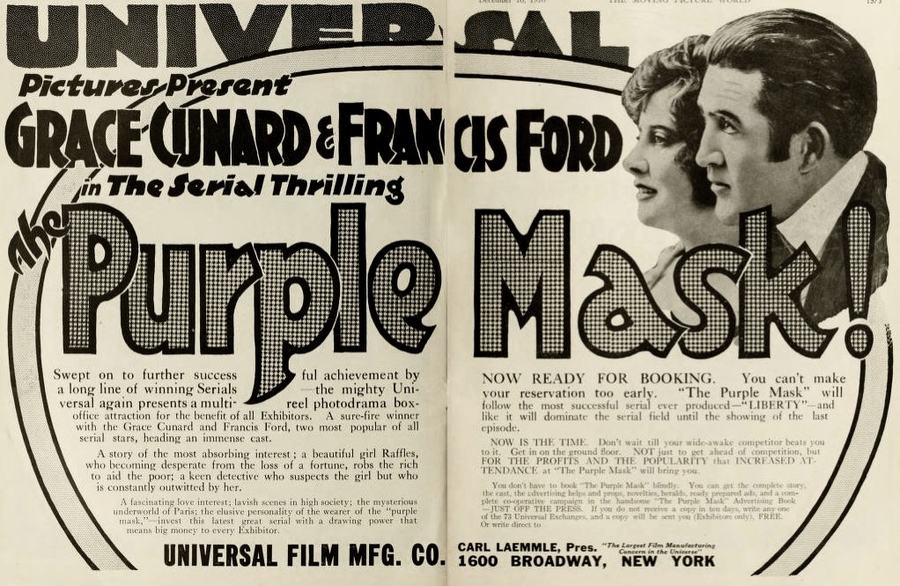
For a film of its era, The Purple Mask, particularly in its debut episode, demonstrates a sophisticated understanding of cinematic storytelling. The collaboration between Grace Cunard and Francis Ford, both as writers and likely influential in direction, is evident in the tightly paced narrative and the clear delineation of character motivations. Cunard, a pioneering female filmmaker, not only penned the script but also starred, embodying the spirited Patricia Montez with a magnetic presence. Her performance, typical of the silent era, relies on exaggerated gestures and facial expressions, yet conveys a genuine sense of Pat's internal conflict and daring. Duke Worne as Phil Kelly, 'The Sphinx,' offers a compelling counterpoint, his stoic demeanor hinting at a sharp intellect and an unwavering resolve. The supporting cast, including Gertrude Short and Monty Banks, contribute to the vibrant tapestry of the Parisian setting, from the opulent Van Nuys residence to the gritty Café Chat Noir. The use of location and set design, even if rudimentary by today's standards, effectively establishes the contrasting worlds Pat navigates. Such attention to detail in world-building, common in serials, was crucial for immersing audiences week after week. While we don't have the full context of later episodes, this opening installment showcases a clear vision for a multi-layered narrative that goes beyond simple good-versus-evil dichotomies.
Beyond the thrilling plot, 'The Vanished Jewels' touches upon themes that resonate even today. The concept of social class and its inherent hypocrisies is subtly explored. Patricia's 'charitable' work juxtaposed with her self-serving vendetta speaks to the performative aspects of philanthropy. The Apache underworld, often romanticized or demonized in contemporary media, serves as a mirror, reflecting the darker impulses that can exist even within 'respectable' society. This thematic depth elevates The Purple Mask beyond mere pulp fiction. In comparison to other films of the era, the serial format allowed for a more drawn-out exploration of character and plot. While a standalone feature like The Spendthrift might explore the moral decay of an individual in a single narrative arc, the serial could slowly peel back layers, building suspense and developing its protagonists over many hours. The intrigue of hidden motives and moral ambiguity might also be found in a film like Ghosts, albeit through very different narrative means. The film's ending, with Kelly pocketing the jewels, leaves a tantalizing question about justice and legality. Is he merely recovering stolen property, or is there a hint of a more complex game at play? This ambiguity is a sophisticated narrative choice, ensuring that the audience is not just entertained but actively engaged in deciphering the characters' true intentions. It stands in contrast to simpler morality tales, such as From the Manger to the Cross, which offers clear-cut moral lessons.
The very structure of a serial like The Purple Mask was revolutionary, laying groundwork for episodic storytelling that would dominate television decades later. Each episode had to deliver a complete, satisfying mini-narrative while simultaneously setting up the next installment. This balancing act required immense skill from writers like Cunard and Ford. The cliffhanger ending of 'The Vanished Jewels' is a perfect example of this craft. By having Kelly seize the jewels, the audience is left with a profound sense of unresolved tension. What will Pat do next? How will Kelly use this advantage? These questions were designed to ensure repeat business, a commercial imperative that nevertheless pushed the boundaries of narrative innovation. It's a far cry from the single-event spectacle of something like Jeffries-Sharkey Contest, which, while historical, lacked the ongoing character development and intricate plot threads of a serial. The film also presents an early example of a strong, albeit morally ambiguous, female protagonist, a character type that would become increasingly important in cinema. Pat is not a passive observer; she is a driver of the plot, capable of both social grace and daring subterfuge. This active portrayal of women, particularly from Cunard herself, marks a significant step forward in cinematic representation, offering a more nuanced and compelling figure than many of her contemporaries. Even the comedic elements, if present in later episodes, would likely serve to temper the dramatic tension, much like how humor might be integrated into a broader narrative in films like Excuse Me. The meticulous plotting and character work here are foundational elements for complex storytelling, anticipating the rich narratives that would define the golden age of Hollywood.
Ultimately, 'The Vanished Jewels' is far more than a simple plot device to kickstart a serial. It is a masterclass in establishing character, conflict, and setting, all within the demanding constraints of early silent cinema. Grace Cunard and Francis Ford weave a tale that is at once a thrilling heist, a psychological drama, and a social commentary, leaving the audience eager for the next chapter. The episode perfectly encapsulates the appeal of the serial format: a tantalizing blend of suspense, action, and intriguing characters that promised weekly escapism. It's a reminder of the enduring power of narrative, even in its nascent forms, to captivate and challenge. The ambiguous ending, with Kelly holding the jewels, doesn't just promise more adventure; it hints at a deeper game of cat and mouse, where the lines between hero and antagonist are delightfully blurred, ensuring that the purple mask of intrigue remains firmly in place, teasing us with what lies beneath. This initial installment of The Purple Mask is not merely a historical curiosity but a vibrant, engaging piece of cinematic art that continues to resonate with its daring narrative and complex characterizations, a true gem from the silent era that beckons us to delve further into its mysterious depths.
IMDb 5.6
1924
Community
Log in to comment.