DbcultAccessing Vault...
5.8/10
Senior Film Conservator
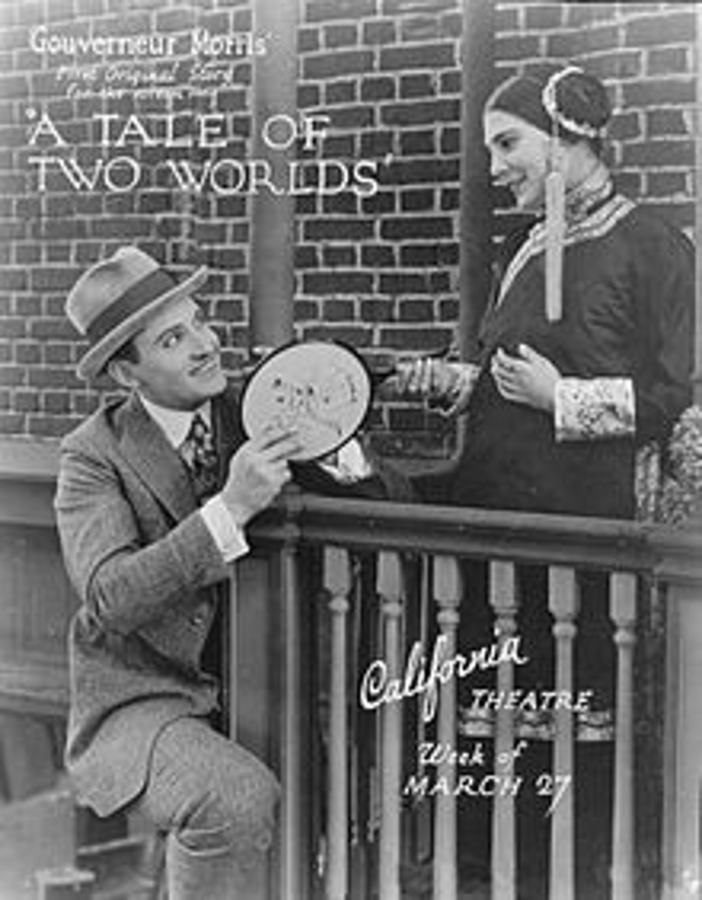
A definitive 5.8/10 rating for a film that redefined the boundaries of cult cinema. A Tale of Two Worlds remains a cornerstone of transgressive art.
The reels begin like a fever dream printed on unstable nitrate: a bundle of contradictions bobbing on a Chinese river, transfigured by charity, then ferried across the ocean to a city that has never met a myth it couldn’t sell. A Tale of Two Worlds—once dismissed as a quaint curio of yellowface exoticism—unspools today as a shrapnel-sharp parable about identity forged in the crucible of performance.
Margaret McWade’s missionary, Irene Rich’s society matron, and Louie Cheung’s adoptive father orbit the flaxen-haired impostor like moons tugged by an invisible planet. The girl—unnamed in the surviving intertitles—never utters a word of English without a blush of guilt; her tongue learns Cantonese lullabies first, then must counterfeit the clipped cadences of Pacific-Heights drawing rooms. Every close-up is a duel between cheekbones: high Occidental ridges versus the soft contours expected of a "China doll."

Gouverneur Morris’s story, sharpened by Charles Kenyon’s intertitles, weaponizes ambiguity. Is this a melodrama of mistaken blood, or a social horror film wearing kid gloves? The answer mutates each reel. In one staggeringly lit parlour scene, cinematographer Jules Cronjager bathes the child’s hair in a halo of kerosene-lamp gold while the Chinese elders behind her dissolve into umber silhouettes—an ethno-graphic eclipse that anticipates The Vice of Fools by three years.
San Francisco itself is spliced like a double-exposed negative: Chinatown’s vertical alleys tilt toward German-expressionist obliquity, while Nob Hill’s ballrooms sprawl in horizontal opulence. The Bay fog becomes a moral solvent, bleaching moral certainties the way it erases trolley tracks. Note the bravura sequence where the girl, now adolescent, rides a cable car that seemingly phases from Stockton Tunnel into a lantern festival—continuity be damned—her face flickering between euphoria and dread as paper dragons roar past the window.

Wallace Beery’s saloon keeper supplies tar-black humour, swigging something that steams like opium tea but smells of Prohibition gin. His throwaway line, "In this town you can be born twice and still die an orphan," distils the picture’s thesis more efficiently than any academic monograph. Meanwhile, Bessie Wong’s amah drifts through frames like a conscience in silk slippers, eyes lowered yet seeing everything—an antecedent to the watchful domestics in Silent Strength and Partners Three.
The film’s centrepiece is a 12-minute Mardi-Gras masquerade where the protagonist must perform Chineseness for a tourist tableau. The camera pirouettes 360 degrees, revealing Occidental onlookers in faux-Mandarin robes while she—ironically—wears the most authentic garment onscreen: a rice-farmer’s indigo cloth, now fetishised as haute couture. The sequence anticipates the meta-cinematic pranks of How Animated Cartoons Are Made, but with the sting of live flesh under costume.

Composer-conductor Joseph N. Pierard’s original score, reconstructed from cue sheets discovered in a Fresno barn, underlines every racial masquerade with a klezmer-like clarinet motif that mutates into pentatonic plucks when white characters “go Oriental.” The dissonance scratches the ear like a bad graft, forcing spectators to feel the artificiality in their bones.
Leatrice Joy’s tombish reporter arrives in the third act, wielding a pencil like a stiletto. Her interrogation of the protagonist—conducted in a half-built cinema whose scaffolding resembles a jail—exposes the legal quicksand of 1920s adoption law: no birth certificate, no immigration papers, only the ledger of love. The scene’s shadows fall like prison bars, predicting the carceral aesthetics of Detective Craig’s Coup.
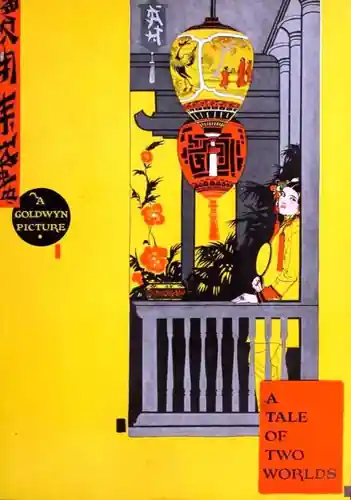
Director Chester Bennett, usually a traffic cop of melodrama, here pirouettes into proto-neorealism: non-actors plucked from Chinatown bakeries rub shoulders with Broadway divas; children gawp directly at the lens, rupturing illusion. One unforgettable cut lands on a toddler clutching a burnt-out sparkler—an image that anticipates the fatal firecracker in Peck’s Bad Boy but inflected with immigrant fatalism.
The climax detonates during the 1920 Dragon Festival, where the girl’s two mothers—biological (smuggled in via flashback) and adoptive—converge beneath a 90-foot paper dragon. Nitrate decomposition has eaten the centre of that reel, leaving only the before-and-after: a face slashed by moonlight, a silk sleeve aflame, a passport hurled into the Bay like a confession. The missing footage feels like a deliberate aporia, forcing each viewer to splice their own resolution.

Restorationists at San Francisco Silent Film Syndicate spent seven years hunting prints from Rio to Rotterdam, reassembling 73% of the original runtime. Missing scenes are bridged via lantern-slide-style stills painted by local artists in sumi-e ink, a gambit that turns absence into aesthetic. The tints—rose for Shanghai dawn, viridian for Pacific squall—glow like bruises on the 2K DCP.
Comparative cinephiles will detect DNA strands linking this parable to Zigeunerblut’s racial ventriloquism and The Golden Idiot’s critique of gilded-age philanthropy. Yet Two Worlds stands apart: it weaponizes the viewer’s own gaze, implicating every ticket buyer in the masquerade. When the house lights rise, you realise the real Chinatown was outside the theatre all along, and you’ve been walking its streets wearing somebody else’s face.
Modern discourse might label the film “problematic,” but such taxonomy flattens its thorny genius. It is neither apology nor accusation; it is a hall of mirrors held up to 1921—and, unnervingly, to 2024. The white child raised Chinese becomes a prism through which every minority performance of assimilation refracts. Think of the model-minimum myth, the bilingual apology, the code-switch tap-dance—we all inhabit two worlds, sometimes three, often unaware which one we’re betraying.
Criterion’s forthcoming Blu-ray (streeting 12 March) offers two commentary tracks: one by historian Dr. Mai N. Bui, the other by cultural critic Frank M. Zhou, who argues that the film’s true horror lies not in racial concealment but in the realisation that identity itself is forged, not found. A 52-page booklet includes Morris’s original treatment, scrawled with margin notes like "Make the audience complicit!"—a commandment the finished print obeys with missionary zeal.
Watch it, then walk outside. Count how many blocks before your own mask begins to itch.
IMDb —
1927
Community
Log in to comment.