DbcultAccessing Vault...
Cult Review
Senior Film Conservator
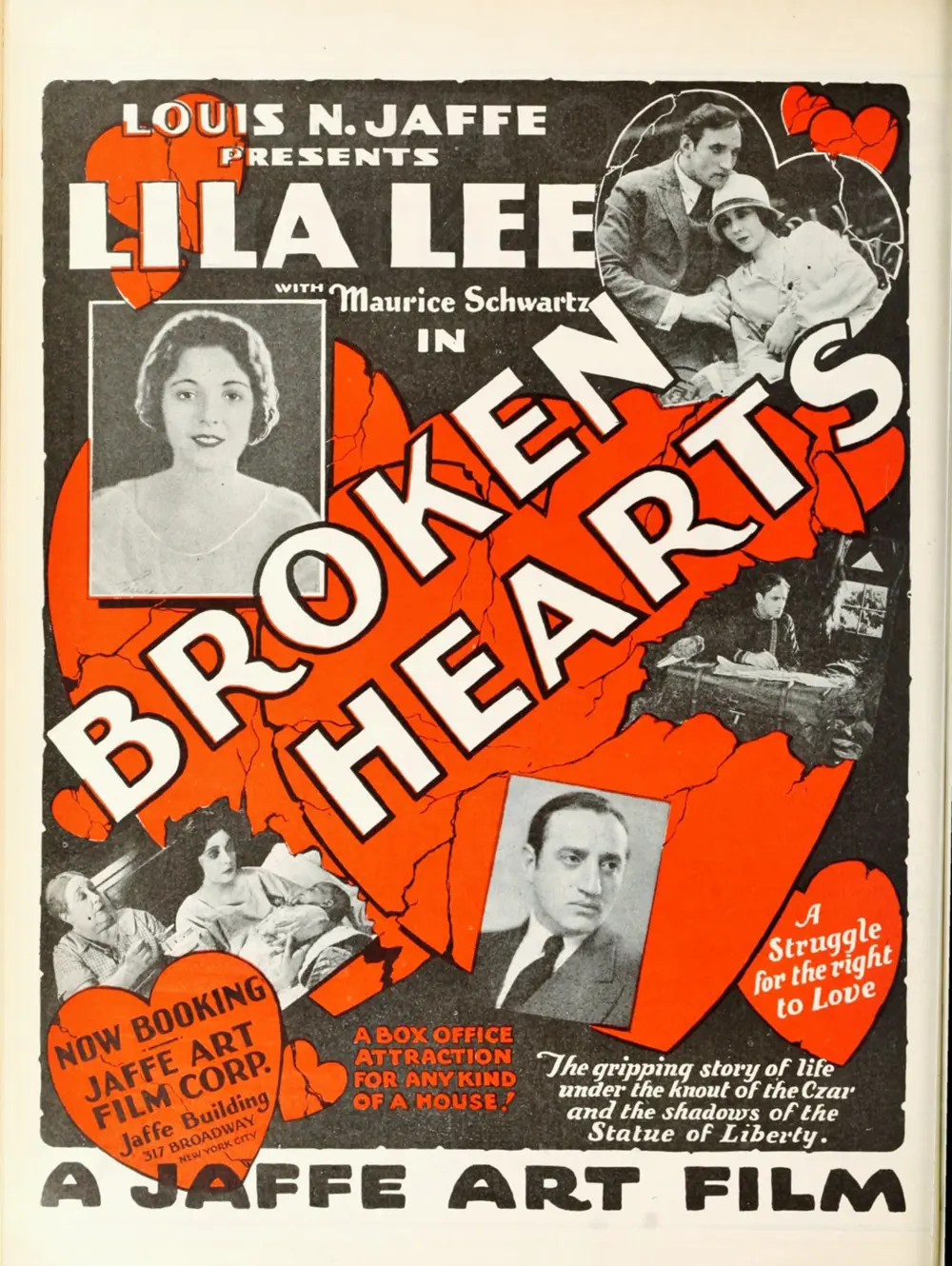
Is Broken Hearts worth a modern viewing? Short answer: Yes, but only if you approach it as a visceral cultural artifact rather than a standard Friday night entertainment. This film is essential for those interested in the roots of Jewish-American storytelling, but it will likely frustrate viewers who demand fast-paced narrative progression or subtle, modern acting styles.
This film works because it captures the raw, unpolished anxiety of the 1920s immigrant experience with a level of authenticity that mainstream Hollywood often smoothed over.
This film fails because it relies on heavy-handed theatrical tropes and coincidental plot twists that feel exhausting by the final act.
You should watch it if you are a student of silent-era cinema or want to see the legendary Maurice Schwartz bring the Yiddish Art Theatre's intensity to the screen.
Broken Hearts is not a film that cares about your comfort. It is a film about the crushing weight of displacement. When we first see Benjamin in Russia, the cinematography emphasizes a sense of looming dread. The government isn't just a political entity; it’s a shadow that follows him into his very home. Unlike the more polished suspense found in The Third Degree, the tension here feels grounded in a very real, very historical fear.
The transition to the Lower East Side is where the film finds its heart. The production design—or perhaps more accurately, the location scouting—is impeccable. You can almost smell the salt air and the crowded tenements. It’s a stark contrast to the romanticized versions of New York we often see in later films. Here, the city is a labyrinth where Benjamin is just another face in a sea of 'greenhorns.' This isn't the New York of glitz; it’s the New York of survival.
Julius Adler’s portrayal of Benjamin is a masterclass in the Yiddish theatrical style. To a modern eye, his gestures might seem overblown. Every sigh is a symphony; every look of despair is a grand tragedy. However, if you look past the era's stylistic choices, there is a profound sadness in his eyes that transcends the medium. He isn't just playing a man who lost his wife; he’s playing a man who has lost his identity. He is a writer who can no longer write, a husband who can no longer protect.
The introduction of the Cantor’s daughter, played with a chilling coldness by Miriam Ellias, provides the film’s most interesting conflict. She doesn't love Benjamin, and she doesn't pretend to. In many ways, she is the most honest character in the film. While other silent films like Slaves of Pride dealt with social standing and ego, Broken Hearts deals with the transactional nature of survival. Their marriage isn't a romance; it's a social contract born of mutual desperation and religious expectation.
Broken Hearts is worth watching for anyone who wants to understand the evolution of the Jewish diaspora in American media. It provides a direct link between the Yiddish stage and the burgeoning film industry of the 1920s. While it lacks the technical fluidity of contemporary hits like Blue Jeans, its emotional honesty is far more cutting. It is a difficult, sometimes slow-moving piece of history, but its portrayal of the 'living ghost'—a person whose past refuses to stay dead—is a theme that remains universal.
The middle act of the film hinges on a classic melodramatic trope: the false report of a death. In a modern context, this feels like a cheap plot device. But in 1926, for an audience of immigrants who had actually left families behind in war-torn Europe, this was a terrifying reality. Letters were lost. Rumors were taken as gospel. The 'complications' that ensue when Benjamin learns his first wife is alive aren't just fodder for drama; they represent the fractured psyche of an entire generation of New Yorkers.
There is a specific scene where Benjamin sits in his cramped apartment, staring at a photograph of his 'dead' wife while his new wife moves coldly in the background. The lighting is harsh, casting long shadows that seem to pin him to his chair. It’s a moment of static horror. He is a bigamist by accident, a sinner by circumstance. The film doesn't offer easy answers, and that is its greatest strength. It lets the misery sit.
Directing a silent film with such a heavy narrative burden is no small feat. Maurice Schwartz, better known for his stage work, brings a proscenium-arch sensibility to the frame. This results in some static shots that feel like they are waiting for a curtain to fall. However, the use of close-ups during the discovery of the first wife's survival is surprisingly modern. The camera lingers on Benjamin’s face until the discomfort is palpable. It’s a far cry from the more experimental camera work in Mad Love, but it serves the story’s emotional gravity.
The pacing is where the film struggles most. There are sequences that feel redundant, reinforcing the same sense of gloom without moving the plot forward. Yet, this very slowness contributes to the atmosphere of entrapment. Benjamin is stuck. The audience is stuck with him. It’s a bold choice, even if it wasn't entirely intentional. The film doesn't care if you're bored; it only cares that you feel the weight of Benjamin's suitcase.
Pros:
Cons:
Broken Hearts is a punishing watch, but a necessary one. It doesn't have the visual flair of a German Expressionist film or the high-octane energy of an American adventure, but it has a soul. It’s a film that understands that leaving your home isn't just a physical journey; it's a psychic fracture. It works. But it’s flawed. The theatricality is a barrier, but if you can climb over it, you’ll find a story that is as relevant today as it was nearly a century ago. It is a stark reminder that the 'Old World' never truly stays behind; it waits in the shadows of the new one, ready to reclaim its due.
"A haunting, if occasionally stilted, exploration of the immigrant's impossible choice between a past that won't die and a future that won't spark."
IMDb 4.7
1935
Community
Log in to comment.