DbcultAccessing Vault...
Cult Review
Senior Film Conservator
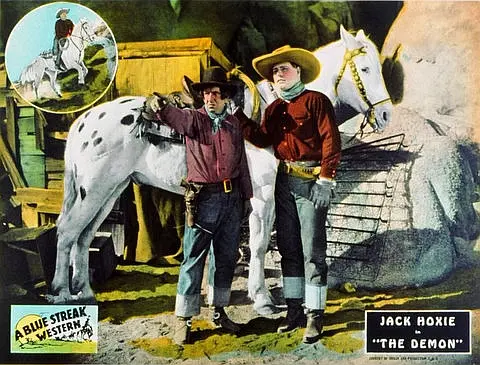
Is The Demon (1926) worth watching today? Short answer: yes, but with significant caveats that demand a specific kind of viewer. This film is a fascinating historical artifact best suited for silent film enthusiasts, Western aficionados, and those keen to observe the nascent stages of genre filmmaking; it is decidedly not for audiences seeking modern pacing, sophisticated narratives, or high-fidelity restoration.
For those willing to engage with its particular rhythms and period sensibilities, The Demon offers a compelling glimpse into the formative years of Hollywood storytelling, showcasing rudimentary yet effective techniques that would later become genre staples. It’s a foundational piece, not a polished gem, but its rough edges hold a certain historical charm.
At its heart, The Demon plunges us into a classic narrative of infiltration and betrayal. Dane Gordon, portrayed with earnest stoicism by Jack Hoxie, embodies the archetypal lawman driven by a singular purpose: to dismantle a lawless gang. His method is audacious, a deep cover operation requiring him to shed his identity and embrace the persona of an ex-convict. This premise, while familiar now, was a potent narrative engine in 1926, setting the stage for moral ambiguities and high-stakes drama.
The plot thickens with the introduction of Goldie Fleming, a stenographer unwittingly entangled with the gang's secret leader, 'Bat' Jackson. Her presence introduces a romantic complication that threatens to unravel Gordon's carefully constructed facade, adding layers of personal jeopardy to his professional mission. The eventual revelation of Gordon's true identity to the outlaws ignites the film's climactic tension, transforming a stealth operation into an overt confrontation.
This film works because it leverages the inherent dramatic potential of its undercover premise, delivering a surprisingly intricate plot for a silent Western of its era. Jack Hoxie’s understated performance provides a solid anchor, and the film’s commitment to tangible, location-based action sequences grounds the narrative in a believable, if somewhat idealized, frontier.
This film fails because its pacing can feel glacial by modern standards, relying heavily on explanatory intertitles that interrupt the visual flow. Character development, particularly for Goldie Fleming, remains largely superficial, hindering deeper emotional investment. The technical limitations of 1926 filmmaking, while historically fascinating, also mean a lack of dynamic camera work or sophisticated editing.
You should watch it if you are a dedicated student of early cinema, a Western film historian, or someone who appreciates the raw, unpolished charm of pre-talkie storytelling. It offers a valuable window into how genre conventions were established.
William Welsh's direction in The Demon is, predictably, a product of its time. The camera largely remains static, capturing scenes in wide or medium shots that prioritize clarity of action over artistic flourish. Yet, within these constraints, Welsh manages to stage some effective sequences. The initial infiltration of Gordon into the outlaw camp, for instance, relies on a series of well-composed shots that establish the rugged environment and the immediate distrust of the gang members. There's a particular wide shot of the gang riding across a dusty plain that, despite its simplicity, conveys a palpable sense of freedom and menace.
The cinematography, while not groundbreaking, effectively uses natural light for its outdoor scenes, lending an authentic, sun-baked aesthetic to the Western setting. Indoor scenes, often dimly lit, contribute to the clandestine atmosphere of 'Bat' Jackson's operations. There's a noticeable lack of elaborate set pieces, with the film leaning into practical locations that ground the narrative. This utilitarian approach, while not 'visually stunning' in the modern sense, provides a raw realism that many contemporary productions, with their green screens and CGI, often struggle to replicate. It’s a testament to the era’s resourcefulness.
Compared to a film like The Wonderful Chance, which also navigated themes of identity and crime around the same period, The Demon feels a bit more straightforward in its visual storytelling. There are fewer attempts at complex shot compositions or symbolic imagery. Instead, Welsh focuses on clear, linear progression, ensuring the audience can follow the plot through visual cues and the omnipresent intertitles.
Jack Hoxie, a prominent Western star of the silent era, brings his characteristic blend of rugged charisma and earnest sincerity to Dane Gordon. His performance is largely physical, relying on posture, determined strides, and intense gazes to convey his character's resolve and inner conflict. When Gordon is undercover, Hoxie subtly shifts his demeanor, adopting a hardened, suspicious look that differentiates him from his true lawman persona. This isn't nuanced acting by today's standards, but for 1926, his ability to project dual identities through physicality alone is commendable. His stoic charm is often mistaken for wooden acting, but it’s a deliberate, effective choice for the era, communicating strength and reliability.
Lola Todd, as Goldie Fleming, is given less to work with in terms of character depth. Her role is primarily to serve as the romantic interest and a catalyst for Gordon's emotional vulnerability. Todd portrays Goldie with a certain innocence and vulnerability, her wide eyes and expressive gestures signaling her unease with her employer's true nature. While her performance doesn't reach the dramatic heights of some of her contemporaries, she embodies the 'damsel in distress' archetype with convincing sincerity, making her a sympathetic figure despite limited screen time dedicated to her internal world.
The supporting cast, including Jere Austin as the villainous 'Bat' Jackson, fulfills their roles adequately. Austin's portrayal of Jackson is suitably menacing, characterized by a sneering smile and authoritative gestures that leave no doubt about his nefarious intentions. The exaggerated expressions and broad physicality, standard for silent film acting, are present here, serving to clarify character motivations without the aid of dialogue. It’s a style that demands a different kind of appreciation from modern viewers, one that values pantomime and clear emotional signals over subtle psychological realism.
The screenplay, credited to William C. Beal, Buckleigh Fritz Oxford, and Alan James, is surprisingly well-structured for an early genre piece. It establishes the stakes early, introduces a credible threat, and builds towards a satisfying, if somewhat predictable, climax. The decision to have the gang's secret leader be a 'respected citizen' adds a layer of social commentary, highlighting the hidden corruption that can fester beneath a veneer of legitimacy. This twist, while not revolutionary, shows a willingness to move beyond simple 'good vs. evil' narratives.
However, the pacing is undeniably slow. Silent films, by their nature, relied on intertitles to convey dialogue, exposition, and character thoughts, which inherently breaks the flow of the moving image. The Demon is no exception. Long stretches of text, while necessary, can test the patience of even seasoned silent film viewers. Action sequences, when they occur, are often brief and quickly resolved, lacking the sustained tension and rapid-fire editing that define modern thrillers. A particular scene involving a chase on horseback, for instance, feels more like a series of static shots than a dynamic pursuit, diminishing its impact.
The narrative's biggest strength is also its most frustrating limitation: its unwavering commitment to silent-era storytelling conventions, which can feel both authentic and agonizingly slow. It works. But it’s flawed. The plot’s complexity is impressive for its time, but its delivery system is a relic that requires patience.
The tone of The Demon is primarily one of adventure and moral rectitude, underscored by a burgeoning romance. There’s a clear delineation between good and evil, typical of early Westerns, but the undercover element introduces a fascinating thematic undercurrent: the cost of deception. Dane Gordon must compromise his true identity, living a lie to achieve justice. This moral tightrope walk, while not deeply explored psychologically, is subtly present in Hoxie's portrayal, especially in moments where his affection for Goldie conflicts with his mission.
The true 'demon' of the title isn't just the gang leader, but arguably the insidious nature of hidden corruption and the moral ambiguity inherent in Dane's deception itself. This surprisingly nuanced undercurrent for a 1926 Western elevates it slightly above pure pulp. Themes of loyalty, betrayal, and the pursuit of justice are universal, and The Demon presents them in a foundational, almost elemental form.
Yes, if you approach it with the right mindset. The Demon (1926) is not a film for casual viewing or for those unfamiliar with silent cinema. It demands patience and an appreciation for film history. For scholars and enthusiasts of early Westerns, it’s an essential watch to understand the genre's evolution. It provides a valuable historical document of popular entertainment from nearly a century ago.
However, if you're looking for a fast-paced, emotionally resonant, or visually spectacular experience, you will likely be disappointed. Its value lies in its historical context and its pioneering efforts in narrative construction, not in its ability to compete with modern storytelling. Consider it an archaeological dig into cinema's past rather than a contemporary blockbuster.
The Demon (1926) is more than just a dusty relic; it’s a foundational stone in the sprawling architecture of the Western genre. While it undeniably suffers from the technical and narrative constraints of its era, its ambition in crafting a nuanced undercover plot and its reliance on the sturdy screen presence of Jack Hoxie make it a compelling piece for the right audience. It’s not a film that will resonate with everyone, nor should it be expected to. But for those who cherish the history of cinema, who delight in observing the nascent forms of storytelling, and who possess the patience to engage with its unique rhythms, The Demon offers a rewarding, albeit challenging, viewing experience.
It serves as a vital reminder of where our cinematic journey began, showcasing the raw talent and innovative spirit that laid the groundwork for everything that followed. Consider it a necessary pilgrimage for the serious film buff, a fascinating, if sometimes arduous, trip back in time. It's not a film to simply enjoy, but one to study and appreciate for its place in history.
IMDb —
1927
Community
Log in to comment.