DbcultAccessing Vault...
Cult Review
Senior Film Conservator
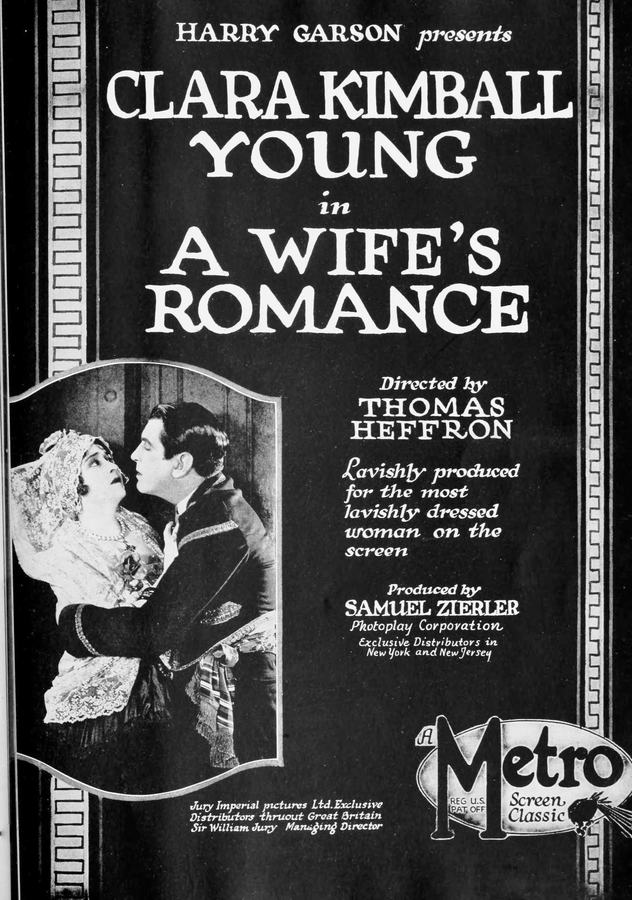
In the annals of early cinema, where flickering shadows often spoke volumes more than any uttered word, certain films emerge as quiet revelations, testaments to the nascent art form's power to plumb the depths of human emotion. Frank S. Beresford and H.W. Roberts' 1914 collaboration, A Wife's Romance, is precisely such a work. Far from a simplistic melodrama, this silent gem, starring the luminous Lillian Adrian, unfolds as a nuanced exploration of marital ennui, artistic awakening, and the perilous allure of forbidden connection against the vibrant, yet restrictive, backdrop of early 20th-century Madrid.
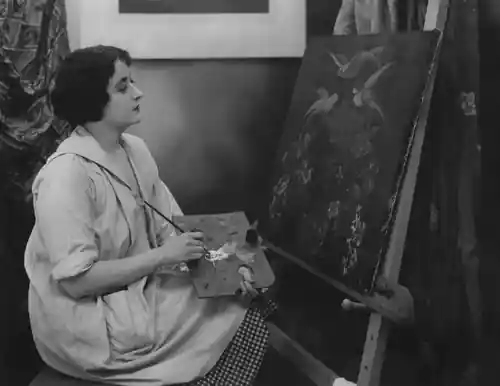
At its heart lies Joyce Addison, portrayed with exquisite subtlety by Lillian Adrian. Joyce is not merely a neglected wife; she is a woman of profound interiority, her spirit stifled by the polite indifference of her American attaché husband, Wedgwood Nowell’s Addison, whose world revolves around diplomatic duties and social engagements. Adrian’s performance, a masterclass in silent film acting, conveys Joyce's quiet desperation not through grand gestures, but through the delicate nuances of her gaze, the slight slump of her shoulders, the almost imperceptible tremor of her hands as she reaches for a paintbrush. Her artistic endeavors are not a frivolous pastime but a desperate lifeline, a solitary act of self-expression in a life otherwise defined by her husband's status and her societal role. This echoes the quiet rebellion seen in characters from films like The Perfect Woman, where female protagonists grapple with the confines of their roles, seeking an escape, be it intellectual or emotional, from the pre-ordained paths laid out for them.
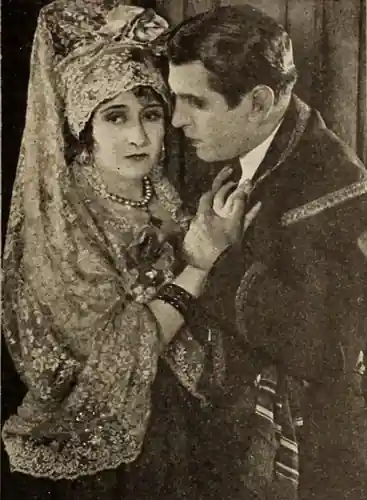
The catalyst for Joyce's awakening arrives in the most unexpected, almost cinematic, fashion: a late-night encounter with a bandit. This is not the brutish villain one might expect from the era's common fare. Instead, Arthur Stuart Hull, who imbues the bandit with a captivating blend of danger and surprising gallantry, presents a figure of raw, untamed charisma. His act of chivalry, seeing Joyce home after robbing her, is a stroke of narrative genius, immediately establishing him as more than a mere criminal. He represents the antithesis of Joyce's structured, sterile existence – a living embodiment of passion, freedom, and perhaps, a touch of the romanticized 'other.' This initial interaction, fraught with peril yet tinged with an undeniable spark, sets the stage for a relationship that defies convention and societal expectation.
Joyce's artistic eye, ever seeking inspiration, seizes upon the bandit as a compelling subject. Her persuasion for him to pose for her paintings is more than a mere request; it is an act of audacious self-assertion. It allows her to bridge the chasm between her constrained reality and the thrilling unknown, to engage with a man who sees her not as an attaché's wife, but as an artist, a woman with her own desires and perceptions. This dangerous friendship, meticulously crafted by Beresford and Roberts, becomes the crucible for Joyce's burgeoning self-discovery. Each brushstroke, each shared glance, each moment of quiet understanding in her studio, chips away at the facade of her dutiful wife persona, revealing a woman capable of profound feeling and yearning.
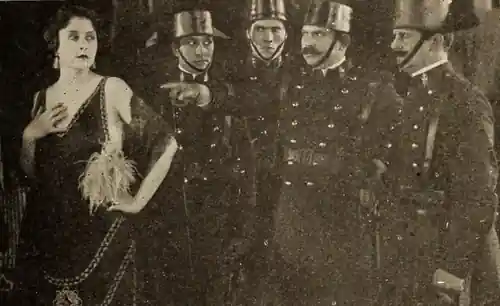
The narrative masterfully escalates the emotional stakes, moving from the quiet intimacy of the studio to the public, yet shadowed, spaces of Madrid. The trip to a notorious cafe with her bandit muse is a defiant plunge into a world forbidden to a woman of her standing. It’s a moment pregnant with both exhilaration and apprehension, a tangible manifestation of her desire to shed the shackles of her identity. However, the world, as it often does in stories of illicit romance, has a way of asserting its presence. The appearance of an old friend—a role that could easily have been filled by the esteemed Clara Kimball Young, whose presence in the ensemble cast hints at a character of significant social standing—serves as society's vigilant eye. This chance sighting is the turning point, the harsh beam of reality cutting through the romantic haze. It underscores the pervasive social scrutiny that women, particularly those in prominent positions, faced during this era, a theme also explored in the moral quandaries presented in films like Dommens dag or the social pressures depicted in Fanatics.
"Lillian Adrian's portrayal of Joyce Addison is a testament to the power of unspoken emotion, a silent symphony of longing and resolve that transcends the limitations of the medium."
The wisdom of giving up her bandit, though heartbreaking, is a pragmatic concession to the social fabric of her time. Adrian conveys Joyce's internal struggle with poignant authenticity; her decision is not one of waning affection, but of stark necessity. The bandit's unhappiness, powerfully rendered by Arthur Stuart Hull, resonates with the tragedy of their impossible love. This moment of renunciation is crucial, highlighting the harsh realities faced by women who dared to stray from prescribed paths. It’s a narrative choice that speaks volumes about the societal constraints of the early 20th century, where personal desires often had to yield to public decorum and marital fidelity, a recurring motif in silent films exploring the complexities of human relationships.
The final turn of the screw, the husband's overhearing of Joyce's painful confession, elevates A Wife's Romance beyond simple romantic drama. Wedgwood Nowell's performance, initially characterized by a detached professionalism, undergoes a significant transformation. His discovery is not met with anger or recrimination, but with a profound, belated realization of his own failings. The plot suggests a determination to reform, to become not just a husband by title, but a 'sweetheart' in action. This promise of reformation, though perhaps a convenient narrative resolution, offers a glimmer of hope for a marriage revitalized by crisis. It speaks to the potential for growth and understanding, even in the face of profound neglect. This theme of marital awakening, spurred by an external threat or internal crisis, can be seen in other silent era dramas like The Heart of Jennifer, where characters are forced to confront the true nature of their relationships.
The supporting cast, including Alan Roscoe, Louise Bates, Robert Cauterio, and Lewis Dayton, contribute to the rich tapestry of Madrid society, adding authenticity to the milieu. While their specific roles might not be detailed in the surviving plot summaries, their collective presence undoubtedly enriched the film's atmosphere, painting a vivid picture of the social landscape in which Joyce's drama unfolds. One can imagine Alan Roscoe playing a confidante, or Louise Bates a society matron whose judgment weighs heavily. These layers, though subtle, are crucial for a film that relies so heavily on unspoken implication and visual storytelling.
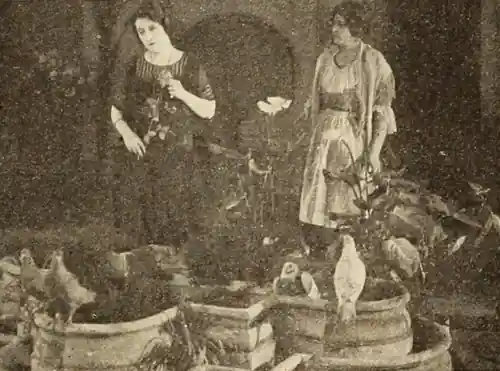
The directorial choices in A Wife's Romance are particularly noteworthy. The use of location, the bustling streets of Madrid, the shadowy corners of the cafe, all contribute to the film's evocative power. The cinematography, even in its early form, would have been instrumental in conveying the emotional landscape, contrasting the stark, elegant interiors of the Addison home with the vibrant, illicit energy of the bandit's world. The framing of shots, the interplay of light and shadow, would have been carefully orchestrated to emphasize Joyce's isolation, her moments of artistic inspiration, and the dangerous frisson of her affair. This attention to visual storytelling is a hallmark of the era, where directors had to rely on visual cues, facial expressions, and body language to carry the narrative load, much like in films such as The Streets of Illusion, where the visual spectacle itself becomes a character.
Beresford and Roberts, as writers, crafted a narrative that, while adhering to certain conventions of its time, dared to explore the complexities of female desire and marital dissatisfaction with a surprising degree of empathy. They avoided simplistic moralizing, instead presenting a protagonist driven by a hunger for connection and self-expression, a hunger that her conventional life could not satisfy. The narrative arc, from quiet despair to dangerous awakening and eventual, painful compromise, is handled with a maturity that belies the film's early production date.
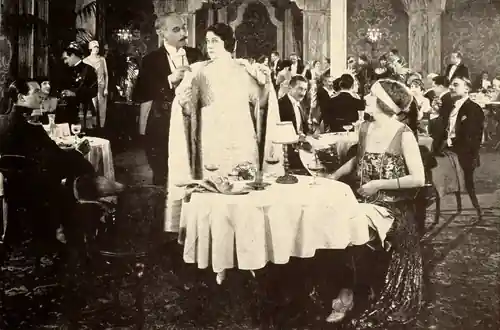
"The film's exploration of societal constraints versus personal yearning remains strikingly relevant, a silent echo of struggles that continue to resonate through the ages."
In an era when films like Flaming Hearts or The Beast often focused on more overt conflicts, A Wife's Romance distinguishes itself through its psychological depth. It's a film about the internal landscape of a woman, her yearnings, her artistic passions, and her struggle to reconcile personal fulfillment with societal expectations. The ending, with the husband's belated realization, offers a bittersweet resolution, suggesting that while the illicit romance must end, the marriage itself might be salvaged, transformed by the tremors of an almost-scandal. This nuanced approach to marital dynamics and female agency makes it a significant, albeit often overlooked, piece of cinematic history.
Ultimately, A Wife's Romance is more than just a historical curiosity. It is a compelling drama that speaks to timeless themes: the search for identity, the complexities of love and marriage, and the human need for connection and creative expression. Lillian Adrian's performance alone is worth seeking out, a masterclass in conveying profound emotion without a single spoken word. The film's ability to evoke the tension between duty and desire, between public image and private longing, ensures its enduring relevance. It reminds us that even in the earliest days of cinema, storytellers were grappling with the intricate nuances of the human condition, crafting narratives that, despite their age, continue to resonate deeply with contemporary audiences. This film, like a carefully preserved painting, offers a window into a past era, yet its brushstrokes depict emotions that are universally understood and felt, solidifying its place as a quietly powerful entry in the silent film canon.
IMDb —
1919
Community
Log in to comment.