DbcultAccessing Vault...
Cult Review
Senior Film Conservator
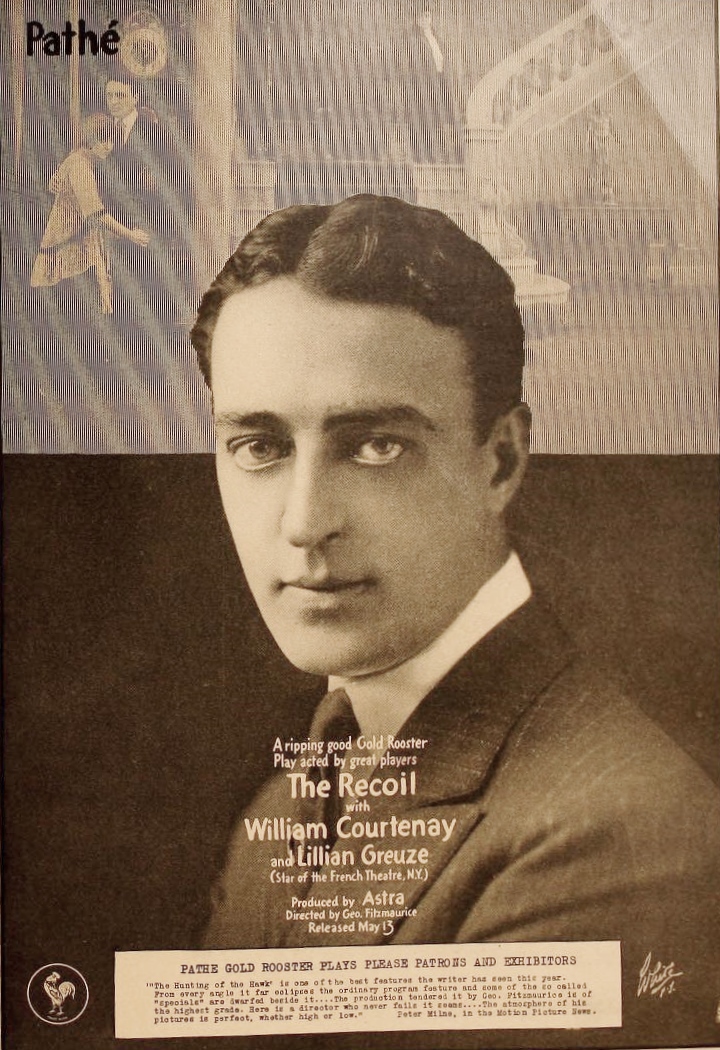
In the nascent years of cinema, when flickering images and evocative intertitles carried the weight of complex narratives, films often delved into the profound human experiences of duty, sacrifice, and the crushing weight of hidden truths. Anthony Paul Kelly's 1917 production, The Recoil, stands as a compelling testament to this era's capacity for intricate melodrama, weaving a tapestry of espionage, accidental tragedy, and the agonizing moral quandaries faced by those caught in fate’s cruel grip. It is a work that, despite its century-plus vintage, resonates with timeless themes of loyalty, desperate choices, and the long shadow cast by secrets, showcasing the dramatic power inherent in the silent medium.
The narrative of The Recoil is a masterclass in escalating tension, commencing with the perilous life of Richard Cameron, a secret service agent entangled in the treacherous world of international espionage. His disappearance, following a kidnapping by the enigmatic Mirian Somerset – an adversary, yet paradoxically, his clandestine wife – immediately plunges the story into an abyss of uncertainty. This initial twist, a romantic bond concealed beneath layers of professional antagonism, sets the stage for the profound emotional turmoil that defines Mirian’s subsequent journey. Her belief in Richard's death, a cruel deception perpetuated by circumstance, propels her into a decision born of desperation and familial obligation. Guided by her mother’s pragmatic, if emotionally fraught, counsel, Mirian acquiesces to a marriage with Charles Van Horn, a man of considerable wealth but questionable character, his dissipation contrasting sharply with Richard’s stoic heroism. This union is not one of affection, but a cold calculation, a desperate gambit to salvage her family's dwindling fortunes, a common motif in melodramas of the era where women were often depicted as pawns in economic games.
The precarious edifice of Mirian's new life crumbles with Richard's miraculous return. The reunion, far from bringing solace, ignites a volatile confrontation. Van Horn, discovering his wife with the man he believes to be her lover, erupts in a fit of jealous rage, attacking Richard. In the ensuing struggle, Mirian, in a moment of panic, strikes Van Horn, inadvertently delivering a fatal blow. This accidental killing is the narrative's central pivot, transforming Mirian from a grieving widow and dutiful daughter into a tormented secret-keeper and inadvertent murderer. The weight of this act is compounded by Richard’s inescapable duty; his mission overseas demands his immediate departure, leaving Mirian isolated with her terrible secret. This separation, born of necessity, amplifies Mirian's vulnerability, leaving her to navigate a treacherous legal and moral landscape alone. The film masterfully explores the excruciating psychological burden of this secret, reminiscent of the silent era's fascination with hidden guilt and its corrosive effects on the human psyche. One might draw thematic parallels to films like Mary Lawson's Secret, where concealed truths unravel lives, or The Great Mistake, which often explored the profound repercussions of a single, catastrophic error.
The drama intensifies when Mirian’s innocent brother, Page, is arrested for Van Horn's murder, implicated by a web of circumstantial evidence. Mirian is thrust into an impossible ethical dilemma: to confess her crime and condemn herself, thereby saving her brother, or to remain silent and witness his unjust conviction, potentially leading to the electric chair. This agonizing choice forms the emotional core of the film, highlighting the profound conflict between self-preservation and familial love. The tension builds relentlessly as Page's fate hangs precariously in the balance, culminating in a dramatic, last-minute intervention. Richard, true to his heroic archetype, reappears with a governor’s pardon, securing Page’s freedom and, in doing so, restoring a fragile peace to Mirian's turbulent existence. This resolution, while providing catharsis, does not erase the trauma, leaving an indelible mark on Mirian's character and the audience's understanding of her journey.
The success of a silent film, particularly one with such a convoluted and emotionally charged plot, rests heavily on the expressive capabilities of its cast. Lilian Greuze, as Mirian Somerset, carries the narrative’s immense emotional weight with remarkable grace and intensity. Her performance is a nuanced portrayal of a woman buffeted by forces beyond her control – from the initial grief for her presumed-dead husband to the pragmatic acceptance of a loveless marriage, and finally, to the harrowing guilt of accidental homicide and the desperate struggle to save her brother. Greuze’s facial expressions and body language would have been paramount in conveying Mirian's internal turmoil, her silent screams of anguish and her silent prayers for reprieve. She embodies the archetypal melodrama heroine, yet imbues her with a compelling realism that transcends the often-exaggerated stylings of the era. Her journey is one of profound suffering and resilience, a testament to the human spirit's capacity to endure unimaginable hardship.
William Courtenay, likely in the role of Richard Cameron, would have projected the stoic resolve and unwavering sense of duty befitting a secret service agent. His character serves as both Mirian's anchor and her recurring source of both hope and despair. The initial disappearance, the dramatic return, and the final, heroic intervention all require a commanding presence that Courtenay, a seasoned performer of the era, would have undoubtedly delivered. His portrayal would have underscored the tension between personal attachment and professional obligation, a theme explored in other contemporary films like According to the Code, which often pitted individual desires against rigid societal or professional standards. The contrast between his steadfastness and Mirian's emotional volatility would have provided a potent dynamic.
Frank Belcher, in portraying the dissipated Charles Van Horn, would have been tasked with creating a character who, while a victim, is also a catalyst for much of the tragedy. His portrayal needed to evoke a sense of entitlement and perhaps a latent menace, making his eventual demise both shocking and, in the context of the melodrama, almost inevitable. Dora Mills Adams, likely playing Mirian’s mother, would have provided the stern, practical counterpoint to Mirian’s emotional distress, embodying the societal pressures and expectations placed upon women in that period. William Raymond, as the innocent Page, would have needed to convey vulnerability and helplessness, amplifying the audience's sympathy and Mirian’s dilemma. The ensemble, under Kelly’s direction, would have worked in concert to build a believable, if heightened, world of passion and peril.
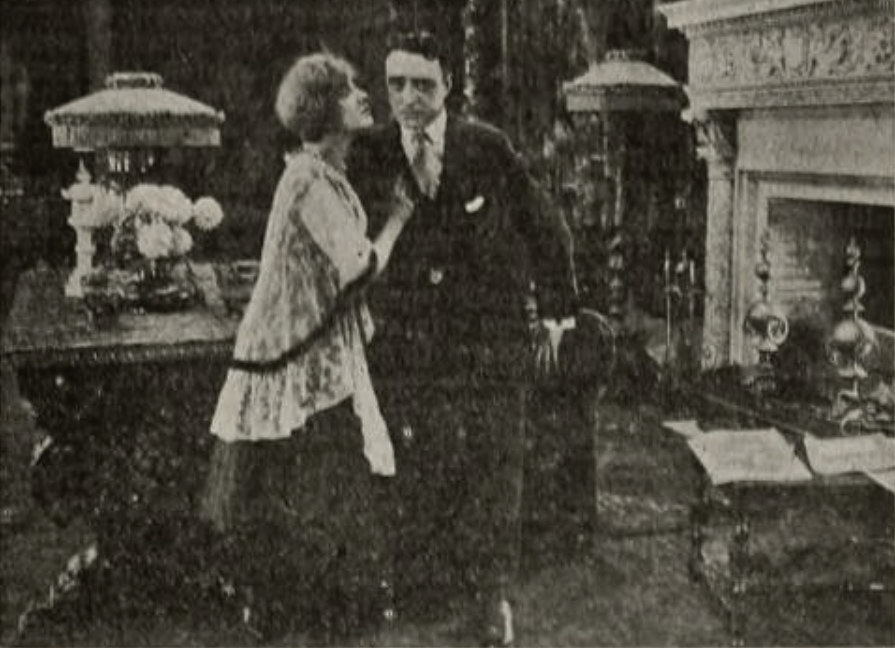
Anthony Paul Kelly, credited as the writer of The Recoil, demonstrates a profound understanding of dramatic construction and narrative pacing, crucial elements for engaging a silent film audience. The plot, with its numerous twists and turns – the presumed death, the forced marriage, the accidental killing, the wrongful accusation, and the eleventh-hour reprieve – is meticulously structured to maintain a high level of suspense. Kelly’s script would have relied heavily on well-placed intertitles to convey exposition and dialogue, but the true artistry lies in how these textual interruptions are integrated with the visual storytelling. The narrative unfolds with a relentless momentum, each revelation deepening Mirian's predicament and ratcheting up the stakes. The use of circumstantial evidence against Page is a particularly effective plot device, highlighting the fragility of justice and the terrifying power of appearances.
The film's direction, though not explicitly detailed in the provided information, would have had to translate Kelly's intricate script into compelling visuals. Silent cinema, with its reliance on tableau shots, exaggerated gestures, and evocative close-ups, demanded a precise visual language. The cinematography would have needed to effectively convey the clandestine world of espionage, the opulence of Van Horn’s home, the grim reality of the courtroom, and the starkness of Page’s impending fate. The editing, a nascent art form at the time, would have been critical in building suspense, cutting between Mirian’s agony and Page’s plight, or between the legal proceedings and Richard’s race against time. The emotional arc of the film, from despair to a glimmer of hope, is carefully managed, ensuring that the audience remains invested in Mirian's harrowing journey.
At its heart, The Recoil is a profound exploration of human resilience in the face of impossible choices. Mirian’s journey is a microcosm of the sacrifices often demanded by duty, whether to family, to country, or to a hidden personal code. Her decision to marry Van Horn, while pragmatic, is a sacrifice of personal happiness, undertaken for her family’s survival. Her accidental killing of Van Horn, a desperate act, forces her into a moral quagmire, a secret that threatens to consume her. The film asks profound questions about culpability, the nature of justice, and the lengths to which an individual will go to protect a loved one. Richard’s unwavering commitment to his mission, even at the cost of supporting his wife through her darkest hour, underscores the theme of duty’s demanding nature, a common thread in narratives involving agents and spies, perhaps even echoing the commitment seen in action dramas like The Target, where protagonists are driven by a higher purpose.
The film also delves into the psychological impact of secrets. Mirian’s silent suffering, her inability to confide in anyone about the true circumstances of Van Horn's death, mirrors the internal torment of characters in films like Her Reckoning, where past actions inevitably demand a confrontation with conscience. The tension between public perception and private truth is central to the drama, highlighting how easily an innocent person can be condemned by a confluence of unfortunate events and concealed realities. The resolution, while providing a happy ending, does not diminish the profound emotional scars left by Mirian's ordeal, suggesting that even with justice served, some burdens are carried forever. This nuanced approach to consequences, even in a melodrama, gives the film a lasting emotional resonance.
While silent films are often viewed through the lens of historical curiosity, The Recoil reminds us of their enduring power as storytelling vehicles. The film’s intricate plot, compelling characters, and universal themes ensure its relevance beyond its immediate historical context. It showcases the capability of early cinema to tackle complex moral dilemmas and to evoke deep emotional responses without the aid of spoken dialogue. The performances of Dora Mills Adams, Lilian Greuze, William Courtenay, Frank Belcher, and William Raymond, guided by Anthony Paul Kelly’s potent script, would have captivated contemporary audiences and continue to impress those who appreciate the artistry of the silent era. For enthusiasts of early cinema, it offers a fascinating glimpse into the narrative sophistication and dramatic ambition that characterized the medium's formative years.
The film's exploration of espionage, accidental death, and the quest for justice places it firmly within a rich tradition of dramatic thrillers. Its ability to maintain tension and emotional investment throughout such a complex narrative speaks volumes about the skill of its creators. In an era where cinema was still defining its grammar, The Recoil stands as a compelling example of a well-crafted melodrama that understands the human heart’s capacity for both profound love and agonizing sacrifice. It's a reminder that compelling stories, regardless of the technological constraints of their time, possess an inherent power to move, to challenge, and to entertain.
In conclusion, The Recoil is far more than a relic of a bygone cinematic age; it is a vibrant, emotionally charged drama that speaks to the timeless struggles of duty versus desire, truth versus deception, and the profound impact of fate on individual lives. Its intricate plot, driven by powerful performances and a masterful script, solidifies its place as a significant, if perhaps lesser-known, contribution to the rich tapestry of silent cinema.
IMDb 4.4
1917
Community
Log in to comment.