DbcultAccessing Vault...
8.6/10
Senior Film Conservator
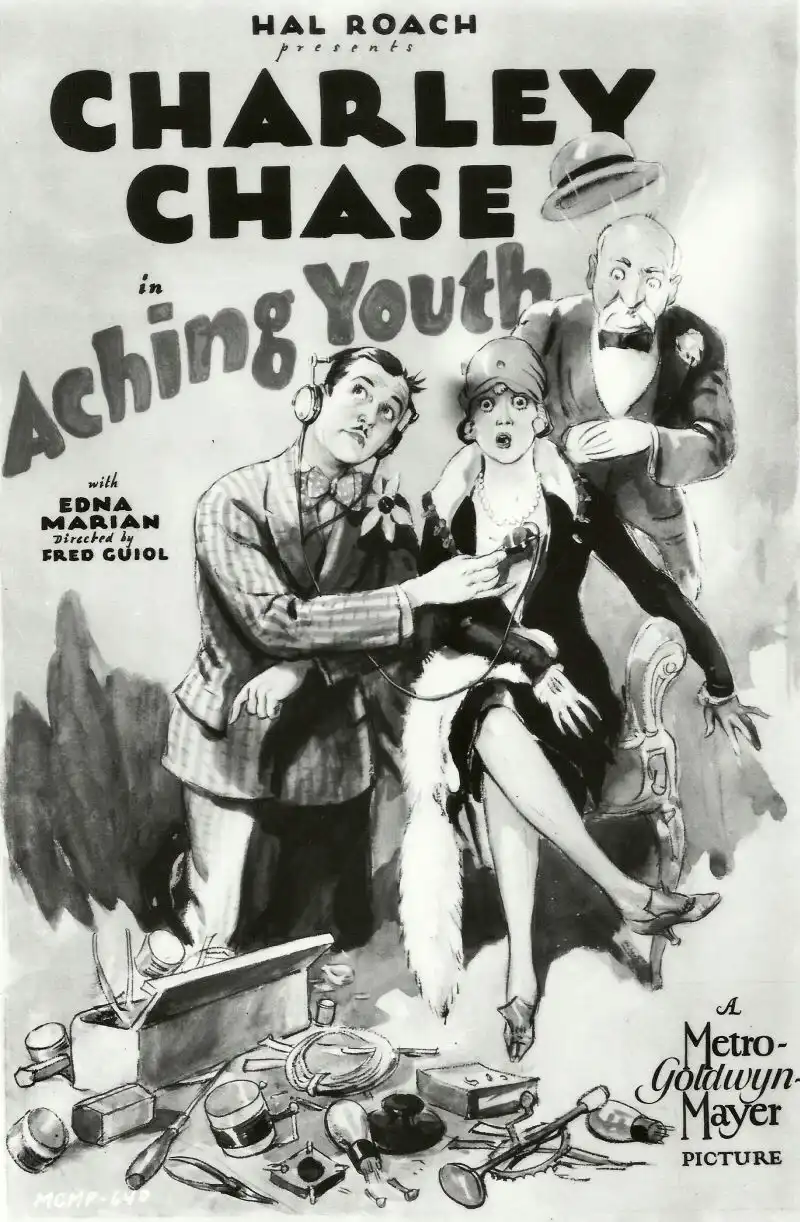
A definitive 8.6/10 rating for a film that redefined the boundaries of cult cinema. Aching Youth remains a cornerstone of transgressive art.
If you’re in the mood for twenty minutes of Charley Chase looking increasingly stressed while his father acts like a total lunatic, Aching Youth is worth a look. It’s not the kind of movie that’s going to change your life, and it’s definitely not the best thing Leo McCarey ever touched, but it has this specific, uncomfortable energy that you don’t always get in 1920s shorts. If you hate silent comedy where the jokes feel like they’re being explained to you with a hammer, you might actually like this one because it’s mostly just... awkward.
Charley Chase has this way of adjusting his hat that tells you everything you need to know about his internal state. In this one, he’s dealing with his dad, played by William Orlamond. If you’ve never seen Orlamond, the man’s face looks like a piece of driftwood that’s been through a storm. He’s obsessed with 'youth,' and he wants Charley to marry a girl who is basically a female version of a hyperactive toddler.
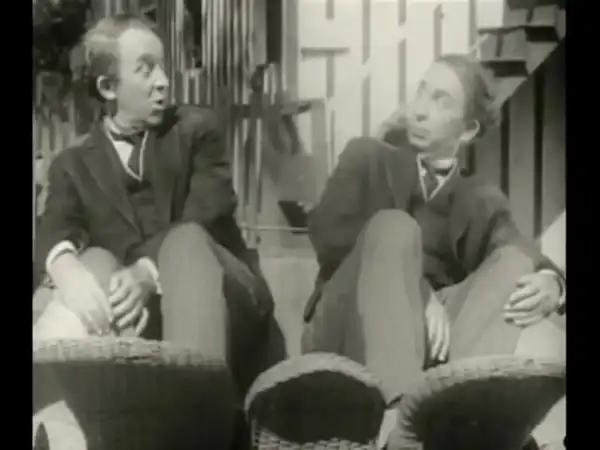
There’s a scene early on where they’re all sitting in a living room that feels about three sizes too small for the actors. The lighting is weirdly flat—it looks like they just opened all the windows and hoped for the best. Orlamond starts doing these 'youthful' exercises, and the way the camera just sits there, staring at his spindly legs moving, goes on for about ten seconds too long. It moves past being a gag and becomes genuinely uncomfortable to watch. I liked that. It felt like a mistake that they just decided to keep in.
The chemistry between Charley and Edna Marion is fine, I guess, but she doesn’t have much to do other than look vaguely concerned. The real standout is Eugene Pallette. He’s not doing the deep-voiced gravelly thing yet (obviously, it’s silent), but his physical presence is just heavy. He grounds the scenes where everyone else is flailing around. It’s a bit like watching a boulder sit in the middle of a stream.
One thing that really stuck out to me was the title cards. Usually, H.M. Walker’s stuff is pretty snappy, but some of the dialogue here feels like it was written in a hallway five minutes before filming. There’s a moment where a character explains a plot point that we literally just saw happen. It’s that kind of redundant writing that makes you realize even the greats were sometimes just punching a clock.
The pacing gets really frantic toward the end, and not in a way that feels intentional. It feels like they realized they only had two minutes of film left and needed to resolve the whole 'father wants him to marry someone else' thing immediately. It reminds me a bit of the rushed energy in Marry Month of May, where the logic of the world just kind of gives up so the movie can end.
I noticed a weird background detail in the big party scene—there’s an extra in the back left who looks like he’s trying to hide from the camera behind a curtain. He spends the whole shot shifting back and forth, and once you see him, it’s impossible to watch Charley. It’s those little human errors that make these old shorts feel more real than the polished stuff that came later.
Is it a masterpiece? No. But the sight of Charley Chase trying to act like a 'peppy' teenager while looking like a grown man who just wants a nap is relatable in a way I didn't expect. It’s a movie about the performance of being young, which is a weirdly modern theme for a 1928 throwaway comedy. It’s better once it stops trying to be a 'romance' and just lets the characters be weirdly antagonistic toward each other.
Don't expect a lot of big belly laughs. Expect to feel a little bit of secondhand embarrassment for everyone involved. Sometimes that’s more interesting anyway.
IMDb —
1928
Community
Log in to comment.