DbcultAccessing Vault...
3.8/10
Senior Film Conservator
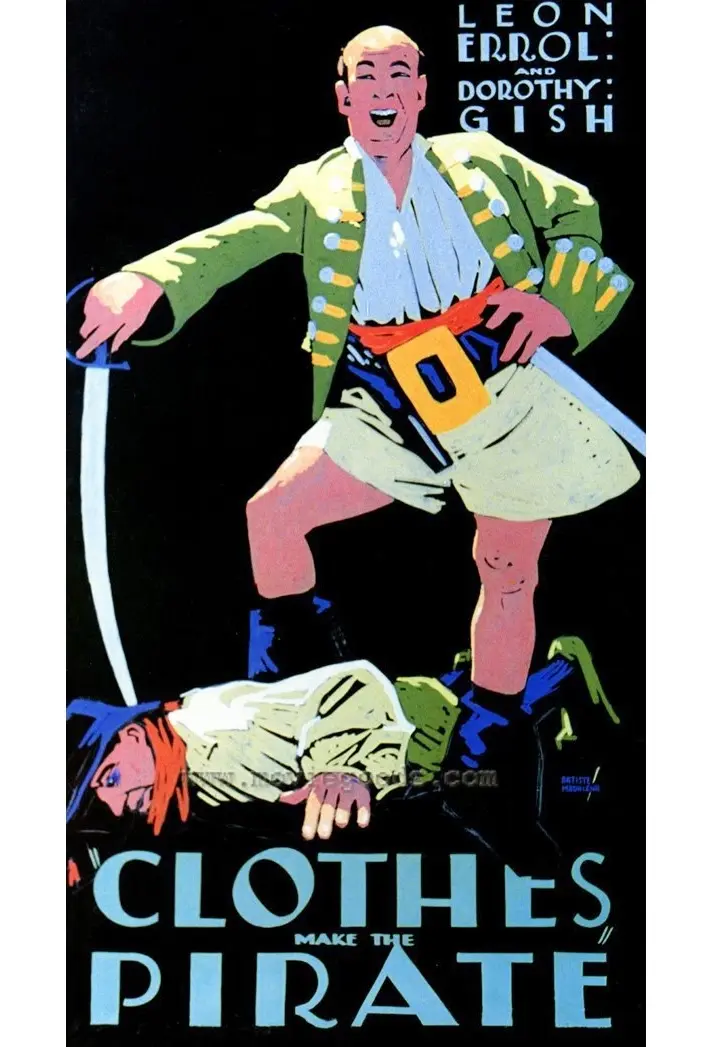
A definitive 3.8/10 rating for a film that redefined the boundaries of cult cinema. Clothes Make the Pirate remains a cornerstone of transgressive art.
Is 'Clothes Make the Pirate' a forgotten masterpiece of the silent era? Short answer: No, it is a frantic, often disorganized farce that relies entirely on the physical charisma of Leon Errol to stay afloat. This film is for silent cinema completionists and those who appreciate the Vaudeville roots of early film comedy, but it is certainly not for viewers who require narrative logic or high-stakes maritime tension.
This film works because Leon Errol’s 'rubber-leg' comedy style transforms a standard mistaken-identity plot into a kinetic masterclass of physical timing. This film fails because it lacks the structural discipline found in the works of Buster Keaton or Charlie Chaplin, often feeling like a series of disconnected sketches rather than a cohesive story. You should watch it if you want to see a rare comedic turn by Dorothy Gish or if you are interested in how the 1920s parodied the swashbuckling genre made popular by Douglas Fairbanks.
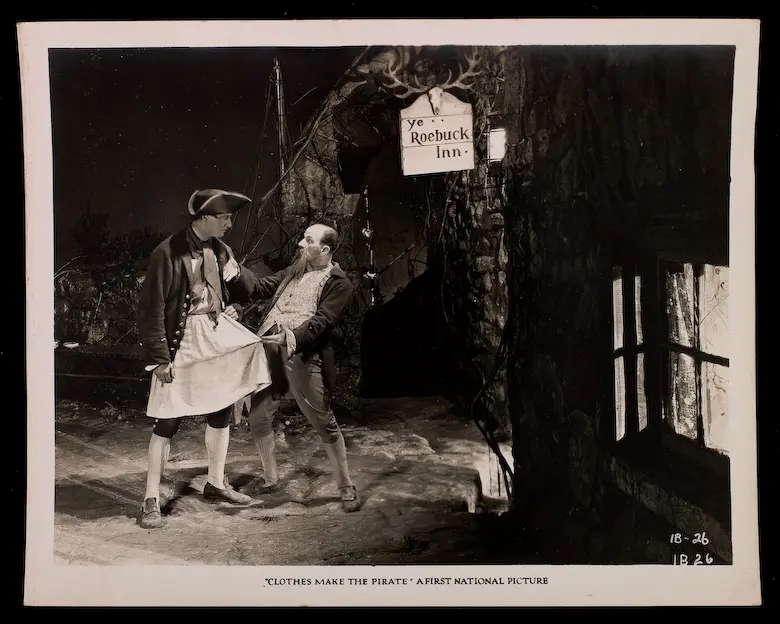
At its core, 'Clothes Make the Pirate' is a satire of the American domestic dream. While films like The House Built Upon Sand explored the fragility of the home through drama, this film uses the 18th-century Boston setting to mock the rigidity of social expectations. Leon Errol’s character, Tidd, is the quintessential 'little man'—a trope that would be perfected later by actors like Don Knotts. The film doesn't just ask us to laugh at his cowardice; it asks us to empathize with the desperation that drives a man to put on a wig and a cutlass just to feel seen.
The specific scene where Tidd first puts on the pirate garb is a highlight. Unlike the gritty transformations in The City of Silent Men, Errol’s transformation is purely aesthetic and psychological. He doesn't become a pirate because he learns to fight; he becomes a pirate because he starts walking with a swagger that his neighbors mistake for malice. It is a cynical, yet hilarious, commentary on how easily society is fooled by outward appearances.
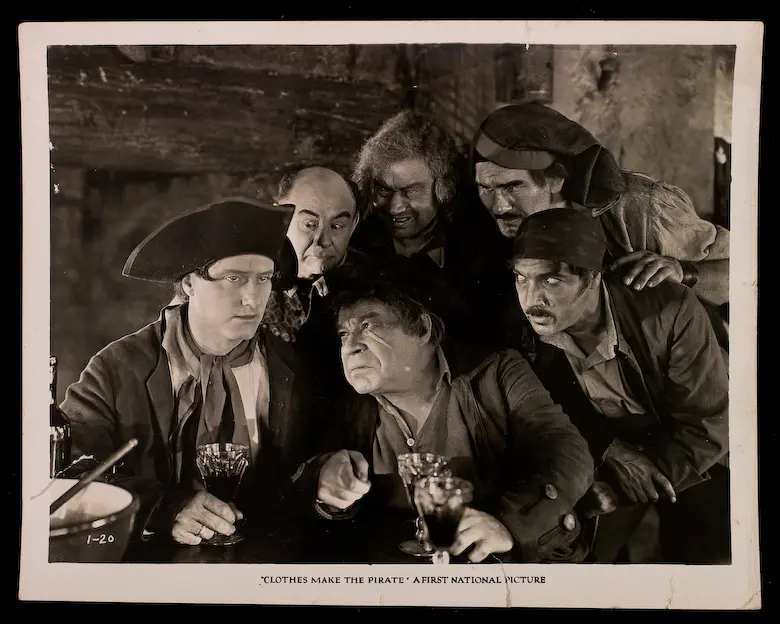
Leon Errol was a veteran of the Ziegfeld Follies, and his 'drunk act' was legendary. In this film, he translates that instability into a character who is perpetually off-balance. Whether he is trying to navigate a ship's deck or avoid his wife's gaze, Errol moves like a man made of gelatin. It works. But it’s flawed. The humor is repetitive. By the third time he nearly falls over a barrel, the joke has worn thin, yet Errol’s sheer commitment to the bit keeps the energy high.
Compare his performance to the stoic leads in Pasteur or the romantic leads in I promessi sposi, and you see the divide between the European tradition of 'acting' and the American tradition of 'performing.' Errol isn't trying to inhabit a character; he is trying to elicit a laugh every thirty seconds. This makes the film feel more like a filmed stage play than a cinematic achievement, a common critique of early comedy features that hadn't yet learned how to use the camera as a comedic tool.
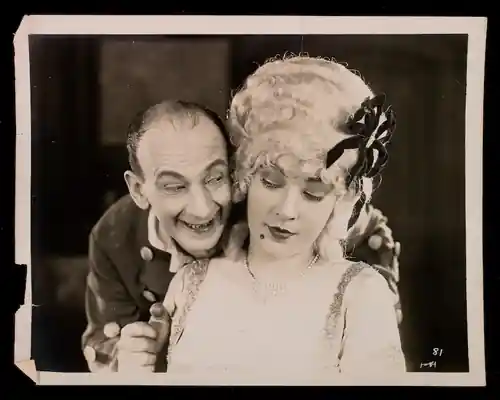
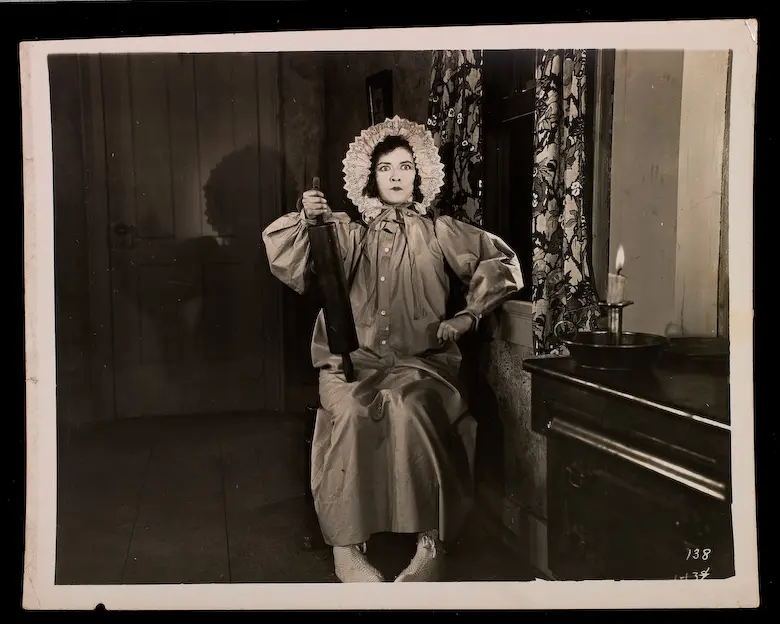
Dorothy Gish is often overshadowed by her sister Lillian, but in 'Clothes Make the Pirate,' she proves why she was the superior comedic talent. As the 'unappreciated wife,' she could have easily played a one-dimensional shrew. Instead, she brings a weary, grounded presence that makes Tidd’s antics feel even more ridiculous. Her chemistry with Errol is prickly and believable, reminding one of the domestic tensions in If Marriage Fails, though filtered through a much broader lens.
There is a specific moment when she discovers Tidd’s 'pirate' identity that is handled with surprising subtlety. She doesn't scream; she looks at him with a mixture of pity and annoyance that is far more devastating. It is this groundedness that prevents the film from floating away into pure nonsense. Without Gish, the film would be an unanchored series of falls; with her, it becomes a story about a marriage that is survived through mutual delusion.
Yes, 'Clothes Make the Pirate' is worth watching if you are interested in the evolution of the slapstick genre. It provides a fascinating look at the mid-1920s transition from short subjects to feature-length comedies. While it lacks the visual polish of Jamestown, its energy is infectious. It is a light, harmless curiosity that showcases the specific talents of Leon Errol.
Pros:
The film features Nita Naldi, who brings a touch of 'vamp' energy that contrasts hilariously with Errol’s bumbling. The costume design is surprisingly detailed for a comedy, and the final confrontation with Dixie Bull is a satisfying payoff for the film's long setup. It also avoids some of the more maudlin sentimentality found in films like Breaking Home Ties.
Cons:
The pacing is uneven, with a middle act that drags significantly as Tidd navigates the pirate ship. Some of the maritime sets look remarkably cheap, especially when compared to the lavish productions of the same year. The film also suffers from a lack of genuine stakes; we never truly feel that Tidd is in danger, which robs the climax of some of its potential power.
While the writing by Marion Fairfax is functional, the direction (often attributed to Maurice Tourneur) is surprisingly static. Tourneur was known for his pictorial beauty, as seen in his other works, but here he seems content to let Errol run the show. The camera rarely moves, acting as a proscenium arch for the actors. This isn't necessarily a bad thing for a comedy, but it makes the film feel dated compared to the experimental camera work seen in '49-'17 or the atmospheric lighting of Die Frau mit dem schlechten Ruf.
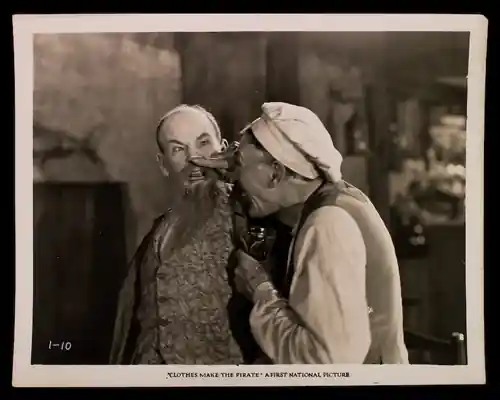
The use of intertitles is also somewhat excessive. Instead of showing us Tidd’s internal conflict, the film often tells us through text. However, the visual gag of Tidd putting his foot on the real pirate's head is a classic piece of silent imagery that transcends the need for dialogue. It is a moment of pure, unadulterated triumph for the 'little man,' and it is directed with just enough mock-heroic flair to make it stick.
'Clothes Make the Pirate' is a fascinating relic. It isn't a 'good' movie by modern standards—the plot is paper-thin and the gender politics are firmly rooted in the 1920s—but it is an entertaining one. It captures a specific moment in cinematic history when the stars of the stage were trying to figure out how to make their acts work on the silver screen. Leon Errol is a joy to watch, even when the material fails him. It’s a mess. But it’s a fun mess. If you go in expecting a high-seas epic, you will be disappointed. If you go in expecting a silly, spirited romp led by one of the era's most unique physical comedians, you will find plenty to enjoy. It is a minor work, but a memorable one, proving that sometimes, all a man needs to change his life is a fancy hat and a bit of misplaced confidence.
IMDb 5
1935
Community
Log in to comment.