DbcultAccessing Vault...
Cult Review
Senior Film Conservator
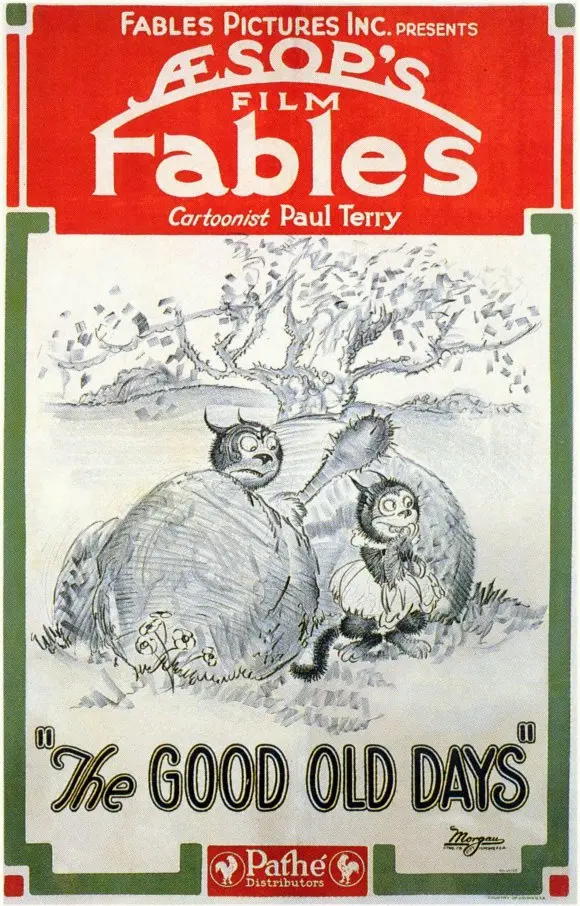
So, is Aesop's Film Fables: Good Old Days worth watching today? Short answer: yes, but with a significant caveat. This early animated short is a fascinating artifact, a poignant, albeit simplistic, examination of human nature that surprisingly holds a mirror to contemporary societal anxieties. It's a film for those who appreciate the foundational elements of animation and allegorical storytelling, for cinephiles interested in the roots of narrative film, and for anyone seeking a gentle, thought-provoking parable.
However, it is decidedly not for audiences seeking complex plots, high-octane action, or cutting-edge animation. If your cinematic palate demands modern pacing and intricate character arcs, this fable might feel more like a historical curiosity than a compelling viewing experience. Its deliberate simplicity, while a strength, can also be perceived as a weakness by those unaccustomed to the narrative rhythms of early cinema.
The genius of Aesop's Film Fables: Good Old Days lies in its straightforward yet deeply resonant exploration of nostalgia. We are introduced to a forest community, primarily through the eyes of the Squirrel and the Hare, two characters who embody a collective yearning for a past they never experienced. Their romanticized tales of a 'golden age' – an era of boundless resources and effortless living – serve as a powerful metaphor for our own human tendency to idealize history, often at the expense of appreciating the present.
The film works because it taps into a universal truth: the past, viewed through the hazy lens of memory or inherited lore, often appears more appealing than the messy, demanding present. This allegorical framework, typical of Aesop, allows the film to transcend its simple animation and rudimentary storytelling, offering a timeless reflection on human psychology. It’s a quiet, understated critique of generational romanticism, a theme that remains remarkably relevant.
This film fails because its very simplicity, while its core strength, can also be its undoing for modern viewers. The lack of dialogue (or reliance on intertitles/narration, depending on the specific print) and the straightforward characterizations mean that much of the emotional heavy lifting is left to the viewer's interpretation. For those accustomed to explicit emotional cues and complex motivations, the film's subtle approach might feel underdeveloped, even frustratingly vague. It demands an active, contemplative audience, which is not always the default in today's rapid-fire media landscape.
You should watch it if you appreciate the historical significance of early animation, enjoy allegorical storytelling, or are curious about how foundational cinematic techniques were used to convey profound moral lessons. It's an excellent piece for educational purposes, sparking discussions about historical interpretation, the nature of memory, and the pitfalls of unchecked idealization. Watching it is less about entertainment in the modern sense and more about engaging with a piece of cultural history that still speaks volumes.
The direction in Aesop's Film Fables: Good Old Days is a masterclass in economy. Given the technological limitations of its era, the filmmakers had to convey complex ideas with minimal resources. The camera often remains static, allowing the animated characters and their interactions to fill the frame, much like a stage play. This deliberate framing choice emphasizes the allegorical nature of the story, transforming the forest into a moral arena where human follies play out through animal proxies.
Consider the recurring visual motif of the Squirrel and Hare lounging idly, their gestures expansive and theatrical as they spin their yarns of the past. This contrasts sharply with the Beaver, whose constant, methodical dam-building is depicted with a practical, no-nonsense animation style. This simple visual juxtaposition, a hallmark of effective early animation, is a direct commentary on active engagement versus passive reminiscing. It's a directorial choice that, without a single spoken word, articulates the film's central conflict.
The animation itself, while rudimentary by today's standards, possesses a charm that is often lost in hyper-realistic CGI. The hand-drawn quality, the slight imperfections, and the expressive caricatures of the animals lend the film a unique personality. The subtle movements of the Owl's eyes, for instance, convey more wisdom and gentle exasperation than pages of dialogue ever could. It's a testament to the animators' skill in conveying character and emotion through pure visual storytelling. This isn't just movement; it's performance distilled to its essence.
In keeping with the fable tradition, the 'characters' in Good Old Days are less individuals and more archetypes. The Squirrel is the embodiment of restless longing, the Hare represents impressionable conviction, and the Beaver is the steadfast pragmatist. The Owl, of course, is the quiet voice of reason, the elder whose wisdom is often overlooked until crisis strikes. This approach, far from being a flaw, is central to the film's purpose.
Their 'performances' are conveyed through exaggerated body language and distinct visual designs. The Squirrel's frantic gestures as he describes mythical past feasts, or the Hare's wide-eyed absorption of these tales, are clear, concise strokes of characterization. There's a particular scene where the Squirrel, mid-reverie about a giant, sweet chestnut, nearly trips over a perfectly ripe, contemporary berry, completely oblivious. It’s a wonderfully understated piece of visual comedy that underscores the film's core message. This kind of nuanced, non-verbal storytelling is what makes these early animated shorts so compelling to study.
While some might argue that the characters lack depth, this is precisely their strength as allegorical figures. They exist to represent ideas, not complex psychological profiles. This allows the audience to project universal experiences onto them, making the film's moral lessons broadly applicable. It's a stark contrast to modern character-driven narratives, and a refreshing reminder of cinema's power to communicate through symbolic representation.
The pacing of Aesop's Film Fables: Good Old Days is deliberate, almost leisurely. It takes its time to establish the characters' routines and their entrenched nostalgia. This slow build-up is crucial for the eventual impact of the film's message. The tone is largely observational, imbued with a gentle, almost melancholic irony, before shifting subtly towards a more didactic, cautionary note in its understated resolution.
The film doesn't rush to judgment; instead, it allows the audience to witness the consequences of living in an idealized past. This measured approach is a refreshing change from the often frantic pacing of contemporary cinema. It encourages contemplation rather than passive consumption. The narrative structure, while simple, is effective: establish the problem, show its effects, and then subtly guide towards the lesson. This is a formula that still works, as seen in more recent animated parables like some segments of The Fox and the Crow, which also relied on animal archetypes for moral lessons.
The allegorical weight of the film is its heaviest asset. It's not just a story about animals; it's a commentary on societal progress, the dangers of complacency, and the importance of adapting to change. In an age where 'make America great again' or similar nostalgic slogans dominate political discourse, this film's message about the perils of romanticizing a past that never truly existed with such perfection feels eerily prescient. It's an unconventional observation, perhaps, but one that highlights the enduring power of these seemingly simple fables.
For an early animated film, the 'cinematography' of Good Old Days is surprisingly effective in its use of composition and implied depth. While lacking the sweeping camera movements of later eras, the animators expertly use foreground and background elements to create a sense of space within their two-dimensional world. The forest setting is rendered with enough detail to feel lived-in, yet stylized enough to maintain its fable-like quality.
The use of color, even if limited in early film, plays a role. Prints that survive often have muted, earthy tones, which contribute to the film's somewhat somber, reflective mood. When a rare splash of brighter color appears – perhaps a newly bloomed flower or a ripe berry – it subtly draws the viewer's eye, emphasizing the overlooked beauty of the present. This economic use of visual cues is a hallmark of early filmmaking, where every element had to serve a distinct narrative or thematic purpose.
The way the 'camera' focuses on the characters' expressions, even simple ones, is crucial. The Owl's patient, knowing gaze or the Beaver's determined brow are not just animated details; they are narrative devices, guiding the audience's emotional and intellectual response. This focused visual storytelling, much like in silent live-action films of the era such as Hands Up, relies heavily on universally understood visual cues to convey complex internal states.
Yes, Aesop's Film Fables: Good Old Days is worth watching for specific audiences. It offers a unique window into early animation and allegorical storytelling. Its message about nostalgia and present appreciation remains relevant. It is not a modern blockbuster, but a foundational piece of cinematic history. Expect simplicity and profound thematic depth. It works. But it’s flawed.
Aesop's Film Fables: Good Old Days is not a film for everyone, nor does it pretend to be. It is a humble, yet remarkably insightful, piece of early cinema that serves as both a historical document and a surprisingly potent allegorical commentary. Its strength lies in its unyielding simplicity and its unwavering commitment to delivering a timeless moral lesson. While it lacks the visual spectacle and narrative complexity that modern audiences often demand, its charm and thematic relevance are undeniable.
I firmly believe that its message about the deceptive allure of nostalgia and the importance of living in the present is more vital now than ever. In an era saturated with 'retro' trends and a collective longing for perceived simpler times, this film acts as a gentle, animated cautionary tale. It’s a reminder that true wisdom lies not in dwelling on an idealized past, but in diligently building a better future with the resources and opportunities of today. It's a film that deserves to be seen, not just as a relic, but as a conversation starter, a quiet voice from the past still whispering uncomfortable truths about human nature.
If you approach Good Old Days with an open mind and an appreciation for cinematic history, you'll find more than just a quaint cartoon. You'll discover a concise, profound rumination on human folly and the enduring power of presence. It’s a film that asks us to look around, not just back. And that, in itself, is a truly valuable experience.
IMDb —
1925
Community
Log in to comment.