DbcultAccessing Vault...
Cult Review
Senior Film Conservator
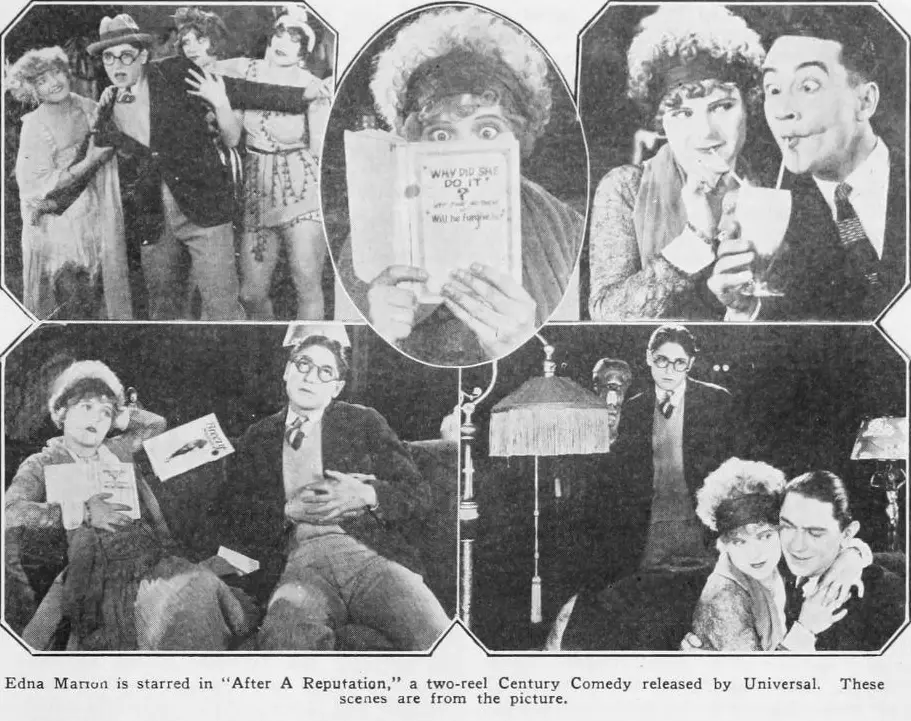
Is 'After a Reputation' worth watching today? Short answer: yes, but with significant caveats. This silent-era relic is a fascinating historical artifact that offers a window into early cinematic storytelling, particularly for those deeply invested in the evolution of film or the nuances of silent comedy and drama. It’s a film for the cinephile, the historian, and the curious adventurer willing to excavate the past.
However, it is decidedly not for the casual viewer expecting modern pacing, dialogue, or narrative complexity. Its charms are subtle, its impact often intellectual rather than visceral, demanding a certain patience and appreciation for the medium as it once was. This is not a film you stumble upon; it’s one you seek out, knowing full well the unique experience it promises.
Stepping into 'After a Reputation' is akin to opening a time capsule. Directed by William Watson, with a narrative penned by the same, this film from an era long past presents the simple, yet universally resonant, tale of a small-town girl with big stage dreams. While the plot outline is deceptively straightforward, the film, through its silent language, endeavors to explore the trials and tribulations inherent in such an ambitious pursuit.
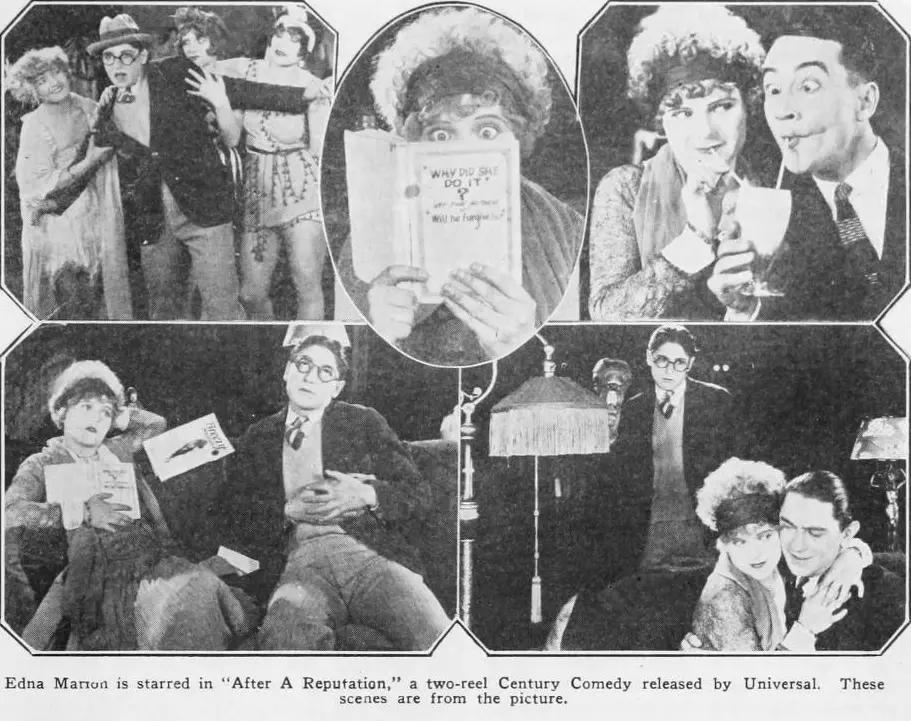
The film works because it captures a quintessential American dream narrative – the yearning for fame, the escape from the mundane, the belief in one's own talent – through the earnest, physical performances characteristic of the silent era. Edna Marion, a known Mack Sennett bathing beauty and comedienne, likely brought a vivacity and expressive physicality that would have resonated strongly with audiences of the time. The sheer ambition of a young woman chasing the spotlight, a narrative trope that endures to this day, provides a timeless hook.
This film fails because, like many productions of its time, its narrative depth and character development are often sacrificed for broad strokes and episodic 'adventures.' Without the benefit of spoken dialogue, subtle emotional arcs can be challenging to convey fully, relying heavily on intertitles and exaggerated gestures. For a modern audience, this can feel simplistic, even rudimentary, obscuring the potential for richer thematic exploration.
You should watch it if you have an academic interest in early cinema, are a fan of silent-era performers like Edna Marion, or appreciate the historical context of filmmaking. It serves as an invaluable artifact for understanding the foundational elements of visual storytelling before the advent of sound changed everything. It's a testament to the ingenuity and expressive power that filmmakers could achieve with limited tools.
It works. But it’s flawed. Like many silent films, its greatest strength is also its most significant hurdle for contemporary appreciation.
The premise of 'After a Reputation' — a hometown girl with stage aspirations — is fertile ground for silent cinema. Without dialogue, the story relies on exaggerated expressions, physical comedy, and carefully crafted intertitles to convey the protagonist's journey. Edna Marion, an actress often celebrated for her comedic timing and expressive face, would have been pivotal in anchoring this narrative.
One can imagine Marion's wide-eyed optimism in her provincial home, perhaps practicing dance steps in a cramped room, contrasted with her bewildered awe upon arriving in a bustling city. The transition from the familiar to the chaotic, from the supportive to the cutthroat, would have been communicated through her changing demeanor, her posture, and the subtle shifts in her facial expressions. This is where silent acting truly shines, demanding a nuanced understanding of non-verbal communication.
The director, William Watson, would have faced the challenge of translating the abstract concept of 'reputation' into tangible visual cues. Does our heroine seek to build a reputation, or perhaps overcome a tarnished one? The title itself suggests a compelling duality, a journey where public perception is as critical as personal talent. This ambiguity, while potentially frustrating for those seeking clear plot points, allows for a broader interpretation of her 'adventures,' making the film a more engaging study for those willing to lean into its suggestive nature.
Compared to a more overtly comedic silent film like Charlie Chaplin's The Idle Class, 'After a Reputation' likely leans more into the dramatic tension of its premise, though elements of lightheartedness would undoubtedly be present. The presence of Matty Roubert, often a stunt performer, suggests potential for dynamic physical sequences, perhaps even some slapstick as our heroine navigates the challenges of auditions or the pitfalls of city life. This blend of earnest aspiration and physical comedy would have been a hallmark of popular silent films.
The cast of 'After a Reputation' is a fascinating ensemble, each bringing a particular flavor to the silent screen. Edna Marion, as the central figure, carries the weight of the film's emotional arc. Her background as a Sennett bathing beauty often meant she excelled in roles requiring charm, physical grace, and a knack for light comedy. Here, she would likely have had the opportunity to stretch those talents, portraying the initial innocence, the inevitable disappointments, and the eventual triumphs of a budding performer.
Her acting style, characterized by clear, often exaggerated, gestures and expressions, was perfectly suited for communicating complex emotions without dialogue. Imagine her conveying despair with a drooping posture and downcast eyes, or elation with a radiant smile and energetic movements. It's a performance style that might seem melodramatic by today's standards, but it was the lingua franca of its era, a powerful tool for connecting with an audience through pure visual storytelling.
Matty Roubert, known for his athleticism and work as a stuntman, would have provided a contrasting energy. His presence suggests a role requiring physical prowess or perhaps a more grounded, less ethereal character. He might have been the helpful friend, the romantic interest, or even the antagonist who complicates our heroine's path. His physicality would have added a layer of dynamic movement to the film, perhaps in a chase scene or a dance sequence, elements common in films exploring the world of performance.
Pinto Colvig, a name later synonymous with voice acting (Goofy, Bozo the Clown), also had a career in silent film. His early work often involved character roles, sometimes comedic, sometimes villainous. His contribution would have been in creating a memorable supporting character, perhaps the quirky mentor, the cynical stage manager, or the rival performer. Colvig's ability to imbue characters with distinct personalities, even without words, would have been a significant asset.
The interplay between these actors, each with their unique strengths, would have been crucial in building the world of 'After a Reputation.' Their performances, more than any other element, would dictate the film's tone and its emotional resonance, guiding the audience through the protagonist's journey with visual cues alone.
William Watson, as both writer and director, held the singular vision for 'After a Reputation.' In the silent era, the director's role was paramount, shaping every frame to tell the story visually. Watson's approach would have been focused on clarity and dramatic impact, using techniques like close-ups to emphasize emotion and wider shots to establish setting.
Consider the cinematography. While specific details are scarce, silent films often employed dramatic lighting to create mood – stark shadows for moments of despair, bright, ethereal glows for scenes of hope or glamour. The contrast between the drab, realistic lighting of the hometown and the sparkling, artificial brilliance of the stage lights would have been a powerful visual metaphor for our heroine's journey. Watson would have meticulously planned each shot to guide the viewer's eye and convey narrative information.
Pacing in silent films could vary wildly. Early silent comedies, like The Hick, were often fast-paced, relying on rapid-fire gags and physical antics. Dramas, however, might adopt a slower, more deliberate rhythm, allowing moments of emotional intensity to linger. 'After a Reputation,' with its blend of ambition and 'adventures,' likely maintained a dynamic pace, accelerating during moments of excitement or peril and slowing down for scenes of introspection or dramatic revelation. The rhythm of intertitle placement, a critical element, would dictate how quickly the audience absorbed plot points and emotional beats.
The tone of the film would have been carefully balanced. While the pursuit of stage aspirations naturally lends itself to moments of lightheartedness and aspiration, the title 'After a Reputation' implies a more serious undertone. It suggests that the journey is not without its costs, its missteps, or its moments of public scrutiny. Watson would have had to navigate these tonal shifts, perhaps using comedic interludes to lighten dramatic tension, or introducing moments of genuine pathos to underscore the protagonist's struggle. This delicate balance is a hallmark of effective silent filmmaking, ensuring that the audience remains invested in the character's fate.
For those who appreciate cinema as an evolving art form, 'After a Reputation' holds significant value. It's not a film that will likely find a broad mainstream audience today, nor should it be expected to. Its worth lies in its historical context, its demonstration of early filmmaking techniques, and the performances of its talented, albeit less remembered, cast members.
If you are a student of film history, an admirer of silent-era acting, or simply curious about the foundational stories that shaped Hollywood, then yes, it is absolutely worth seeking out. It offers a unique opportunity to witness the birth of storytelling through a purely visual medium, to appreciate the craftsmanship that went into conveying complex ideas without the aid of spoken dialogue. It's a reminder of how far cinema has come, and how much of its core appeal remains unchanged.
However, if your primary interest is in modern blockbusters, intricate plots, or dialogue-driven character studies, 'After a Reputation' will likely feel like a chore. It demands a different kind of engagement, a willingness to suspend contemporary expectations and immerse oneself in a different cinematic language. It's not entertainment in the modern sense, but rather a historical document, rich with lessons for those who care to learn.
'After a Reputation' is more than just a film; it's a historical document, a testament to the nascent power of cinema, and a vibrant example of silent-era storytelling. It demands a particular kind of engagement, one steeped in appreciation for the medium's evolution. While it won't resonate with every viewer, its value for those interested in film history or the enduring allure of stage aspirations is undeniable.
It’s a charming, if at times quaint, journey into the dreams and struggles of a bygone era, brought to life through the expressive artistry of Edna Marion and the foundational direction of William Watson. Approach it not as a contemporary piece of entertainment, but as a rich, visual artifact. For the right audience, it offers genuine insight and a quiet, profound pleasure. It’s a film that, despite its age, still has something to say, even without a single spoken word.
IMDb —
1928
Community
Log in to comment.