DbcultAccessing Vault...
Cult Review
Senior Film Conservator
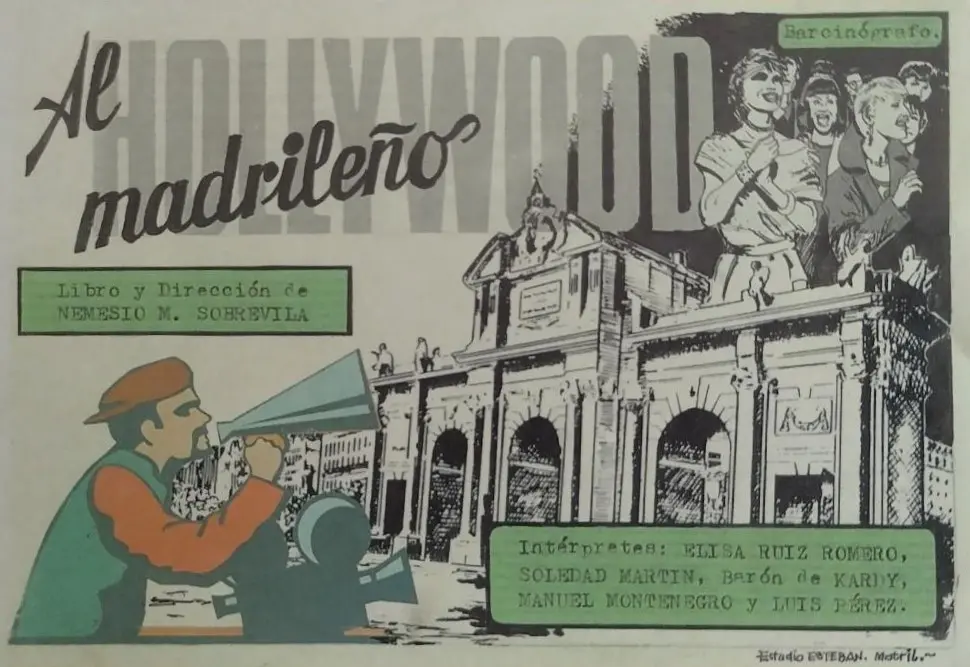
Is Al Hollywood madrileño a hidden gem of Spanish silent cinema? Short answer: Yes, but only if you appreciate the chaotic energy of the early 20th-century avant-garde over traditional storytelling.
This film is specifically for historians of the medium and those who enjoy meta-commentary on the absurdity of fame. It is absolutely not for viewers who demand high-definition clarity or a straightforward, linear plot without experimental diversions.
1) This film works because it fearlessly parodies the very industry it tries to inhabit, using a 'film-within-a-film' structure that was decades ahead of its time.
2) This film fails because its episodic nature feels disjointed, often losing the emotional core of the father-daughter relationship in favor of stylistic exercises.
3) You should watch it if you are fascinated by the transition from traditional European culture to the 'Americanized' celebrity era of the 1920s.
Nemesio M. Sobrevila was not a conventional filmmaker; he was an architect by trade, and that geometric sensibility bleeds into every frame of Al Hollywood madrileño. This isn't just a comedy about a tavern owner; it is a structural rebellion against the narrative norms of 1927. While contemporaries like Vanina were exploring expressionistic drama, Sobrevila was busy deconstructing the concept of genre itself.
The film’s central conceit—the owner of a mesón renaming his tavern to attract the glitz of Hollywood—is a brilliant metaphor for Spain's cultural anxieties at the time. It captures a nation caught between its dusty, traditional past and a neon-lit, cinematic future. When the protagonist is offered the chance to produce seven different films, Sobrevila uses it as an excuse to flex his stylistic muscles. We see everything from historical melodrama to a primitive, charmingly low-tech science fiction segment.
The science fiction sequence, in particular, is a revelation. In an era where Spanish cinema was largely dominated by 'españoladas' (clichéd folk dramas), seeing a Madrileño take on the future is both jarring and hilarious. It lacks the polish of Fritz Lang, but it possesses a scrappy, DIY spirit that is infectious. It works. But it’s flawed.
The cast, led by Fernando Milicua, delivers performances that lean heavily into the theatricality of the era. However, there is a self-awareness here that you don't find in standard silents like Cleaning Up. Milicua plays the tavern owner with a frantic, desperate energy that borders on the tragic. He isn't just a man wanting money; he is a man seduced by the flickering light of the projector.
The involvement of Pío Baroja, one of Spain’s literary titans, as a co-writer adds a layer of intellectual cynicism to the proceedings. Baroja was known for his pessimistic view of human nature, and you can feel his influence in the way the film mocks the vanity of the 'star-maker' culture. The dialogue (conveyed through title cards) is sharper than your average 1920s comedy. It doesn't just aim for belly laughs; it aims for the jugular of the studio system.
Consider the scene where the tavern is 'rebranded.' The juxtaposition of the old world ham-hanging rafters with the new, gaudy 'Hollywood' signage is a visual punchline that speaks volumes. It’s a moment of pure, unadulterated kitsch that feels surprisingly modern. It’s the 1920s equivalent of a TikToker turning their bedroom into a professional studio.
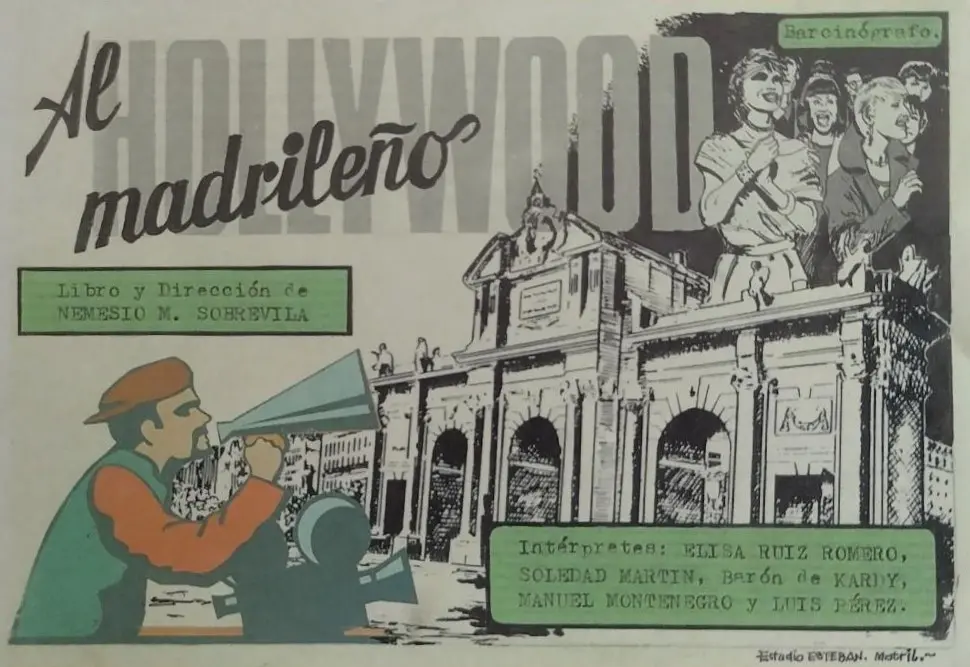
The cinematography in Al Hollywood madrileño is restless. Sobrevila uses the 'seven films' gimmick to experiment with different lighting schemes and camera movements. In the historical segment, the camera is static and somber, mimicking the 'prestige' films of the time. In the experimental segments, the framing becomes tighter, more claustrophobic, and frantic.
Compared to the simple, functional camerawork in Felix Minds His Business, Sobrevila is clearly trying to push the boundaries of what a Spanish camera could do. There are moments of double exposure and rapid-fire editing that suggest a deep familiarity with the Soviet montage school, though applied here to a much more whimsical subject matter.
"Sobrevila didn't just want to make a movie; he wanted to make a catalogue of what movies could be."
However, this ambition is also the film's undoing. By trying to cover seven different genres in a single runtime, the pacing becomes erratic. Just as you are settling into the rhythm of one 'mini-film,' you are jerked into another. It’s a dizzying experience that can leave the viewer feeling more exhausted than entertained. It’s a beautiful mess, but a mess nonetheless.
Does Al Hollywood madrileño hold up for a modern audience? If you are looking for a cohesive narrative, the answer is no. If you are looking for a fascinating historical artifact that predicted the 'meta' trends of modern cinema, the answer is a resounding yes.
The film serves as a vital link between the early silent era and the surrealist movement that would soon be championed by the likes of Luis Buñuel. It is a bridge between the commercial and the avant-garde. While many films from this period, like Home, Sweet Home, were content to stay within their lane, Al Hollywood madrileño swerves across all lines.
We must address the elephant in the room: Al Hollywood madrileño is a partially lost film. This adds a layer of hauntology to the viewing experience. You aren't just watching a movie; you are watching the ghost of a movie. This missing footage actually enhances the experimental feel, making the jumps between genres feel even more like a fractured dream.
In many ways, it shares the DNA of early animation experiments like The Infant at Snakeville, where the logic of the world is secondary to the visual gag. But Sobrevila adds a layer of intellectualism that those early shorts lacked. He was questioning the 'Hollywood Dream' long before it became a standard trope of the industry.
The film's exploration of the 'star-maker' father is particularly poignant. It mirrors the real-life exploitation seen in the industry for decades. By turning his daughter into a product, the tavern owner loses the very thing he was trying to celebrate. It’s a dark undercurrent in an otherwise lighthearted comedy.
Al Hollywood madrileño is a fascinating, frustrating, and brilliant piece of work. It is the kind of film that reminds us that cinema was 'post-modern' almost from its inception. Sobrevila’s vision of a Madrid-based Hollywood is both a hilarious satire and a sobering look at cultural imperialism.
While it lacks the narrative polish of something like The Princess's Dilemma, it makes up for it with sheer audacity. It is a film that refuses to be ignored, even in its fragmented state. It is a loud, proud, and deeply weird entry in the Spanish canon.
Final thought: Watch it for the history, stay for the madness. It is a reminder that before cinema became a billion-dollar industry, it was a playground for architects, writers, and dreamers who didn't know the rules—and therefore weren't afraid to break them.
IMDb —
1922
Community
Log in to comment.