DbcultAccessing Vault...
Cult Review
Senior Film Conservator
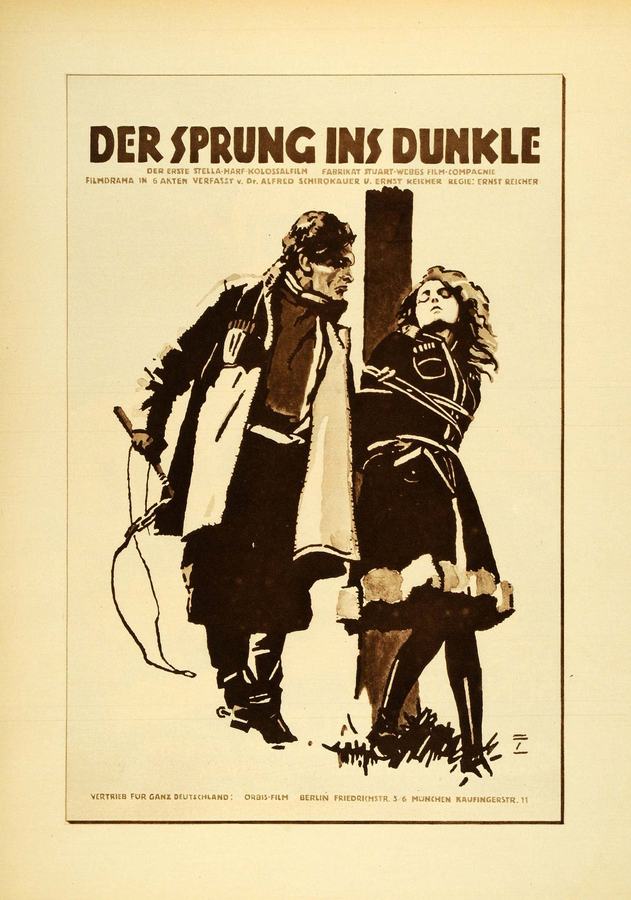
Berlin, 1919. The armistice ink is barely dry, and the city’s arteries pulse with contraband coffee and cocaine. Der Sprung ins Dunkle lands like a shrapnel shard in this open wound—ninety-two minutes of celluloid that feel closer to a séance than to conventional storytelling. Directors Ernst Reicher and Alfred Schirokauer don’t merely film a crime; they transmute it into an x-ray of a society that has already pawned its own reflection.
The plot, if one insists on linearity, is deceptively skeletal: a pawnbroker is murdered, a detective pursues a nimble cat-burglar nicknamed „the Springer,” the trail coils back to the detective himself. Yet every frame leaks a surplus of dread. Cinematographer Max Fassbender tilts the camera like a drunk theologian; staircases yawn into abysses, streetlamps halo like dying saints, and the mere act of opening a door feels tantamount to signing one’s own death warrant. Shadows are not cast—they prowl, autonomous, hungry.
German expressionism usually favors jagged angles and cadaverous make-up, but here the corruption is chiefly optical. Pools of inky blackness spread like spilled India ink across the Academy-ratio frame, swallowing noses and chins so that eyes float disembodied—two cigarette cherries suspended in midnight. Conversely, bursts of white flare with magnesium cruelty: a gunshot becomes a flashbulb that burns the killer’s silhouette onto the viewer’s retina. The film invents, in hindsight, its own brand of noir grammar before Hollywood ever dreamed of Venetian-blind stripes slicing across a starlet’s cheek.
Color, though absent in the orthodox sense, is implied through tonal temperature. Sepia tinting warms scenes of domestic deceit, while cobalt blues drown the nocturnal rooftop sequences. One thinks of the amber contagion in The Life and Works of Verdi or the bruised nocturnes of The Darkest Hour, yet neither achieves the synesthetic chill that Reicher conjures here: a black-and-white that feels colder than indigo, hotter than arterial crimson.
Arnold Marlé plays Stuart Webbs with a haggard elegance that anticipates Bogart by two decades. His shoulders carry the slump of a man who has read every crime file and found his own name penciled in the margins. Marlé’s physiognomy—high cheekbones, eyes set deep as spent bullet casings—gives the camera a landscape upon which to project every spectator’s private culpability. Watch how he lights a cigarette: the match flares, he squints, and for a second the soundtrack (or rather, the symphonic silence of a 1919 print) seems to inhale with him. That squint is not merely against smoke; it is against revelation.
Ernst Reicher doubles as both co-writer and the Springer's lithe alter-ego. Onscreen he is mostly a blur—a silhouette vaulting across chimneyscapes—but in close-up his grin arrives like a switchblade. The performance is physical in a way that CGI-addled modern thrillers have forgotten: every leap is performed on actual rooftops, stone cornices crumbling underfoot. The camera cannot cheat distance; thus tension is proportional to ankle tendons. Compare this corporeal jeopardy with the weightless skirmishes of Il mistero di Osiris or the screwball repartee of The Accidental Honeymoon, and you’ll taste how Der Sprung insists on gravity—both Newton’s and the moral kind.
Stella Harf, as the pawnbroker’s widowed daughter, carries her grief like a porcelain mask liable to fracture. In a tavern scene she recounts childhood memories while absentmindedly peeling the label off a bottle; the paper spirals into a shroud-like curl, prefiguring the narrative’s own tendency to strip identities down to the adhesive. Lia Eibenschütz, playing a typist who moonlights as an informant, exudes jittery electricity; her fingers jitter across typewriter keys the way a pickpocket’s flutter across coat seams. Both actresses were stalwarts of early German serials, yet here they transcend melodrama, achieving something closer to documentary anguish.
Alfred Schirokauer’s intertitles—fragmented, aphoristic—read like Rilke translated by a crime reporter. „Guilt is a tailor who cuts coats for other men but always keeps the measuring tape.” The line appears after a seemingly innocuous shot of a tailor’s dummy, yet retroactively it coils around every character. The narrative’s central conceit is that the Springer may not exist; he might be a communal hallucination minted by newspapers to sell copies. Reicher’s script anticipates post-trust societies, where evidence is negotiable currency and identity is a subscription service. One is reminded of the ontological shell games in The Black Stork, though that film’s cautionary hysteria feels didactic compared to the open-ended vertigo here.
Structure-wise, the film inverts the classic detective arc. Instead of progressively sharpening the image, each clue smears the lens. Webbs’ investigation is less a straight line than a widening gyre; by the third reel, every suspect carries the same birthmark, every alibi loops back to the same café that never appears twice in the same location. The climax atop the half-built cathedral literalizes the screenplay’s central metaphor: society is a cathedral without a nave, a faith without ground. The detective’s leap into darkness is therefore not sacrifice but epistemological surrender—the only exit from a labyrinth whose walls are made of mirrors.
Seen today in the 4K restoration premiered at the Deutsche Kinemathek, Der Sprung ins Dunkle is accompanied by a commissioned score for piano, viola and electronics by composer Lucia Kilger. The decision to forgo a full orchestra is astute: thin reeds of viola slide between the intertitles like subway winds, while prepared-piano strings are struck to mimic the chug of locomotives that haunt the characters’ nightmares. During rooftop chases, electronics emit sub-bass palpitations that seem to emanate from the seats themselves, turning the auditorium into an extension of the vertiginous cityscape. Yet large swaths remain naked, allowing the clatter of the 35mm projector to become part of the orchestration—a meta-commentary on cinema’s perpetual struggle between illusion and mechanism.
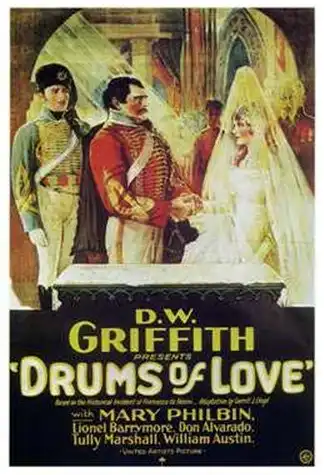
This calculated absence contrasts sharply with the sentimental leitmotifs of The Littlest Rebel or the jaunty rags of Hitting the High Spots. Where those films use music to cushion viewers from trauma, Der Sprung weaponizes silence, forcing audiences to hear their own heartbeats, to recognize complicity in every thump.
Early German crime serials often treated women as either trembling witnesses or femme fatales. Der Sprung ins Dunkle complicates that binary by dispersing culpability across genders. The pawnbroker’s murder is instigated by a defaulted loan he gave to a war-widowed mother; her inability to pay is framed not as personal failure but as systemic betrayal. The camera lingers on bureaucratic ledgers whose ink columns resemble barbed wire, suggesting that finance itself is the invisible Springer. When Harf’s character negotiates with city clerks, the mise-en-scène traps her behind stacks of folders—paper walls more suffocating than brick. Thus the film critiques Weimar capitalism while simultaneously refusing to bestow sainthood upon its female victims; they too barter information, trade loyalties, survive through morally elastic means.
This nuance sets it apart from the reactionary moralizing of Wanted: A Husband or the pastoral escapism of The Heart of the Blue Ridge. In Der Sprung, patriarchy is another shadow on the wall, flickering alongside the others, impossible to pin down and therefore impossible to extinguish.
Editor Anneliese Körting employs match cuts that rhyme gestures across classes: a banker lifting a cigar becomes a street urchin stealing a bun; a woman’s hand closing a locket rhymes with another’s opening a switchblade. The effect is vertiginous equivalency—everyone is always already implicated. Cross-cutting during the cathedral finale alternates between dizzying overhead shots (filmed from a balloon suspended inside the nave) and claustrophobic close-ups of palms sweating on stone. Spatial integrity collapses; viewers lose cardinal orientation. One emerges from the film as if from a fever, unsure whether Berlin exists outside the cinema or whether the city itself is a projection of collective paranoia.
Compare this editorial delirium to the clockwork precision of The Clock or the languid cross-fades of The White Heather. Where those films seek comfort in temporal continuity, Der Sprung embraces fragmentation, anticipating the jump-cut anxieties of post-war modernism by a full quarter-century.
The 2023 restoration scanned the original 35mm nitrate negative at 4K, revealing details previously smothered by generations of dupes: the texture of Marlé’s tweed coat, the condensation rings on beer steins, a single tear sliding off Harf’s mascara brush. Yet the curators resisted the temptation to over-polish. Scratches remain during reel changes, emulsion bubbles bloom like algae during the tunnel sequence, and the flicker at the corner of frames has been preserved as evidence of cinema’s material mortality. The result is an artifact that breathes—beautiful precisely because it refuses cosmetic amnesia.
Such restraint contrasts with the wax-museum sheen of many digital scrubbings, where grain is treated as defect rather than diary. Here, every crease in the film stock is a wrinkle in time, a reminder that 1919 audiences saw this same celluloid lurch through projectors amid influenza outbreaks and Spartacist uprisings. To erase those scars would be to erase history.
Film historians often cite The Cabinet of Dr. Caligari as ground zero for expressionist cinema, yet Der Sprung ins Dunkle premiered four months earlier and pushes subjectivity further. Where Caligari externalizes madness through set design, Der Sprung internalizes it through narrative structure. Its DNA can be traced in the paranoid labyrinths of Lang’s M, the epistemological hallways of Resnais’ Last Year at Marienbad, even the identity splintering of cyberpunk noir like Blade Runner. Video-game designers have cribbed its rooftop iconography—think of the parkour sequences in Mirror’s Edge—while graphic novelists echo its negative-space shadows.
Oddly, the film also anticipates the surveillance anxieties of the 21st century. Telegram wires crisscross the screen like fiber-optic lines; the Springer steals information packets the way hackers skim metadata. In one prophetic shot, Webbs stares at a wall plastered with overlapping Wanted posters until the faces fuse into a single panoptic gaze. The moment foreshadows facial-recognition grids, data profiling, the erosion of anonymity. Der Sprung ins Dunkle thus feels less like a relic than a dispatch from our own future, smuggled across a century of cinematic evolution.
As of this writing, the 4K restoration streams on the Criterion Channel with the Kilger score, while Blu-ray editions from Masters of Cinema include a second disc of scholarly commentaries and the 42-minute documentary „Jumping Into the Void: Reconstructing a Lost Berlin.” A 16mm print with live organ accompaniment tours arthouses quarterly; check local listings under the repertory series „Weimar Aftershocks.” If you reside outside licensed regions, a VPN set to Germany unlocks the public-domain version on the European Film Gateway, albeit in 720p. Torrent sites host unrestored rips—grainy, German-only intertitles—but watching them is like viewing the Mona Lisa through frosted glass: you’ll glimpse a masterpiece, yet miss the pores, the breath, the ghost.
Verdict: Der Sprung ins Dunkle is not merely a film; it is a dare—a dare to confront the vertiginous possibility that the hunter, the hunted, and the witness are triple exposures on the same photographic plate. Accept the dare, and you may exit the cinema seeing your own silhouette on every street corner, flickering under neon, waiting for you to make the leap.

IMDb —
1933
Community
Log in to comment.