DbcultAccessing Vault...
Cult Review
Senior Film Conservator
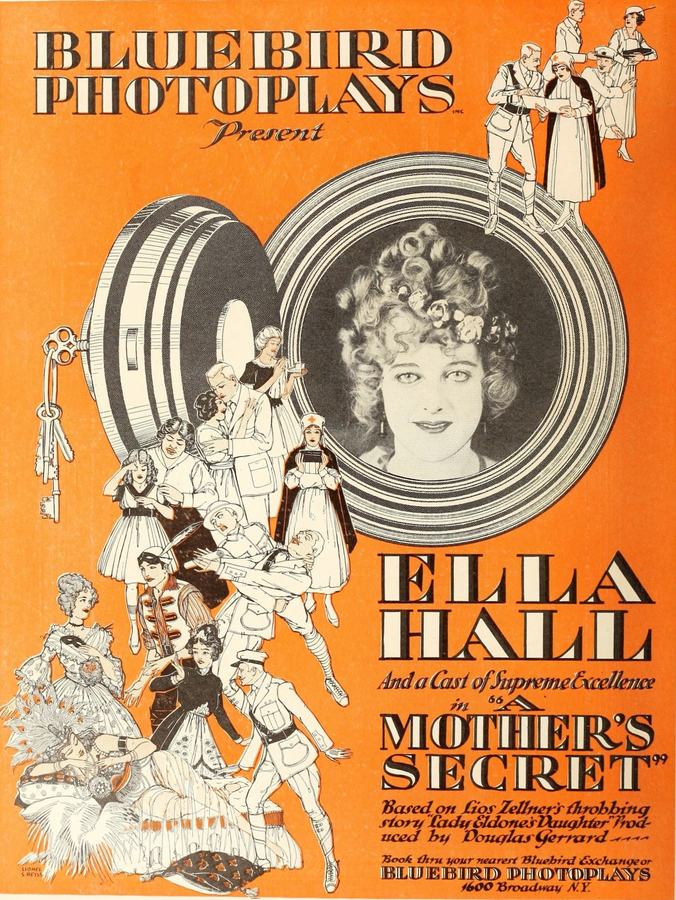
The year 1918 was a crucible of cultural transformation, and nestled within the flickering shadows of the silent era lies A Mother's Secret, a film that navigates the treacherous waters of maternal jealousy and social artifice. Directed with a keen eye for domestic tension, this production serves as a fascinating specimen of the melodrama genre, predating the more cynical explorations of family dynamics found in later decades. It is a work that demands our attention not merely as an antique, but as a psychological study of the lengths to which one might go to preserve a crumbling sense of self.
At the heart of this narrative is the luminous Ella Hall, whose portrayal of Angela is a masterclass in physical transformation. The premise—a young woman of eighteen forced to regress into the behavioral confines of a thirteen-year-old—requires a delicate balance of innocence and latent maturity. Hall navigates this duality with a sophistication that rivals the child-woman archetypes established in Tess of the Storm Country. Her performance is not merely a gimmick; it is a profound commentary on the performative nature of gender and age during the early 20th century.
The mother, played with a chillingly focused vanity by Mrs. L.C. Harris, represents the antithesis of the selfless maternal figures often seen in films like Maternità. Here, the mother is the primary antagonist, an individual so terrified of the encroaching specter of age that she is willing to stifle her daughter's burgeoning womanhood. This dynamic creates a claustrophobic atmosphere within the domestic sphere, where every interaction is tinged with the mother's manipulative intent to land her second husband, the millionaire played by Emory Johnson.
The narrative architecture of A Mother's Secret is the handiwork of Doris Schroeder and Lois Zellner. In an era where the cinematic landscape was heavily dominated by patriarchal viewpoints, the presence of two female writers provides a distinct, nuanced perspective on the pressures of female aging and the fragility of social status. Their script avoids the simplistic moralizing often found in contemporaneous works like Pillars of Society, opting instead for a more intricate exploration of desire and deception.
"The brilliance of Schroeder and Zellner lies in their ability to turn a farcical premise—the accidental disguise of an adult as a child—into a biting critique of how society values women only through the lens of their reproductive or romantic utility."
The dialogue, conveyed through intertitles, is sharp and evocative, capturing the desperate subtext of the mother's pleas and Angela's growing resentment. While some might find the resolution—where the mother finds happiness with her first husband—a bit too convenient, it reflects the era's need for a restorative ending, much like the thematic arcs in Garden of Lies. However, the true emotional core remains the subversion of the mother's plan, as Angela ultimately captures the heart of the millionaire herself, asserting her own agency in a world designed to suppress it.
Douglas Gerrard’s direction utilizes the limited technology of 1918 to maximize the emotional impact of the settings. The opulence of the mother’s home serves as a gilded cage, a stark contrast to the more rustic or forgotten origins of Angela’s father. The use of lighting to accentuate the contrast between the mother's heavily made-up face and Angela's natural, youthful glow is a recurring visual motif that underscores the film's central conflict. This visual dichotomy is reminiscent of the stylistic choices in The Gilded Spider, where artifice and reality are constantly at odds.
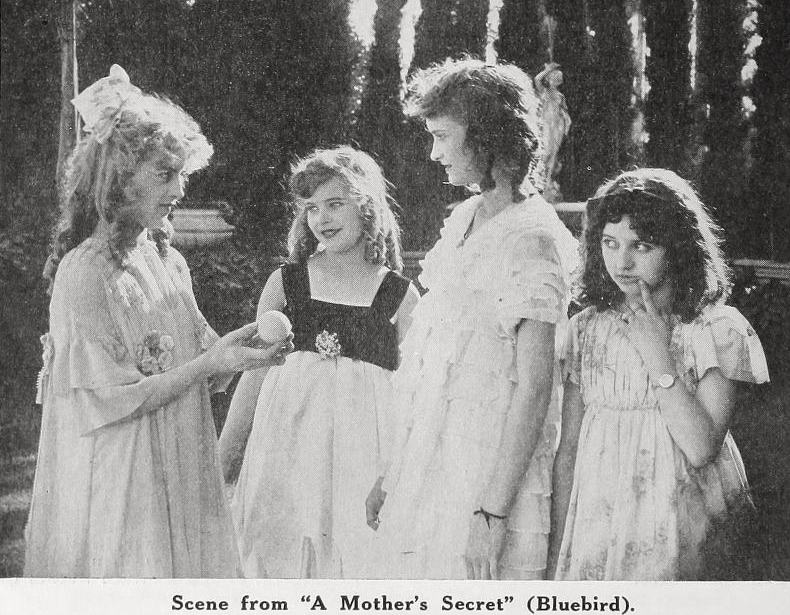
Furthermore, the pacing of the film is remarkably modern. Gerrard avoids the static tableaux that plagued many early silents, such as the more rigid structures seen in Valdemar Sejr. Instead, there is a fluidity to the movement, particularly in the scenes where Angela is forced to play the part of the child. These sequences are imbued with a sense of kinetic energy that reflects the character's internal frustration, a technique also explored in the episodic tension of Beatrice Fairfax Episode 13: The Ringer.
When comparing A Mother's Secret to other works of the period, its unique blend of romance and psychological drama becomes even more apparent. While Little Miss Hoover deals with themes of identity and patriotism, it lacks the visceral family betrayal found here. Similarly, the grand historical sweeping narratives like Iwami Jûtarô or the gritty realism of The Story of the Kelly Gang offer a different kind of spectacle, but they do not delve as deeply into the domestic psyche.
The film shares a certain DNA with Camille in its portrayal of a woman whose social standing is inextricably linked to her romantic viability. However, A Mother's Secret pivots from the tragic inevitability of Camille to a more ironic, almost satirical look at the marriage market. It is a precursor to the sophisticated comedies of manners that would emerge in the 1920s, yet it retains a heavy dose of the Victorian melodrama that preceded it.
In the broader canon of silent cinema, A Mother's Secret is often overshadowed by the larger-than-life epics or the slapstick comedies of the era. Yet, it offers something far more intimate and unsettling. It is a film about the fear of being replaced, the cruelty of vanity, and the resilience of youth. It echoes the sentimental weight of Over the Hill but replaces the pathos with a sharp, almost biting irony.
The collaboration between Ella Hall and the writing duo of Schroeder and Zellner resulted in a film that feels surprisingly relevant today. In an age of digital filters and the relentless pursuit of aesthetic perfection, the mother's desperate attempts to retain her youth feel less like a relic of 1918 and more like a prophetic warning. Even when compared to international mysteries like Borgkælderens mysterium or the immigrant struggle in Bogdan Stimoff, the domestic intrigue of this film holds its own through sheer psychological intensity.
Ultimately, A Mother's Secret is a testament to the power of silent storytelling. Without the aid of spoken dialogue, it manages to convey a complex emotional landscape where love, betrayal, and redemption are all facets of the same maternal coin. It is a must-watch for any serious student of film history, offering a rare glimpse into the sophisticated narrative structures that were being developed just as the world was emerging from the shadows of the Great War. Whether viewed as a romantic drama or a cautionary tale, it remains a compelling piece of art that transcends its own chronological boundaries, much like the characters it so vividly portrays.
Rating: A Sophisticated 8/10 for Silent Era Enthusiasts
IMDb 7.3
1934
Community
Log in to comment.