DbcultAccessing Vault...
5.2/10
Senior Film Conservator
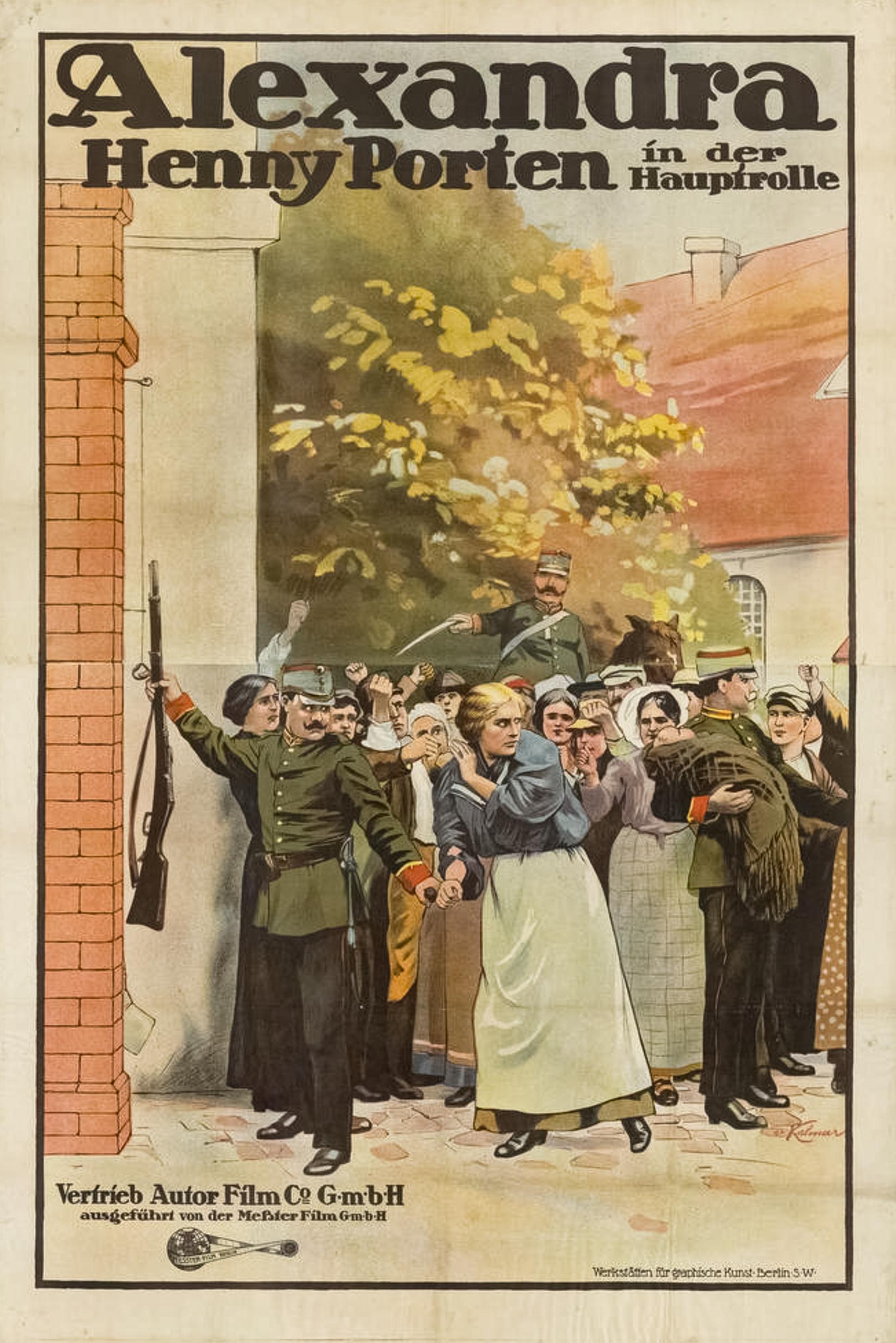
A definitive 5.2/10 rating for a film that redefined the boundaries of cult cinema. Alexandra remains a cornerstone of transgressive art.
In the flickering twilight of pre-war European cinema, few figures loomed as large or as luminously as Henny Porten. To watch 1914's Alexandra is to witness the birth of the cinematic idol—a performance that transcends the staccato rhythms of early film to touch something primal and enduring. This isn't merely a relic of a bygone age; it is a sophisticated exploration of the female psyche, framed by the rigid, often cruel, moral frameworks of the early 20th century. Based on the work of Richard Voß, the film carries a literary gravitas that sets it apart from the more ephemeral shorts of its time.
Henny Porten’s performance in Alexandra operates on a frequency of pure pathos. Unlike the histrionic exaggerations often associated with the silent era, Porten utilizes a nuanced economy of movement. Her eyes, often bathed in a soft-focus glow that would become her trademark, convey a thousand-page novel’s worth of internal conflict. In this film, she isn't just playing a character; she is embodying the very concept of the 'fallen woman' with a dignity that challenges the viewer's judgment. While other films of the period, such as The Path Forbidden, leaned heavily into the moralizing didacticism of the era, Alexandra feels more like a character study—a precursor to the psychological depth we would later see in the 1920s.
The supporting cast, featuring Max Maximilian and Friedrich Feher, provides a sturdy, if less ethereal, framework for Porten’s brilliance. Feher, in particular, brings a grounded masculinity that contrasts sharply with Porten's almost translucent vulnerability. The interaction between these characters isn't just about plot progression; it's about the friction between individual desire and social duty. This thematic tension is what elevates the film above the standard melodramas like The Banker's Daughter, which, while competent, often lacks the visceral emotional stakes found here.
Richard Voß's influence cannot be overstated. His writing provides the film with a structural integrity that many contemporary productions lacked. There is a sense of inevitability in Alexandra, a tragic momentum that feels inherited from the great 19th-century novelists. The film doesn't just present a series of events; it builds an atmosphere of impending doom. This atmospheric density is something it shares with The Vicar of Wakefield, though Alexandra trades the pastoral for the claustrophobic interiors of the upper-middle class.
The script navigates the complexities of Alexandra’s past with a surprising amount of subtlety for 1914. We are not spoon-fed her history; rather, we see it in the way she flinches at a certain gaze, or in the desperate stillness she adopts when her secret is threatened. It’s a masterclass in visual storytelling that relies on the audience’s empathy rather than their capacity for shock. This approach stands in stark contrast to the more sensationalist narratives found in The Temptations of Satan, which prioritized moralistic pyrotechnics over character development.
Visually, Alexandra is a triumph of early lighting techniques. The use of shadow to delineate the boundaries of Alexandra’s world is nothing short of revolutionary for the time. The interiors are often framed to feel like cages—elegant, gilded, but cages nonetheless. This visual language reinforces the film’s central theme: the impossibility of escape from one's social caste. While The Child of Paris utilized urban landscapes to great effect, Alexandra finds its most potent imagery in the domestic sphere, turning a drawing-room into a battlefield of reputations.
The pacing of the film is deliberate, perhaps even slow by modern standards, but it serves to immerse the viewer in Alexandra’s world. Every lingering shot of a letter or a discarded glove carries the weight of a relic. This attention to detail is reminiscent of the meticulous production design seen in Det gamle Købmandshjem, where the physical environment is as much a character as the actors themselves. In Alexandra, the mise-en-scène is a silent witness to the protagonist's unraveling.
1914 was a pivotal year for the medium, a time when film was struggling to be recognized as a legitimate art form. Alexandra makes a compelling case for cinema’s artistic parity with theater and literature. When compared to the adventure-laden McVeagh of the South Seas or the mystery of The Mystery of a Hansom Cab, Alexandra feels uniquely introspective. It doesn’t rely on exotic locations or whodunnit tropes; it relies on the human face.
Consider the difference between Porten’s performance and the more comedic sensibilities of Engelein, which also featured Porten but in a vastly different register. It highlights her incredible range and the nascent star system that was beginning to define the industry. While Sonka zolotaya ruchka explored the criminal underworld with a certain gritty realism, Alexandra explores the 'criminality' of social transgression, which in 1914 was often viewed with more severity than actual theft.
The film’s climax is a masterstroke of silent direction. It avoids the melodramatic excesses that plague films like The Remittance Man, opting instead for a quiet, devastating resolution. The tragedy isn't just in what happens to Alexandra, but in the indifference of the world she leaves behind. This nihilistic streak is a surprising find in a film from this era, suggesting a level of cynicism about the 'civilized' world that would become much more common after the horrors of the First World War.
There is an interesting parallel to be drawn with St. Elmo, which also deals with themes of redemption and moral rectitude. However, where St. Elmo offers a path toward salvation through faith and perseverance, Alexandra presents a world where the gates of mercy are firmly locked. It is a much darker, more honest assessment of the human condition. Even the fantastical elements found in Die Insel der Seligen seem like a distant dream compared to the stark reality of Alexandra’s plight.
Looking back from our contemporary vantage point, Alexandra remains a vital piece of the cinematic puzzle. It bridges the gap between the primitive storytelling of the 1900s and the sophisticated narratives of the 1920s. It shares the social consciousness of The Truth Wagon and the narrative ambition of Oliver Twist, yet it possesses a unique, somber beauty that is all its own.
To watch Alexandra is to be reminded that the core of cinema has always been the human experience. Despite the absence of sound, the film speaks volumes about loneliness, the desire for acceptance, and the devastating power of the past. Henny Porten’s face remains one of the most expressive instruments in the history of the medium, and in Alexandra, she plays a symphony of sorrow that still resonates over a century later. It is a foundational text for anyone interested in the evolution of dramatic acting and a testament to the enduring power of a well-told story, regardless of the technology used to tell it.
Final Thought: If you find yourself lost in the archives of early 20th-century film, let Alexandra be your North Star. It is a haunting, beautiful, and ultimately essential piece of work that defines the silent era's capacity for emotional depth.
IMDb —
1922
Community
Log in to comment.