DbcultAccessing Vault...
Cult Review
Senior Film Conservator
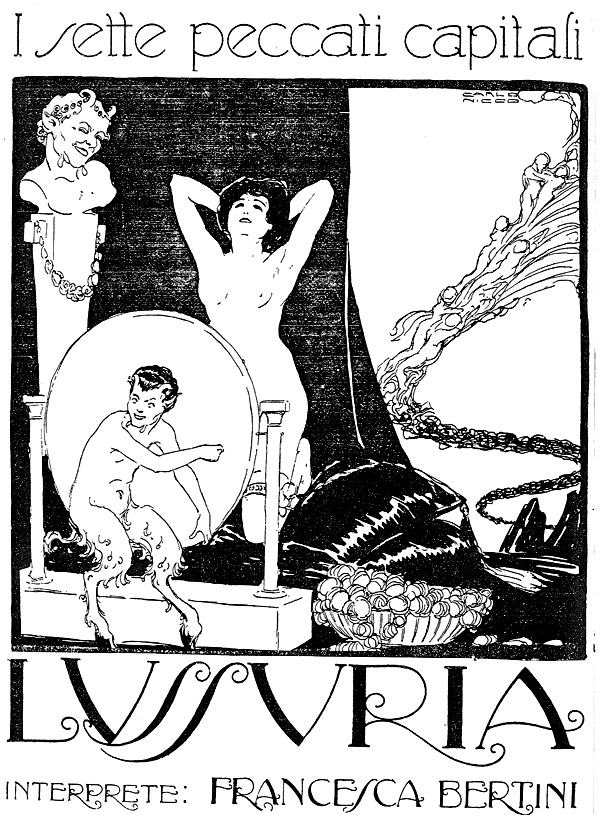
Ah, the silent era! A time when emotions were writ large across the screen, conveyed through the balletic grace of movement and the searing intensity of an actor's gaze. Among the titans of this epoch, Francesca Bertini stands as an undisputed empress, her presence alone capable of imbuing a narrative with a profound, almost mythic resonance. Her collaboration with Caesar Films on the 'I Sette Pecatti Capitali' (The Seven Capital Sins) series was, in many respects, a monumental undertaking, an ambitious cinematic exploration of humanity's most primal flaws. And within this grand tapestry, 'La Lussuria' (Lust), the penultimate installment, shines with a particularly dark, captivating brilliance, offering a searing indictment of ambition, social stratification, and the intoxicating, often destructive, power of desire.
At its core, 'La Lussuria' is a tale of relentless pursuit and profound transformation, a narrative that deftly navigates the treacherous waters of class disparity and personal aspiration. We are introduced to Leonard, portrayed with a compelling blend of vulnerability and burgeoning resolve by Vittorio Bianchi. He is, initially, a man of meager means, a cashier whose daily existence is a testament to quiet desperation. Yet, within his soul burns a fire, an ardent, almost consuming attraction to Magdalena Dutertre. Bertini, as Magdalena, is nothing short of mesmerizing – a vision of aristocratic beauty, her every gesture exuding an air of unattainable grace and, crucially, a palpable disdain for those beneath her station. Her elusiveness, her very inaccessibility, acts not as a deterrent but as a powerful catalyst, igniting in Leonard a singular, all-encompassing obsession. This is not merely physical attraction; it is a yearning for something more profound, perhaps a desire to conquer the very social barriers that separate them.
The brilliance of Vittorio Bianchi's portrayal lies in his ability to convey Leonard's internal struggle and subsequent metamorphosis. His initial meekness is not weakness but a simmering potential, a quiet fury waiting for its moment to erupt. As the narrative progresses, we witness Leonard's meteoric ascent. The poor cashier, through means implied to be as ruthless as they are cunning, sheds his humble skin to become a powerful, influential banker. This shift is not merely economic; it is a complete re-evaluation of self and societal standing. And with this newfound power, the dynamics between him and Magdalena are irrevocably altered. Her once unyielding disdain, a shield forged from social superiority, begins to crack, revealing a pragmatic, perhaps even transactional, core. The fire of Leonard's ardor, once dismissed, now finds a receptive, even eager, counterpart in Magdalena's burgeoning interest. It's a fascinating, if morally ambiguous, exploration of how power can reframe desire, turning contempt into fascination and, ultimately, into a form of passionate engagement.
To speak of 'La Lussuria' without delving into the incandescent performance of Francesca Bertini would be an oversight of epic proportions. Bertini, a true diva of the silent screen, possessed an unparalleled ability to convey complex emotional landscapes with a mere flick of the wrist or a subtle shift in her gaze. As Magdalena Dutertre, she is the very embodiment of the film's central sin – not merely in her beauty, but in her capacity to inspire such fervent, all-consuming lust. Her initial portrayal is one of icy elegance, a woman accustomed to being admired from a distance, her beauty a weapon and a shield. Yet, as Leonard's fortunes rise, Bertini masterfully portrays Magdalena's transformation, a gradual thawing that suggests a calculating mind beneath the veneer of aristocracy. Is her eventual reciprocation of Leonard's passion genuine, or is it a pragmatic acknowledgment of his power? Bertini leaves this deliciously ambiguous, allowing the audience to project their own interpretations onto her enigmatic expressions.
Her performance here resonates with her other iconic roles, particularly those where she embodies figures of immense allure and, at times, moral complexity. One might draw parallels to The Goddess, where her divine beauty holds sway, or even to the more tragic figures she sometimes portrayed, whose desires and ambitions led them down perilous paths. Bertini's Magdalena is not a passive object; she is an active participant in this dance of power and desire, wielding her beauty and social standing with strategic precision. The film, in many ways, is a showcase for her extraordinary talent, demonstrating her range from haughty indifference to a more complex, almost desperate, passion.
The title, 'La Lussuria', is hardly subtle, yet the film's exploration of lust is far from simplistic. It's not merely about carnal desire, though that is undeniably a driving force. Rather, it delves into a broader, more insidious form of covetousness – the lust for power, for social acceptance, for revenge against a world that once scorned you. Leonard's journey is a stark illustration of this. His initial desire for Magdalena is inextricably linked to his desire to transcend his lowly status. Her rejection fuels his ambition, transforming a personal slight into a powerful motivator for economic conquest. This narrative thread is beautifully echoed in films like The Ploughshare, which similarly explores the arduous climb through social strata and the moral compromises inherent in such a journey.
The film also serves as a potent commentary on the transactional nature of relationships within a stratified society. Magdalena's initial disdain for Leonard is rooted in his poverty; her eventual acceptance is clearly tied to his wealth. This highlights a cynical truth about human nature and societal values: that external markers of success often outweigh genuine affection or merit. It brings to mind the poignant themes explored in A Hungry Heart, where love and ambition often clash, revealing the painful choices individuals make in pursuit of a better life or societal standing. The moral ambiguity of both Leonard and Magdalena is one of the film's greatest strengths; neither character is entirely sympathetic, yet their motivations are deeply human and understandable.
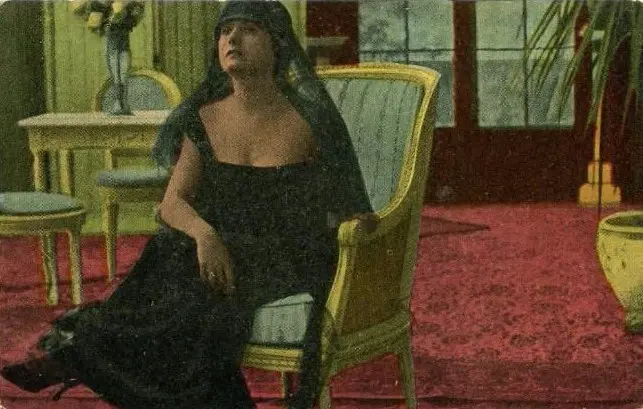
The inclusion of 'La Lussuria' within the 'Seven Capital Sins' series is particularly insightful. While other films in the series might tackle more overt displays of greed or gluttony, lust here is depicted as a multifaceted force, capable of driving both destruction and creation. It's a sin that permeates not just the personal realm but also the societal, influencing economic systems and interpersonal dynamics. This profound exploration of sin and its consequences is a recurring motif in cinema, finding its darker, more morally absolute echoes in films such as ...der Übel größtes aber ist die Schuld, where the weight of transgression looms heavily over the characters' fates. 'La Lussuria', however, offers a more nuanced view, suggesting that lust, while potentially destructive, can also be a powerful engine for change, albeit one that often leaves a trail of moral compromise in its wake.
As a product of the silent era, 'La Lussuria' relies heavily on visual storytelling, a craft perfected by the Italian cinema of the time. The direction, while uncredited beyond the general Bertini/Caesar Films association, demonstrates a keen understanding of cinematic language. The use of dramatic lighting, particularly in scenes depicting Leonard's initial poverty versus his later opulence, effectively underscores the thematic shift. Close-ups are employed judiciously, allowing the audience to fully absorb the nuanced expressions of Bianchi and Bertini, crucial for conveying unspoken desires and internal conflicts. The melodrama, characteristic of the period, is handled with a certain grace, preventing it from tipping into caricature. Instead, it amplifies the emotional stakes, drawing the viewer into the characters' heightened realities.
Set design and costuming are also vital components, meticulously crafted to delineate social class and character evolution. Magdalena's elaborate gowns and opulent surroundings sharply contrast with Leonard's humble beginnings, making his eventual entry into her world all the more impactful. The visual language speaks volumes, a testament to the artistry of Italian silent film production. This attention to visual detail and dramatic staging is a hallmark of the period, seen in other compelling dramas that sought to explore the darker facets of human existence, such as The Gates of Doom, where atmosphere and visual metaphor play a critical role in conveying the film's moral gravity.
'La Lussuria', like its counterparts in the 'Seven Capital Sins' series, stands as a significant artifact of early Italian cinema, particularly for its daring exploration of complex moral themes and its showcase of Francesca Bertini's formidable talent. It challenges viewers to confront uncomfortable truths about desire, power, and the societal structures that often dictate human relationships. The film's nuanced portrayal of its characters – Leonard, driven by a complex mix of lust, ambition, and perhaps a yearning for validation; Magdalena, whose initial haughtiness gives way to a more pragmatic, yet still alluring, persona – ensures its continued relevance. It avoids simplistic moralizing, opting instead for a portrayal of human nature in all its messy, contradictory glory.
Even a century later, the core themes resonate powerfully. The relentless pursuit of wealth and status, the way unrequited desire can morph into an all-consuming ambition, and the transactional nature of some relationships in a class-conscious society – these are not relics of the past but enduring facets of the human condition. The film serves as a valuable reminder of the sophistication and psychological depth that silent cinema was capable of achieving, often through the sheer force of its performers and the evocative power of its visual storytelling. It invites us to reflect on our own desires and the lengths to which we might go to satisfy them, making it a timeless piece of cinematic art that continues to provoke thought and discussion.
In its raw depiction of human frailty and ambition, 'La Lussuria' contributes significantly to the understanding of early 20th-century European sensibilities regarding morality and social mobility. It’s a testament to the fact that even without spoken dialogue, a film can communicate profound psychological truths, leaving an indelible mark on its audience. The film, much like Infatuation (1918), explores the dangerous precipice of obsessive love, but here, it's amplified by the corrosive influence of societal expectations and the hunger for power. It truly is a film that asks more questions than it answers, inviting contemplation long after the final frame.
Ultimately, 'La Lussuria' is more than just a silent film; it's a mirror reflecting the enduring complexities of human desire and the often-unsettling journey one takes in its pursuit. A must-see for aficionados of classic cinema and anyone interested in the psychological dramas that shaped early film narratives.
IMDb 5.7
1923
Community
Log in to comment.