DbcultAccessing Vault...
Cult Review
Senior Film Conservator
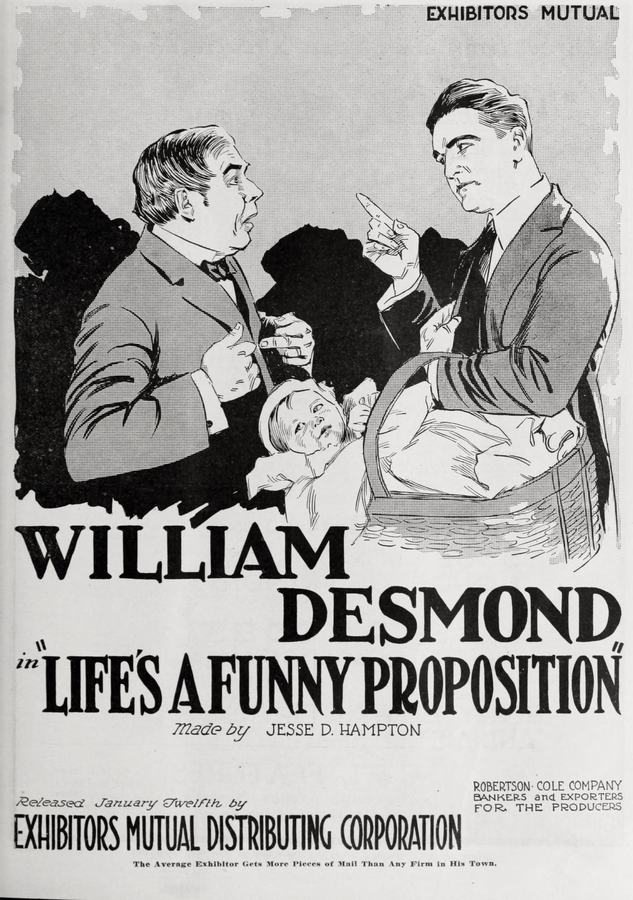
The year 1919 represented a pivotal juncture for American cinema, a period where the industry began to shed its primitive skin and embrace the sophisticated narrative structures that would define the roaring twenties. Joseph Franz’s Life's a Funny Proposition stands as a vibrant testament to this transition, blending the slapstick sensibilities of the previous decade with a nuanced exploration of post-war social anxieties. At its core, the film is a frantic comedy of manners, yet it pulses with an underlying tension regarding financial stability and moral rectitude that resonates even a century later.
William Desmond portrays Jimmie Pendleton not as a typical swashbuckler, but as a man of intellectual prowess crippled by social inhibition. This portrayal of the 'shy lawyer' archetype is particularly fascinating when contrasted with the more aggressive protagonists found in contemporary works like The Rebel. Desmond utilizes a repertoire of subtle gesticulations and expressive micro-movements to convey a sense of mounting panic that feels remarkably modern. His performance anchors the film, providing a relatable emotional core amidst the escalating absurdity of the plot.
The dynamic between Jimmie and Herbert Austin (Jay Belasco) serves as the primary catalyst for the film's kinetic energy. Herbert is the quintessential agent of chaos, a character whose lack of impulse control mirrors the reckless optimism of the era. Their relationship is one of parasitic codependency, where Jimmie’s legal mind is constantly employed to rectify Herbert’s social and financial transgressions. This dichotomy between the responsible professional and the hedonistic socialite is a recurring motif in silent cinema, often used to critique the perceived decadence of the urban elite.
"In the labyrinth of early 20th-century farce, the foundling is never merely a prop; it is a manifestation of the protagonist's repressed domestic fears and the external pressures of a society in flux."
The inclusion of the Belgian Babies War Relief organization is more than a mere plot device; it is a poignant reflection of the zeitgeist. Following the Great War, American cinema was saturated with references to European recovery efforts, and here, the presence of the 'orphaned' infant serves as a sharp contrast to Jimmie’s own arrested development. While Jimmie struggles to commit to Mary (Louise Lovely), he is literally forced to confront the ultimate responsibility: the care of a child. This thematic thread elevates the film above standard burlesque, aligning it with the moral gravity seen in dramas like The Blindness of Virtue.
The cupboard sequence, wherein Jimmie attempts to muffle the cries of the child, is a masterclass in suspenseful comedy. Franz uses the spatial limitations of the set to amplify the claustrophobia of Jimmie’s secret. Every knock on the door or inquiry from Mary’s mother becomes a potential catastrophe, turning the domestic space into a minefield of social exposure. This tension between public persona and private reality is a theme explored with equal vigor in Mrs. Dane's Defense, though Franz opts for a lighter, more whimsical touch.
The introduction of the $20,000 in Liberty bonds shifts the film’s gears from domestic farce to a proto-caper. These bonds were not merely currency; they were symbols of patriotic duty and national investment. By making them the prize in a sordid marriage arrangement orchestrated by Uncle Tobias, the script by William Parker subtly critiques the commodification of loyalty. Uncle Tobias, played with a delightful gruffness by John Steppling, represents the old-world patriarchal control that the younger generation—represented by Jimmie and Mary—is desperately trying to outpace.
Hepzibah’s role in the theft of the bonds introduces a layer of subversion. Often, in films like The Girl from Rector's, female characters are either virtuous or villainous with little middle ground. Hepzibah, however, is driven by a crude but understandable desire for agency, eloping with another man and the fortune to escape the very marriage her father tried to force upon Jimmie. It is a moment of narrative irony that complicates the viewer's sympathy, suggesting that the 'funny proposition' of life applies to everyone, regardless of their social standing.
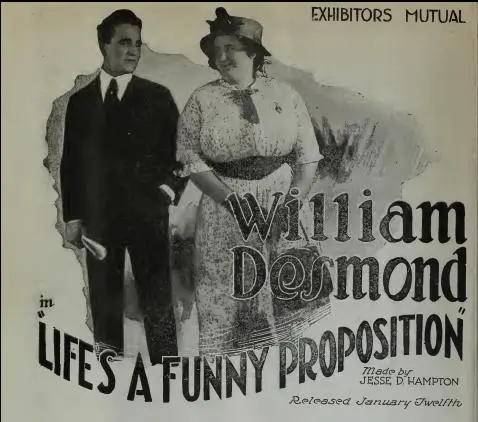
Joseph Franz exhibits a sophisticated understanding of pacing. The transition from the static legal offices to the kinetic hospital escape showcases a versatility in framing that was quite advanced for 1919. Unlike the more somber visual palette of Gefangene Seele, Franz utilizes high-key lighting to maintain an atmosphere of levity, even when the stakes involve embezzlement and ruined reputations. The set design of the New York apartments reflects a burgeoning Art Deco influence, emphasizing the modernity that Jimmie is struggling to navigate.
The film’s editing, particularly during the climax where the various plot threads converge, is remarkably tight. The intercutting between Jimmie’s pursuit and Herbert’s recovery creates a sense of synchronized resolution that satisfies the audience's desire for order after the preceding chaos. This structural competence is reminiscent of the narrative efficiency found in Pals First, another film that balances humor with a dash of mystery.
When comparing Life's a Funny Proposition to other works of the period, its unique blend of social commentary and farce becomes even more apparent. While Puppchen explores the artifice of identity through a more whimsical lens, Franz’s work is grounded in the tangible pressures of post-war American life. It lacks the melodrama of The Failure or the existential dread of The Seventh Noon, opting instead for a celebratory resilience. Even the international flavor of Fekete gyémántok or the emotional turbulence of Hjertestorme seems distant from the lighthearted, yet meticulously constructed, New York world depicted here.
The film also shares a certain DNA with The Innocence of Ruth, particularly in its depiction of a young protagonist forced to grow up through a series of unexpected responsibilities. However, where Ruth’s journey is one of moral education, Jimmie’s is one of self-actualization. He doesn't just learn right from wrong; he learns how to assert his will in a world that treats him as a pawn.
One cannot discuss this film without acknowledging the luminous Louise Lovely. As Mary, she provides the essential counterpoint to Jimmie’s frantic energy. Lovely possesses a screen presence that is both ethereal and grounded, a quality that served her well in other features like One Hour. In this film, she represents the stability Jimmie craves. Her reaction shots—ranging from bewildered to tender—guide the audience's emotional response, ensuring that we never lose sight of the stakes of Jimmie’s predicament. The chemistry between Desmond and Lovely is palpable, making the eventual flourishing of their romance feel earned rather than merely convenient.
The supporting cast, including Vera Doria and Lillian Sylvester, fill out the social landscape with a series of vivid caricatures. From the overbearing mother-in-law archetype to the 'fat cousin' trope, these characters provide the necessary friction to keep the plot moving. While some of these portrayals might seem dated by modern standards, they are executed with such ebullience that they remain entertaining. Even in smaller roles like those in The Monk and the Woman, the era's focus on distinct character types helped audiences navigate the silent narrative without the need for excessive intertitles.
Ultimately, Life's a Funny Proposition is a film that rewards close viewing. Beyond the surface-level humor of babies in cupboards and hospital escapes lies a sophisticated commentary on the anxiety of transition. It captures a moment in time when the world was trying to find its footing after a global catastrophe, using the microcosm of Jimmie Pendleton’s life to mirror the macrocosm of a society in recovery. It lacks the overt propaganda of Joining the Tanks, opting instead for a human-centric approach to the post-war experience.
The film concludes not with a grand statement, but with a quiet reestablishment of order. The bonds are recovered, the baby is returned (presumably to a more stable environment), and Jimmie is no longer the shy, hesitant boy we met in the opening frames. He has been tested by the 'funny proposition' of life and emerged as a man of substance. For fans of silent cinema, this is an essential piece of the puzzle, a delightful reminder that the pursuit of happiness has always been a chaotic, unpredictable, and ultimately rewarding endeavor.
IMDb 6.6
1917
Community
Log in to comment.