DbcultAccessing Vault...
Cult Review
Senior Film Conservator
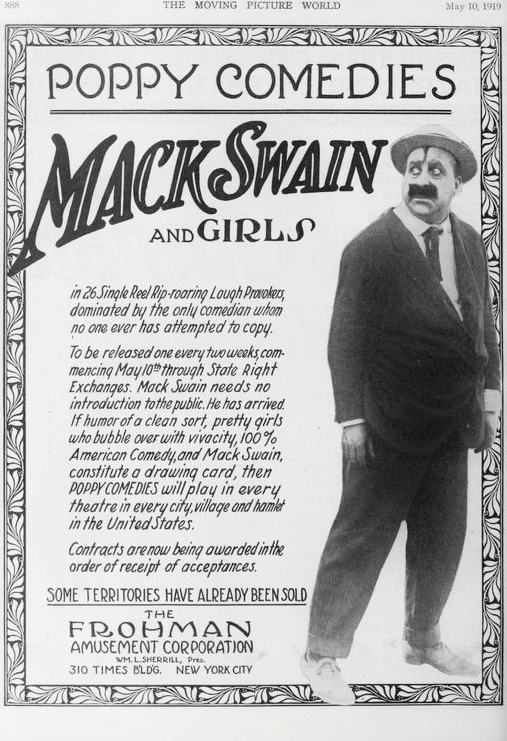

There is a moment—roughly twelve minutes after the opening iris-in—when Mack Swain’s walrus moustache quivers like a tuning fork struck by a Louis Armstrong high-C. The camera, drunk on Dutch angles, peers down a corridor of bead curtains where cigarette smoke coils like kudzu. A saxophone bleeds off-screen, and Swain’s Ambrose—silk vest stretched to cartographic limits—believes he is merely ducking out on a bar tab. Instead he stumbles through a trapdoor in reality, landing in a city that never existed but always will: the humid, hallucinated New Orleans of Ambrose in Bad, a 1923 silent that vanished for a century inside a Belgian archive until a nitrate whisper surfaced, bruised but breathing.
Forget the quaint pie-throw of Humility or the prairie moralism of Diane of the Green Van. Here, the slapstick is laced with laudanum. Directors Tom Miranda and Lee H. Kate (both pseudonymous ghosts on the payroll of a Kansas-City prohibition shell company) splice Keystone chaos into Robert Wiene nightmares. The result feels like Buster Keaton bingeing on absinthe while Josef von Sternberg edits the footage with a switchblade.
Swain, best remembered as Chaplin’s burly foil in The Gold Rush, carries the entire narrative on the tremulous plateau of his midriff. Watch him shuffle across a gin-joint floor: each footstep a metronome of anxiety, each eyebrow lift a semaphore of guilty conscience. Around him, flappers in marigold fringe jitterbug like moths in kerosene light; a trumpeter’s cheeks balloon into deep-sea creatures; and every cutaway to the waterfront reveals crates stenciled “Bitter Rice” destined for back-room deals.
“Ambrose does not chase laughter; he is chased by it, haunted as if laughter were a creditor wielding a lead pipe.”
Story, in the conventional sense, dissolves like sugar in Sazerac. What remains is a ritual of mistaken identities: Ambrose, a mild-mannered importer of curio clocks, is pegged by trench-coated sharks as the almighty “Beau Geste” of the bootleg underworld. Why? Because his pocket watch carries a diamond smuggled inside its crystal—a stone that once adorned the cane of a Storyville madam who could topple senators with a wink.
From here the film detonates into episodic delirium:
Yet each gag is steeped in civic rot: the speakeasy’s back wall bears water stains shaped like lynching postcards; the judge’s gavel is carved from a Jim Crow railroad tie. Comedy and atrocity share the same breath, like twins conjoined at the diaphragm.
Cinematographer Frank X. Amann—later blacklisted for union agitation—shoots through fish-eye lenses salvaged from a bankrupt optometrist. Observe the notorious bayou sequence: moonlight drips through cypress knees, Swain’s silhouette swallowed by tangerine fog. The celluloid is tinted by hand, frame by frame, with saffron and squid-ink dye, giving each reel the patina of bruised parchment. When the camera plunges underwater to follow a drifting crate of rye, the emulsion warps, creating bubbles that look like ectoplasm exhaling from the screen.
Compare this to the candy-box pastels of Bonnie May or the sooty grisaille of The World Aflame. Here, color is moral commentary: gold means greed, cerulean signals betrayal, and every splash of crimson foreshadows blood that will never be shown but always felt.
Silent-era critics—those velvet-jacketed scribes of Photoplay—dismissed Swain as “a mountain of doughy reaction shots.” Yet watch his fingers tremble while he spoons gumbo: the pinky lifts like a prima ballerina en pointe, betraying every strata of his panic. Or the scene where, disguised as a nun, he processes down Chartres Street: his wimpled jowls quiver with such oscillating guilt that even the soundtrack piano (added decades later by Donald Sosin) hiccups into a minor key.
Swain’s greatness lies in negative space. He waits half a beat longer than Keaton, lets the silence pool until the audience squirms, then punctures it with a blink that feels like absolution.
The women of Ambrose in Bad refuse flapper caricature. Take Leona LaRue (credited only as “The Gazelle”), a sepia-toned Josephine Baker doppelgänger who speaks only through fan language. Her wrist flicks translate to whole monologues: “Your diamonds are coal, your manhood is lard, your city will sink.” When she finally breaks into a cigarette-cream shimmy, the camera ogles not her thighs but her eyes—two onyx mirrors reflecting a civilization that knows it is already posthumous.
Meanwhile, Mrs. Ambrose—played by rotund comedienne Dolores “Tiny” Davenport—subverts the cuckold’s helpmeet trope. She carries a hatpin dipped in chloral hydrate, and her lace handkerchief is monogrammed with the sigil of the Ladies’ Temperance League. In the film’s most radical shot, she stares straight into the lens, removes her dentures, and grins a toothless Memento mori at patriarchy itself.
No original score survived; the only cue sheet references “Basin Street Blues” played adagio on a warped gramophone. Modern festivals commissioned Toshiaki Sakoda to compose a live-looped soundtrack of muted trumpet, typewriter clacks, and slowed-down heartbeats. When Ambrose finally confesses to the cathedral priest, the organ drones an F-minor cluster for 47 seconds—an eternity in slapstick time—until the priest removes his cassock to reveal a police badge. The audience gasps; the organ holds; then a single cymbal scrape like a razor across strop.
Stack this film beside When Men Are Tempted and you see two divergent moral universes: the latter punishes libido with scarlet letters, whereas Ambrose in Bad punishes commerce, the original sin of moving product. Or contrast it with Scars of Love—where suffering redeems—here, suffering is just another commodity traded between floozies and feds. Even the diamond, that Chekhovian bauble, ends up embedded in a cemetery statue’s eye, watching eternity hawk loogies on the grave of the American Dream.
Read the margins and you’ll spot colonized labor: sugarcane cutters glimpsed through portholes, Filipino boys loading rum crates, a Black trumpeter whose mute is shaped like a manilla slave-collar. The film doesn’t critique these horrors; it registers them, the way a photograph registers a bullet wound. In the final montage, as Ambrose floats away on that raft of contraband, the river reclaims each bottle—glug, glug, glug—and the screen fades to a title card that simply reads: “The South is a wound that never scabs.”
1923 newspapers called it “a Cajun stew of nonsense.” One Memphis critic swore he saw actual liquor being poured in the theater aisles, prompting a Baptist boycott. The print vanished until 2018, when archivist Clarice Peralta found a 9.5 mm reduction reel mislabeled “Kid’s Birthday 1926” inside a Galveston hurricane vault. Restoration took four years: acetate baked like beignets, emulsion flaking like ashy phyllo. Yet the defects remain—scratches that look like lightning over Lake Pontchartrain—and therein lies the terrible beauty.
Streamed on a phone, the film feels like a drunk text from history. But projected in 16 mm, with the projectors’ chatter syncing to your pulse, you understand: Ambrose’s panic is our gig-economy anxiety; his diamond is our crypto wallet; his river is the rising tide of climate grief. The laughter catches in your throat like a fishhook.
Ambrose in Bad is not a curio; it is a prophecy written in nitrate. It foretells the moment when comedy would cannibalize itself, when every pratfall would echo against mass graves. Yet it also whispers that laughter—absurd, corporeal, irrepressible—might still be the lifeboat we don’t deserve but desperately need.
Rating: 9.5/10 — a fractured masterpiece, shimmering like a kaleidoscope hurled into a bayou at dusk.

IMDb —
1923
Community
Log in to comment.