Summary
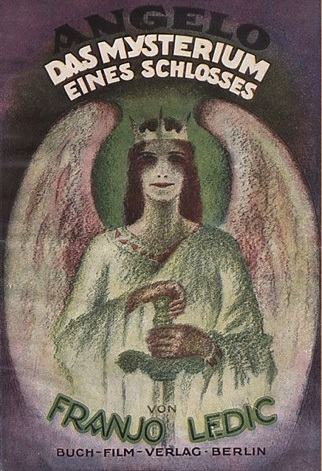
Drachenegg, an ossified Carinthian keep, looms like a cracked reliquary above a hamlet that time misplaced; within its rat-maze corridors, Angelo—a name whispered like a heretical prayer—materializes as both demon and deliverer. He is no mere vagrant illusionist: he is the sum of every repressed desire that ever seeped into the castle’s mortar, a mercurial presence who rewinds pocket-watches with a breath and steals the reflection of whoever dares gaze into his obsidian ring. The baronial line has dwindled to the neurasthenic Graf Siegwart, his shutter-bulb niece Irmgard, and a house-staff whose livers are as pickled as their loyalty. Each dusk, frescoes of dragon-saints bleed ochre tears; each dawn, another servant forgets their own surname. When itinerant archivist Ernst Dernburg arrives to catalogue the library’s mould-furred tomes, he uncovers a palimpsest that tells of a 14th-century foundling—Angelo—condemned to eternally pay for the ancestral sin of a child-killing crusader. The parchment prophesies that the cycle can break only if a living descendant volunteers to take the foundling’s place in a chrono-cage suspended between the castle’s highest tower and the mountain’s basalt womb. Irmgard, desperate to halt the erasure of her kin’s memory, attempts to outwit Angelo by staging a midsummer séance, but the conjurer simply inverts the moonlight, trapping the villagers inside their own shadows. Robert Leffler’s itinerant photographer then exposes a glass-plate negative that reveals Angelo’s heart to be a miniature Drachenegg, complete with tiny screaming figures. The image becomes a viral obsession: the townsfolk claw at the plate, craving proof of their own existence. In the climactic danse macabre, Angelo offers Siegwart a Faustian bargain: surrender your ancestral name and the castle will stand forever; refuse, and every portrait in the gallery will step forth to claim the living. Siegwart, whose only remaining joy is the brittle phonograph aria of his dead wife, chooses instead to burn the genealogical scroll, thereby dissolving the castle’s foundations into a vortex of ink and thunder. Yet the final shot—an iris-out on Angelo strolling through a modern Alpine resort—suggests the curse merely migrated into celluloid itself, waiting for the next projector beam to re-ignite.
Review Excerpt
"
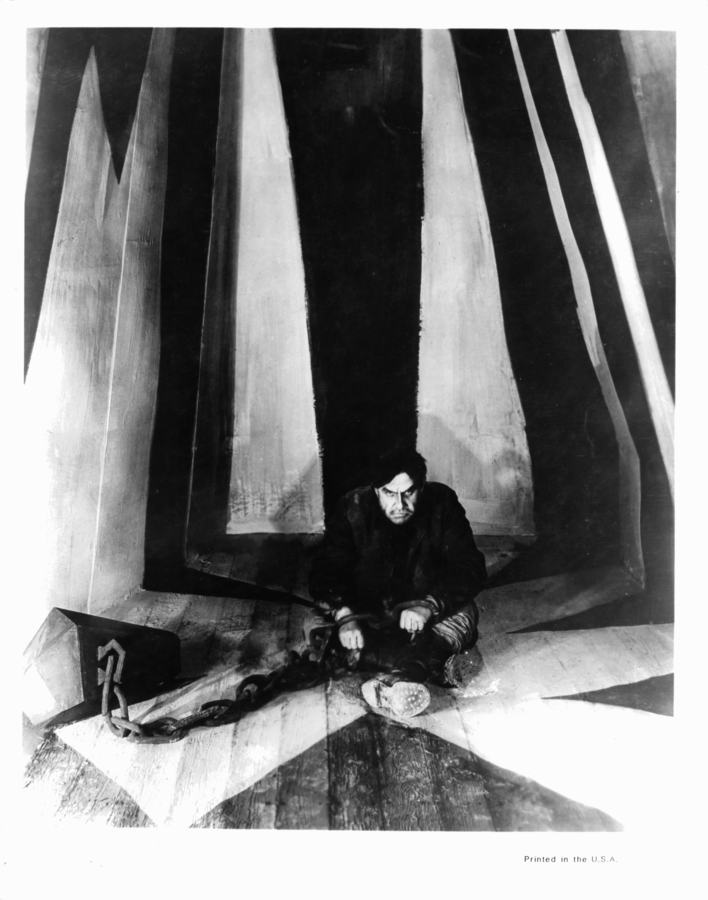
Franjo Ledic’s Angelo das Mysterium des Schlosses Drachenegg is less a motion picture than a cathedral of fog—each intertitle a cracked stained-glass window, each frame a shard of obsidian lodged in the retina. Shot on location in the Karawanks during the inflation-slashed summer of 1924, the film arrived when German-language screens were already drunk on the angular nightmares of Caligari and the cadaverous religiosity of Murnau’s Faust. Yet Angelo refuses to be a footnote; it detonates its o..."