DbcultAccessing Vault...
5/10
Senior Film Conservator
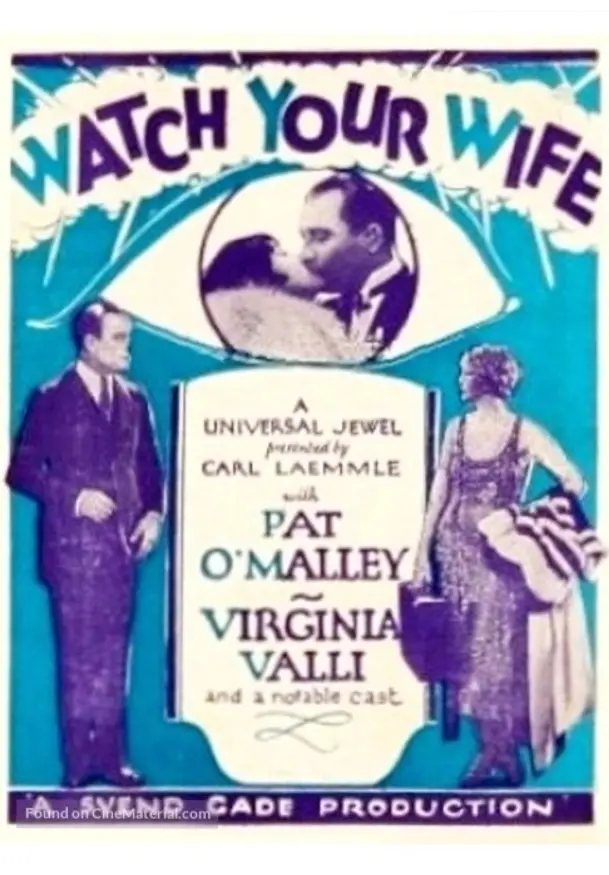
A definitive 5/10 rating for a film that redefined the boundaries of cult cinema. Watch Your Wife remains a cornerstone of transgressive art.
Is 'Watch Your Wife' worth seeking out in an era of endless streaming options? Short answer: Yes, but primarily as a fascinating sociological artifact of the roaring twenties rather than a comedic masterpiece. This film is for the silent cinema completionist and those interested in the 'proto-rom-com' tropes that defined early Hollywood; it is certainly not for viewers who demand modern pacing or sensitive gender dynamics.
The film occupies a strange space in the mid-1920s landscape. It is a transition piece, caught between the sophisticated social comedies of the early decade and the more robust, action-oriented features that would follow. It works because it treats the concept of divorce with a surprisingly modern, cynical levity, treating marriage as a contract that can be canceled and renegotiated like a lease. However, it fails because the third-act train sequence feels like it belongs in a completely different genre, jarring the viewer out of the domestic satire established in the first hour.
You should watch 'Watch Your Wife' if you are a fan of silent-era social satires or a Gary Cooper completist looking for his earliest footprints. This film provides a unique look at 1920s divorce culture and the 'rental' agency trope that predates modern gig-economy comedies by a century. It is a brisk, occasionally biting look at how pride destroys and then rebuilds a relationship.
1) This film works because it uses the 'rental wife' concept to expose the transactional nature of high-society marriages in the 1920s.
2) This film fails because the character of Alphonse Marsac is a one-dimensional caricature that lacks the threat level necessary to make the climax feel earned.
3) You should watch it if you want to see the visual language of silent comedy before it was fully standardized by the major studios.
The most striking element of 'Watch Your Wife' is the 'wife agency.' In a scene that feels decades ahead of its time, James Langham walks into a professional office to browse through a catalog of women. It is treated with the same mundanity as hiring a plumber. This isn't presented as a scandalous or sexualized endeavor, but as a purely functional one. James needs a 'wife' to keep the house running and to provide the appearance of domestic stability so he can focus on his writing.
This plot point serves as a sharp critique of what was expected of women in 1926. By making the 'wife' a rented commodity, the film accidentally—or perhaps intentionally—highlights that the traditional marriage James had with Claudia was also built on a foundation of service and financial exchange. When you compare this to the themes of domestic expectation in Come Out of the Kitchen, you see a recurring obsession in 1920s cinema with the blurring lines between service and romance.
For many modern viewers, the draw here is Gary Cooper. It is important to temper expectations: this is very early Cooper. He isn't the towering icon of 'High Noon' yet. He is raw, lean, and still finding his screen presence. Watching him navigate the physical comedy of the silent era is like watching a great athlete learn a new sport. He is talented, but you can see the gears turning.
Helen Lee Worthing as Claudia is the true engine of the film. She plays the 'scorned wife' with a level of frantic energy that balances James's stoicism. Her performance in the hotel scenes, where she tries to convince herself she is happy with the predatory Marsac, is genuinely moving. It’s a performance of performance—a woman acting like she’s in love to spite the man she actually loves. This level of psychological depth is often missing from the broader comedies of the era, such as The Little Fool.
Svend Gade, the Danish director at the helm, brings a certain European flair to the production. There is a specific focus on interiors that makes the Langham mansion feel like a character in itself. The way Gade shoots the empty spaces after the divorce emphasizes James's isolation. The lighting is crisp, typical of the mid-20s, but Gade uses shadows effectively during the more melancholic moments of the separation.
The pacing, however, is where the film stumbles. The first two acts are a slow-burn domestic drama with comedic undertones. Then, the third act arrives like a thunderbolt. The transition from a quiet study of a broken marriage to a high-stakes train rescue is jarring. It feels as though the producers worried the audience would be bored by the dialogue-heavy (via title cards) domestic scenes and demanded a 'thrilling' conclusion. It works. But it’s flawed. It lacks the cohesive tonal control found in contemporary masterpieces like The Shadow of a Doubt.
Yes, 'Watch Your Wife' is worth watching for anyone interested in the evolution of the romantic comedy. It features a unique, high-concept premise that challenges the sanctity of marriage while ultimately reinforcing it. While the ending is a bit of a tonal mess, the lead performances and the cynical humor of the 'rental agency' make it a standout among the lesser-known silents of 1926.
Pros:
The film offers a surprisingly frank look at divorce. Worthing’s performance is expressive and nuanced. The cinematography captures the opulence of the 1920s without feeling like a mere stage play. It’s a short, punchy runtime that doesn’t overstay its welcome.
Cons:
The 'villain' Marsac is a cardboard cutout. The ending relies on a 'rescue' that feels unearned given the intellectual nature of the earlier conflict. Some of the title cards are overly wordy and disrupt the visual flow.
'Watch Your Wife' is a fascinating, if slightly uneven, relic. It captures a moment in time when Hollywood was experimenting with more 'adult' themes like divorce and domestic dissatisfaction but wasn't quite ready to abandon the melodramatic tropes of the previous decade. It is a film of two halves: a sharp, modern satire and a regressive, action-heavy finale. Despite the whiplash, the central performances and the sheer oddity of the 'rent-a-wife' plot make it a journey worth taking. It isn't a masterpiece, but it is a vital piece of the puzzle for anyone studying the transition of American cinema into the mature studio system. If you enjoyed the domestic tension of The Woman from Nowhere, this is a logical, albeit more comedic, next step.
IMDb —
1928
Community
Log in to comment.