DbcultAccessing Vault...
Cult Review
Senior Film Conservator
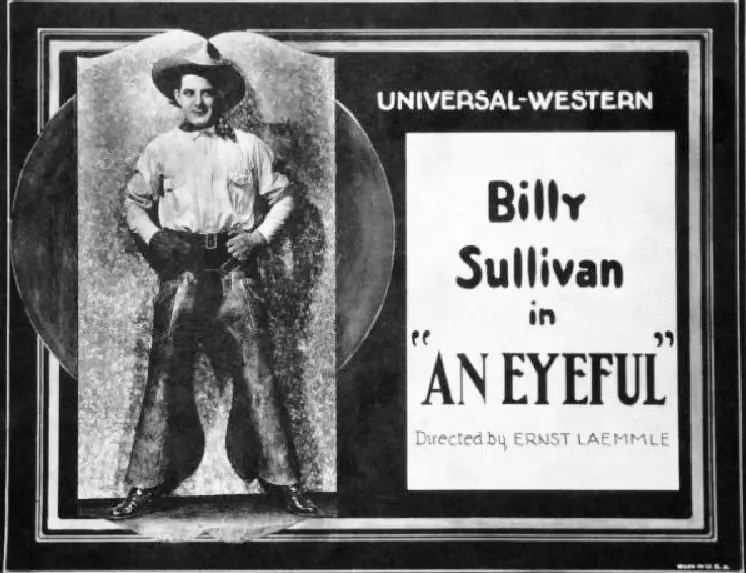
The year 1924 stood at a fascinating crossroads for the American film industry. It was a period where the primitive slapstick of the previous decade began to meld with a more sophisticated, character-driven narrative structure. An Eyeful, directed by the often-underappreciated Ernst Laemmle, serves as a quintessential artifact of this transition. While ostensibly a brief short, the film packs a dense thematic punch, exploring the friction between social classes, the encroaching influence of the 'New Woman'—represented here by the vampiric Stella Glendenning—and the redemptive power of traditional masculinity. Unlike the more sprawling epics of the time, such as The Holy City, this film focuses its lens on the microcosm of the American road, turning a simple car breakdown into a stage for moral reckoning.
Billy Sullivan, a performer whose physicality often rivaled the great acrobats of the silent era, brings a palpable energy to the role of Billy Langdon. In the early sequences, Sullivan plays the 'country boy' with a lightness of touch that avoids the caricature often found in similar roles. His chemistry with Florence Lee, who plays the steadfast Joyce, provides the necessary emotional stakes. When Sullivan's character is seduced—or rather, 'vamped'—by Lola Todd's Stella, we see a flicker of the confusion that defined many male characters of the post-WWI era. This sense of being overwhelmed by the modern, aggressive feminine energy is a recurring theme in Universal shorts of the period, often seen in works like Nineteen and Phyllis.
"The silent screen did not require voice to scream its anxieties; the tilt of a hat, the flare of a nostril, and the mechanical failure of an automobile spoke volumes about a society in flux."
Lola Todd’s portrayal of Stella Glendenning is a masterclass in the 'vamp' aesthetic. She represents the 'Eyeful' of the title—a visual feast that is ultimately hollow and destructive. Her presence acts as a catalyst for the film's conflict. In the lexicon of 1920s cinema, the wealthy tourist was often a figure of both envy and ridicule. When the Glendennings' car breaks down, it is not merely a plot device; it is a symbolic failure of the machinery of the upper class when confronted with the raw reality of the American landscape. This juxtaposition of the sophisticated and the primal is handled with more nuance here than in the overtly comedic His Briny Romance, where the environment is purely a source of gags.
The arrival of the 'blanket stiffs'—a term for itinerant tramps—introduces a darker, almost noir-ish element to the story. These characters represent the forgotten men of the 1920s, the shadows lurking behind the glitz of the Jazz Age. Their robbery of the Glendennings is swift and brutal, serving as a stark reminder of the vulnerability of wealth. This thematic thread of social instability is something Ernst Laemmle would explore with varying degrees of intensity across his filmography, often drawing comparisons to the grit found in Sawdust.
One of the most intriguing aspects of An Eyeful is its fascination with technology. Joyce, played with a surprising amount of agency by Florence Lee, does not simply wait to be rescued. Instead, she utilizes a telephone lineman’s apparatus to call for help. This inclusion of a specific, somewhat technical tool reflects the era's obsession with the 'magic' of telecommunications. It elevates Joyce from a mere romantic interest to a vital component of the film's resolution. This proto-feminist streak was gaining ground in mid-20s cinema, often surfacing in films like The Humming Bird, where female characters took active roles in their own destinies.
The sequence where Joyce taps into the line is filmed with a tautness that foreshadows the suspense thrillers of the 1930s. The editing, likely overseen by the collaborative efforts of writers Isadore Bernstein and Dwinelle Benthall, creates a rhythmic urgency as the message is relayed to the railroad station. This connection between the rural horse-mounted messenger and the electrical pulse of the telephone wire perfectly encapsulates the 'An Eyeful' experience—a blend of the old world and the new.
When Billy and the posse set out, the film shifts into high gear. The cinematography captures the frantic energy of the chase, utilizing wide shots that emphasize the scale of the pursuit. Billy Sullivan’s background in athletic roles is put to full use here. He doesn't just ride; he dominates the frame with a kinetic intensity that reminds one of the pacing in The Phantom Fortune. The recovery of the loot is not merely about the return of property; it is the restoration of the social order that Stella’s arrival had disrupted.
The confrontation with the tramps is staged with a ruggedness that avoids the sanitized violence of later Hays Code-era films. There is a sense of genuine peril, a grit that aligns it with the darker undertones of The Sons of Satan. Billy’s success in overcoming the tramps serves as his 'squaring' with Joyce—a physical manifestation of his loyalty and his rejection of the 'vamp's' allure.
To understand An Eyeful, one must look at it alongside its contemporaries. While it lacks the sheer comedic absurdity of What Happened to Jones, it possesses a dramatic weight that elevates it above standard short-form fare. It shares a certain DNA with The Pinch Hitter in its depiction of the underdog rising to the occasion, yet it replaces the baseball diamond with the rugged terrain of the American road. The film’s focus on a singular, high-impact event—the robbery and rescue—mirrors the structure of Squabs and Squabbles, though with a significantly more serious tone.
Furthermore, the 'vamp' character of Stella can be compared to the mystical or dangerous women found in European imports of the time, such as Az utolsó éjszaka or the haunting Le revenant au baiser mortel. However, An Eyeful grounds its 'vamp' in the reality of American consumerism and class envy, rather than gothic horror or romantic tragedy. It is a pragmatic take on temptation.
Ernst Laemmle’s direction is characterized by a lack of pretension. He understands that in a short film, every frame must serve the narrative. The way he frames the breakdown of the auto—stark against the horizon—creates an immediate sense of isolation. The script, co-written by the prolific Isadore Bernstein and Dwinelle Benthall, is lean and efficient. They avoid the overly sentimental title cards that bogged down many silents, allowing the actors' faces and the action to carry the story. This efficiency is also found in The Catspaw, though that film leans more heavily into mystery elements.
The film also touches on themes of forgiveness and the fragility of trust. Joyce’s willingness to help the man who seemingly betrayed her—even if only in her mind—adds a layer of maturity to the plot. It asks the audience: Who is the real hero? Is it Billy for his physical bravery, or Joyce for her mental quickness and capacity for grace? This moral ambiguity, though slight, is what makes the film resonate more than a standard 'save the day' narrative like Who Loved Him Best?
Visually, An Eyeful is a testament to the high production standards Universal maintained even for its shorter releases. The lighting during the outdoor sequences is naturalistic, capturing the harsh beauty of the landscape. The contrast between the Glendennings' polished automobile and the dusty, ragged appearance of the tramps creates a visual dialogue about wealth and poverty that is as relevant today as it was in 1924. It lacks the supernatural sheen of The Devil-Stone, but replaces it with a grounded, visceral reality.
In the final analysis, An Eyeful is more than just a 'look' at a bygone era. It is a tightly wound spring of a movie that captures the anxieties of a nation transitioning into modernity. It showcases Billy Sullivan at the peak of his powers and offers a glimpse into the sophisticated storytelling techniques that would soon define the golden age of Hollywood. For those interested in the evolution of the action-romance, or for those who simply appreciate a well-told story of redemption and resourcefulness, this film remains a vital piece of the silent cinema puzzle. It is a reminder that even in the shortest of films, there is room for complex characters, social commentary, and a thrilling sense of adventure.
As the dust settles on Billy and Joyce’s reconciled future, the audience is left with a profound sense of the era's optimism. The car may have broken down, and the 'vamp' may have caused a stir, but the human spirit—and a handy telephone lineman's apparatus—ultimately carried the day. It is a cinematic 'eyeful' that deserves to be seen by modern eyes, stripped of the layers of time and viewed for the masterful piece of storytelling it truly is.
IMDb 5.9
1935
Community
Log in to comment.