DbcultAccessing Vault...
6.4/10
Senior Film Conservator
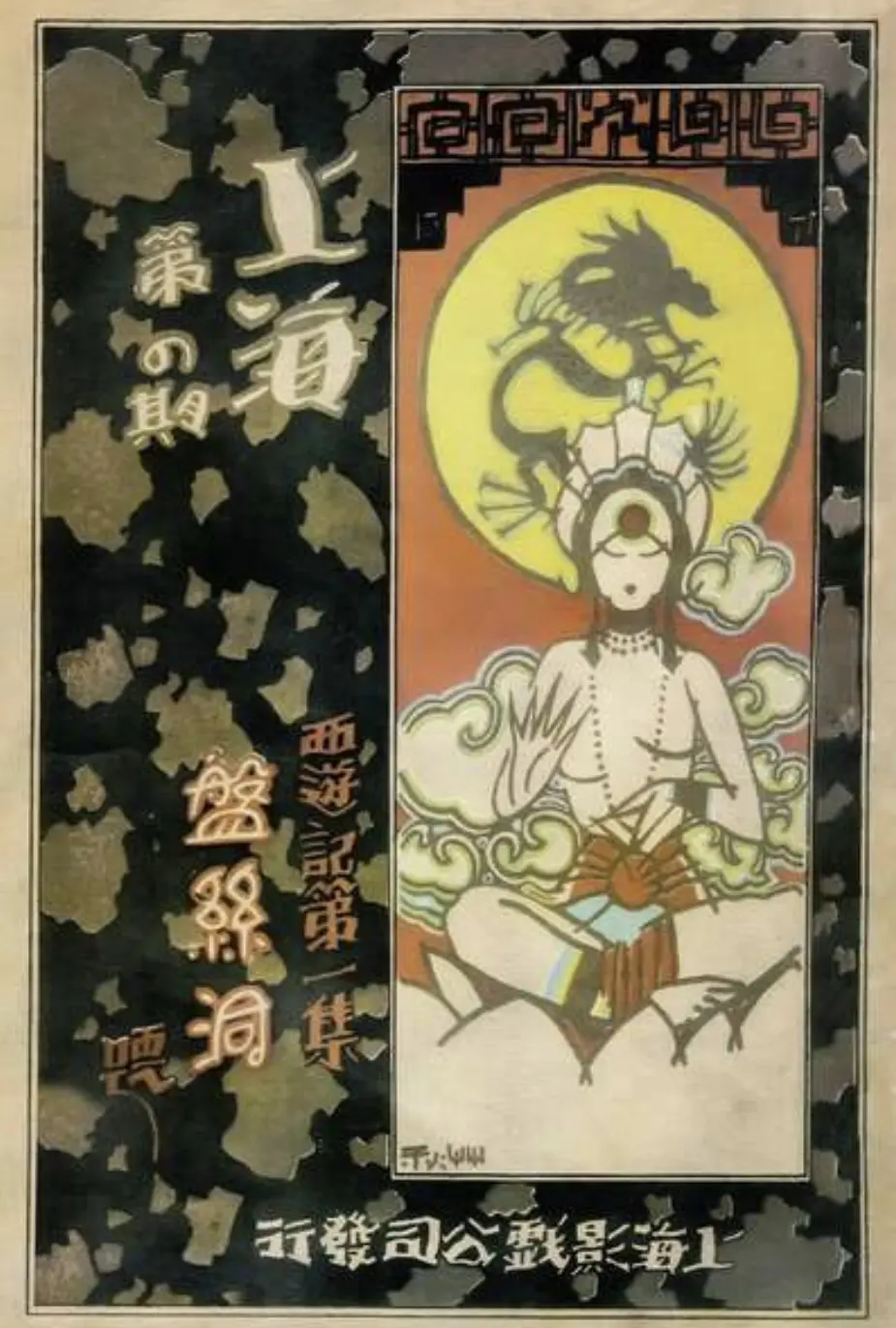
A definitive 6.4/10 rating for a film that redefined the boundaries of cult cinema. The Cave of the Silken Web remains a cornerstone of transgressive art.
Is the 1927 version of The Cave of the Silken Web worth your time today? Short answer: Absolutely, but only if you appreciate the raw, experimental spirit of early global cinema over modern polish.
This film is a mandatory watch for historians of Asian cinema and fans of folk-horror, though it will likely frustrate those who demand high-definition clarity or fast-paced modern editing. It is a relic that breathes with a surprising amount of flirtatious energy.
This film works because it embraces a bold, proto-horror aesthetic that feels genuinely transgressive for its time, utilizing inventive practical effects that still possess a certain tactile charm.
This film fails because the middle act relies too heavily on repetitive capture-and-escape tropes that can feel tedious to a modern viewer accustomed to more complex narrative arcs.
You should watch it if you want to witness the literal birth of Chinese special-effects cinema or if you have an interest in how traditional literature was adapted during the silent era.
The Cave of the Silken Web is more than just a movie; it is a survivor. For decades, this film was thought lost to time, a casualty of war and the fragile nature of nitrate film. Its rediscovery in a Norwegian library in 2013 was a miracle for cinema history. When we look at the work of director Dan Duyu, we aren't just seeing an adaptation of Journey to the West; we are seeing the burgeoning identity of Shanghai’s 1920s film scene.
Unlike the early Western adaptations such as A Tale of Two Worlds, which often viewed Chinese culture through an Orientalist lens, Dan Duyu’s work is deeply rooted in local folklore while simultaneously reaching for international cinematic standards. The direction is remarkably focused on the physical presence of the actors. There is a tangible sense of space within the cave, even if the sets are clearly studio-bound.
The film’s pacing is deliberate. It doesn't rush. While some might call it slow, I find it atmospheric. The way the camera lingers on the spider spirits as they weave their webs suggests a director who understood the power of visual metaphor. It reminds me of the deliberate movement found in The Son of a Sheik, where the spectacle is as important as the plot.
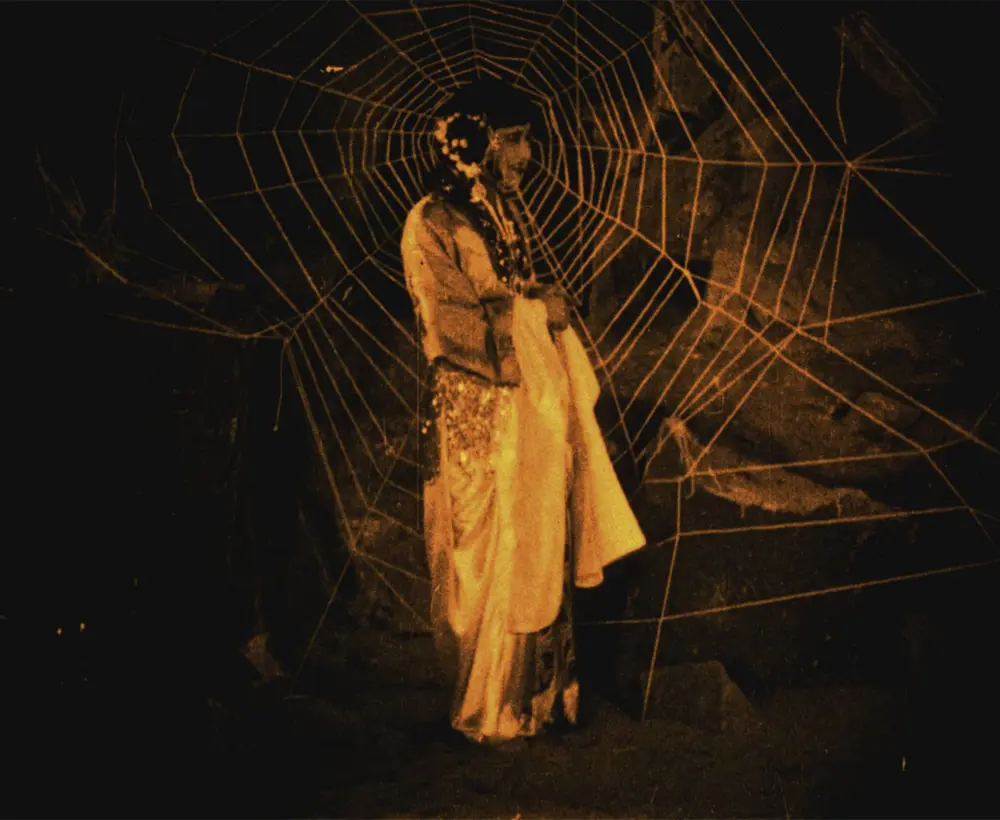
The standout element of this film is undoubtedly Yin Mingzhu. As the lead spider spirit, she brings a level of charisma that was rare in the 1920s. She doesn't just play a monster; she plays a woman who is fully aware of her power. Her performance is playful, menacing, and surprisingly modern. She was the "First Lady" of Chinese cinema for a reason.
In one specific scene, the sisters gather to bathe and prepare for their feast. The way they interact is less like the stiff acting found in Anne of Green Gables and more like a proto-femme fatale ensemble. They are tactile. They touch. They laugh. This level of intimacy was quite controversial at the time and led to the film eventually being banned in China for its "erotic" undertones. By today's standards, it is tame, but the intent remains clear: desire is the ultimate trap.
The Monkey King, played by Wu Wen-chao, offers a necessary counterpoint. His movements are heavily inspired by Peking Opera, resulting in a performance that is highly stylized and acrobatic. Every scratch of his head and every leap feels intentional. It’s a physical feat that holds up better than many modern CGI interpretations of the character. He is the kinetic energy that keeps the film from becoming a static stage play.
How do you show a spider web in 1927? You use what you have. The film uses thick ropes, clever lighting, and double-exposure techniques to create its supernatural world. There is a scene where the webs are literally pulled from the spirits' stomachs—it’s practical, it’s messy, and it’s brilliant. It has a physical weight that digital effects simply cannot replicate.
The cinematography by Dan Duyu himself is surprisingly adventurous. He uses close-ups to heighten the monk’s distress and wide shots to showcase the scale of the cave. While it lacks the fluid camera movement of Paris, it makes up for it with sheer visual invention. The use of smoke and mirrors (literally) to depict transformations is a masterclass in low-budget problem solving.
It works. But it’s flawed. The special effects are obviously dated, and the film occasionally suffers from the "theatrical" framing common in the 1920s. However, if you compare it to other films of the era like War Brides, you can see that The Cave of the Silken Web was pushing the boundaries of what was possible in the fantasy genre.
Yes, The Cave of the Silken Web is absolutely worth watching if you have any interest in the evolution of special effects or Chinese cultural history. It provides a rare window into the pre-Communist Shanghai film industry, which was vibrant, experimental, and unafraid of taboo subjects. While the narrative is simple, the visual execution is a fascinating time capsule of 1920s ingenuity.
For a casual viewer, the silent format and the black-and-white grain might be a barrier. However, for anyone who can look past the surface, there is a rich, dark fairy tale waiting to be discovered. It’s not just a historical curiosity; it’s a genuine piece of horror-fantasy that paved the way for the Wuxia blockbusters of today.
If I have one major gripe, it’s the repetitive nature of the second act. The monk gets captured, the disciples plan a rescue, the monk almost gets eaten, the disciples intervene. This cycle repeats a few too many times. In a film that runs just over an hour, this circular storytelling can make it feel longer than it is. It lacks the tight narrative structure found in something like Nell Gwynne from the same era.
However, the film finds its footing again in the finale. The intervention of Guanyin (the Bodhisattva) brings a sense of scale and divine justice to the proceedings. The final battle is a chaotic blend of smoke, fire, and theatrical combat. It’s a satisfying payoff to the slow-burn tension of the cave sequences. The film doesn't just end; it explodes into a flurry of motion.
The Cave of the Silken Web is a fascinating anomaly. It is a film that feels both incredibly old and surprisingly modern in its sensibilities. It treats its monsters with a level of respect and screen time that would make modern horror directors jealous. While it doesn't have the narrative complexity of modern epics, it possesses a soul and a sense of wonder that is often missing from today's CGI-heavy spectacles.
It is a testament to the power of visual storytelling. Even without dialogue, the stakes are clear, the danger is felt, and the temptation is palpable. If you can surrender to its rhythm, you will find a film that is as enchanting as the silk it depicts. It isn't just a movie you watch; it's a movie you experience as a piece of living history. Don't skip this one. It’s a spider web worth getting caught in.
IMDb —
1916
Community
Log in to comment.