DbcultAccessing Vault...
Cult Review
Senior Film Conservator
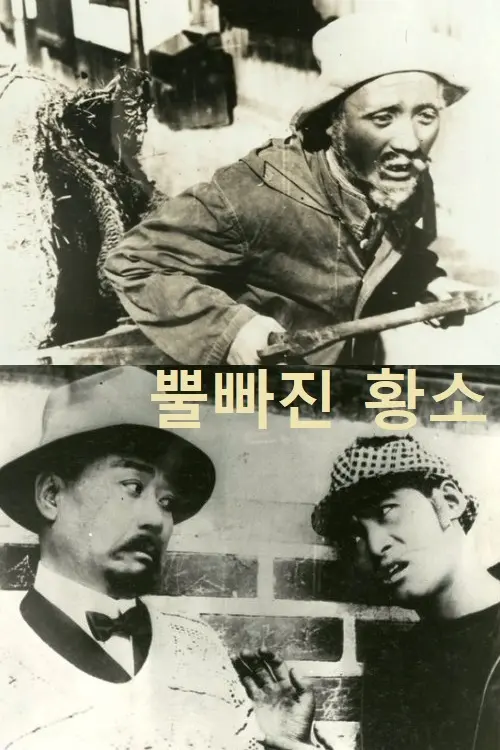
Is An Ox Without Horn worth watching today? Short answer: yes, but with significant caveats that demand a particular kind of cinematic appreciation. This film is for those who appreciate the foundational narratives of early Korean cinema, particularly melodramas steeped in social commentary and the stark realities of their era. It is decidedly not for audiences seeking fast-paced action, modern storytelling conventions, or immediate emotional gratification.
It’s a historical artifact, a window into a bygone era of storytelling and societal concerns. For the discerning viewer, its value lies not just in its narrative, but in its very existence as a document of cultural and artistic evolution. However, expecting a contemporary viewing experience would be a disservice to both the film and your own expectations.
Tae-jin Kim's An Ox Without Horn, even decades after its release, continues to resonate with themes that feel tragically universal: the suffocating grip of class hierarchy, the heartbreak of unrequited love, and the often-futile struggle against societal expectations. The core plot, deceptively simple, lays bare the brutal mechanics of a world where personal happiness is a luxury only the privileged can afford, or rather, demand.
We are introduced to a classic love triangle, but one skewed by the immovable force of socio-economic disparity. Two friends, one the son of a wealthy landowner, the other from an impoverished family, both harbor affections for the same woman. Her choice, driven by genuine emotion, falls upon the poorer man. Yet, this choice is swiftly overridden by the will of her father, who, in a move that feels both pragmatic and devastatingly cruel, marries her off to the rich man. This isn't just a plot; it's a societal indictment.
The film, through this stark portrayal, forces us to confront the uncomfortable truth that love, in many historical and even contemporary contexts, is not a matter of the heart alone. It is a commodity, a strategic alliance, a means to consolidate power or ensure survival. The titular 'ox without a horn' metaphorically represents the powerless, the defenseless, the one stripped of agency in a brutal world. It’s a strikingly potent image for the film's central female character, and perhaps even for the poor suitor.
What this film achieves, even with the inherent limitations of its production era, is a raw emotional core. It doesn't shy away from the pain of its characters, depicting a world where individual desire is often crushed under the heel of collective expectation. This is a story about the devastating ripple effects of one decision, a decision made not out of love, but out of necessity and social pressure.
Analysing An Ox Without Horn requires a lens attuned to its historical context. Early Korean cinema, much like its global counterparts, was still finding its voice, experimenting with narrative structures and visual language. Director Tae-jin Kim, who also penned the script, works within these nascent conventions, delivering a melodrama that feels both earnest and, at times, overtly theatrical by modern standards.
The direction, likely driven by practical considerations of the time, leans on clear, uncluttered framing to convey its emotional beats. One can imagine static shots of characters grappling with internal turmoil, their faces serving as the primary canvas for their anguish. Close-ups, if employed, would have been used sparingly, reserved for moments of profound emotional release, such as the girl's tear-streaked face as she accepts her father's decree, a silent scream against an unchangeable fate.
Cinematography, while lacking the sophisticated camera movements of later eras, would have used the natural light of the countryside to its advantage, perhaps contrasting the bright, open fields where the friends once played with the shadowy, confined interiors of the landowner's home, symbolizing the shift from innocent freedom to constrained duty. The visual language, though simple, would have been functional, designed to underscore the narrative's emotional weight without distraction.
The pacing of the film, typical for early melodramas, is deliberate. It allows moments of tension and sorrow to linger, inviting the audience to immerse themselves in the characters' plight. This slower rhythm can be challenging for contemporary viewers accustomed to rapid-fire editing, but it is essential to appreciate the film's intended emotional impact. It’s a slow burn, culminating not in explosive action, but in the quiet, devastating realization of lost love and shattered dreams.
The cast, including Byeong-Ryong Han, In-gyu Ju, and So-yeong Kim, would have delivered performances characteristic of early cinematic acting—often expressive, leaning into grand gestures and heightened emotion to convey interior states. Subtle realism, as we understand it today, was not the primary goal; rather, it was about communicating clear emotional arcs to an audience still learning the language of film.
Byeong-Ryong Han, likely as the wealthy suitor, would embody the entitled frustration of a man who believes his status grants him automatic possession, yet finds himself competing for genuine affection. His performance might reveal the superficiality of his supposed victory. Conversely, In-gyu Ju, as the poor suitor, would likely portray a profound sense of helplessness and dignity in the face of insurmountable odds, his despair palpable.
So-yeong Kim, playing the central female figure, would carry the emotional burden of the film. Her performance, even without extensive dialogue, would communicate the immense internal conflict of a woman torn between love and duty. The tragedy of her character is not just in her choice, but in the lack of one, her agency systematically eroded by the patriarchal structure of her society. Her silent suffering, if effectively conveyed, would be the film's most potent emotional weapon.
This film works because of its unflinching look at societal injustice and its raw emotional core. It fails because its pacing and acting styles can feel dated to modern viewers, requiring a historical perspective to fully appreciate. You should watch it if you are a student of early cinema, a fan of classic melodrama, or someone interested in the social history embedded within art.
Absolutely, but with the right mindset. If you approach An Ox Without Horn as a historical document, a crucial piece of early Korean cinema, then its value is undeniable. It offers a rare glimpse into the cinematic sensibilities and societal concerns of its time. For film historians and enthusiasts of classic melodrama, it provides rich ground for analysis.
However, if you're looking for a film that feels contemporary in its storytelling, pacing, or visual flair, you might find it a challenging watch. The conventions of early cinema, particularly the melodramatic acting and often slower narrative progression, can be jarring for modern audiences. It demands patience and an appreciation for how cinema evolved.
Its enduring relevance lies in its thematic depth. The struggle between love and duty, wealth and poverty, individual desire and societal pressure, are themes that continue to be explored in cinema even today. Watching An Ox Without Horn allows us to see the foundational ways these narratives were first crafted on screen.
When considering An Ox Without Horn, it's useful to place it alongside other films of its era, both Korean and international. While direct comparisons are difficult without more specific details of its production and release, it likely shares thematic DNA with other social dramas of the early 20th century. Films like God's Law and Man's or Ashamed of Parents, if contemporaries, would also grapple with moral dilemmas and societal expectations, albeit from different cultural perspectives.
The focus on class struggle and romantic tragedy can also be seen in films such as The Cloister and the Hearth, which, despite its different setting, similarly delves into the constraints placed upon individuals by religious or social institutions. This universality of theme is precisely what makes these early films, despite their age, still worthy of academic and critical attention.
The raw portrayal of human emotion, often delivered with a theatrical flourish, would have been a hallmark of early silent and early sound films. Comparing it to the likes of Sex or Why Girls Say No, one can infer a shared interest in exploring social taboos and the burgeoning independence (or lack thereof) of women in an evolving society. While the specifics differ, the undercurrent of social commentary remains a powerful throughline.
An Ox Without Horn is not a film for everyone, nor is it a casual viewing experience. It is a piece of cinematic history, a profound yet often slow-moving drama that speaks volumes about the society from which it emerged. Its narrative is simple, its emotional impact profound. It works. But it’s flawed. Its true value lies in its power as a cultural artifact, a testament to the enduring human struggles against the rigid structures of class and fate. It’s a stark portrayal. And it hurts.
I’d argue that its greatest strength is also its most frustrating weakness: its uncompromising commitment to the melodramatic conventions of its era. While this provides a genuine historical experience, it demands a significant degree of patience and empathy from the modern viewer. For those willing to make that investment, An Ox Without Horn offers a potent, albeit dated, commentary on the human cost of societal hierarchy. It’s a film that leaves an imprint, not for its technical brilliance, but for its raw, emotional honesty.
IMDb 6.8
1935
Community
Log in to comment.