DbcultAccessing Vault...
Cult Review
Senior Film Conservator
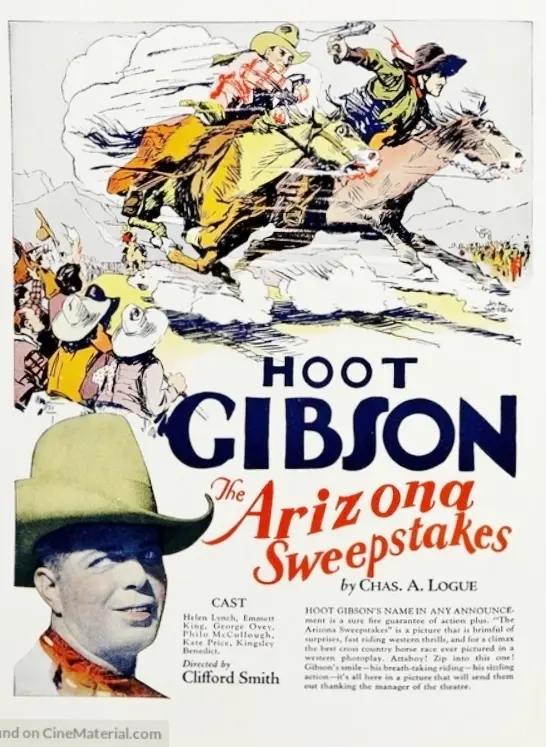
Is Arizona Sweepstakes a relic that belongs in the vault, or a hidden treasure worth digging up today? Short answer: yes, but primarily for those who appreciate the evolution of the Western hero from a stoic lawman to a charismatic everyman. This film is for viewers who enjoy the intersection of silent-era comedy and high-stakes melodrama; it is NOT for those who demand a consistent tone or a narrative that follows modern logic.
This film works because Hoot Gibson possesses a naturalistic screen presence that makes even the most absurd plot contrivances feel grounded in character.
This film fails because the shift from a gritty San Francisco murder mystery to a lighthearted domestic comedy with three children feels like a jarring mid-movie identity crisis.
You should watch it if you want to see the exact moment the Western genre began to blend with the 'bachelor father' trope, predating films like The Bachelor Daddy.
The first act of Arizona Sweepstakes is a fascinating anomaly. We expect Hoot Gibson to be on a horse within the first five minutes. Instead, we find him in the foggy, claustrophobic streets of San Francisco. The cinematography here, handled by the uncredited but capable Universal camera department, uses shadows and tight framing to emphasize Coot Cadigan’s displacement. He is a fish out of water, but more importantly, he is a man of honor in a city built on 'phony fights' and staged realities.
The sequence involving the staged brawl is the film's strongest moment of tension. Stuffy McGee, played with a slippery, nervous energy by George Ovey, represents the urban rot that the Western hero must eventually overcome. When the 'mock' fight results in a real death, the film briefly flirts with the tone of a crime thriller, reminiscent of the early suspense found in The Lone Wolf. It is a brutal, sudden shift that catches the audience off guard. The framing of Coot is not just a plot point; it’s a commentary on how the city treats the honest individual.
Gibson was never the stone-faced statue that William S. Hart was. He was a reactor. In Arizona Sweepstakes, his performance is defined by a series of exasperated double-takes and genuine physical warmth. This is best displayed when he is saddled with Stuffy’s three children. The chemistry between Gibson and the child actors—Jack Morgan, Billy Kent Schaefer, and Turner Savage—is surprisingly tender. It prevents the film from descending into pure slapstick.
Consider the scene where Coot has to feed the children while hiding out. There is a specific moment where he realizes he is more afraid of a crying toddler than a San Francisco policeman. It works. But it’s flawed. The humor occasionally leans too heavily into the 'clumsy man learns to be a mother' trope, which was already becoming a cliché even in 1924, as seen in The Pinch Hitter. However, Gibson’s sincerity saves it from being insufferable.
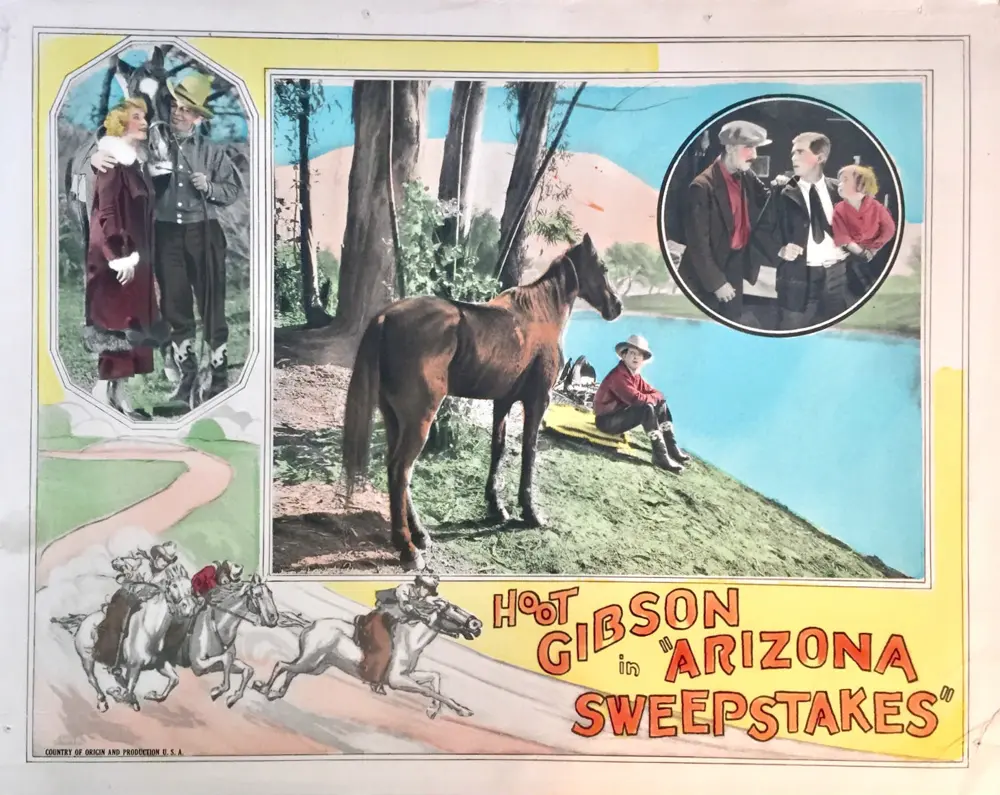
Arizona Sweepstakes is worth watching if you are interested in the transition of the American Western from historical myth-making to star-driven entertainment. It provides a rare look at Hoot Gibson playing a character who is vulnerable, wrongly accused, and burdened by domestic responsibility before he gets to be the hero on horseback. It is a messy, energetic, and ultimately charming piece of silent cinema history.
Director William James Craft seems more comfortable in the desert than the city. Once the action shifts back to Arizona, the film’s visual language opens up. The wide shots of the Savery ranch provide a breath of fresh air after the cramped quarters of the first half. The pacing, which drags slightly during the 'hiding out' phase, kicks into high gear during the titular sweepstakes.
The horse race itself is a masterclass in silent action editing. While it doesn't have the experimental flair of something like The Show-Off, it understands the mechanics of suspense. Every cut between the thundering hooves and the anxious face of Helen Lynch (playing the Colonel’s daughter) heightens the stakes. We aren't just watching a race; we are watching Coot try to outrun his past in San Francisco. The horse becomes his vehicle for legal and social redemption.
Pros:
Cons:
Helen Lynch provides a solid, if somewhat standard, romantic interest. However, her role as the daughter of a failing rancher adds a layer of economic desperation that was very real to 1920s audiences. The film touches on the anxiety of land loss, a theme that resonates through the decades of Western cinema. Compare her performance to the more theatrical turns in Camille, and you see Lynch striving for a more grounded, 'girl next door' appeal.
The inclusion of the three children is the most debatable creative choice. While they provide the 'heart' of the film, they also distract from the central tension of Coot being a wanted man. It’s an unconventional observation, but the film almost functions as a proto-sitcom. Coot isn't just a cowboy; he's a surrogate father, a fugitive, and an athlete all at once. This multi-tasking hero was a hallmark of Gibson's appeal, setting him apart from the more singular focus of his contemporaries.
"The Arizona Sweepstakes is less about the speed of the horse and more about the weight of the baggage Coot Cadigan carries from the city to the plains."
Arizona Sweepstakes is a fascinating hybrid. It begins as a dark urban drama and ends as a triumphant sports Western. While the gears grind loudly during that transition, the sheer force of Hoot Gibson’s personality keeps the wheels from falling off. It’s not a flawless masterpiece, but it is a highly entertaining example of how silent cinema could juggle multiple genres within a single hour of runtime. The horse is faster than the plot, and in a Western, that is often all that matters. It works. But it's flawed. For any serious student of the genre, it is an essential watch to understand the 'Everyman Cowboy' archetype.
IMDb —
1931
Community
Log in to comment.