DbcultAccessing Vault...
Cult Review
Senior Film Conservator
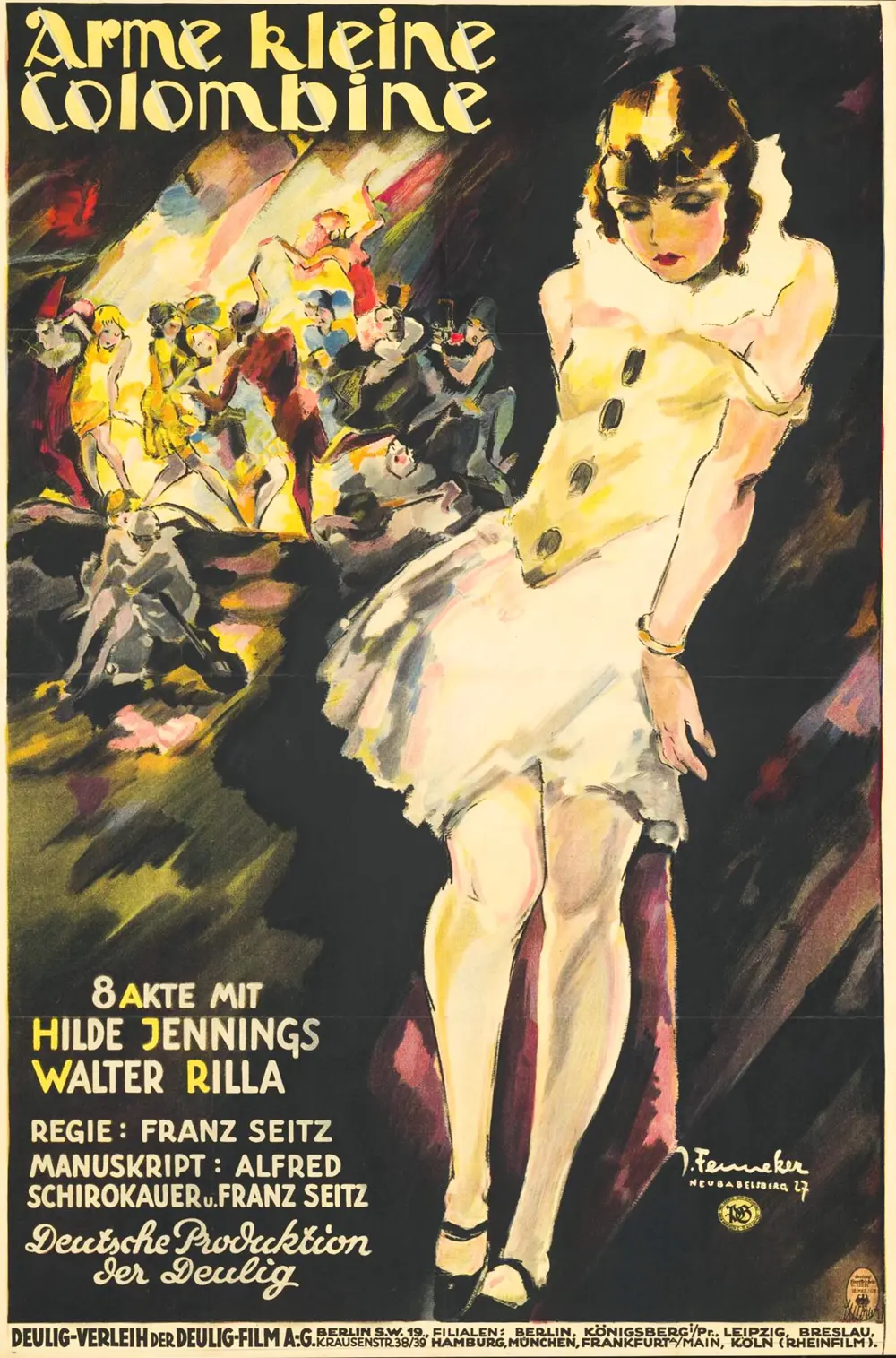
Is Arme kleine Colombine worth your time in the modern era? Short answer: yes, but only if you have the stomach for unvarnished Weimar-era tragedy and the patience for silent-era pacing.
This film is for the dedicated cinephile who wants to see the DNA of modern social dramas; it is absolutely not for someone looking for a lighthearted evening or a fast-paced narrative. It is a slow, methodical dismantling of a human soul.
This film works because it refuses to look away from the transactional nature of beauty and art in a failing economy.
This film fails because its unrelenting bleakness can occasionally feel like a repetitive emotional cudgel rather than a nuanced narrative.
You should watch it if you appreciate the visual storytelling of the 1920s and want to see Hilde Jennings deliver a performance that rivals the greats of the silent screen.
Arme kleine Colombine is not just a title; it is a sentence. In the world created by director Franz Seitz, the protagonist is trapped by the very archetype she portrays on stage. The 'Colombine' figure is historically one of playfulness and romance, yet here, that mask is a prison.
There is a specific moment mid-way through the film where Jennings sits at a dressing table, her face half-painted. The camera lingers on her reflection in a cracked mirror—a visual metaphor that might feel cliché today, but in 1927, it was a sharp articulation of the fractured German identity. This isn't the high-adventure escapism of Der Berg des Schicksals; it is a domestic horror story told in shades of grey.
The writing by Alfred Schirokauer and Seitz is surprisingly modern in its cynicism. They don't offer Colombine a way out through a wealthy benefactor or a sudden stroke of luck. Instead, every 'rescue' comes with a price tag. It is a brutal observation. The film suggests that for a woman in her position, there are no heroes, only different types of creditors.
Hilde Jennings is the beating heart of this film. While many silent actors relied on grand, sweeping gestures to convey emotion, Jennings leans into a minimalist intensity. Her eyes do the heavy lifting. In a scene where she is forced to perform while grieving, the micro-adjustments in her facial muscles are nothing short of extraordinary. It is a performance that feels grounded, unlike the more theatrical style seen in The Girl from Beyond.
Walter Rilla provides a chilling counterpoint. He plays the 'sophisticate' with a cold, detached grace that makes your skin crawl. He represents the upper class that consumes art and people with the same lack of empathy. The chemistry between them is not romantic; it is predatory. This creates a tension that carries the film through its slower second act.
Paul Rehkopf and Wolfgang Zilzer fill out the supporting cast, providing a sense of the broader community—or lack thereof. There is a palpable sense of 'every man for himself' that permeates the set design and the character interactions. No one is safe, and no one is coming to help. It is cold. It is honest.
Technically, the film is a fascinating bridge between Expressionism and the 'New Objectivity' (Neue Sachlichkeit). The lighting is less about distorted shadows and more about the harsh, flat reality of poverty. The cinematography captures the grime of the tenements with a precision that makes the audience feel the dampness of the walls.
Consider the pacing. Like many films of its time, such as Flygande holländaren, it takes its time to establish a mood. However, Seitz uses this time to build a sense of claustrophobia. Even the outdoor scenes feel cramped, as if the city itself is closing in on Colombine. The streets are not avenues of opportunity; they are chutes leading to the same inevitable conclusion.
The editing is deliberate. It doesn't have the frantic energy of 100% Nerve, but it uses rhythmic cutting during the stage performances to create a jarring contrast with the stillness of Colombine's private life. This juxtaposition is where the film finds its power. The stage is movement and light; the home is silence and shadow.
Arme kleine Colombine is worth watching for anyone interested in the evolution of social realism in cinema. It provides a stark, uncompromising look at the human cost of economic collapse and social stratification. While it lacks the spectacle of big-budget silent epics, its emotional weight is far heavier. It is a challenging watch, but a rewarding one for those who value substance over style.
Pros:
Cons:
When we look at other films of the period, like The Devil's Circus, we see a similar fascination with the 'performer in peril' trope. However, Arme kleine Colombine feels more grounded in reality. It lacks the Hollywood-adjacent polish of its contemporaries, opting instead for a documentary-like observation of suffering. It is less a 'circus' and more a 'morgue' of dreams.
Even compared to the gender-bending playfulness of The Violinist of Florence, this film is a different beast entirely. It doesn't want to charm you. It wants to indict you. It asks the audience: how much of this girl's pain are you willing to pay to see? It is a meta-commentary on the act of watching itself.
The film lacks the slapstick levity of Felix Gets the Can or the rhythmic comedy of Tramp, Tramp, Tramp the Boys Are Marching. It is a reminder that while the 20s roared for some, they whimpered for others. This film is that whimper, amplified to a deafening roar through the lens of Seitz's camera.
Arme kleine Colombine is a difficult, haunting, and ultimately essential piece of silent cinema. It strips away the glamour of the stage to reveal the skeleton of a society in decay. It is not an easy watch, but it is a necessary one for those who want to understand the true power of the silent image. It hurts to watch. But you shouldn't look away.
Ultimately, the film stands as a testament to the talent of Hilde Jennings. She carries the weight of a crumbling nation on her shoulders, dressed in the tattered silks of a clown. It is a masterclass in empathy. While it may not have the name recognition of other Weimar classics, its sting is just as sharp. It works. But it’s flawed by its own commitment to misery.
IMDb —
1925
Community
Log in to comment.