DbcultAccessing Vault...
Cult Review
Senior Film Conservator
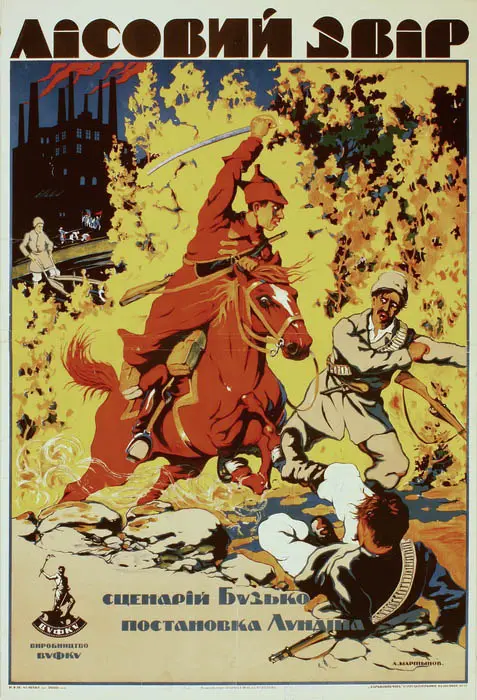
Is Lesnoy zver worth watching today? Short answer: yes, but only if you view it as a historical artifact rather than a modern thriller.
This film is specifically for students of early Soviet cinema and those fascinated by the intersection of autobiography and propaganda; it is emphatically not for viewers who require high-definition pacing or clear-cut moral landscapes.
This film works because it captures an authentic sense of place and paranoia that only someone who lived through the 1920s Odessa insurgency could convey.
This film fails because its narrative structure is frequently interrupted by the heavy-handed ideological requirements of its era, often sacrificing character nuance for political messaging.
You should watch it if you want to see how early revolutionary cinema attempted to turn real-life intelligence work into a foundational national myth.
Lesnoy zver is a rare beast in the world of silent cinema. Unlike the polished dramas coming out of Hollywood at the time, such as The Frame-Up, this film feels uncomfortably close to the dirt and blood of its inspiration. Dmitriy Buzko wasn't just the writer; he was the man who lived the story. This creates a layer of intensity that is hard to replicate. When the Cheka operatives move through the underbrush, there is a lack of 'movie magic' that actually serves the film well. It feels like a documentary of a memory.
Take, for instance, the sequence where the trap is finally set for Zabolotny. The tension isn't built through rapid editing—which was still being pioneered—but through the agonizingly slow placement of figures within the frame. You can feel the stillness of the Ukrainian spring, a silence that is about to be shattered. It is a primitive form of suspense, but it is effective. It reminds one of the raw atmospheric power found in Dikaya sila, where the environment dictates the fate of the men within it.
Lazar Bodik and the supporting cast deliver performances that are surprisingly restrained for the 1920s. While many films of this period, like Her Silent Sacrifice, relied on grand theatrical gestures, the ensemble here seems to understand the gravity of the subject matter. Vladimir Uralskiy, in particular, brings a grounded presence to the screen. There is a specific moment where the realization of the mission's danger hits a young operative, and the camera lingers on his face just long enough to see the mask of revolutionary fervor slip. It is a humanizing touch in a film that could have easily been a cardboard cutout of Soviet heroism.
However, the portrayal of Zabolotny is where the film takes its most debatable stance. He is framed as the 'beast' of the title, yet the film cannot help but show the charisma that allowed him to lead an insurgency for three years. This creates a fascinating tension. Is he a villain, or is he a relic of an old world that refuses to die? The film wants you to believe the former, but the lens often suggests the latter. It is a nuanced conflict that elevates the movie above simple police procedural fare.
For the casual viewer, the answer is likely no. The pacing is reflective of its time—deliberate and occasionally stagnant. However, for the cinephile, Lesnoy zver is an essential watch. It provides a blueprint for the Soviet 'Eastern' genre and offers a window into the soul of a nation in transition. It is a film about the end of the frontier and the beginning of the state. It works. But it’s flawed.
The visual language of Lesnoy zver is surprisingly sophisticated. The use of natural light in the forest scenes creates a high-contrast environment that mirrors the moral binaries of the script. The shadows are deep, almost oppressive. This isn't the romanticized nature of Sången om den eldröda blomman; this is nature as a combat zone. The camera work, while static by modern standards, utilizes the depth of field to keep the threat of Zabolotny’s men ever-present in the background.
One standout scene involves a clandestine meeting in a dimly lit room in Odessa. The smoke from the cigarettes curls into the light, creating a noir-ish atmosphere years before noir was a recognized genre. It captures the 'underground' nature of the Cheka’s work perfectly. You aren't just watching a mission; you are witnessing the birth of a secret police aesthetic. This is a stark contrast to the more domestic or comedic tones of films like Puppy Love or The Ghost of Rosy Taylor.
When comparing Lesnoy zver to other films of the era, such as A Certain Rich Man or The Prodigal Son, the difference in stakes is palpable. While those films often deal with moral redemption or social standing, Lesnoy zver is about survival and the cold mechanics of power. It lacks the whimsical nature of Novoye platye korolya or the domestic drama of Lady Windermere's Fan. Instead, it sits in a lonely category of 'revolutionary realism' that is both fascinating and chilling.
"The forest does not hide the beast; it merely waits for the beast to make a mistake." — This thematic undercurrent defines the entire second half of the film.
One surprising element of the film is its relative lack of 'villainy' in the traditional sense. Zabolotny isn't a mustache-twirling antagonist. He is portrayed as a force of nature—a 'beast' that is being hunted because it doesn't fit into the new garden being planted by the state. This makes the film's conclusion feel less like a triumph and more like a grim necessity. It is a stance that feels remarkably modern, even if the film's framing devices try to tell you otherwise.
Lesnoy zver is a challenging, often slow, but ultimately rewarding piece of cinema. It captures a specific moment in time with a level of personal detail that is rarely seen in the 1920s. While it suffers from the propaganda requirements of its birth, the core story of the hunter and the hunted remains compelling. It is a stark reminder that the most dangerous beasts are often the ones we create ourselves through conflict and ideology. It is a piece of history that breathes, bleeds, and occasionally bores, but it is never less than fascinating.
IMDb —
1921
Community
Log in to comment.