DbcultAccessing Vault...
Cult Review
Senior Film Conservator
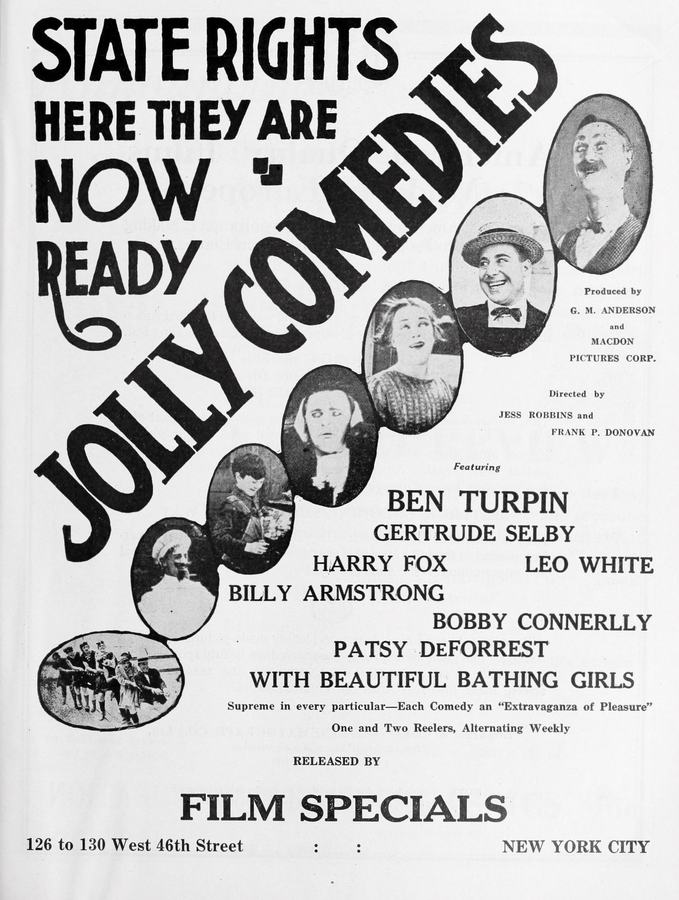
A nickelodeon piano crashes into a funeral march, and suddenly the 1918 audience—hats still on, corsets still tight—realizes they’ve been lured not into escapism but into an autopsy. Artless Artie arrives like a bloodstained postcard mailed from the id of a nation busy selling Liberty Bonds by day and snorting ether by night. There are no title cards announcing theme; instead, the film’s first image is a boot heel grinding a dropped ice-cream cone into the pavement while a child watches, unblinking. The symbolism is deliciously cheap and inexhaustible: innocence squashed underfoot, dessert turned to mucilage, summer curdled.
Director-writer Harry Fox (pulling triple duty here) refuses the era’s standard perfumed melodrama. His camera behaves like a drunk ethnographer, lurching from burlesque stages to flop-house corridors, always half-a-frame late to the action so the viewer feels the after-shiver rather than the slap. The result is a cinematic fin-de-siècle migraine, a film that knows the 20th century will be built on crime-scene photographs and cigarette endorsements.
Fox shot on orthochromatic stock, rendering reds as tar-black bruise. Thus every cabaret lantern, every rose tucked behind a chorus girl’s ear, becomes a hole punched into the celluloid. Critic-historian Jay Leyda once called ortho “the palette of the already dead,” and Fox weaponizes it: faces float like bleached moons against velvet that drinks light and exhales mold. The tinting—hand-applied in an attic lab reeking of potassium ferricyanide—follows no archival logic: night scenes ooze dark orange, dawn scenes flicker jaundiced yellow, and the intermittent sea-blue flash frames suggest nitrate decomposition turned aesthetic.
Compare this chromatic hysteria to the restrained amber of A Very Good Young Man or the pastel romance in Lea. Where those films use tint as mood perfume, Fox uses it as chemical burn. When Artie finally discovers his brother’s fate—tied to a revolving stage platform while counterfeit banknotes snow onto him—the footage is dyed in all three hues simultaneously, creating a queasy rainbow that feels like a threat.
Silent-film acting often ages poorly; brows over-mime, hearts over-clutch. Fox, however, weaponizes understatement. His Artie shrinks inside second-hand suits two sizes too large, sleeves swallowing his fingertips so every gesture looks borrowed. Watch his shoulder blades: they twitch like moth wings whenever the character suspects betrayal (which is every 38 seconds). The performance is half-Kuleshov experiment, half-Jacobean revenge sketch; he lets the audience project entire orphanages onto the hollows of his clavicles.
Modern viewers raised on method naturalism might mistake the stylization for hamminess, but Fox’s micro-gestures anticipate Bresson’s “models” by a decade: the way he removes a hat is never about etiquette—it’s an autopsy of dignity. In one insert close-up, Fox slowly wipes newsprint ink from his fingertips onto his trousers; the smudge left behind forms an accidental map of the very city he’s doomed to wander. It’s the birth of cinematic contingent poetry years before Italian neorealists claimed the patent.
Fox wrote no substantial female parts in the conventional sense. Instead, women appear as conjurer’s props that bite back: the suffragette sharpshooter fires a bullet through her own Wanted poster; the child contortionist folds herself into an envelope addressed to “Anyone Who Can Unlove Me.” The most arresting figure is a nameless ticket-taker (played by vaudeville escape artist Velma Vance) who materializes whenever Artie approaches a theater, silently extending a torn ticket stub that always bears yesterday’s date. She never speaks, yet her presence threads the picaresque chapters into an existential Möbius strip: every venue promises escape yet loops back to the same wicket.
This tactic feels proto-feminist precisely because it refuses victimhood; these women weaponize the very objectification foisted upon them. Contrast with the sacrificial ingenue of The Second Mrs. Tanqueray or the decorative socialite in American Aristocracy. Fox’s women don’t die to motivate male catharsis—they vanish, reappear, and pick the hero’s pockets.
Fox’s editing syntax predates Eisenstein’s agit-prop rhythms by a full winter, yet feels funkier, more jazz-adjacent. He fractures continuity via match-action mismatches: Artie exits a saloon in medium shot, swings the door open, and the next cut deposits him inside a church confessional, hat still damp with barroom condensation. The splice is unapologetically visible—gate-flare, emulsion scratch, the splice tape’s yellowed grin—reminding viewers that narrative itself is counterfeit currency.
In the film’s centerpiece sequence, Fox crosscuts between three spaces: a printing press stamping bogus banknotes, a surgeon sewing a patient’s face after a barroom glassing, and a projectionist fixing a broken film loop. The montage accelerates until individual frames themselves rebel—images of ink, blood, and celluloid coalesce into a single throbbing mandala. When the sequence ends, Artie awakens inside the counterfeit Michelangelo drawing, suggesting the entire plot may be a hallucination nested within the etching ink. Try finding that in The Pioneers.
Though released as a silent, the film’s original exhibitors received a bizarre exhibition memo: hire a child to clang a fire bell whenever Artie tells a lie, and pipe in cigar smoke during reel changes. Most venues ignored the directive; those that obeyed reported fainting spells, one stampede, and a profitable repeat turnout. Contemporary scholars interpret the stunt as Fox’s proto-Godardian attempt to make the theater itself a character—olfactory and auditory additions turning passive spectators into complicit voyeurs breathing the same carcinogenic air as the damned onscreen.
Home-viewing cinephiles today can approximate the effect: cue a YouTube fire-alarm loop at minute 17, light a cheap stogie, and watch domestic tranquility detonate. Instant avant-garde credibility, no film-school debt required.
Fox’s urban expressionism anticipates the chiaroscuro nightmares of The Cabinet of Dr. Caligari by a calendar year, yet his dread is rooted not in Germanic folklore but in American hucksterism—shell games on rain-slick boardwalks, patent medicines sold from the backs of wagons. The angled sets (plywood façades painted to resemble bruised skyscrapers) prefigure the stylized cityscapes of Metropolis, but Fox’s skyline seems to sweat instead of gleam; every cornice drips with pigeon-excrement stalactites.
Cine-essayist Chris Marker once claimed the 20th century began not in Sarajevo but in a film studio when someone first cranked a camera backward; if so, Artless Artie is the moment that camera reversed while laughing. Its DNA strands can be traced through the carnivalesque despair of Taxi Driver, the ontological sleights of Videodrome, even the participatory gimmickry of The Rocky Horror Picture Show. Yet Fox’s film remains stubbornly sui generis, a cinematic platypus that refuses taxidermy.
Only one 35 mm print survives, housed in the basement of the Cinémathèque de Toulouse, where it’s been known to warp from humidity until images resemble Monet haystacks dipped in tar. A 2K scan circulates in private torrents under the alias “FoxTrot_NitrateNightmare”; quality is decent except for reel four, where scanner jitter makes everyone look like malfunctioning marionettes. The ideal viewing window is 2:07 a.m.—brain half-lubricated, city outside reduced to ambulance yelp—because the film won’t meet you halfway; you must crawl down the alley first.
Survival kit: black coffee to echo the protagonist’s insomnia, a fire-alarm WAV file for authenticity, and a notebook because the film’s secrets are written in disappearing ink between frames. Expect post-credit tinnitus; consider it the price of witnessing the moment American cinema looked in the mirror and punched its own reflection.
Hollywood likes its history neat: Griffith births narrative, Welles deep-focuses into legend, Spielberg sprinkles humanity over blockbusters. Artless Artie is the rowdy bastard crashing the family reunion, spiking the punch with cyanide, then leaving with the photo album under its coat. It reminds us that American storytelling was born crooked, that every pixel of optimism contains a latent crime scene. To watch it is to ingest a century-old virus and discover you’re the asymptomatic carrier. Don’t seek comfort; there’s none on offer—only the dizzy thrill of realizing the projector’s gaze has been staring back the entire time, waiting for you to blink first.
IMDb 7.3
1931
Community
Log in to comment.