DbcultAccessing Vault...
Cult Review
Senior Film Conservator
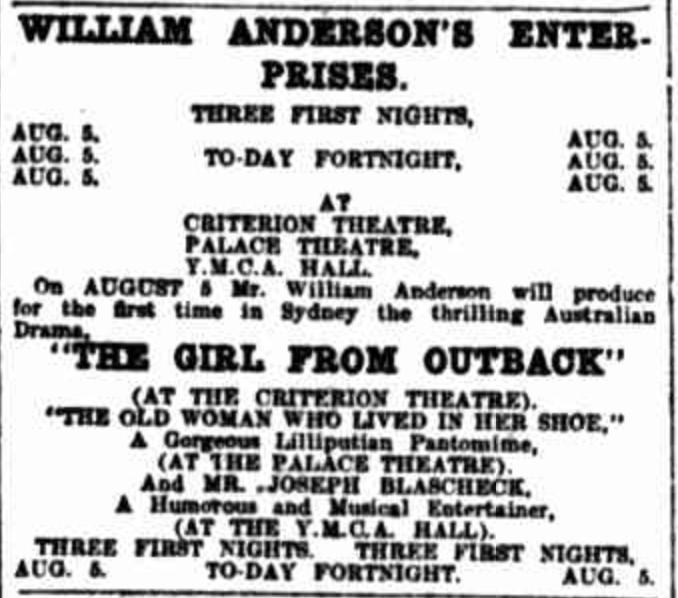
In the nascent years of the twentieth century, while European filmmakers were busy refining the theatricality of the 'film d'art' and American studios were beginning their migration toward the sun-drenched valleys of California, a distinct and feral cinematic voice was erupting from the Australian continent. The Girl from Outback (1911) stands as a towering, if somewhat weathered, monument to this era—a period defined by a fascination with the 'bushranger' and the rugged individualism required to survive the antipodal wilderness.
To understand the impact of The Girl from Outback, one must first recognize the cultural vacuum it filled. Following the monumental success of The Story of the Kelly Gang, Australian audiences developed an insatiable appetite for tales of frontier defiance. However, where earlier efforts often focused on the hyper-masculine exploits of outlaws, this 1911 production pivoted the lens toward a female protagonist, a move that was both commercially savvy and narratively refreshing.
The film doesn't merely replicate the beats of its predecessors like Robbery Under Arms; it infuses the genre with a domestic urgency that heightens the stakes. The 'Girl' of the title is not a mere damsel awaiting rescue. Instead, she is a manifestation of the landscape itself—resilient, unpredictable, and fiercely independent. This characterization serves as a stark contrast to the more rigid social structures seen in contemporary urban films of the time, such as A Rua Augusta em Dia de Festa, which highlighted the ordered, festive nature of European city life.
Technically, the film is a fascinating study in the limitations and triumphs of early 1910s cinematography. The camera work, likely hampered by the intense glare of the Australian sun, possesses a high-contrast, almost bleached quality that adds to the film's sense of realism. Unlike the controlled environments of the Westinghouse Works shorts, where industrial lighting provided a consistent exposure, the makers of The Girl from Outback had to contend with the mercurial nature of the bush.
There is a raw, unedited quality to the exteriors that puts one in mind of early ethnographic actualities like Saída dos Operários do Arsenal da Marinha, yet here the footage is harnessed for narrative propulsion. The use of deep space is particularly noteworthy; characters often approach from the far distance, their silhouettes slowly gaining definition against the horizon, a technique that would later become a staple of the Western genre.
When comparing the dramatic weight of this film to other early century offerings, the difference in 'stakes' is palpable. While many films of the era were preoccupied with the spectacle of sport or ritual—such as the The Corbett-Fitzsimmons Fight or the Jeffries-Sharkey Contest—The Girl from Outback attempted to weave a complex emotional tapestry. It moved beyond the 'cinema of attractions' to engage with the viewer's empathy.
Consider the narrative density here compared to A Football Tackle. While the latter captures a fleeting moment of physical exertion, the former attempts to document a moral journey. This ambition is shared with other Australian 'bush' films like The Squatter's Daughter and A Tale of the Australian Bush, which collectively sought to define the national character through the crucible of the wilderness.
The plot, centered on a false accusation, touches upon an atavistic fear of the colonial period: the fallibility of British law in a land that felt lawless. This thematic thread is a recurring motif in the era’s bushranger cinema, including The Life and Adventures of John Vane, the Australian Bushranger. The protagonist’s struggle is not just against a villainous antagonist, but against a system that fails to distinguish between the desperate and the depraved.
In this sense, the film mirrors the religious and moral gravity found in contemporary passion plays such as The Life and Passion of Jesus Christ, albeit transposed into a secular, dusty purgatory. The 'Girl' acts as a secular redeemer, navigating the moral grey areas that the law cannot see. Her agency is the catalyst for the resolution, a significant departure from the passive roles often seen in films like Anna Held or the stylized performances in Highlights from The Mikado.
One cannot overstate the importance of the Australian bush in this production. It is not the manicured nature seen in Le Longchamp fleuri or the romanticized vistas of Trip Through Ireland. This is a landscape of endurance. The gum trees, the rocky outcrops, and the pervasive dust create a sensory experience that transcends the silent medium. The film captures the 'tyranny of distance' that defined early Australian life, making every journey across the screen feel like an odyssey.
The film’s pacing reflects this environmental harshness. There is a deliberate, almost grueling rhythm to the sequences, far removed from the rapid-fire editing of modern cinema or even the frenetic energy of At Break-Neck Speed. It forces the audience to sit with the characters in their isolation, to feel the weight of the sun and the silence of the scrub.
Reviewing The Girl from Outback today is an exercise in cinematic archaeology. Like many films from the pre-1920 era—such as The Fairylogue and Radio-Plays or the numerous lost works of the period—the surviving footage is a fragmented ghost of the original vision. Yet, even in its truncated form, the film’s power remains evident. It represents a moment when Australian cinema was arguably the most vibrant in the world, preceding the legislative crackdowns on bushranger films that would eventually stifle the industry.
The film’s influence can be traced through the decades, informing the 'Australian New Wave' of the 1970s. The DNA of this 1911 production exists in every subsequent attempt to capture the intersection of femininity and the frontier. It is a progenitor of the 'strong female lead' long before the term became a marketing cliché.
While a modern viewer might find the melodramatic acting styles—reminiscent of I promessi sposi—to be archaic, those who look closer will find a sophisticated understanding of visual storytelling. The director utilizes the frame to isolate characters, highlighting their psychological state through their physical position within the vast, uncaring landscape. It is a work of profound topographical empathy.
In conclusion, The Girl from Outback is more than a historical curiosity. It is a vital piece of the global cinematic puzzle, a testament to the power of regional storytelling, and a reminder that even in the earliest days of the medium, film was capable of capturing the complex, often violent birth of a national identity. It stands alongside milestones like Defense of Sevastopol as a crucial example of how early cinema was used to forge a sense of place and purpose in a rapidly changing world.
*** Review by the Cinephile Critic ***
IMDb —
1925
Community
Log in to comment.