DbcultAccessing Vault...
Cult Review
Senior Film Conservator
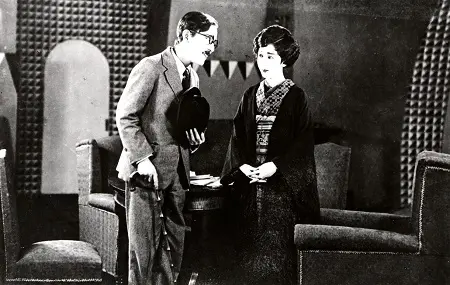
Is Ashi ni sawatta onna (The Woman Who Touched Her Feet) worth watching today? Short answer: yes, but with a significant caveat. This 1926 silent film is a fascinating relic, a window into early Japanese cinema that offers more than just historical value, yet it demands a certain patience and appreciation for its era.
This film is undeniably for cinephiles, historians, and those with a keen interest in the foundational years of Japanese storytelling. It is emphatically NOT for viewers seeking rapid pacing, modern narrative conventions, or high-fidelity visuals. You’ll need to adjust your expectations, but the rewards are there for those willing to look.
Directed by Yutaka Abe, Ashi ni sawatta onna, or The Woman Who Touched Her Feet, is a silent film from 1926 that offers a delightful, if somewhat quaint, journey into the heart of early Japanese cinema. Based on Nadematsu Sawada's novel, the film chronicles the unlikely pairing of Goheita Kita, an earnest Osaka detective portrayed by Kan'ichi Tani, and Saya Shiozawa, a quick-witted Osaka pickpocket played with surprising nuance by Hisako Takihana. Their shared vacation to Tokyo, ostensibly a retreat, quickly transforms into an 'unusual journey' that blurs the lines between duty and desire, law and lawlessness.
The film, penned by Hajime Masuda, thrives on the comedic friction generated by its central duo. Tani’s Goheita is a man of rigid principles, often comically out of his depth when confronted with the unpredictable Saya. Takihana’s Saya, on the other hand, embodies a spirited independence, a character archetype that feels remarkably progressive for its time. Their interactions, largely conveyed through expressive pantomime and intertitles, form the comedic and dramatic backbone of the narrative.
This film works because of its charming character dynamics and its subtle, observational humor. The contrast between the upright detective and the mischievous pickpocket is a timeless comedic setup, and here it’s executed with a delicate touch that avoids overt slapstick, leaning instead into situational irony. The performances, particularly from Hisako Takihana, are genuinely captivating, allowing the audience to connect with characters despite the silent film format.
This film fails because its pacing can feel glacially slow by modern standards, and some of the narrative beats, while charming, lack the intricate depth contemporary audiences might expect. The 'unusual journey' itself, while conceptually rich, doesn't always translate into a visually dynamic or plot-heavy progression. It’s a film that asks you to settle into its rhythm, which not everyone will be able to do.
You should watch it if you appreciate the historical significance of early Japanese cinema, enjoy character-driven stories over plot-heavy ones, or are simply curious about how humor and drama were conveyed in the silent era. It's a testament to the universal appeal of human connection, even across the divide of law and order.
Yutaka Abe’s direction in Ashi ni sawatta onna is a masterclass in subtlety, especially considering the technical limitations of 1926. There are no grand, sweeping panoramas of Tokyo, nor are there overtly dramatic camera movements. Instead, Abe focuses on framing his actors, allowing their expressions and body language to carry the narrative weight. This intimate approach ensures that the audience's attention remains squarely on Goheita and Saya, making their internal struggles and burgeoning rapport the film's true spectacle.
For example, a particular scene where Goheita, ever the detective, attempts to subtly observe Saya in a public space, only to be caught by her knowing glance, is a moment of pure, understated brilliance. The camera holds on their faces, conveying volumes without a single spoken word. It’s a testament to the power of performance and precise framing.
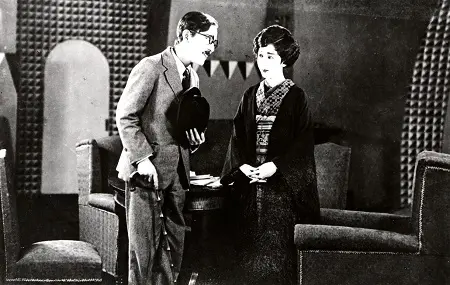
The cinematography, while not groundbreaking by today's standards, is remarkably effective for its time. Shots are often static, allowing the mise-en-scène to tell part of the story. The use of natural light, where possible, lends an authentic, almost documentary-like feel to certain outdoor sequences, grounding the fantastical premise in a believable reality. It evokes a sense of place without needing elaborate set pieces, a practical necessity that becomes an artistic strength.
The strength of Ashi ni sawatta onna lies almost entirely in the performances of its lead actors, Kan'ichi Tani and Hisako Takihana. Tani, as the earnest detective Goheita Kita, delivers a performance that balances his character's inherent rigidity with moments of surprising vulnerability. His comedic timing, often expressed through exasperated sighs or wide-eyed bewilderment, is impeccable. He doesn't overplay the role; instead, he allows Goheita's internal conflict to simmer beneath a composed exterior.
Hisako Takihana, however, is the true revelation here. Her Saya Shiozawa is a whirlwind of charm and mischief. Takihana imbues Saya with an intelligence and independence that feels modern, even rebellious, for a female character of that era. Her subtle smiles, the flick of her wrist as she executes a pickpocketing maneuver, or the challenging glint in her eyes when confronted by Goheita, all speak volumes. She commands the screen without ever resorting to histrionics, making Saya a character you genuinely root for despite her questionable profession.
The supporting cast, including Tokihiko Okada and Yôko Umemura, provide solid, if less memorable, contributions. Kōji Shima, in particular, adds a touch of gravitas to his role, however minor, helping to flesh out the world these characters inhabit. Their reactions and interactions serve to highlight the central duo’s dynamic, acting as a crucial backdrop to the main narrative.
The pacing of Ashi ni sawatta onna is deliberately slow, a characteristic common to many silent films. This isn't a criticism, but rather an observation about the viewing experience. The film unfolds gradually, allowing scenes to breathe and emotions to register without the rush of modern editing. This slower rhythm can be challenging for contemporary audiences accustomed to rapid-fire cuts and plot advancements. However, for those who embrace it, it allows for a deeper immersion into the characters' inner lives and the subtle nuances of their relationship.
The tone is predominantly lighthearted, a gentle comedy with romantic undertones. There are moments of genuine tension, particularly when Saya’s illicit activities threaten to expose her, but these are always tempered by the underlying warmth of the film’s central premise. It never veers into heavy drama, maintaining a consistent, charmingly optimistic outlook. This tonal consistency is a credit to Hajime Masuda's script, which navigates the moral ambiguities of its characters with a sympathetic hand.
Comparatively, while not a direct thematic match, the light romantic drama and character-driven focus feel somewhat akin to the innocent charm found in films like The Love Trap (1923), albeit with a distinctly Japanese sensibility. The humor often arises from social situations and character quirks, rather than broad physical comedy, which gives it a more sophisticated feel than some of its contemporaries.
Absolutely, if you approach it with the right mindset. Ashi ni sawatta onna is a captivating piece of cinematic history that showcases the foundational elements of storytelling and character development in early Japanese film. It’s not just a historical curiosity; it’s genuinely engaging. The performances, especially Hisako Takihana's, are exceptional. The subtle humor and character dynamics hold up surprisingly well. It offers a unique cultural perspective from nearly a century ago.
Pros:
- Exceptional Lead Performances: Kan'ichi Tani and Hisako Takihana deliver nuanced, expressive performances that transcend the silent film medium. Takihana, in particular, is a revelation, crafting a character that feels remarkably ahead of her time.
- Charming Character Dynamics: The 'odd couple' pairing of the rigid detective and the spirited pickpocket creates a wealth of comedic and heartwarming moments. Their interactions are the film's beating heart.
- Subtle, Observational Humor: The comedy is never forced, arising naturally from the characters' personalities and their conflicting worlds. It's intelligent and often quite endearing.
- Historical Significance: Offers a valuable glimpse into 1920s Japanese society and the nascent stages of its film industry. It's a cultural artifact that still resonates.
- Understated Direction: Yutaka Abe's focus on intimate framing and character expression proves highly effective, showcasing how much can be conveyed without dialogue or elaborate set pieces.
Cons:
- Slow Pacing: The film's deliberate tempo, common for its era, can feel sluggish to modern viewers accustomed to quicker narrative progression. It requires a significant adjustment in viewing habits.
- Limited Visual Spectacle: While effective, the cinematography is not particularly dynamic or visually ambitious, which might disappoint those looking for grand vistas or innovative camera work.
- Simple Plot: The 'unusual journey' concept, while charming, doesn't translate into a complex or twist-filled plot. The narrative is largely driven by character interaction rather than intricate events.
- Accessibility Barriers: As a silent film, it requires a willingness to engage with intertitles and interpret non-verbal cues, which can be a barrier for some.
- Dated Sensibilities: While largely progressive, some elements might feel dated, although this is more a function of its historical context than a flaw in its execution.
Ashi ni sawatta onna is more than just a historical footnote; it’s a genuinely engaging piece of early Japanese cinema. It works. But it’s flawed. Its charm lies in its simplicity, its focus on character, and the captivating performances of its leads, especially Hisako Takihana, who shines brightly even in the silent era's shadows. While its slow pace and lack of modern cinematic flair might deter some, those willing to invest their time will discover a delightful, heartwarming, and often humorous story. It’s a testament to the enduring power of human connection, even when one character is trying to uphold the law and the other is routinely breaking it.
It's not a film that will reinvent your understanding of cinema, but it will certainly deepen your appreciation for the craft and ingenuity of early filmmakers. If you're a fan of silent-era character studies, or curious about the roots of Japanese storytelling, then carve out some time for this one. It's a quiet gem that deserves to be rediscovered, a subtle triumph that proves compelling narratives don't always need sound or color to resonate. Highly recommended for the discerning viewer who values historical context and nuanced performances over flashy spectacle.
IMDb 4.6
1934
Community
Log in to comment.